


More news on this day
Thousands of travelers across Saudi Arabia, the United Arab Emirates and Oman are facing disrupted journeys as a new wave of cancellations and delays hits key routes operated by Royal Jordanian, Emirates, Saudia, FlyDubai and Oman Air, underscoring how fragile Gulf aviation remains amid ongoing regional instability.
Get the latest news straight to your inbox!
Fresh Disruptions Across a Stressed Gulf Aviation Network
Publicly available airport and flight tracking data from early June 2026 indicate that at least 48 flights operated by or involving Royal Jordanian, Emirates, Saudia, FlyDubai and Oman Air have been canceled across Saudi Arabia, the UAE and Oman within a short operational window, alongside more than 60 additional delays. The pattern mirrors wider turbulence that has affected Gulf air travel since regional airspace closures and security concerns intensified in late winter.
Recent coverage focusing on the United Arab Emirates shows that, on a single day in early June, hundreds of flights experienced schedule disruption at Dubai, Abu Dhabi and Sharjah, with double digit cancellations and a far larger number of delays logged across multiple carriers. These figures form part of a broader picture of instability in Gulf aviation, where even leading hub airlines have struggled to maintain predictable timetables.
In Oman, earlier announcements extending the suspension of several routes into April due to regional airspace closures signaled the operational strain now becoming visible again in June. Oman Air’s network adjustments, initially framed as temporary, contributed to a backlog of disrupted itineraries and tighter capacity on remaining services, magnifying the impact whenever new delays or cancellations occur.
Saudi carriers have faced similar pressures. Industry and advisory bulletins over the past three months have repeatedly cited temporary suspensions from Saudi airports to key regional destinations, driven by evolving security assessments and airspace restrictions. Even as some routes have resumed, the latest cluster of cancellations and delays shows that the recovery remains partial and vulnerable to new shocks.
Why Flights Are Being Canceled or Delayed
A combination of security related airspace closures, rerouting requirements and knock on operational challenges continues to sit at the heart of the disruption. Analysts tracking the 2026 Strait of Hormuz crisis and subsequent regional tensions note that airlines operating in and out of the Gulf have repeatedly adjusted flight paths, sometimes adding significant time to sectors and compressing already tight turnaround schedules.
When airspace corridors close or become restricted, flights are often rerouted through narrower or more congested paths. This can increase flying time, fuel burn and crew duty hours. Carriers such as Emirates and FlyDubai, which run dense hub and spoke networks through Dubai, are particularly exposed, as a delay in one leg can ripple across multiple onward connections and outbound rotations, producing secondary delays and cancellations later in the day.
Fuel and infrastructure considerations are another layer. Recent risk assessments highlight the possibility of uneven jet fuel availability and heightened demand on alternative hubs when parts of the region are disrupted. In practice, this means some services are prioritized, while others are thinned out or consolidated, resulting in last minute schedule changes that passengers experience as abrupt cancellations or long delays at the gate.
Operationally, airlines must also work within regulatory limits on crew working hours and aircraft maintenance windows. When flights are delayed by several hours due to security holds or rerouting, crews may exceed legal duty limits, obliging airlines to cancel sectors or wait for replacement teams. In busy hubs such as Riyadh, Jeddah, Dubai and Muscat, that can quickly translate into clusters of disrupted services rather than isolated incidents.
How Travelers Are Being Affected on the Ground
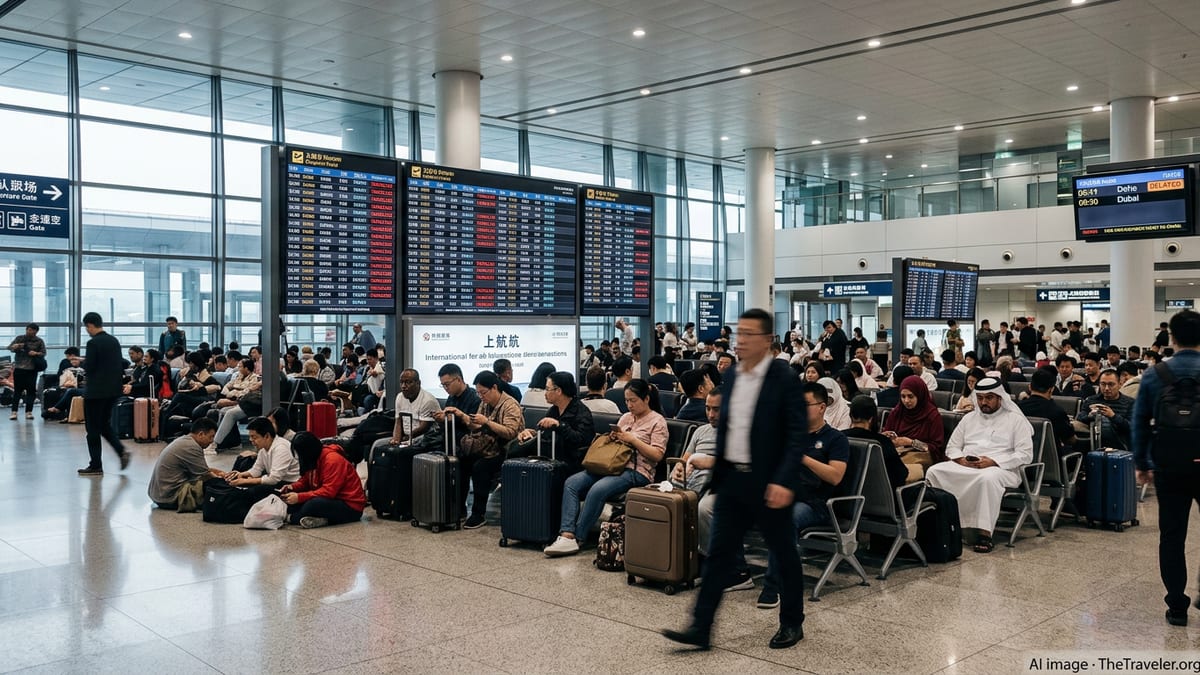
The practical impact for passengers has been stark. Reports from regional media, aviation advisories and traveler accounts describe crowded terminals in Dubai and Abu Dhabi, with some travelers waiting many hours for rebooking or onward connections. In Saudi Arabia and Oman, reductions in frequencies on certain regional routes have in some cases left passengers with fewer same day alternatives when flights are canceled at short notice.
For transit passengers connecting between Europe, Asia and Africa through Gulf hubs, missed connections are a recurring theme. With Emirates, Saudia, FlyDubai and Oman Air all acting as crucial connectors across the region, a single canceled or heavily delayed sector can break multi leg itineraries, forcing travelers to overnight in hub cities or pursue complex re routings via alternative airlines and airports.
In addition to time lost, travelers are encountering uncertainty over entitlement to care, accommodation and compensation. While Gulf based carriers generally outline disruption policies on their websites, the mix of operational, security and regulatory causes behind each delay or cancellation can affect what support is offered in practice. Passengers on Royal Jordanian, for example, have been directed in earlier advisories to options such as date changes, refunds or vouchers when flights were canceled due to external constraints.
The strain is also visible in secondary airports and alternative routes. As some services into high profile hubs are thinned out, more travelers are funneled through cities that still have operational capacity, such as Muscat or secondary Saudi airports, which can create pressure on local ground transport, hotel availability and consular support services.
What Airlines and Airports Are Doing to Respond
According to recent travel advisories and carrier updates, airlines across the region are pursuing several strategies to manage the disruption. These include temporary route suspensions, consolidation of flights on busier routes, and ongoing schedule revisions designed to build more slack into tightly timed hub operations. Royal Jordanian, Oman Air, Saudia and other carriers have at various points in 2026 suspended or reduced services to destinations such as Dubai, Doha, Bahrain and Kuwait, before reintroducing them as conditions allowed.
Hub operators in the UAE and Saudi Arabia have focused on stabilizing operations after earlier shutdowns and partial closures. Publicly reported airport notices for Dubai International and other key gateways emphasize that airports are open, but warn that schedules may change at short notice as airlines continue to adapt flight paths and frequencies to regional airspace constraints.
Advisory firms monitoring infrastructure risk in the aviation sector suggest that Gulf operations are likely to remain “operational but uneven” in the short term, with intermittent spikes in delay and cancellation levels whenever new security incidents or airspace changes occur. This assessment aligns with the latest pattern of 48 cancellations and 68 delays clustered in a limited timeframe, which appears less a one off event than another flare up in an already stressed system.
Carriers are also relying more heavily on digital tools to communicate with passengers and automate rebooking, although the volume of disrupted itineraries means some travelers still experience long waits for confirmation messages or revised tickets. Regional commentators note that, in peak disruption periods, customer service channels can quickly become overwhelmed, especially for travelers booking through third party agents rather than directly with the airline.
Key Tips for Travelers Facing Gulf Flight Disruptions
Travel and risk management specialists consistently highlight the importance of monitoring flight status closely when traveling through the Gulf in the current environment. Given the scale of recent disruption involving Royal Jordanian, Emirates, Saudia, FlyDubai and Oman Air, passengers are advised to check airline apps and airport information repeatedly in the 24 hours before departure and again on the way to the airport.
Where possible, experts recommend allowing longer minimum connection times when building itineraries through Dubai, Abu Dhabi, Riyadh, Jeddah or Muscat, and considering flexible tickets that permit free or low cost changes if conditions deteriorate. Travelers booking critical trips, such as time sensitive business journeys or onward cruises, may also wish to route through alternative hubs outside the immediate region to reduce exposure to sudden airspace closures.
Insurance and documentation are another key factor. Policies that explicitly cover missed connections, extended delays and security related disruption can help absorb some of the financial impact of rebooked flights and unexpected hotel stays. Keeping all receipts and written confirmations of cancellations or delays is important for later claims, particularly given the complicated mix of causes behind the current wave of disruptions.
Finally, travelers already stranded in Saudi Arabia, the UAE or Oman are encouraged by publicly available guidance to remain in close contact with their airline and, where applicable, their employer or travel management company. While the latest tally of 48 cancellations and 68 delays reflects a volatile situation, the underlying trend in recent months has been gradual adaptation rather than complete shutdown, meaning that seats do eventually become available as airlines recalibrate schedules and regional conditions evolve.