


More news on this day
Fire departments across Vernon County partnered with medical students for a recent large scale training drill that simulated vehicle crashes, structure fires and complex medical emergencies, creating a live test of how first responders and future physicians work together when minutes matter.
Get the latest news straight to your inbox!
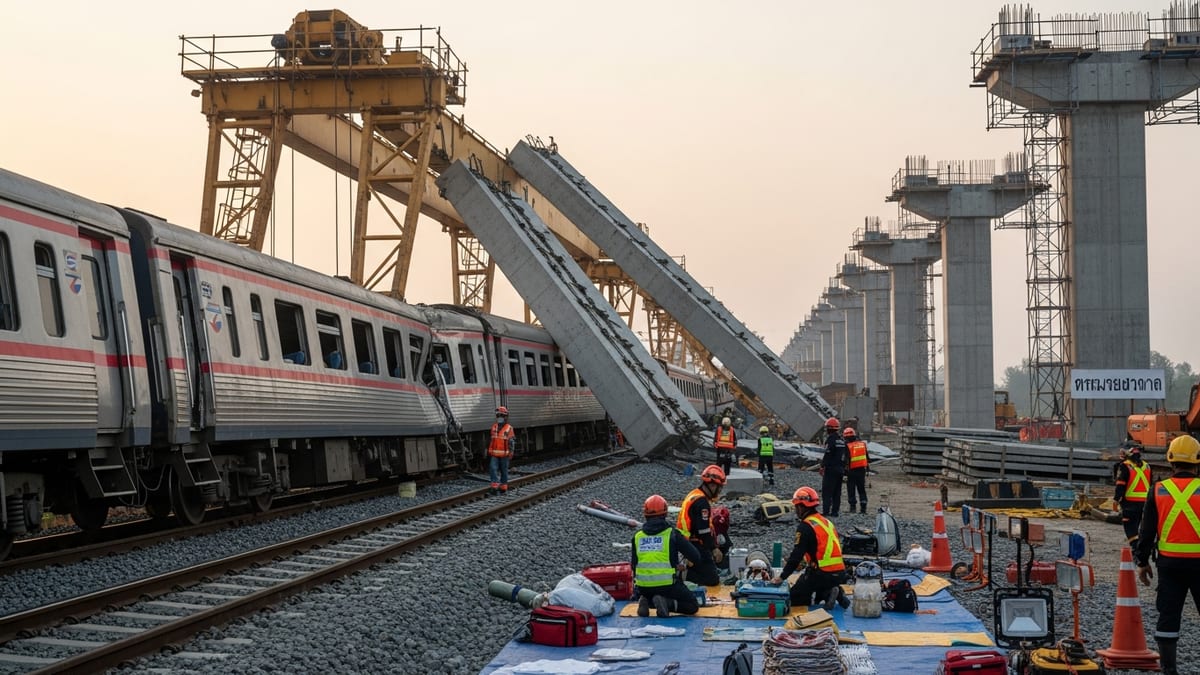
Countywide drill tests frontline coordination
The Vernon County training brought together fire departments, ambulance crews and medical students in a single coordinated exercise designed to mirror the pace and ambiguity of real emergencies. Training organizers used staged scenarios such as multi vehicle collisions and patients trapped in buildings to force quick decisions and cross disciplinary problem solving.
Publicly available information on similar regional drills indicates that county fire agencies are increasingly using joint exercises with health care trainees to close gaps between field care and hospital treatment. By placing medical students directly into live fire and extrication environments, the Vernon County event sought to familiarize them with the challenges of care in roadside ditches, farm fields and rural highways rather than controlled clinical settings.
Reports on rural emergency response trends show that counties with large geographic areas and small populations, such as Vernon County, face longer transport times and limited staffing. Exercises that deliberately stretch local units across several simulated incidents are intended to test resource sharing agreements between departments and refine dispatch protocols before a real disaster exposes weaknesses.
Organizers also used the drill to rehearse communication between fire command posts, EMS units and hospital based medical control. Medical students practiced relaying structured patient updates while firefighters and EMTs balanced rescue operations, fire suppression and triage in rapidly changing conditions.
Medical students step into the prehospital role
The training marked a rare opportunity for medical students, who often begin their careers in hospital wards and clinics, to experience the prehospital phase of emergency care. According to descriptions of similar programs at colleges and teaching hospitals, early exposure to field medicine can improve future physicians’ understanding of what is possible for first responders working with limited tools and under environmental pressure.
During the Vernon County exercise, students rotated through roles that included initial patient assessment, monitoring vital signs, assisting with airway management and helping to prepare patients for rapid transport. Under the supervision of licensed EMS personnel, they learned how treatment priorities shift in scenarios where there may be more patients than available ambulances.
Training materials used in other Midwestern emergency medicine programs highlight that many incoming residents have limited familiarity with fireground operations, vehicle extrication or rural rescue. By observing how firefighters stabilize vehicles, manage fuel leaks and coordinate with EMS crews, the students in Vernon County were given insight into how much work occurs before a patient ever reaches an emergency department.
The drill also introduced participants to the emotional and cognitive load of chaotic scenes. Instructors emphasized techniques such as speaking in concise, structured phrases over the radio, documenting critical information quickly and deferring nonessential tasks to preserve attention for immediate life threats.
Fire departments refine complex rescue skills
For Vernon County fire departments, the exercise provided an opportunity to practice low frequency, high risk skills that are difficult to maintain without live scenarios. Crews rehearsed vehicle extrication, patient removal from elevated platforms and coordination with mutual aid partners, including departments that would be called in during larger incidents.
Regional training standards show that modern fire service missions now extend far beyond traditional firefighting to include advanced first responder medical care, hazardous materials response and technical rescue. Local departments used the drill to evaluate whether their current equipment, staffing models and standard operating guidelines are sufficient for mass casualty incidents and extended rural operations.
In addition to technical skills, the training emphasized incident command. Officers practiced assigning crews, tracking units and adjusting tactics as new information arrived from triage teams and medical students in the field. Observers monitored how quickly departments established clear leadership structures and whether information flowed effectively from the scene to transport units.
After each scenario, fire personnel and students participated in structured debriefs that reviewed what worked and where communication or coordination faltered. Participation in these reviews has become a common requirement in multi agency training, with the goal of translating lessons into updated procedures, checklists and future drills.
Rural challenges shape emergency preparation
Vernon County’s geography, which includes winding roads, agricultural operations and small towns separated by long stretches of rural highway, strongly influences how agencies prepare for emergencies. Public data and regional planning documents for comparable counties show that response times can be significantly longer than in urban areas, and volunteer staffing remains a persistent concern.
Training scenarios reflected these realities by simulating incidents far from hospitals and staging events at times when some departments might typically have leaner staffing. Medical students were asked to consider how limited resources change treatment strategies, such as when to prioritize rapid transport over lengthy on scene interventions.
The drill also underscored the importance of interoperable communication equipment and common terminology among fire, EMS and hospital teams. In rural counties, where agency budgets vary, joint exercises are one of the few chances to test whether radios, protocols and documentation systems align well enough to support a fast, unified response.
Participants used the event to practice contingency plans for situations where weather, distance or multiple simultaneous emergencies slow mutual aid. By rehearsing worst case conditions, agencies aimed to identify opportunities to expand training partnerships with neighboring jurisdictions and local colleges.
Training partnerships point to long term benefits
The collaboration between Vernon County fire departments and medical students reflects a broader shift toward integrated emergency training that spans from the roadside to the hospital bed. Programs in other regions have reported that graduates who experienced field based education are more comfortable working with EMS crews, more precise in radio consults and better prepared to accept incoming trauma patients.
Locally, the Vernon County drill is expected to inform future course planning for both fire agencies and medical education programs. Organizers indicated that feedback from this year’s participants will guide adjustments to scenario design, the balance between classroom instruction and live simulations, and opportunities for students to return for advanced rotations.
Community members who follow regional emergency preparedness efforts may see additional joint exercises in coming years as departments refine their plans for severe weather events, highway crashes and incidents at large public gatherings. The involvement of medical students suggests that hospitals and training programs view the prehospital environment as a critical classroom for the next generation of physicians.
By building relationships between fire crews, EMS providers and future doctors before a real crisis occurs, Vernon County agencies are positioning themselves to deliver more coordinated care when residents and visitors face their most serious emergencies.