


More news on this day
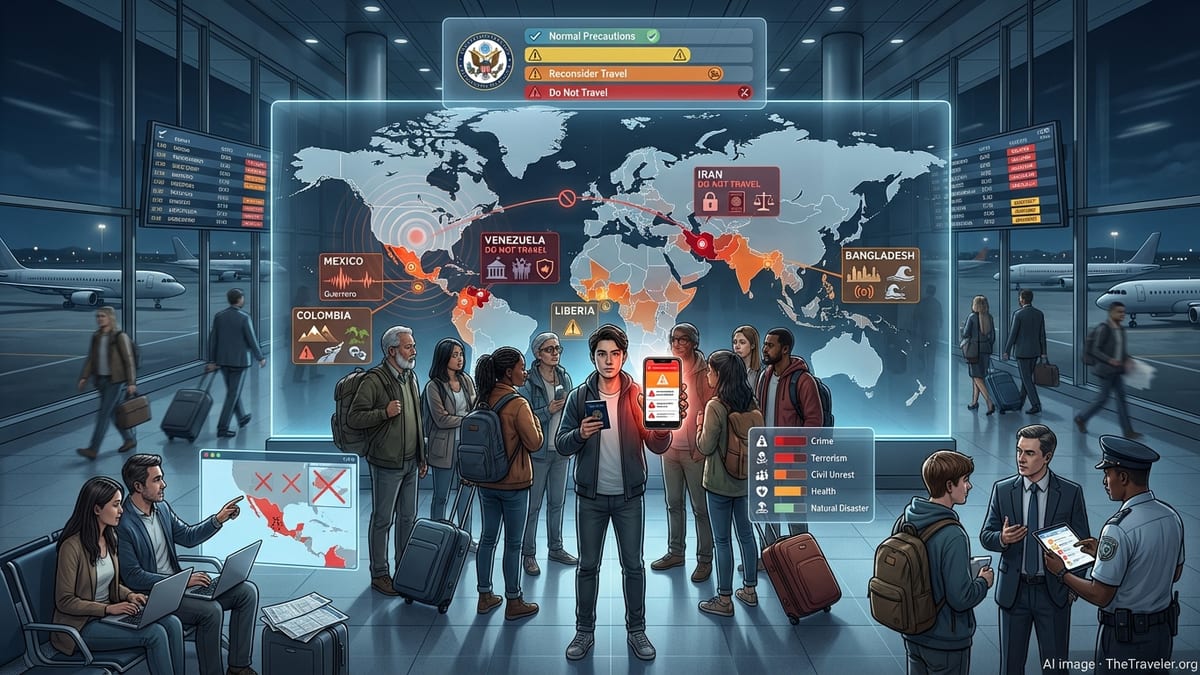
The U.S. Department of State has issued a rare worldwide caution urging Americans traveling or living abroad to exercise increased vigilance, citing heightened global tensions and the potential for attacks or disruptions targeting U.S. interests and locations associated with American travelers.
Get the latest news straight to your inbox!
Rare Global Alert Highlights Heightened Risk Environment
The latest worldwide caution, published on the State Department’s official travel advisory platform, advises Americans across all regions to be more alert to security threats when they leave the United States. Publicly available information describes a risk environment shaped by ongoing conflict in the Middle East, concerns about potential retaliation by state and nonstate actors, and the possibility of opportunistic attacks against visibly U.S.-linked targets.
Coverage by outlets such as Travel + Leisure and other travel industry publications notes that worldwide cautions are far less common than country-specific advisories and tend to appear during periods of exceptional geopolitical strain. Recent reporting links the current alert to fears that groups aligned with Iran or hostile to U.S. policy could look for “soft targets,” including tourist areas, transportation hubs, and venues where Americans are likely to gather.
The State Department’s advisory framework has also evolved in recent years, with every country already assigned a standing risk level. The new global message does not replace those individual ratings but instead overlays an additional layer of caution, indicating that even destinations considered relatively stable may face abrupt changes in security conditions.
What the Worldwide Caution Means for Travelers
The worldwide caution urges U.S. citizens overseas to maintain a higher level of situational awareness, avoid large demonstrations, and stay alert to the possibility of sudden disruptions, including airspace closures and flight cancellations. Public guidance emphasizes that security incidents can unfold with little or no warning and may temporarily affect airports, public transit, or border crossings.
Travel-focused coverage explains that the alert is not a blanket instruction to cancel trips, but rather a signal that travelers should be ready to adjust plans quickly. That can include building more flexibility into itineraries, allowing extra time for connections, and monitoring local news and official security updates more closely than usual.
The worldwide caution also highlights an elevated risk around locations that can be easily identified with the United States. According to published summaries of the advisory, such sites may include U.S.-branded hotels and restaurants, major international chains popular with Americans, and areas close to diplomatic facilities. Travelers are encouraged to be discreet about their movements, avoid advertising precise routines, and reconsider visits to crowded locations if tensions appear to be rising.
How This Alert Fits into the State Department’s Advisory System
According to publicly available information on the State Department’s travel advisory pages, each country is assigned a level from 1 to 4, ranging from “exercise normal precautions” to “do not travel.” These advisories reference specific concerns such as crime, civil unrest, terrorism, health risks, kidnapping, or wrongful detention, and they are updated as conditions change.
The worldwide caution sits above this country-by-country system and is designed to address risks that cut across regions. Analysts who track travel policy note that similar global alerts have previously been issued following major terrorist incidents, targeted killings, or sudden escalations in conflict involving U.S. forces or partners. In those instances, the State Department has sought to prepare travelers for a period in which anti-U.S. sentiment could spike in multiple locations at once.
Travel writers and security commentators point out that while many destinations remain open and functioning normally, the global alert signals that even traditionally low-risk regions are not fully insulated from events elsewhere. Travelers are therefore encouraged to read both the worldwide caution and their specific destination’s advisory in tandem, treating them as complementary pieces of guidance rather than separate or conflicting messages.
Practical Steps Recommended for Americans Overseas
Public guidance issued through official channels outlines several concrete steps Americans can take to better manage risk under the current worldwide caution. Travelers are urged to review the detailed advisory for each country on their itinerary, paying particular attention to sections on terrorism, civil unrest, and localized restrictions on movement. Those planning multi-country trips are encouraged to consider how an incident in one region might affect flight routes or land borders elsewhere.
Security information documents from the Bureau of Consular Affairs recommend that U.S. citizens share their itineraries and contact details with trusted family or friends, and keep copies of important documents, including passports and visas, in secure but accessible places. Observers also underline the value of having a backup communication plan, such as secondary messaging apps or offline copies of key phone numbers, in case local networks are disrupted.
Enrollment in the Smart Traveler Enrollment Program, commonly known as STEP, is also highlighted across publicly available resources as a key protective measure. Once registered, travelers can receive targeted alerts from the nearest U.S. embassy or consulate and can be easier to reach if emergencies occur. Travel industry commentary notes that STEP messages often provide more localized detail than global media coverage, including information on curfews, road closures, or specific neighborhoods to avoid.
Balancing Caution with Continuing Demand for International Travel
Despite the elevated risk language, early responses from airlines, tour operators, and travel analysts suggest that most international travel is continuing with relatively limited disruption. Data referenced in industry reports indicates that U.S. outbound travel demand remains strong, with many travelers opting to proceed with planned trips while building in additional safety measures and flexibility.
Travel experts quoted in consumer-facing coverage emphasize that risk is not uniform across all destinations and that the worldwide caution should be interpreted as a call for informed decision-making rather than a universal halt to travel. They advise prospective travelers to look at destination-specific advisories, consider their own risk tolerance, and consult reputable news sources for context on regional developments.
For Americans already abroad, the message is to stay informed, stay connected, and stay prepared for change. By closely monitoring official advisories, remaining aware of their surroundings, and having contingency plans in place, U.S. travelers may be better positioned to navigate an uncertain security landscape while still pursuing essential trips and long-planned journeys.