


More news on this day
Travelers heading to the Gulf are being urged to reassess plans after the UK Foreign, Commonwealth and Development Office updated its advice for Bahrain and Kuwait, warning of elevated risks linked to escalating tensions between the United States and Iran.
Get the latest news straight to your inbox!
Heightened warnings for Bahrain and Kuwait
Updated Foreign Office guidance now highlights Bahrain and Kuwait as among the Gulf states most exposed to spillover from the latest phase of the US Iran confrontation, following fresh attacks and counterstrikes since early July. The UK advisories underline an increased threat to infrastructure linked to United States interests, as well as the possibility of further missile and drone activity in and around major urban areas.
In Bahrain, the latest travel advice points to recent strikes in the region and notes that facilities associated with US military and civilian operations have been targeted in past incidents. The presence of the US Navy’s Fifth Fleet headquarters in Manama continues to place the kingdom close to the heart of the broader stand off, and public guidance now stresses heightened vigilance in the capital and key commercial districts.
For Kuwait, the Foreign Office also flags recent regional attacks and the country’s proximity to areas of active military operations. Publicly available advisories describe an environment in which further strikes cannot be ruled out at short notice, particularly against locations associated with US deployments or logistics.
Both sets of guidance emphasise that overall security conditions can deteriorate rapidly and that travelers should monitor official updates closely, ensure their documents are in order and keep departure plans under review in case commercial options become limited.
US Iran tensions reshape the regional risk map
The sharper tone of the UK warnings comes against a backdrop of renewed confrontation between Washington and Tehran, which has included strikes on Iranian assets and retaliatory attacks on sites in several Gulf states since late February. Open source reporting indicates that targets in Bahrain and Kuwait have been struck or threatened on multiple occasions, reinforcing concerns that the two countries sit on the front line of any further escalation.
International coverage describes a pattern in which Iran and aligned groups have aimed drones and missiles at infrastructure associated with US forces and their partners around the Gulf. Bahrain’s role as a key maritime hub and host to US naval facilities, and Kuwait’s position as a longstanding logistics platform for American operations, have placed both states under particular scrutiny in recent months.
Regional statements collected by media outlets show that neighbouring countries, including the United Arab Emirates and Qatar, have publicly condemned attacks on Bahrain and Kuwait and characterised them as a serious threat to Gulf security. United Nations material on the unfolding crisis has also referenced incidents in both states when outlining the wider impact of the US Iran confrontation on shipping, energy infrastructure and civilian areas.
Analysts cited in think tank assessments argue that as long as tensions between Washington and Tehran remain unresolved, Gulf states hosting US military assets will face elevated strategic risk, even if they are not directly party to the conflict.
Impact on flights, airspace and travel logistics
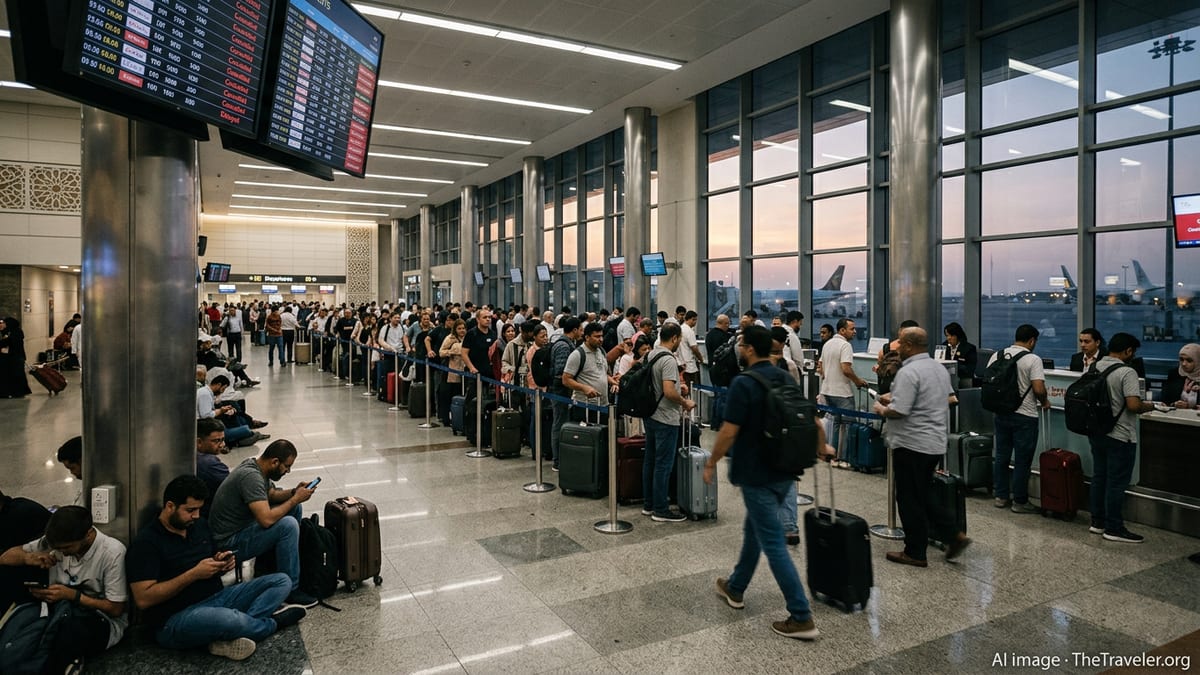
The Foreign Office updates arrive amid wider disruption to travel across the region. Industry circulars and government advisories referenced in recent coverage note that airspace closures and restrictions have periodically affected Bahrain and Kuwait since the outbreak of hostilities, with some airlines rerouting or suspending services during peaks in military activity.
Aviation safety guidance from European and other regulators has in recent months advised operators to exercise caution in Gulf airspace, including sectors controlled by Bahrain and Kuwait, due to the risk posed by long range weapons and misidentification. In earlier phases of the crisis, documents circulated to corporate travel managers recorded temporary closures above several Gulf states and warned of possible short notice changes to overflight permissions.
Travel insurers and corporate security providers have responded by revising risk ratings for Bahrain and Kuwait, often aligning them with government advisories that encourage only essential travel. Some policy documents indicate that coverage may be limited or subject to additional conditions for trips routed through high risk airspace or destinations under formal “reconsider travel” style warnings.
For individual travelers, the evolving situation means it is increasingly important to confirm airline schedules close to departure dates, check whether transit routes cross restricted zones and understand how policy exclusions might apply if flights are cancelled or diverted for security reasons.
Guidance for leisure and business travelers
While the Foreign Office has not issued a blanket prohibition on visiting Bahrain or Kuwait, its latest language signals that trips should be carefully evaluated. Publicly available advice suggests that travelers consider whether journeys are essential, avoid demonstrations or large gatherings, and stay alert to any unusual security activity near hotels, shopping malls or government related facilities.
Business travelers and corporate travel planners are being encouraged, in open source security briefings, to conduct updated risk assessments for projects in Bahrain and Kuwait. Recommendations typically include establishing clear communication channels with local partners, identifying shelter locations within accommodation and offices, and planning for staff extraction should commercial flights be temporarily suspended.
For tourists, many governments now advise that itineraries remain flexible, with refundable bookings where possible and contingency plans in case of rapid changes to airspace or border controls. Travelers are also being urged to register their presence with relevant consular services so they can receive alerts if the security environment shifts.
Families with children or travelers with medical needs are often advised, according to publicly available checklists, to give particular weight to the potential for disruptions to healthcare access, medication supply and airport operations when deciding whether to proceed with non essential travel to the region.
What the latest moves signal for Gulf travel
The Foreign Office revisions for Bahrain and Kuwait form part of a broader pattern of increasingly cautious government messaging on Gulf travel during the current US Iran standoff. Similar but not identical updates have emerged from other Western and Asia Pacific countries, whose travel advisories frequently echo core themes of possible missile and drone activity, cyber threats to infrastructure and intermittent disruption to air connectivity.
For the wider travel industry, the tightening of advice on Bahrain and Kuwait may reinforce a shift in demand toward alternative hubs perceived as less exposed to direct military risk, at least in the short term. Travel consultancy reports note that airlines and hotel operators across the region are monitoring booking trends closely, with contingency plans in place for rapid capacity adjustments.
At the same time, the Gulf’s role as a critical transit corridor between Europe, Asia and Africa means that airlines and authorities are likely to seek ways to maintain viable routes while responding to evolving security assessments. Any further deterioration in the US Iran relationship would, observers suggest, increase the likelihood of more stringent restrictions affecting Bahrain, Kuwait and neighbouring states.
For now, prospective visitors are being urged by multiple governments and security analysts to treat Bahrain and Kuwait as highly dynamic environments, to follow official travel advice closely and to prepare for the possibility that plans may need to change at short notice as events unfold.