


More news on this day
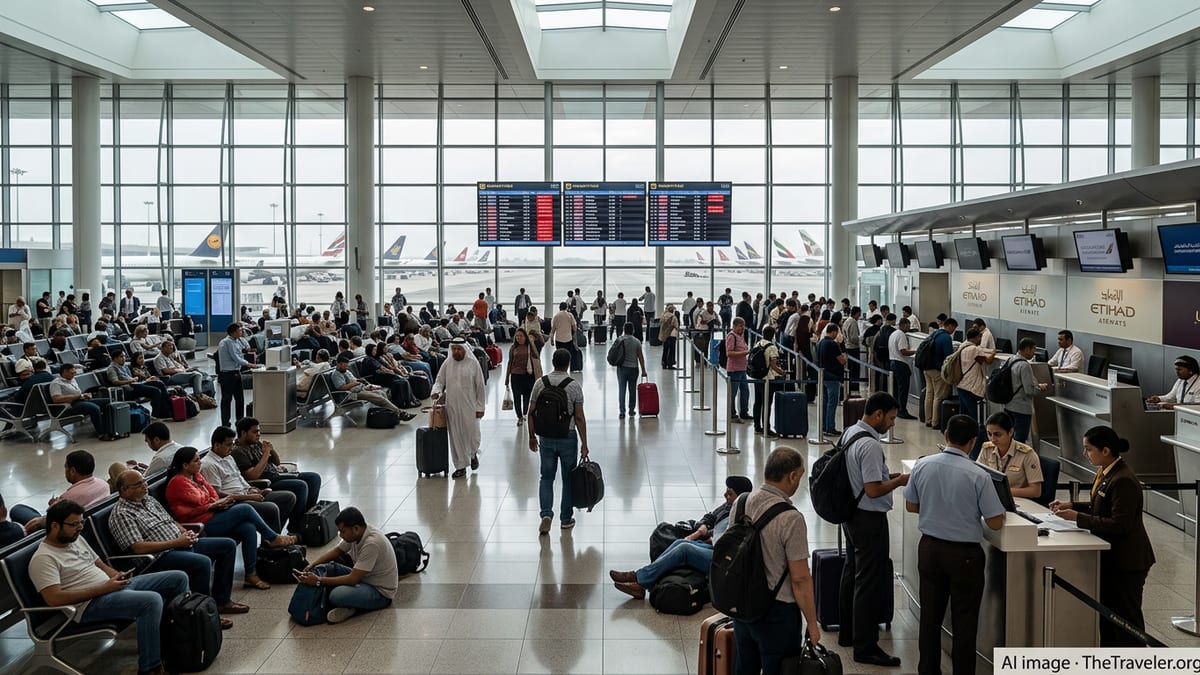
Fresh disruption data from late summer 2026 is highlighting the Gulf’s ongoing vulnerability to sudden schedule breakdowns, with one widely cited snapshot showing 490 flight delays and about 70 cancellations across key Middle East gateways within a 24-hour period.
Get the latest news straight to your inbox!
What the latest disruption numbers show
Published coverage tracking daily operations around major Gulf and regional hubs has circulated multiple high-disruption days across August 2026, with delay-heavy patterns emerging even when cancellations stay comparatively contained. Separate tallies published for different dates in August and early September show the same theme: delays spike first, then cancellations rise when crews and aircraft rotations can no longer be recovered within the day.
The “490 delays and 70 cancellations” framing appears as part of a broader set of rolling disruption reports across the region, including days where delay totals are far higher. In the same late-summer window, other published counts have pointed to 882 delays and 70 cancellations on a different date, and to more than 1,600 delays with 70 cancellations on another day, suggesting the headline figures can vary sharply depending on which 24-hour window and tracking method is being referenced.
Across these reports, the same airports recur as pressure points: Dubai International, Doha’s Hamad International, Abu Dhabi’s Zayed International, and major Saudi hubs including Riyadh’s King Khalid International. The pattern reflects how a disruption at a single Gulf hub can cascade into missed connections and aircraft out-of-position problems across multiple continents within hours.
Why delays are outpacing cancellations in 2026
In 2026, airspace avoidance and corridor congestion have been recurring operational constraints in the Gulf and surrounding region. Published travel and aviation coverage has described airlines adjusting routings away from higher-risk airspace, which can lengthen flight times, compress turnarounds, and reduce schedule resilience. When the network is already tight, longer routings can translate directly into late arrivals, late departures, and rolling reactionary delays.
Industry analysis has also emphasized how concentrated long-haul transfer flows are through a small number of Gulf hubs, magnifying the knock-on effects of even modest disruption. Cirium analysis earlier in the year described the degree to which major Gulf carriers carry a significant share of intercontinental connecting passengers, meaning operational friction at one hub can quickly become a multi-region problem.
The result is a delay-first system: airlines and airports often attempt to operate most flights, pushing departures later rather than canceling, especially on high-demand days. Cancellations tend to climb when aircraft rotations break, crews hit duty-time limits, or arrival slots and airport stand availability become too constrained to recover the timetable.
Where disruption has been most visible for travelers
UAE-based outlets have published repeated “flight updates” through July and August 2026 describing rolling changes affecting selected Gulf routes, including short-notice delays, temporary suspensions, and cancellations tied to the regional security environment and operational assessments. These updates have frequently highlighted services to nearby Gulf destinations as among the most likely to see adjustments on specific days.
At the same time, publicly available coverage indicates that many days still see the majority of flights operating, even while certain city pairs or time blocks experience concentrated disruption. That unevenness is part of what makes the numbers difficult for travelers to interpret: a headline disruption tally can be driven by a handful of bottlenecks at peak times, while many other flights on the same day operate normally.
Another factor in late summer is seasonality. August is a high-load month for leisure and visiting-friends-and-relatives travel, and heavy passenger volumes can expose weak points in the schedule when airspace, weather, or staffing constraints appear simultaneously. Even when the root cause is not widely visible to passengers, the experience on the ground is straightforward: late departure screens, tighter connection windows, and rebooking queues that grow quickly when multiple inbound flights arrive late at once.
What travelers can do right now to reduce risk
For travelers transiting Gulf hubs during disruption-prone periods, the most practical step is to treat same-day connections as fragile. A longer layover can reduce missed-connection risk when arrival times become less predictable, particularly for itineraries that rely on a single daily departure to a final destination.
It also helps to separate what can be controlled from what cannot. Travelers can confirm the operating status of each flight segment before leaving for the airport, ensure contact details are updated in airline bookings, and keep essential items in carry-on luggage in case checked bags are delayed by aircraft swaps or rebookings.
On the policy side, disruption waves can trigger flexible rebooking options and refunds that vary by airline and fare type. Travelers should check the airline’s published travel advisories and their booking conditions before making changes, and keep documentation of itinerary changes and out-of-pocket costs if rebooking or overnight stays become necessary.
How the disruption picture could evolve through the rest of 2026
Published reporting and industry commentary in mid-to-late 2026 has pointed to an environment where recovery is uneven and sensitive to fresh shocks. Some Gulf airports and carriers have shown partial rebounds toward earlier capacity patterns on certain measures, while other markets remain constrained by airspace decisions, scheduling conservatism, and the ripple effects of longer routings.
Travel pricing is part of the picture. Gulf-based business coverage has described the possibility of elevated fares through much of 2026, tied to longer flight paths, higher operating costs, and reduced capacity in certain corridors. Even where schedules stabilize, airlines may keep buffers or maintain conservative route planning if risk conditions stay fluid.
For passengers, the practical takeaway is that disruption in the Gulf in 2026 is not solely about cancellations. The more common trip-killer is the long delay that breaks a connection or forces an involuntary reroute. As long as airspace constraints and network fragility persist, the region’s hub-and-spoke model can still deliver smooth trips on many days, but remains prone to sudden, high-visibility spikes like the latest “490 delays and 70 cancellations” snapshot.