


More news on this day
UK travellers faced widespread airport disruption this month after a technical issue in the national air traffic control system triggered mass delays and flight cancellations, with knock-on impacts continuing as airlines reposition aircraft and rebook passengers.
Get the latest news straight to your inbox!
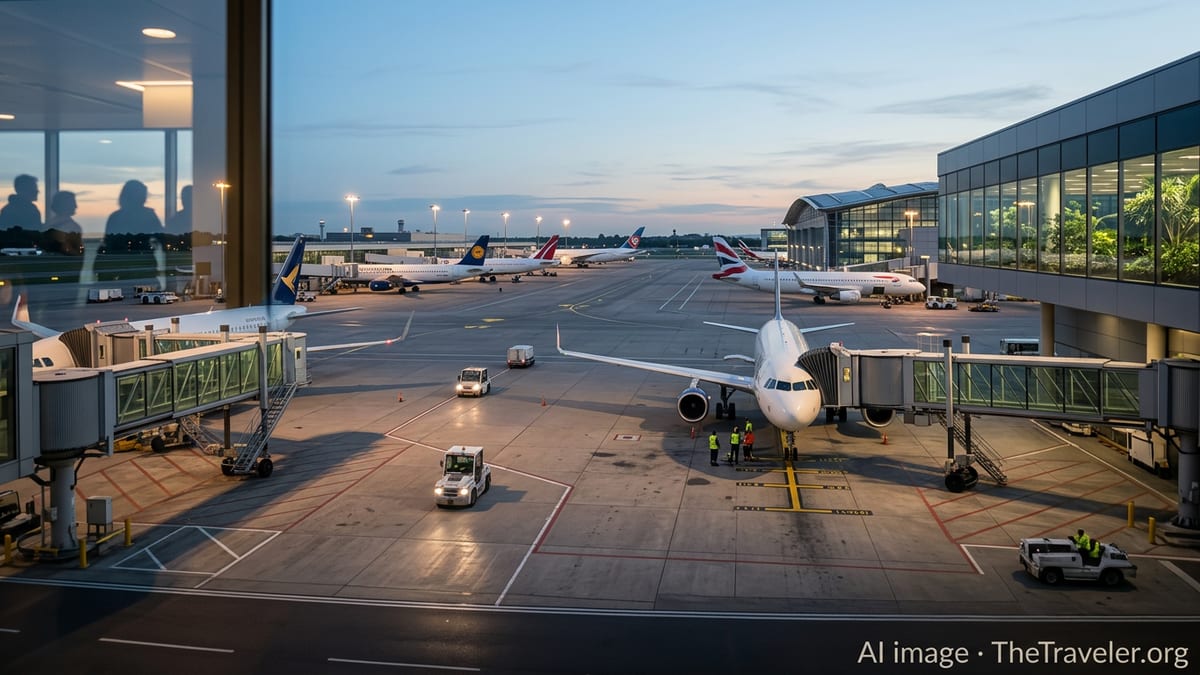
What happened and why disruption can linger
Published coverage indicates a technical problem affected the UK’s air traffic control network on Tuesday, September 8, 2026, prompting airlines and airports to slow or suspend operations as schedules rapidly fell out of sequence. Reports described flights being held on taxiways and in terminals, with cancellation totals running into the thousands across the country over the course of the disruption and the recovery period.
Air travel can take days to normalize after a systemwide interruption because aircraft and crews end up in the wrong place, inbound flights are diverted, and departure “slots” must be rebuilt. Even when departures restart, airports can remain congested and airlines may need to consolidate services, swap aircraft types, or cancel rotations to restore network balance.
Airports affected in published reports included London hubs and large regional airports, with some sites issuing passenger updates advising travellers to keep checking flight status directly with their airline and to arrive in line with airline instructions.
Holafly expert: staying connected is now part of disruption planning
A Holafly connectivity specialist has urged travellers to treat reliable mobile data as a core part of any disruption plan, alongside insurance and flexible bookings. The reasoning is straightforward: when flights change quickly, travellers often need real-time access to airline apps, booking references, digital boarding passes, payment tools, maps, and customer-service channels that may be difficult to use on overloaded public WiFi.
Holafly’s published guidance for travellers emphasizes setting up an eSIM carefully to avoid accidental activation before a trip, and then switching it on when needed. Holafly instructions also highlight that users typically need to enable the eSIM line, select it for mobile data, and turn on data roaming in the device settings once they are ready to use it.
For passengers caught mid-journey, the practical value of mobile data is less about streaming and more about resilience: receiving gate-change notifications, arranging ground transport when rail links are busy, and rebooking quickly when seats on alternative flights are disappearing. Holafly has also described a safety-net feature that can provide limited emergency data after a plan ends, intended to help users avoid being stranded without connectivity during critical moments.
Your rights in the UK: care, rerouting, refunds, and complaints pathways
Publicly available UK Civil Aviation Authority guidance explains that passenger protections apply to flights departing from the UK, and to certain inbound flights depending on the airline. In disruption, airlines have duties that can include offering rerouting or a refund in cancellation situations, and providing “right to care” support such as meals, refreshments, and accommodation for overnight delays when appropriate.
Compensation is more nuanced. The CAA’s published material notes that fixed-sum compensation under UK261 may not be payable when disruption is caused by “extraordinary circumstances” that could not have been avoided even if reasonable measures had been taken. That means travellers may receive care and assistance while waiting, even when compensation is disputed.
If a passenger believes an airline has not met its obligations, CAA guidance outlines escalation routes. Depending on the carrier, complaints may be eligible for Alternative Dispute Resolution, or they may be handled through the CAA’s Passenger Advice and Complaints Team process if the airline is not in an ADR scheme.
The CAA also warns about a common pitfall during disruption: self-transfer itineraries booked as separate tickets. Where travellers have stitched together separate bookings, statutory rights to care, compensation, or onward transport to the final destination may not apply if the first delay causes a missed later flight.
Practical moves travellers can make right now
During live disruption, speed and documentation matter. Travellers typically benefit from checking both airline notifications and airport updates, keeping boarding passes and receipts, and saving screenshots of delay or cancellation notices. That documentation can help with later reimbursement claims for reasonable expenses or for formal complaints if required.
Rebooking strategy can also reduce stress. When cancellations spread, flights on the same route can sell out quickly, and rebooked itineraries may involve different airports. Travellers can improve odds by considering nearby London airports or rail alternatives for domestic legs, while double-checking baggage rules and connection times if rerouted via a different hub.
Connectivity planning is a simple, concrete step many travellers can take before reaching the terminal. Holafly’s own setup guidance recommends installing an eSIM in advance where appropriate, then activating it at the right time by enabling the travel line and data roaming, so passengers are not relying solely on airport WiFi during a fast-moving schedule meltdown.
What to watch next as the UK strengthens passenger protections
Beyond the immediate disruption, UK aviation policy is moving toward stronger enforcement of passenger-rights obligations. Government-published updates earlier in 2026 outlined plans to modernize aviation rules and give the CAA additional enforcement powers, including the ability to issue fines when airlines and airports fail to meet passenger-rights requirements.
For travellers, the near-term takeaway is that the rules already in place can be useful if applied correctly: ask the airline for rerouting or refunds when eligible, request care when waiting, and keep records. And as disruption events increasingly involve complex, systemwide causes, the best outcomes often go to passengers who can act quickly, stay connected, and keep their options flexible.