


More news on this day
Air travel across the Gulf is facing renewed disruption as heightened tensions between the United States and Iran trigger fresh security alerts in Bahrain, Qatar and Kuwait, only days after President Donald Trump declared the US-Iran ceasefire "over."
Get the latest news straight to your inbox!
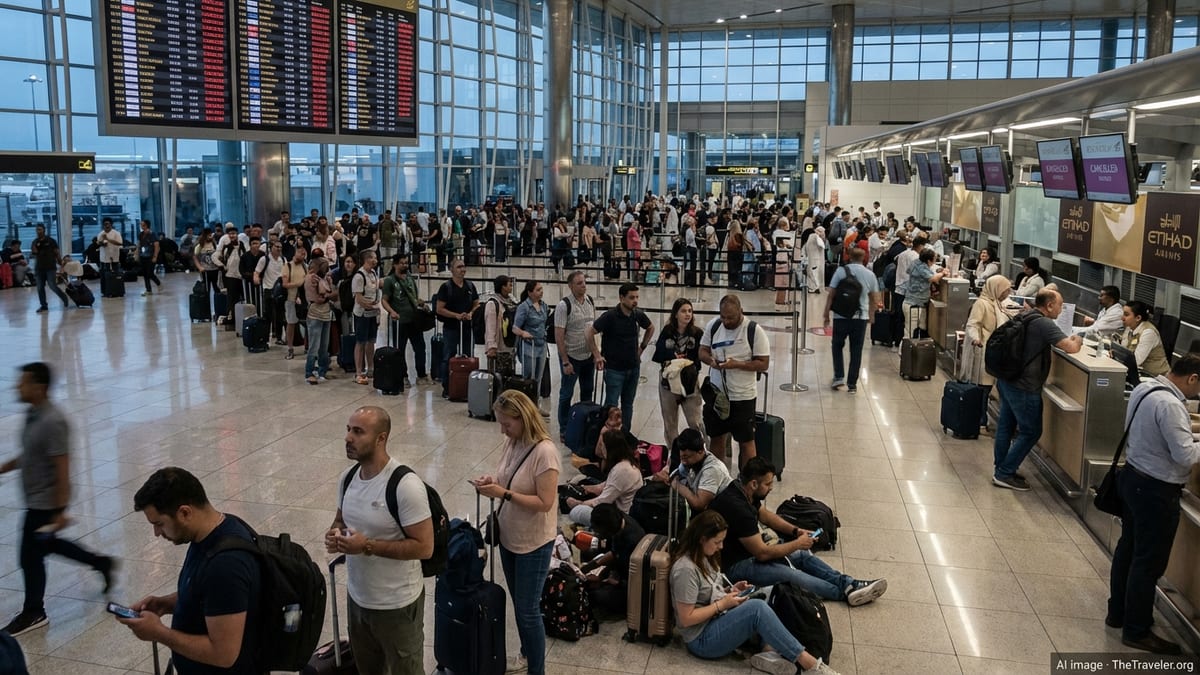
Flight disruption radiates from Dubai across regional hubs
Major carriers operating through Dubai and other Gulf hubs are adjusting schedules and rerouting aircraft as military activity and security alerts ripple across the region. Dubai International Airport, one of the world’s busiest long-haul gateways, has already seen a growing number of delayed and diverted services as airlines move to avoid sensitive airspace and reassess overflight corridors.
Publicly available flight-tracking data shows aircraft skirting large parts of airspace near recent strike zones and reported missile trajectories. Analysts note that reroutes around the northern Gulf and the Strait of Hormuz lengthen flight times between Europe, Asia and Oceania, adding fuel costs and compressing already tight connection windows for transit passengers.
While most operations at Dubai and Abu Dhabi remain functional, passengers are being advised to check their flight status frequently and allow extra time for security screening and rebooking. Industry observers say the pattern is reminiscent of previous spikes in regional tension, when airlines temporarily shifted night-time schedules and consolidated frequencies to manage uncertainty.
Travel agents report a rise in inquiries from passengers seeking to change routings away from the Gulf or to split journeys via alternative hubs, particularly for non-essential business trips and leisure travel. However, the Gulf’s strategic location between continents means many long-haul travelers still have limited alternatives to the big Middle Eastern transit hubs.
Bahrain, Qatar and Kuwait issue heightened security alerts
Security postures in Bahrain, Qatar and Kuwait have been raised following the latest exchange of strikes between US forces and Iran-linked targets. Published coverage from the region points to air raid warnings and reports of intercepted projectiles over or near several Gulf states in recent days, prompting authorities to tighten protective measures around airports, ports and key infrastructure.
In Bahrain and Kuwait, where US military facilities form part of the regional security network, recent attacks and attempted attacks have underscored the proximity of critical aviation assets to potential targets. Public information from regional civil aviation authorities indicates that contingency protocols for airspace restrictions and temporary route closures are in place should the security situation deteriorate further.
Qatar, home to Doha’s Hamad International Airport and a dense network of connecting flights, has also been monitoring the evolving risk environment. Airlines serving Doha are maintaining operations but have built in additional buffers for potential delays and ground holds, particularly during periods of heightened alert when military movements increase.
Travel risk specialists note that, even when airports remain open, security alerts can cause rolling knock-on effects, from temporarily suspended takeoffs and landings to changes in the availability of airport transport links and hotel capacity for disrupted passengers.
Trump’s ceasefire remark reignites concern over Gulf airspace
The latest disruption follows a sharp escalation in rhetoric and military activity after President Trump said on July 8 that, in his view, the ceasefire between the United States and Iran was “over.” His comments, made on the sidelines of a NATO summit in Ankara, came amid renewed US airstrikes on Iranian targets and responsive attacks attributed to Tehran on sites in Bahrain and Kuwait.
The ceasefire, reached in June as part of an interim understanding to halt hostilities in the Gulf and reopen negotiations, had prompted cautious optimism among airlines that had begun to normalize routing and capacity planning. Trump’s statement has revived fears that the conflict could slide back into a more volatile phase, putting civilian aviation routes once again closer to active military operations.
According to international aviation safety assessments, commercial airlines typically rely on a patchwork of government advisories, insurer guidance and real-time military liaison channels when deciding whether to overfly conflict-affected areas. The perception that a truce has collapsed, even if some talks continue, tends to shift those risk calculations toward more conservative routing.
Market observers point out that previous incidents in the wider region, where missiles or drones have strayed near civil aviation corridors, have led to abrupt closures of airspace and rapid, large-scale rerouting. As a result, any suggestion that hostilities could broaden or become less predictable is enough to influence airline decisions days or even weeks in advance.
Travelers face longer journeys, higher fares and shifting advice
For passengers traveling via Dubai, Doha or other Gulf hubs, the most immediate impact is likely to be longer flight times and a greater risk of missed connections. Carriers that choose to avoid certain flight information regions often add significant detours, particularly on Europe–Asia and Asia–North America routes that would normally pass closer to the Strait of Hormuz or the northern Gulf.
Higher fuel consumption and additional crew time associated with these detours can filter through to airfares if disruptions persist. Some airlines may also opt to trim capacity or consolidate frequencies on marginal routes to preserve operational resilience, which can reduce flexibility for travelers seeking last-minute changes.
Travel industry guidance emphasizes the importance of maintaining up-to-date contact details with airlines and booking platforms so passengers can receive real-time notifications of schedule changes. Many carriers have introduced limited waivers for date or routing changes on itineraries passing through the most affected hubs, particularly for departures over the coming days.
Insurance coverage is another concern. Policies that include “known event” or war-risk exclusions may limit compensation for new bookings made after the latest escalation became widely reported, while some premium products continue to offer broader protection. Travelers are being encouraged to read policy wording carefully and, where possible, select flexible tickets that can be changed without heavy penalties.
Outlook for Middle East aviation as tensions evolve
How long the current disruption will last depends heavily on whether the security situation stabilizes or deteriorates in the coming days. Analysts tracking the US-Iran confrontation say that, even if both sides avoid a full-scale break from existing understandings, sporadic strikes and harsh rhetoric could keep risk levels elevated over the Gulf for some time.
For Dubai and its regional peers, the episode is another reminder of the vulnerability of hub-and-spoke aviation models to geopolitical shocks. The Gulf’s leading airports and airlines have built robust contingency plans and have experience managing route diversions, but repeated disruptions can erode traveler confidence and complicate long-term planning for fleet deployment and network growth.
At the same time, the region’s connectivity remains vital for global trade and tourism, from business links between Europe and Asia to holiday traffic to Indian Ocean destinations. Industry observers expect that, unless there is a severe deterioration that forces prolonged airspace closures, Gulf hubs will strive to maintain as much of their scheduled operation as safety considerations allow.
For now, travelers transiting the Middle East are being urged by travel advisers to remain flexible, monitor official airline channels closely and build extra time into their itineraries, recognizing that the map of safe and efficient routes across the Gulf can change with little warning as the US-Iran confrontation enters a new and uncertain phase.