


More news on this day
Paris is accelerating the rollout of bank card payments across its metro network following a first deployment at Orly Airport, positioning the French capital to join other major cities that let riders tap a contactless card or phone directly at transit gates.
Get the latest news straight to your inbox!
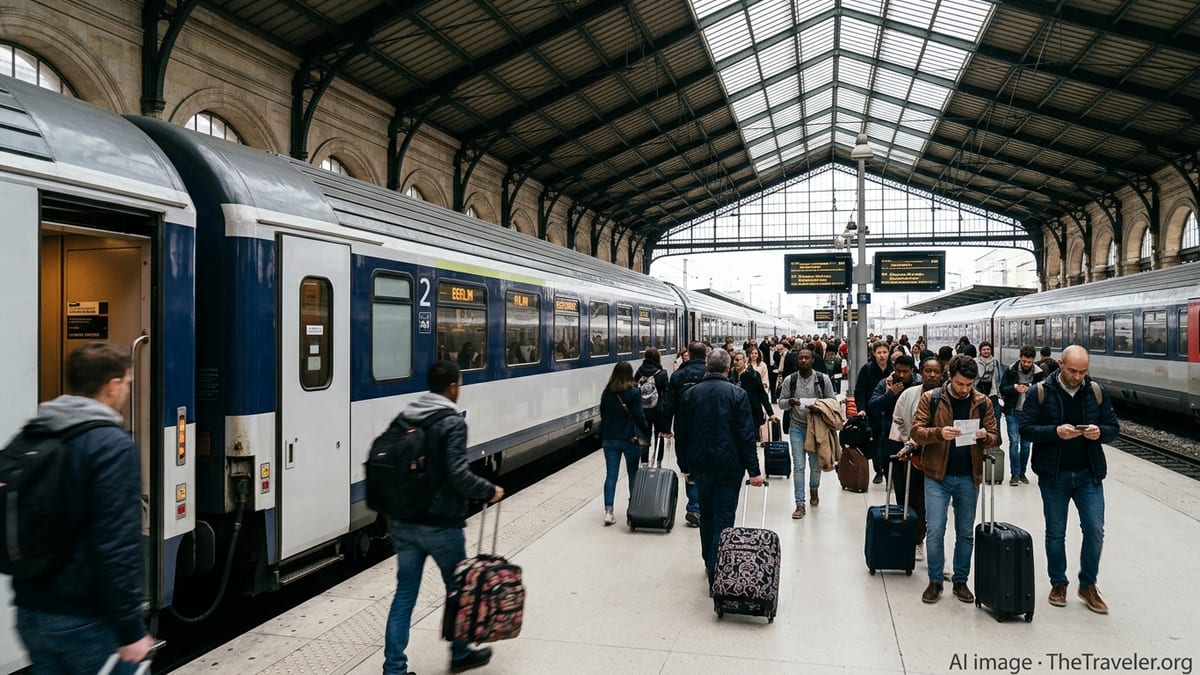
From Orly pilot to wider metro rollout
Contactless bank card payments were first introduced at the new Orly Airport station on Metro Line 14 on 30 June 2026, giving arriving passengers a way to exit the station simply by tapping a bank card, phone or connected watch at the gate if they did not already hold a valid airport ticket. Publicly available information shows that the system recognises Visa, Mastercard and CB contactless products, including those stored in digital wallets.
The service at Orly is currently configured at the station exits and is linked to the dedicated Paris Region Airport ticket. Each tap is charged at the airport fare, which regional transport authorities have set at a flat rate identical to the paper or mobile ticket for trips between central Île de France and the airports.
According to published coverage from regional transport operator Île de France Mobilités, the Orly deployment is framed as both a trial and an early showcase for a more ambitious shift away from magnetic tickets and proprietary cards. The agency has described the bank card option as a way to help infrequent users and tourists regularise their journey without navigating ticket machines after a long flight.
Initial feedback highlighted that the Orly gates can handle multiple taps for small groups, within a capped number of validations per terminal. That design is intended to simplify travel for families or companions arriving together while still associating each journey with an individual contactless payment.
Planned expansion across key metro lines
Regional transport plans indicate that the Orly experiment is only the first step. Île de France Mobilités has outlined a programme to extend bank card validation to the busiest and most tourist-heavy lines of the Paris Metro, followed by a gradual network wide rollout by the end of the decade.
Press materials from the agency set out a timetable under which dedicated bank card payment terminals are due to appear from 2027 on Line 1, the central east west backbone serving many of the capital’s main landmarks. The same documentation points to further deployment on Lines 4, 14, 15 and 18 by the end of 2027, and on Lines 7 and 12 by the end of 2028, with the goal of comprehensive coverage of the metro and bus network by around 2030.
The broader programme sits alongside the existing Navigo smartcard, smartphone ticketing and products such as the Paris Visite tourist pass. Rather than replacing those options outright, bank card acceptance is positioned as an additional layer, particularly aimed at occasional visitors who may not wish to learn a local ticketing system for a short stay.
Reports indicate that Paris is following a trend already visible in cities such as London, New York and various North American and European networks, where so called open loop payments have cut the need for separate transit cards. In the case of Paris, the challenge has been to reconcile this approach with long standing Calypso based ticketing infrastructure.
Bus and tram experience informs metro changes
The metro expansion builds on two years of experience with bank card payments on the surface network. Service Public and regional announcements note that contactless payment terminals have already been installed on a large share of buses in Paris and the inner suburbs, allowing riders to buy a single on board ticket by tapping a bank card when they board.
Authorities have stated that more than a thousand buses are now equipped and that the entire bus network in Paris and the nearby “petite couronne” is scheduled to be fitted with these terminals by August 2026. That earlier rollout has given transport planners data on transaction flows, uptake by tourists compared with residents and the operational impact on boarding times.
Fare structures differ slightly between bank card purchases and standard tickets, with published information showing a small surcharge on single tickets bought via contactless card compared with the base tariff paid through Navigo or other media. Analysts note that this approach mirrors practices in several other cities, where convenience pricing is used to encourage regular users to migrate to passes while still keeping one off travel simple.
The Orly pilot therefore arrives in a context where many visitors have already encountered card payments on buses or the Montmartre funicular, softening the learning curve as similar terminals appear at metro gates.
Tourist convenience and fare integration at airports
The extension of Line 14 to Orly Airport in 2024 significantly reshaped ground access to the south Paris gateway, offering a direct, high frequency metro link between the airport and central Paris in around 25 minutes. The new bank card payment option is tightly integrated with the Paris Region Airport ticket, the unified fare introduced in 2025 for trips to both Orly and Charles de Gaulle.
Official fare notices describe that ticket as a single product valid across metro, RER and airport links within Île de France, priced identically whether loaded onto a Navigo card, purchased as a mobile ticket or, now, validated by bank card at Orly’s Metro 14 station. This alignment is designed to avoid confusion between different points of sale and to ensure that using a bank card at the gate does not penalise travellers with a substantially higher fare.
For airport passengers, especially those arriving from countries where open loop transit systems are already common, the Orly gates work in a familiar way. Travellers can go straight from baggage claim to the metro platforms and decide at the exit whether to tap a pre purchased ticket, a Navigo product or simply present a contactless card to pay for the trip.
Travel guidance notes that the service currently operates in a single direction at Orly, focusing on the exit to regularise journeys for people who boarded without an airport ticket. Future phases on other lines are expected to cover both entries and exits, enabling pay as you go travel across the network using bank cards alone.
Paris positions itself in the global race to tap in
Transport analysts observe that the expansion of bank card payments on the Paris Metro has become part of a wider modernisation strategy intended to simplify ticketing ahead of major events and rising visitor numbers. While Navigo smartcards and mobile tickets remain central for residents, the open loop initiative acknowledges that a growing share of tourists expect to pay for public transport with the same card they use in shops.
Comparisons with other cities suggest that once bank card validation is widely available, a significant portion of casual riders may shift away from paper tickets entirely. Regional planning documents explicitly reference a long term goal of phasing out remaining magnetic tickets, which have been a source of reliability and enforcement issues.
Industry observers also point to the potential benefits for international travellers, who often encounter difficulties with local ticket machines, unfamiliar fare zones or minimum top up amounts on transit cards. Being able to tap an existing card at the gate removes several friction points, although it depends on the card being compatible with international contactless standards.
As the Paris Metro prepares to spread bank card validation from its Orly test site to central lines and then the wider network, riders can expect a gradual transition period in which multiple options coexist. Over time, the simple gesture of tapping a bank card at the turnstile is set to become as closely associated with Parisian transport as it already is with networks in other global capitals.