


More news on this day
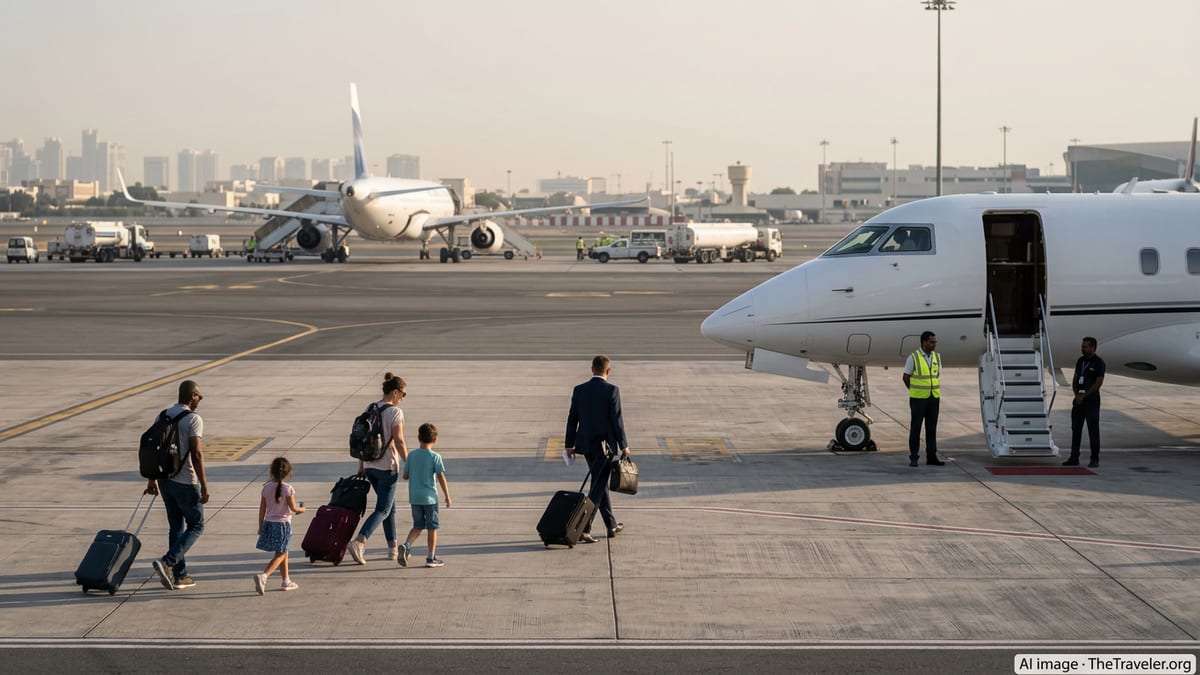
The United States government is urging its citizens across the Middle East to consider leaving the region or be ready to depart quickly, as new security alerts highlight the risk of sudden escalation, disrupted air travel and potential attacks on US-linked targets.
Get the latest news straight to your inbox!
Heightened Security Alerts Across the Region
Recent security alerts circulated by US diplomatic missions in the Middle East advise American citizens to exercise increased caution and to have contingency plans in place in case tensions escalate further. Publicly available information indicates that embassies and consulates in multiple Gulf and Levant countries have reposted updated messages in recent days, repeating guidance that Americans should consider departing while commercial options remain available.
The alerts emphasize that US citizens in the region may face sudden airspace closures, flight cancellations and wider travel disruptions. Messages reviewed by regional observers state that Americans should not rely on the availability of government-organized evacuations and instead plan for self-directed departures using commercial airlines or overland routes where feasible.
According to published coverage, US posts have framed the warnings as precautionary but serious, noting that diplomatic facilities themselves may be potential targets during any sharp deterioration in the security environment. The advisories stress that Americans should monitor local news, follow any instructions from local authorities and review the State Department’s country-specific travel advisories before moving around the region.
Travel industry analysts note that such broad, region-wide alerts are relatively rare and typically reflect concern about the possibility of rapid, hard-to-predict changes in the threat landscape, rather than a specific, publicly identified incident in any single country.
Which Countries Are Most Affected
Public information on the latest alerts points to a wide swath of affected territory, including traditional business and transit hubs as well as known conflict zones. Security messaging circulating on social platforms and in local media highlights posts from embassies in Bahrain, Iraq, Israel, Jordan, Kuwait, Lebanon, Oman, Qatar, Saudi Arabia and the United Arab Emirates, among others, amplifying Washington’s call for vigilance.
These alerts come on top of long-standing, high-level warnings already in place for several destinations. Official US travel advisories for Iran, Iraq, Lebanon, Syria, Gaza and Yemen have for some time classified these locations under the strictest “do not travel” category, citing risks from armed conflict, terrorism and civil unrest. For other regional states such as Bahrain, Israel, Jordan, Kuwait, Oman, Qatar, Saudi Arabia and the United Arab Emirates, guidance has generally been to “reconsider travel,” reflecting concern about potential spillover effects and targeted attacks.
For travelers already in these countries, the new messaging does not always mandate departure but frequently frames it as a serious option to weigh. In relatively stable Gulf hubs, for example, Americans are being told to be alert to the possibility that the security picture could change quickly, with local authorities tightening controls or restricting movement in response to regional developments.
In higher-risk locations, public commentary by security researchers suggests that Americans are being urged to stay away from protest sites, avoid nonessential travel outside major urban areas and ensure that identity documents and travel reservations are in order should they decide to leave on short notice.
Implications for Travelers and Expats
For US tourists, business travelers and long-term residents, the latest alerts raise urgent questions about whether to cut trips short or relocate temporarily. Travel risk consultants observe that the US government’s language, urging citizens to consider departing and to be prepared to leave, is a signal that conditions are viewed as volatile enough that commercial options could narrow with little warning.
Commercial airlines serving the region have already shown in past crises that they can rapidly cancel flights, adjust routes to avoid contested airspace or suspend service entirely on particular corridors. Travel specialists caution that even countries not directly involved in armed conflict can experience knock-on effects, such as temporary closures of airports or border crossings, if tensions rise sharply.
For Americans living and working in the Middle East, the decision calculus is more complex. Many hold long-term contracts, family ties or business interests that make immediate departure difficult. Corporate security managers quoted in recent media coverage indicate that companies with staff in the region are revisiting evacuation and hibernation plans, checking that employees have valid passports, access to emergency funds and clear internal communication channels.
Education and tourism sectors are also affected. Universities with US students on study-abroad or research programs are reassessing risk levels and contingency plans, while tour operators are reviewing itineraries and cancellation policies. Some have begun advising new clients to postpone nonessential travel into the most affected countries until there is greater clarity about the trajectory of tensions.
How Americans Are Being Advised to Prepare
Security specialists recommend that US citizens currently in the Middle East treat the latest alerts as a prompt to update personal safety planning. Publicly shared guidance from the State Department and travel-risk experts emphasizes the importance of registering travel plans with consular services, maintaining a charged mobile phone with local and international contact numbers, and keeping copies of key documents both physically and in secure digital form.
Americans are also being encouraged to review their routes to the nearest airports and land borders, identify at least one backup option and stay informed about any changes in commercial flight schedules. Travelers are advised to keep essential items packed and ready for rapid departure, including medications, basic supplies, emergency cash and bank cards that will work outside the region.
Families are urged to discuss meeting points and communication plans in case mobile networks are disrupted or if members become separated during a crisis. Travel advisers note that in past regional emergencies, information has at times moved more quickly through local news outlets and airline announcements than through official channels, making it important to monitor multiple sources.
Legal and insurance considerations are also in focus. Policy specialists point out that some travel insurance products may exclude coverage for acts of war or require policyholders to depart within a certain time frame after a government issues a high-level advisory for a destination. Americans weighing whether to remain or leave are being encouraged by consumer advocates to review their policies carefully and seek clarification from providers where needed.
What This Means for Future Travel to the Middle East
While the latest US alerts are framed as precautionary, travel industry observers expect short-term disruptions and a possible cooling of demand for leisure trips to parts of the Middle East if security risks remain elevated. Airlines and hotels that rely heavily on Western travelers may see booking patterns shift toward destinations perceived as more stable, at least in the near term.
At the same time, analysts note that regional hubs have a history of rebounding once tensions ease, with many travelers returning relatively quickly after previous periods of instability. Business travel in sectors such as energy, logistics and finance is often more resilient, though it may temporarily be limited to essential trips only, with stricter corporate approval processes.
For now, the central message from publicly available US government guidance is caution and preparedness rather than panic. Americans are being told to consider departing while regular travel options remain open and to avoid assuming that emergency evacuations will be organized if conditions deteriorate further. For those planning new trips, the advisories underscore the importance of carefully weighing risks, maintaining flexible itineraries and staying closely attuned to changing developments across the region.