


More news on this day
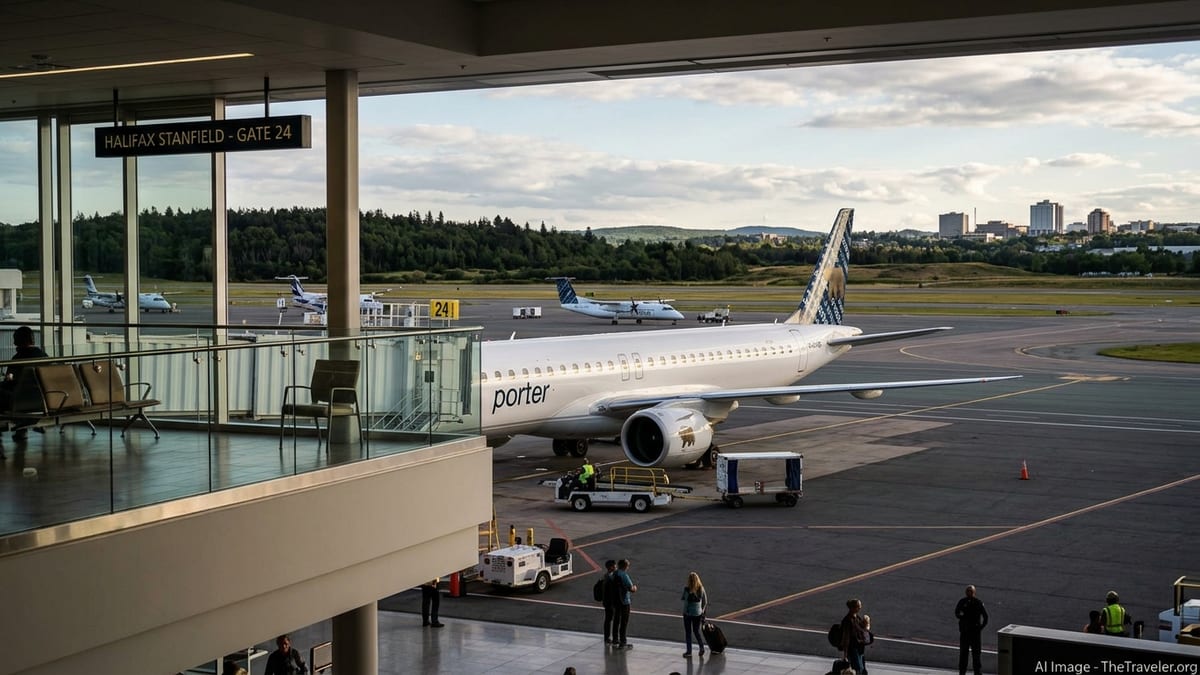
Halifax Stanfield International Airport and Porter Airlines have emerged as Canada’s top performers in TIME and Statista’s new World’s Best Airports 2027 and World’s Best Airlines 2027 rankings, using global passenger surveys and independent operational data to challenge assumptions that only the largest hubs and legacy carriers can come out on top.
Get the latest news straight to your inbox!
How TIME Ranked Airports and Airlines for 2027
The 2027 airport and airline lists are the first of their kind from TIME, produced with data firm Statista. For airports, Statista surveyed passengers across all continents between July and early September 2026, asking them to rate up to five airports they had used in the previous three years. Those satisfaction scores were combined with flight performance data from aviation analytics company OAG, covering more than 30 million flights operated between July 2025 and June 2026, to produce an overall rating for each airport.
The airport ranking is divided into size bands, with separate lists for major hubs, large airports, mid-sized facilities and small airports. Within these categories, airports are compared on reported satisfaction, punctuality and cancellation levels. TIME and Statista also excluded airports involved in critical safety violations or major accidents from the final list, so only facilities meeting basic safety standards are recognized.
The World’s Best Airlines 2027 list uses a similar structure, combining a multi-year global passenger survey with OAG’s operational data to evaluate both customer experience and reliability. TIME also publishes sublists, including Most Reliable Airlines, Best Airlines for Long-Haul Flights and Best Airlines for Business Travel, giving additional context to the overall rankings.
Halifax Stanfield Named Top Small Airport Worldwide
Within TIME’s small-airports category, Halifax Stanfield International Airport is ranked first worldwide, with a score of 93.60, making it the highest-rated Canadian airport in the 2027 tables rather than simply one of several strong performers. The small-airports list is limited to facilities handling fewer than 10 million passengers annually, a threshold that comfortably includes Halifax.
Recent figures from the Halifax International Airport Authority show that Halifax Stanfield handled just over 4.1 million passengers in 2025, around a 4 percent increase compared with 2024 as international travel continued to grow. Separate federal statistics also place the airport among Canada’s top 10 by passenger volume, but still well below the country’s largest hubs, which carry tens of millions of travelers each year.
Despite its mid-tier size, Halifax offers several features that may resonate in TIME’s satisfaction scores. It is an international airport with U.S. preclearance facilities, allowing travelers on eligible routes to complete American customs and immigration before departure rather than on arrival. The airport has also expanded its network to a record number of non-stop international destinations in recent seasons, including transatlantic links that give Atlantic Canada more direct access to Europe without backtracking through Toronto or Montreal.
Porter Becomes Top-Ranked Canadian Airline
On the airline side, TIME’s new World’s Best Airlines 2027 list places Porter Airlines 27th overall worldwide. That position makes Porter the highest-ranked Canadian carrier in the main list, ahead of larger domestic competitors such as Air Canada, WestJet, Air Transat and Flair, which appear further down the global table.
TIME and Statista identify Emirates as the overall number one airline in the 2027 ranking, with Gulf and Asia-Pacific carriers dominating the top 10. Among Canadian airlines, Air Canada does receive separate recognition on TIME’s Best Airlines for Business Travel sublist, where it is placed 18th. Porter does not appear on that particular sublist, reflecting differences in network focus and product, even as it outperforms its domestic peers in the general customer-satisfaction ranking.
The TIME results add to a growing collection of industry accolades for Porter. In 2026, for example, Skytrax named Porter the Best Regional Airline in North America, a separate award system based on its own methodology. While that Skytrax recognition and the TIME/Statista rankings are distinct, together they underline how a still-growing challenger brand can compete with long-established carriers on measures of passenger experience.
Why a Mid-Sized Airport and All-Economy Airline Score Well
The ranking formats mean that both Halifax Stanfield and Porter are evaluated against comparable peers rather than solely against the world’s largest hubs and global network airlines. In practice, though, their operational profiles may help explain why they perform strongly even within those adjusted categories.
Halifax Stanfield’s scale allows for a level of connectivity that is significant for Atlantic Canada while remaining more manageable than the country’s biggest hubs. Passenger totals around the 4.1 million mark mean the terminal is busy but not at the levels of Toronto Pearson or Vancouver International, which can translate into shorter walking distances, fewer bottlenecks and a more predictable experience. At the same time, the presence of U.S. preclearance, a growing set of transborder and European routes and a record number of international destinations gives Halifax a level of choice that many other airports in its size band do not offer.
Porter, meanwhile, operates an all-economy cabin configuration on its fleet of De Havilland Dash 8-400 turboprops and Embraer E195-E2 jets. Across the fleet, seating is arranged 2-by-2 with no middle seats, so every passenger has either a window or an aisle. The airline highlights complimentary snacks, beer and wine for all travelers, and on its E195-E2 aircraft it adds free, high-speed Wi-Fi and power at each seat. Those service elements, which go beyond what is typically offered by many North American economy products, are likely reflected in the carrier’s high satisfaction ratings in the TIME/Statista survey.
It is notable that Porter achieves its strong score without offering a separate business-class cabin. Instead, it sells a range of economy fares, including extra-legroom and more flexible options within the same single-class layout. That structure may have influenced why Air Canada, rather than Porter, appears in TIME’s business-travel sublist, while Porter leads among Canadian airlines in the main combined ranking that includes leisure-focused travel.
What Travelers Should Watch Next
TIME and Statista caution that detailed scores for airports and airlines are limited to the headline rankings, and that positions may be updated as new operational data and survey responses are incorporated in future editions. Travelers interested in how specific non-Canadian airports or airlines placed should check the latest tables on TIME’s site before making decisions based solely on a particular ranking.
For Halifax Stanfield, recognition as the world’s top small airport in the TIME system adds to recent milestones in passenger volumes and economic impact. Airport management has previously set growth targets that would take annual traffic above current levels, but no specific new routes or infrastructure projects have been announced solely as a result of the 2027 ranking. Any future additions will depend on airline strategy, demand forecasts and regulatory approvals rather than the award alone.
For Porter, performing ahead of larger Canadian competitors in TIME’s World’s Best Airlines 2027 list may support its case as it negotiates with airports and tourism partners for further expansion. The airline has been steadily adding routes across North America, particularly with its E195-E2 jets, yet there have been no public commitments linking new destinations or fleet orders directly to the TIME results. Travelers considering future trips should treat the rankings as one useful datapoint, alongside schedules, fares, on-time performance and their own priorities in comfort and loyalty benefits.