


More news on this day
Italy has overtaken France to become Europe’s most-decorated country for MICHELIN Key hotels, with the 2026 global selection published on 18 September confirming 224 Italian properties now hold the distinction, ahead of France’s 220 and well clear of the United Kingdom and Germany.
Get the latest news straight to your inbox!
Michelin’s 2026 Key data puts Italy ahead in Europe
The MICHELIN Guide’s 2026 hotel announcement on 18 September detailed a global tally of 2,832 MICHELIN Key hotels, including 1,338 in Europe across more than 35 destinations. Within that European total, Michelin’s own breakdown shows Italy leading with 224 Key hotels, followed by France with 220, the United Kingdom with 131 and Germany with 130. The figures confirm that, within Europe, Italy now has the widest network of hotels vetted by Michelin inspectors for a notably high-quality stay.
Independent tallies based on the same 2026 dataset show how Italy’s Key portfolio is structured: 17 Italian hotels hold Three Keys, 49 have Two and 158 have One, compared with 188 total Italian Key hotels in the 2025 selection. While Michelin does not publish a regional “league table,” these country counts, compiled from the official list, are the clearest current benchmark of Italy’s position in the European market.
Globally, Michelin’s hotel selection now spans more than one hundred countries and territories, and Italy ranks among the largest national Key portfolios. However, Michelin has not issued a formal worldwide ranking by country, so the most that can be stated with certainty is that Italy currently leads Europe on the basis of confirmed 2026 Key counts.
From Amalfi cliffs to art cities: where Italy’s Three-Key hotels are emerging
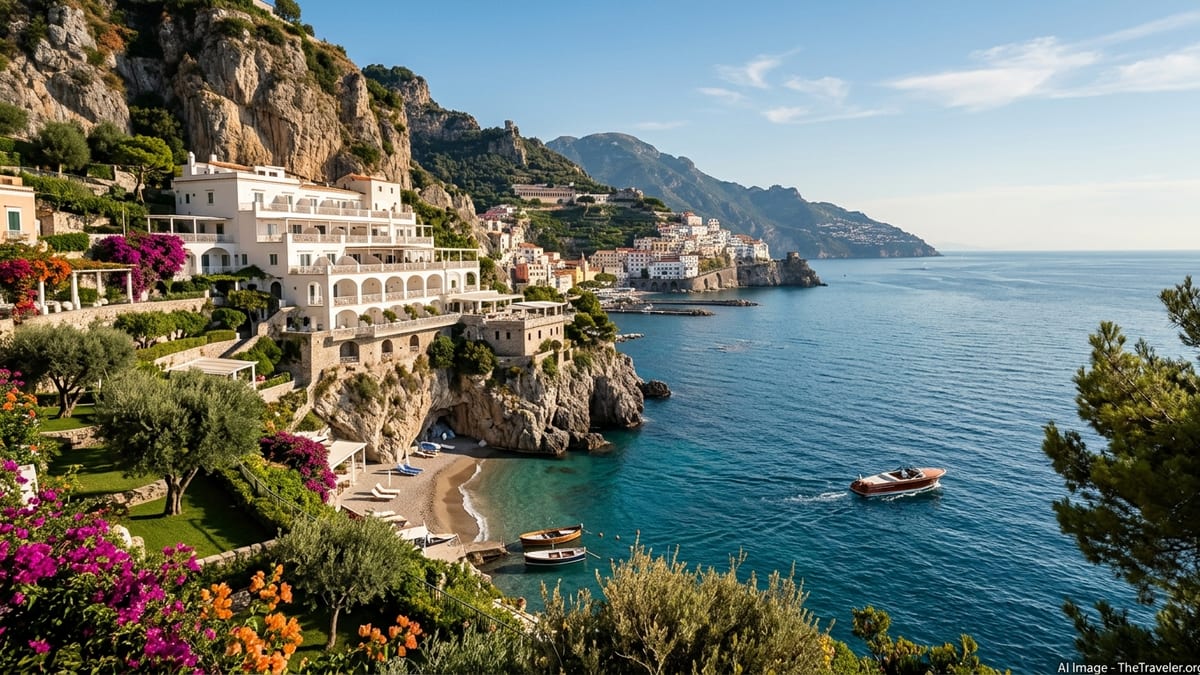
Within Italy’s 224-Key tally, the top tier of 17 Three-Key properties offers a snapshot of how high-end hospitality has evolved across the country. On the Amalfi Coast, Borgo Santandrea at Conca dei Marini is among the headline stories of the 2026 release, promoted from Two to Three Keys after a multi-year repositioning of the 1960s cliffside structure as a compact, design-led resort with its own small beach and panoramic terraces.
Michelin’s 2026 list also highlights new or newly promoted Three-Key addresses in major art cities. In Venice, Airelles Palladio joins the selection at the highest level following a restoration of historic buildings on Giudecca island. In Florence, Collegio alla Querce moves up to Three Keys, while in Liguria the coastal resort Splendido in Portofino is another promotion, giving Italy’s Riviera and central art cities additional anchors at the very top of Michelin’s hotel scale.
Beyond these individual promotions, regional breakdowns of the Italian Key selection show the breadth of coverage. Tuscany accounts for the largest cluster of Key hotels, followed by the Amalfi Coast and the Rome and Lazio area, with Rome itself hosting more Key properties than any other Italian city. Lake destinations such as Como also feature prominently once One and Two-Key hotels are included, indicating that Italy’s Michelin-recognised luxury inventory reaches well beyond the best-known urban and coastal icons.
Separate data shows a luxury-heavy pipeline since 2019
Non-Michelin analyses of Italy’s hotel sector help explain why the country now tops Europe’s Key counts. ISTAT-based and consultancy reports tracking openings since 2019 show a marked increase in five-star supply, both through conversions of historic buildings and new construction in resort areas. While methodologies differ, multiple Italian and international consultancies describe a multi-year shift in which the luxury tier has grown faster than lower categories in key destinations such as Rome, Milan, the lakes and high-demand coastal regions.
Pipeline data for chain-affiliated hotels underline this tilt to the upper end. A recent Italy-focused chains monitor from consulting firm Thrends, covering projects expected to open mainly between 2026 and 2029, identifies 269 new chain hotels in the pipeline and reports that the luxury segment alone accounts for roughly 39 percent of those planned properties by number. That share is notably higher than the European average cited by Cushman & Wakefield for comparable pipelines, indicating that a disproportionate share of Italy’s future chain growth is concentrated in five-star and luxury-branded projects.
Other market presentations from international advisors such as Cushman & Wakefield and EY, which aggregate transactions and development announcements through the first half of 2026, likewise describe Italy as a priority market for luxury and resort investment. Although each study covers a different sample of deals and projects, their combined evidence supports the idea that Italy’s high-end hotel stock has expanded significantly since before the pandemic, and that the pipeline of branded hotels is skewed toward the top end of the scale.
What MICHELIN Keys mean for travelers choosing luxury stays
For travelers, the growth in MICHELIN Key hotels in Italy primarily translates into greater choice of independently vetted high-end stays across the country. A Key is a quality distinction based on anonymous inspections of the overall experience, including character, design, service and value; it is separate from a hotel’s national star rating and from restaurant stars within the MICHELIN Guide. A property can hold any star category under Italian regulations and still receive One, Two or Three Keys if inspectors judge it to deliver a very special, exceptional or extraordinary stay.
Keys do not alter how rooms are priced or booked: travelers still reserve stays through the hotel, preferred agencies or online platforms as usual. However, the 2026 data suggest that affluent travelers planning Italian trips may increasingly use the MICHELIN hotel selection as a filter, especially in regions where there are now multiple Key-awarded options at different price points and styles. In destinations such as the Amalfi Coast, Rome or the Tuscan countryside, Keys can help distinguish between a growing number of luxury-branded openings and long-established independent properties.
Because Michelin continues to refine and expand its hotel coverage, travelers should verify the latest selection close to their travel dates, particularly for 2027 stays and beyond. Since the initial 18 September 2026 announcement, individual hotels in Italy and elsewhere have publicised newly awarded Keys or promotions, and Michelin may add further properties or new destinations before releasing the next full dataset. Checking for updates will help travelers identify any newly recognised luxury hotels, as well as understand how existing favorites, from Borgo Santandrea to city landmarks in Rome, Florence and Venice, are currently rated in the evolving Key system.