


More news on this day
Jet2 will cut 240,000 seats from its Winter 2026/27 flying programme despite record traffic, as the UK leisure carrier moves to protect profitability from sharply higher jet-fuel and carbon costs while still growing overall capacity year on year.
Get the latest news straight to your inbox!
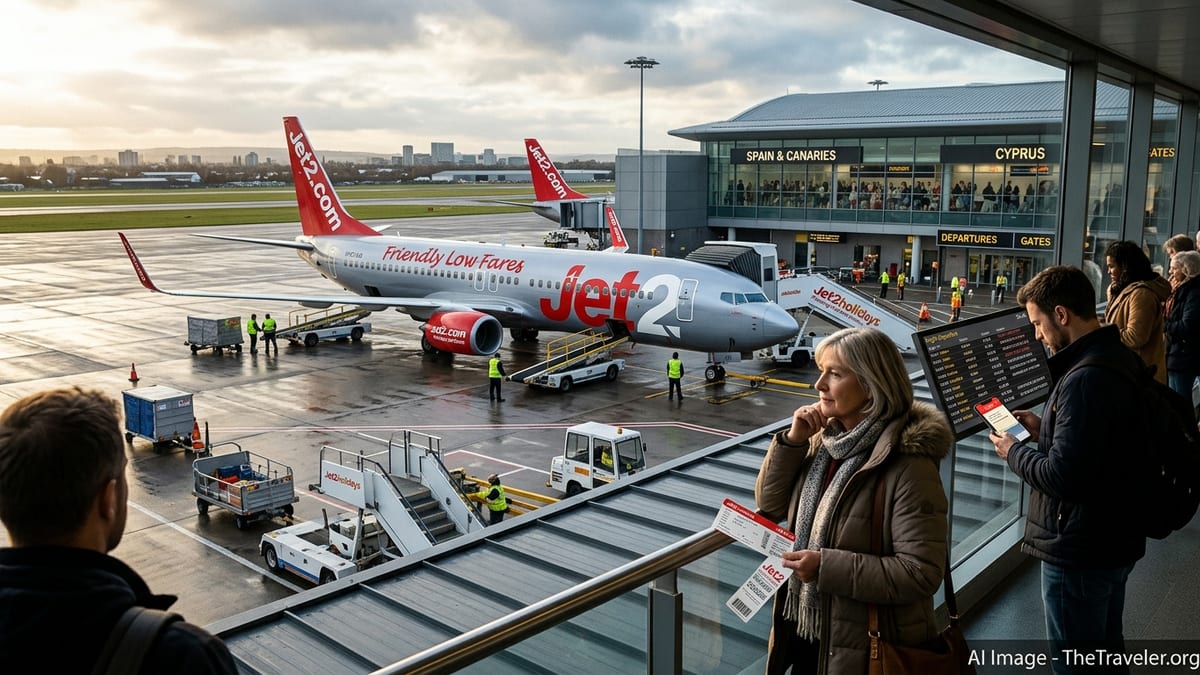
Jet2 confirms smaller winter schedule but continued growth
In half-year results released on 18 November 2026 for the six months to 30 September, Jet2 said it has reduced its Winter 2026/27 programme by 240,000 seats since early September in response to elevated forward prices for its remaining unhedged jet fuel. The airline now plans to operate 5.7 million seats this winter, which company filings and investor presentations show is 3.8% more capacity than in Winter 2025/26 overall, but 3.6% lower at its bases outside London Gatwick compared with last year.
Jet2 reported record passenger numbers of about 15.4 million and revenue of approximately £5.6 billion for the half-year period, but profits declined as higher fuel and emissions costs outpaced revenue growth. Interim results and commentary from the airline indicate that the decision to trim winter flying is aimed at protecting margins rather than reversing growth, with Gatwick continuing to be a key driver of incremental capacity.
The carrier’s documents emphasise that capacity planning for the rest of Winter 2026/27 and for Summer 2027 remains under review. Management has stated that they will keep adjusting seat supply and costs in line with fuel prices, taxation and wider macroeconomic conditions, and have not issued full-year profit guidance given ongoing volatility.
Fuel hedging cushions the blow, but spot prices bite
Jet2’s interim report shows that around 91% of its jet-fuel requirement for Winter 2026/27 is already hedged at roughly 880 US dollars per tonne, limiting the immediate impact of recent price spikes on most flights this season. For Summer 2027, about half of the expected fuel consumption is hedged at around 837 dollars per tonne. However, the group notes that spot jet-fuel prices in Europe have recently been running at levels roughly 40% higher than these hedge prices, increasing the cost of any unhedged fuel and narrowing profit margins.
Alongside fuel, Jet2 has highlighted rising carbon and environmental taxation as additional cost pressures influencing its capacity choices. Industry analyses of the results point to higher EU and UK emissions trading costs feeding through to ticket economics, especially on lower-yield or more marginal winter routes, which are more vulnerable when operating costs rise.
Even with hedging in place, the combination of higher fuel, environmental charges and a softer yield performance helped push Jet2’s operating margin lower compared with the same period a year earlier. The airline’s move to scale back some winter flying while still growing overall seat numbers is presented as a targeted response to that squeeze rather than a broad retrenchment.
Capacity discipline spreads across European carriers
Jet2’s actions are part of a broader pattern of capacity discipline among European airlines heading into the low winter season. Data from air schedule analysts show that several million seats have been removed from carriers’ fourth-quarter schedules in recent weeks as jet-fuel prices in Europe more than doubled compared with a year earlier, before easing slightly in early November.
Recent analysis by aviation data provider OAG highlights that multiple European-based airlines have trimmed their Winter 2026/27 programmes since early September, with some low-cost carriers cutting winter capacity by mid-single to high-single digit percentages versus their initially filed schedules. ACI Europe’s latest traffic outlook notes that seat capacity at European airports is now expected to rise by about 1.6% this winter compared with last year, down from growth projections above 6% at the same point a year ago, as airlines respond to higher fuel costs and reduced hedging cover.
Other individual carriers have also confirmed adjustments. Ryanair disclosed in its most recent half-year update that it removed around 2 million seats from its winter schedule and lowered its full-year traffic target, citing higher jet-fuel costs, a stronger US dollar and increased environmental taxes among the factors behind a more cautious approach. Industry coverage indicates that tour-focused airlines such as TUI Airways and network carriers including SAS and airBaltic have each made selective winter capacity cuts of their own, often combining fuel-related pressures with aircraft availability and demand considerations.
What the changes mean for travellers
For passengers, Jet2’s revised plan means that many winter routes still operate, but with fewer seats than originally advertised from some regional UK bases. The company’s results and subsequent reporting suggest that a larger share of its growth is now being concentrated at London Gatwick, where Jet2 is in only its second winter season but has added significant extra capacity compared with last year, offsetting reductions elsewhere in the network.
On the ground, travellers may notice reduced frequencies on certain sun and city routes from airports such as Leeds Bradford, Manchester, Birmingham, Newcastle or Glasgow compared with what appeared in early schedule filings. While outright route cancellations currently look limited, lower seat availability on remaining flights can make popular departure dates harder to secure at short notice, especially around school holidays and peak ski weeks.
Industry fare data and commentary from airlines across Europe suggest that higher operating costs are feeding into firmer winter pricing. With many carriers now trimming capacity rather than expanding aggressively, there is less surplus seat supply to push prices down on weaker travel days. Travellers who are flexible on dates and airports are still finding competitive fares, but those set on particular weekends or regional departures may need to book earlier than in previous winters.
Checking your winter plans and what to watch next
Jet2 has already implemented the 240,000-seat reduction for the current winter season, but its own statements make clear that schedules remain subject to further adjustment if fuel prices, taxation or demand change materially. Other European airlines are giving similar guidance, noting that both jet-fuel markets and booking patterns are unusually volatile.
For travellers, that means it is worth regularly checking existing bookings and planned itineraries in airline apps or through travel agents, particularly for flights from smaller or regional airports where frequencies are thinner. If a flight time changes or a service is consolidated, most carriers, including Jet2, typically offer rebooking options within their networks, although specific policies and any fare differences depend on the ticket type and route.
Looking ahead, Jet2 currently plans to grow capacity again in Summer 2027 by around 5% year on year to roughly 21 million seats, with a strong focus on London Gatwick and measured growth at established bases. However, the company has signalled that these plans will stay under review in light of fuel markets and economic conditions. Travellers considering summer holidays in 2027 should expect schedules to evolve over the coming months and may wish to reconfirm flight times and frequencies closer to departure as airlines continue to fine-tune capacity.