


More news on this day
Heightened regional tensions and evolving security advisories are driving a new wave of flight disruptions across the Middle East, with Saudi Arabia and key UAE–Riyadh routes seeing some of the most noticeable impacts for travelers in late August 2026.
Get the latest news straight to your inbox!
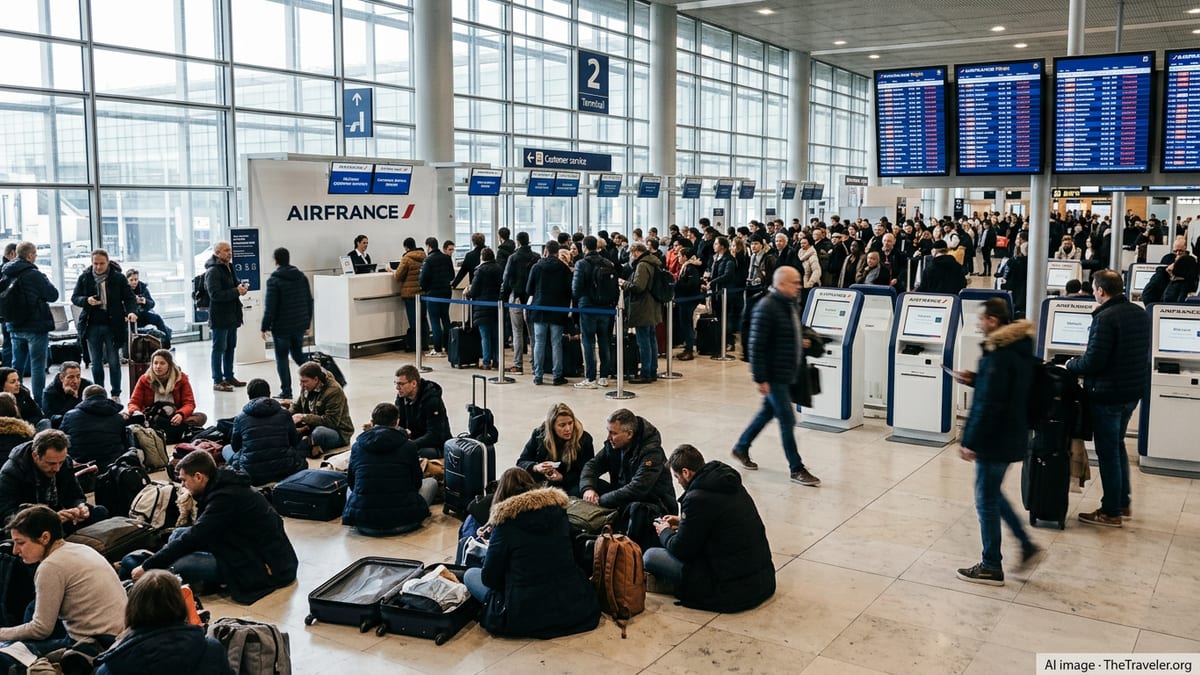
Riyadh Cancellations Climb Amid Regional Tensions
Data from aviation tracking platforms shows that Riyadh’s King Khalid International Airport has logged a significant number of cancellations in August 2026, reflecting wider operational strains linked to the regional security climate. One airport performance database reports 263 cancelled flights so far this month, including 109 departures and 154 arrivals, with Saudia accounting for the vast majority of affected services and southern domestic routes such as Jizan and Najran among the most disrupted.
These figures indicate a level of volatility that goes beyond typical seasonal schedule adjustments. Routes within Saudi Arabia’s south, where airspace and infrastructure are more exposed to spillover from conflict around the Yemen border, appear especially vulnerable to short-notice changes. For passengers transiting Riyadh or using domestic legs to connect to or from international services, the elevated cancellation rate is translating into tighter connection windows, last-minute rebookings, and in some cases extended layovers.
While long-haul flights into Riyadh from major global hubs remain mostly operational, the data suggests that airlines are frequently consolidating frequencies, trimming late-night rotations, or swapping aircraft types as conditions evolve. Travelers planning multi-segment journeys through the Saudi capital are increasingly advised by carriers and travel intermediaries to build in additional contingency time and to monitor booking tools closely in the 24 to 48 hours before departure.
The pattern in Riyadh also underscores how quickly airport performance can change as the regional situation shifts. Industry digests tracking the Middle East travel market note that operators are using a mix of tactical cancellations and rerouting to keep capacity aligned with safety assessments and demand, often updating schedules on a rolling basis rather than in fixed seasonal blocks.
Security Advisories Raise the Stakes for Saudi-bound Travel
Parallel to the operational turbulence at Saudi airports, international travel advisories have moved decisively toward a more cautious stance. Updated U.S. government guidance currently rates Saudi Arabia at Level 3, urging travelers to reconsider non-essential trips due to risks linked to armed conflict, terrorism, and local legal restrictions. The advisory highlights the potential for drone and missile activity, particularly around critical infrastructure and energy facilities, along with the possibility of sudden disruptions to commercial air services.
Other governments have taken similarly guarded positions. Recent Canadian travel advice recommends avoiding non-essential travel to Saudi Arabia because of what it describes as a volatile security situation, while the UK’s Foreign, Commonwealth & Development Office points to a renewed threat from Houthi forces to target Saudi infrastructure, including airports. As of July 2026, UK guidance notes that airports in the south and southwest have already seen airspace interruptions linked to strikes against Abha and other facilities.
These advisory shifts do not automatically close routes, but they do influence airline network planning and corporate travel policies. Carriers may be more conservative about night operations, layovers, or crew rest stops in higher-risk areas, while multinational companies are reassessing duty-of-care obligations for staff traveling to or through Saudi Arabia. Some corporate travel programs are temporarily routing employees via alternative Gulf hubs when possible, particularly for itineraries that are not time-critical.
For leisure travelers, the higher advisory levels affect insurance eligibility and flexibility options. Many travel insurance policies include clauses that restrict coverage when visiting destinations listed at “avoid non-essential travel” or equivalent levels, making it important for passengers heading to Saudi Arabia to confirm their policy terms and any exclusions that might apply if conditions worsen and trips are cancelled or curtailed.
UAE–Riyadh Routes Stay Open but Less Predictable
Despite heightened risk assessments, point-to-point air links between the United Arab Emirates and Riyadh remain active, reflecting the economic importance of these corridors. Schedules published by Gulf carriers continue to show multiple daily services between Riyadh and major UAE gateways such as Dubai, Abu Dhabi, and Sharjah, with fares and availability for August 2026 still being marketed on airline booking platforms.
However, publicly available flight-planning commentary and traveler reports suggest that routing and timing on these sectors have become more fluid. Some passengers connecting between Asia or Europe and Saudi Arabia via Dubai or Abu Dhabi describe last-minute flight plan changes or extended flight times as airlines adjust routings to avoid sensitive airspace. In a number of cases, itineraries that once relied on tight connections in Gulf hubs now involve extended buffers to account for potential en route holding or diversions.
Carriers operating the UAE–Riyadh corridor have strong incentives to preserve these links, given the high volume of business and expatriate traffic. At the same time, they are constrained by evolving NOTAMs, airspace restrictions, and risk assessments that can change on short notice. This has led to a pattern where services are largely maintained but individual flights may be retimed, consolidated, or substituted with different aircraft at relatively short notice.
Travelers planning to move between the UAE and Riyadh in the coming weeks are being encouraged by public-facing guidance to adopt flexible ticket options where possible, opt for earlier departures in the day to leave room for disruption, and ensure that contact details are up to date within airline booking systems so that schedule changes can be communicated quickly.
Knock-on Effects for Middle East Connections and Itineraries
The instability in Saudi schedules is also feeding through to the broader network of Middle East connections, particularly for itineraries combining multiple regional stops. The concentration of cancellations on southern domestic routes, coupled with intermittent constraints around border-adjacent airports, has made it more complicated to stitch together trips that once relied on seamless domestic links to Riyadh or Jeddah.
For long-haul travelers flying into the Gulf from Europe, North America, or Asia, this means that a wider range of routing scenarios now needs to be considered. Some passengers are opting to route entirely via UAE hubs and then connect onward by air or road only if conditions in Saudi Arabia appear stable close to departure. Others are postponing non-urgent trips or replacing multi-country circuits with single-destination stays to reduce exposure to cascading disruptions.
Industry analysis published over the summer points to a broader reshaping of demand patterns in the region, with short-notice bookings, refundable fares, and flexible hotel arrangements becoming more common. Travel management companies also report an uptick in interest in real-time risk monitoring tools that flag changes in airport status, airspace restrictions, and official advisories for Saudi Arabia and neighboring states.
The net effect is that even where flights continue to operate, the overall travel experience has become less predictable. Longer connection times, additional screening, and a greater need to verify each leg of an itinerary shortly before departure are now part of trip planning for many visitors whose journeys intersect with Saudi airspace or airports.
Practical Guidance for Passengers Navigating the Uncertainty
For passengers with near-term plans involving Riyadh, Jeddah, or any UAE–Saudi combination, the core message from publicly available guidance is to stay informed and to plan for contingencies. Checking both airline notifications and the latest advisories from home-country governments has become a critical step, particularly given the potential for rapid shifts in risk assessments or airspace availability.
Travelers are also being encouraged to scrutinize fare rules before committing to tickets. Flexible or semi-flexible options, though often more expensive upfront, can make a substantial difference if a flight is cancelled or rerouted shortly before departure. Where possible, building extra time into connections, especially when changing from international to domestic sectors inside Saudi Arabia, can help mitigate the risk of missed onward flights.
Insurance remains a key consideration. Policies that explicitly cover trip interruption or cancellation linked to security events, as distinct from standard medical coverage, can provide an added layer of protection. Given the current advisory levels for Saudi Arabia, travelers may need to confirm that their chosen product does not exclude destinations under “reconsider travel” or “avoid non-essential travel” guidance.
As the regional situation continues to evolve, observers expect airlines and regulators to keep refining schedules and safety protocols on a rolling basis rather than through major one-time changes. For now, the picture for Middle East aviation, and particularly for the UAE–Riyadh corridor, is one of continued connectivity tempered by heightened uncertainty and a growing emphasis on flexibility in both planning and execution.
U.S. Department of State Saudi Arabia Travel Advisory
UK Foreign, Commonwealth & Development Office: Saudi Arabia Travel Advice
Government of Canada: Saudi Arabia Travel Advice and Advisories
King Khalid International Airport August 2026 Cancellations Overview