


Landing at Palma de Mallorca Airport usually means clear blue skies, warm air as you step off the plane and thousands of other holidaymakers all trying to work out what happens next. This practical arrivals guide walks you through the process from the aircraft door to your hotel lobby, covering passport control, baggage, customs, money, SIM cards and every major onward transport option, with real-world examples to help you plan time and budget.
Get the latest updates straight to your inbox!
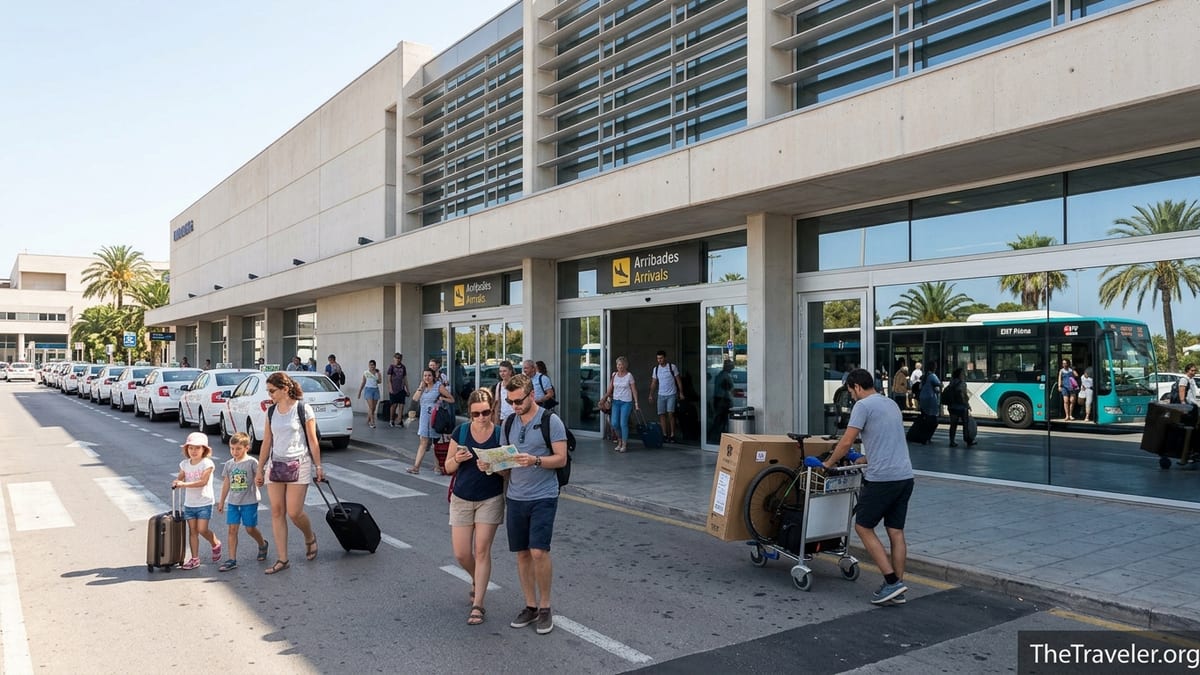
First steps after landing: understanding Palma’s layout
Palma de Mallorca Airport (PMI), also known as Son Sant Joan, is a single-terminal airport with four gate modules (A, B, C and D). Regardless of which module you arrive at, all passengers are funneled into the same central arrivals and baggage reclaim area on Level 0. This means the experience is broadly similar whether you have flown in from London, Frankfurt or Madrid, which simplifies wayfinding when you are tired from an early start.
After disembarking, follow the yellow "Llegadas / Arrivals" signs. Walkways from the modules can be surprisingly long, especially from Module C which handles many holiday charter flights. Moving walkways help, but in summer peaks it can take 10 to 15 minutes to reach passport control from a distant gate. Toilets are signposted along the way; if you are traveling with children, it is often easier to stop before joining the passport queue.
There is only one public landside arrivals hall, directly in front of the baggage claim exits. On the same level you will find exit doors to the official taxi rank and the new central bus station, while covered walkways connect to the multi-storey car park where some car rental pickups and private transfer meeting points are located. Thinking in levels helps: Arrivals and baggage reclaim are on Level 0, Departures and check-in are on Level 2, and car parks and transport are accessed from Level 0 via short walks.
The airport can feel very busy between roughly 10:00 and 16:00 in summer, when multiple flights from the UK, Germany and Scandinavia arrive at once. Outside those hours the same spaces can feel almost empty. Build some flexibility into your onward travel plans so you are not stressed if the terminal is congested when you arrive.
Passport control and the new entry systems
Passport control is your first checkpoint. Passengers from Schengen countries such as Germany, France or Italy usually walk straight into the baggage area with minimal checks, while non-Schengen passengers, including those arriving from the UK, Ireland and most long-haul destinations, must queue at passport booths or e-gates. In busy holiday periods, queues can range from 5 minutes to over 45 minutes if several large aircraft land together, although on quieter days you might be through in under 10 minutes.
As of 2026, Spain is rolling out the EU’s Entry/Exit System (EES) for non-EU nationals. For many travelers this means that the first time you enter the Schengen Area in this new system you may be asked for fingerprints and a facial image at a kiosk, then directed to a manned booth. Once you are registered, subsequent entries should be quicker. Real-world feedback from recent arrivals at Palma suggests that some days the extra checks add only a few minutes, while on other days queues can snake back into the corridors, so avoid booking a tight transfer pick-up immediately after landing.
Families with young children, passengers needing assistance and some EU biometric passports may be directed to separate lanes or automated e-gates when available. Keep passports and any supporting documents (hotel booking, return flight, proof of funds or onward travel) easily accessible. UK travelers, for example, may be asked to confirm their length of stay and accommodation details; having your hotel name and address ready on your phone makes the interaction smoother.
If you have a tight onward connection, such as a domestic flight to another Spanish city, inform airport staff or your airline’s ground crew as soon as you disembark. They can sometimes direct you to a priority lane, although this is not guaranteed. Most holidaymakers heading to resorts like Alcúdia, Magaluf, Cala d’Or or Port de Pollença will be collected landside, so a moderate delay at passport control mainly affects your waiting time for transfers or car hire, not a connecting flight.
Baggage claim, customs and what happens in the arrivals hall
Once you have cleared passport control, escalators and ramps lead directly into the baggage reclaim hall. Overhead monitors show flight numbers and assigned carousels; common European arrivals like Manchester, Berlin or Copenhagen typically share belts with other flights from the same airline or tour operator. At peak times, luggage may take 20 to 30 minutes to appear, while late-night flights often see bags on the belt within 10 to 15 minutes.
If you are traveling with sports equipment like bicycles or golf bags, oversized items usually arrive on designated “special baggage” belts near the standard carousels. Look for small screens with your flight number indicating where these odd-sized pieces will appear. Lost or damaged luggage is handled by your airline’s ground handler; desks such as Groundforce, Swissport or the in-house service are located alongside the belts. Expect to show your passport and baggage tag when filing a report.
After collecting your bags, you will walk towards customs. As in most Spanish airports, customs at Palma is low-key. You choose between the green channel for “Nothing to declare” and the red channel if you are carrying goods above duty-free allowances or restricted items. Routine bag checks are relatively rare but do happen, especially on flights from outside the EU. If you are bringing high-value electronics or large quantities of alcohol or tobacco, familiarise yourself with EU limits in advance and keep receipts handy.
Beyond customs doors you emerge into the public arrivals hall. Immediately ahead are meeting points where tour operators such as TUI, Jet2Holidays and other European package brands hold up signs or branded paddles. You will also see large digital screens with bus bay information, a few cafes and snack bars, restrooms, and an airport information desk. This is where your choices diverge between cash and SIM cards, taxis, buses, hire cars and resort transfers.
Money, ATMs, currency exchange and SIM cards
Spain uses the euro. In the arrivals hall and nearby corridors you will find several ATMs from major Spanish banks such as CaixaBank or Banco Santander, as well as independent machines. Bank ATMs generally apply standard foreign card fees; independent machines often offer expensive dynamic currency conversion and poor exchange rates. When the screen offers to charge you in your home currency, it is usually cheaper to decline and choose to be charged in euros instead.
Currency exchange kiosks are usually operated by specialist companies and can be convenient if you arrive with only cash in a non-euro currency, but their rates are typically less favorable than using an ATM or paying directly by card. Many recent visitors manage their entire stay with a combination of debit or credit cards and a small amount of cash for tips or small purchases. For example, you can comfortably pay your airport bus fare, supermarket shop and restaurant bills with a contactless Visa or Mastercard, while keeping 50 to 100 euros in notes for beach bars or markets that may be cash-preferred.
For mobile data, EU residents with SIMs from other EU countries usually roam in Spain at domestic rates, so they can simply turn on their phones after landing. Travelers from the UK, North America or further afield have a few options. There are sometimes small electronics or telecom counters in arrivals or departures selling Spanish SIMs from brands like Orange, Vodafone or Movistar, but opening hours and stock vary. More commonly, visitors now rely on eSIM providers such as Holafly, Airalo or Saily, purchased online before travel, which activate automatically on arrival and connect to local Spanish networks without needing a physical card.
If you prefer a local prepaid SIM, you may find better deals in Palma city itself. For instance, you could take the A1 airport bus to Plaça d’Espanya, then buy a prepaid pack from a Vodafone, Orange or Movistar shop or from multi-brand resellers such as Phone House in the city center. Expect to pay in the region of 10 to 20 euros for a short-stay data package, though tariffs change regularly. Always carry your passport, as Spanish regulation often requires ID to register a SIM.
Airport buses: reaching Palma and connecting to island coaches
Palma’s airport is about 8 km from the city center, and the municipal bus company EMT Palma operates dedicated airport lines. The main route for most visitors is the A1, which links the airport with central Palma, including stops along the seafront and at Estació Intermodal under Plaça d’Espanya, the island’s main public transport hub. From there you can connect to metro services, local city buses and intercity TIB coaches to resorts all over Mallorca.
Since 2025 the airport has a more centralised bus station area close to the arrivals level. To reach it, exit the terminal at Level 0, follow the "Bus" signs and walk across to the marked bays. The walk is short and fully accessible with ramps. Buses are modern, air-conditioned and equipped with luggage racks. Airport services typically run from early morning until after midnight, though exact first and last departure times can vary by season, so late-night arrivals should always double-check timetables before relying on the bus.
Fares on the EMT airport buses are higher than on regular city routes but still very competitive compared with taxis. Recent examples discussed by travelers suggest that a single adult fare paid by contactless card sits in the region of 4 to 6 euros from the airport to central Palma. You can usually tap a contactless debit or credit card directly on boarding; drivers may also accept cash, though carrying small notes and coins is advisable. Some visitors have reported that the system charges a slightly different amount when paying by card compared with cash, reflecting zonal or return fares, so keeping an approximate figure in mind helps you spot anomalies.
Once at Estació Intermodal, travelers heading to resorts such as Alcúdia, Cala Millor, Cala Rajada or Port de Pollença can change to TIB intercity coaches. These bright red-and-yellow buses have underfloor luggage holds suitable for suitcases. Fares vary by distance but are generally far cheaper than private transfers; for example, a public coach to Alcúdia can be a fraction of the typical taxi price. Payment is usually by contactless card, and you must tap both when boarding and when alighting. This option is ideal if you are budget-conscious and arriving at a time that lines up with published timetables.
Official taxis and app-based rides
The official taxi rank at Palma de Mallorca Airport is located directly outside the arrivals level. After exiting customs, follow the "Taxi" signs and you will be guided along a short corridor to a covered rank where white, metered taxis line up. There is usually a dispatcher managing the queue in busy periods, and separate lines often exist for regular taxis and for passengers needing larger vehicles or accessible cabs.
Taxis operate on regulated fares set by the Consell de Mallorca, including a fixed airport supplement. As of 2026, typical prices reported by visitors suggest that a daytime ride from the airport to central Palma falls roughly in the 20 to 30 euro range, depending on traffic and exact drop-off point, with late-night or weekend trips costing slightly more. Journeys to major south-western resorts such as Palmanova or Magaluf often fall around 40 to 50 euros, while longer runs to Alcúdia or Cala d’Or are more expensive again. Taxi meters should always be visible and switched on; if in doubt, politely insist before setting off.
App-based services are gradually appearing on the island. Licensed taxis in Palma may be bookable via the official PMTaxi app, while ride-hailing brands such as Cabify or Bolt are reported to operate in Palma and some surrounding tourist areas. Their pick-up zones at the airport are usually close to, but not exactly at, the main taxi rank and may involve walking to a designated ride-hailing point in the car park. Because local regulations can change, it is wise to check your chosen app shortly before travel to see whether it is currently allowed to pick up at the terminal and what the estimated fare is at your arrival time.
For a typical family of four with two large suitcases, a taxi can be more cost-effective and much more convenient than four separate airport bus tickets, especially late at night or with tired children. For solo travelers or couples on a budget, the bus is cheaper, but taxis win for door-to-door comfort, especially if you are staying in old-town Palma, hilly neighborhoods or small villages where public transport connections are sparse.
Car rental desks and driving away from the airport
Palma is one of Europe’s busiest leisure airports for car hire, with a long list of operators including global brands and local companies. In-terminal desks from firms such as Avis, Budget, Hertz, Europcar, Enterprise and Sixt are typically located near or just beyond the baggage reclaim exits, while additional counters and dedicated offices are found in the multi-storey car park directly opposite the terminal. Other low-cost or local brands may operate a shuttle service from outside arrivals to off-airport depots a few minutes’ drive away.
If your rental is with an in-terminal company, staff at the desk will usually confirm your booking, check your driving licence and passport, and give you a contract and directions to the car collection area. Collections for many operators are on the lower levels of the main car park, accessible by lifts or ramps from the arrivals area. Look for color-coded zones and large wall signs with rental logos. Expect some queuing at peak holiday times; in July and August, waits of 30 to 60 minutes at the car hire desk are not unusual when several flights land together.
Off-airport rental agencies often instruct you to meet a representative at a specific point outside the terminal, such as a designated "Parking meeting point" in the car park or a numbered bus bay. You may receive this information by email or in your booking voucher. These companies commonly operate small shuttle buses branded with their logo to take customers to their depot. While they can offer lower prices, factor in the extra time this adds compared with picking up a car directly from the airport car park.
Before driving away, take a few minutes to photograph your hire car from all angles, including wheels and interior, and ensure you understand the fuel policy and return location. The main exit road from the airport swiftly feeds into the Ma-19 motorway, which leads towards Palma in one direction and to resorts such as Llucmajor and Campos in the other. For destinations like Alcúdia or Pollensa in the north, you will typically follow Ma-19 towards Palma, then join Ma-20 and Ma-13. A navigation app or pre-downloaded offline maps are highly recommended.
Hotel shuttles, package transfers and getting to the resorts
Many visitors to Mallorca arrive on package holidays, and their transfers are included in the booking. In this case, your tour operator will usually provide clear instructions in your travel documents. After customs, look for branded desks or representatives from companies such as TUI, Jet2Holidays or major German and Scandinavian tour operators in the arrivals hall. They will direct you to the correct coach bay just outside the terminal or in the nearby bus station.
Shared shuttle services can also be booked independently through specialist transfer companies. These services group passengers heading to similar areas, such as Alcúdia Bay, Cala Bona or Santa Ponsa, into one coach or minibus. Prices often start from around 10 to 20 euros per person for mid-distance resorts, rising for more remote locations. Shared shuttles are more economical than taxis but can take longer, as the vehicle may stop at multiple hotels en route. Private transfers, using cars or minibuses for your party alone, are faster and more flexible but command higher prices more comparable to, or above, taxi fares.
If you are combining public transport with a pre-arranged transfer, a common strategy is to take the airport A1 bus into Palma’s Estació Intermodal, then switch to a TIB coach directly to your resort. For example, you could ride the A1 to Plaça d’Espanya and then take a TIB 302 or similar line towards Can Picafort or other northern resorts. This approach is particularly attractive if you land in the morning or afternoon, when coach frequencies are higher.
When choosing between transport options, consider not only the headline price but also arrival time and luggage. A family landing at 23:30 and staying in Palmanova might value a pre-booked private transfer waiting outside over navigating timetables and night buses, even if it costs 60 to 80 euros. Conversely, a couple landing at midday with only carry-on bags and heading to a hotel near Palma’s old town may find the A1 bus perfectly adequate for a few euros each.
The Takeaway
Arriving at Palma de Mallorca Airport is generally straightforward once you know the sequence: passport control, baggage claim, customs, then a choice between cash machines, SIM options, buses, taxis, hire cars and transfers. The terminal’s single main arrivals hall makes navigation simple, even at the height of summer, and most services are grouped logically around Level 0 and the adjacent car park.
Your key decisions are how much time to allow at passport control, where to obtain euros and data, and which onward transport suits your budget and arrival time. For central Palma, the EMT A1 bus and regulated taxis are the workhorses. For resorts, you can choose between tour operator coaches, intercity TIB buses from Plaça d’Espanya, shared shuttles and hire cars. Understanding approximate costs and travel times in advance helps you avoid surprises.
By thinking ahead about your priorities, whether that is speed, price or comfort, you can step off the plane with a clear plan. That means less time worrying in queues and more time on the beach, in the old town’s cafes or exploring the rest of Mallorca’s coastline.
FAQ
Q1. How long does it usually take to get through Palma Airport after landing?
For most travelers it takes around 45 to 75 minutes from landing to reaching the arrivals hall, covering passport control, baggage and customs. At busy summer times it can take longer, especially if several non-EU flights arrive together or if you are waiting for checked luggage.
Q2. Is it better to take a taxi or the bus into Palma city center?
The bus is cheaper while taxis are faster and more convenient. An EMT A1 bus ticket typically costs only a few euros per person, but you must walk to the bus bay and may stop several times. A taxi to central Palma often costs around 20 to 30 euros total and takes about 15 to 20 minutes in normal traffic, which is attractive for couples or families with luggage.
Q3. Are there ATMs and currency exchange facilities in the arrivals area?
Yes, you will find multiple ATMs from Spanish banks and several currency exchange counters in and near the arrivals hall. ATMs are generally considered better value than airport exchange kiosks, especially if you decline any offer to be charged in your home currency and opt to be charged in euros instead.
Q4. Can I buy a Spanish SIM card at Palma de Mallorca Airport?
There are occasionally telecom or electronics counters selling local SIM cards, but availability and opening hours vary. Many travelers now rely on eSIMs purchased before travel or wait until they reach Palma city center to buy a prepaid SIM from shops associated with major providers such as Vodafone, Orange or Movistar.
Q5. How much does a taxi from the airport to popular resorts usually cost?
Prices vary by distance and time of day, but a regulated taxi to Palmanova or Magaluf often falls somewhere around 40 to 50 euros, while longer trips to Alcúdia, Cala d’Or or Cala Millor are more expensive. Always check that the meter is running and be aware that airport supplements and night or weekend surcharges may apply.
Q6. Is public transport a realistic option for reaching resorts like Alcúdia or Cala Millor?
Yes, if your flight time aligns with timetables. A common route is to take the EMT A1 bus from the airport to Estació Intermodal at Plaça d’Espanya, then transfer to a TIB intercity coach towards your resort. This can be significantly cheaper than taxis or private transfers, though it usually takes longer and involves at least one change.
Q7. Where do I pick up my rental car at Palma Airport?
If you booked with an in-terminal company such as Avis, Budget or Europcar, you will complete paperwork at their desk near arrivals and then follow signs to their parking area, usually in the multi-storey car park opposite the terminal. Off-airport companies often run shuttle buses from designated meeting points outside arrivals to their depots a few minutes away.
Q8. What payment methods are accepted on the airport buses?
Airport buses operated by EMT Palma generally accept contactless debit and credit cards, and drivers may also take cash in euros. It is sensible to carry small notes or coins in case of issues with card readers. On TIB intercity coaches, contactless card payment is widely used, and you normally tap on when boarding and tap off when leaving the bus.
Q9. Is Palma de Mallorca Airport easy to navigate for families and passengers with reduced mobility?
Yes, the airport is relatively compact and mainly on one level for arrivals, with lifts, ramps and moving walkways. Families will find accessible toilets near the gates and in arrivals, and assistance services can be arranged via airlines in advance for those who need help from the aircraft to the public area or transport connections.
Q10. Should I pre-book a transfer, or can I just decide on arrival?
If you are arriving in peak summer, late at night or traveling with young children or a large group, pre-booking a transfer or confirming a car hire reservation is sensible. At quieter times of year or for short hops into Palma, you can usually decide on arrival and choose between official taxis, the A1 airport bus, car rental desks and, where available, app-based ride services.