


More news on this day
Flights at London Heathrow faced widespread disruption after a fire close to the southern runway prompted a temporary closure, forcing diversions, go-arounds and delays across one of Europe’s busiest hubs.
Get the latest news straight to your inbox!
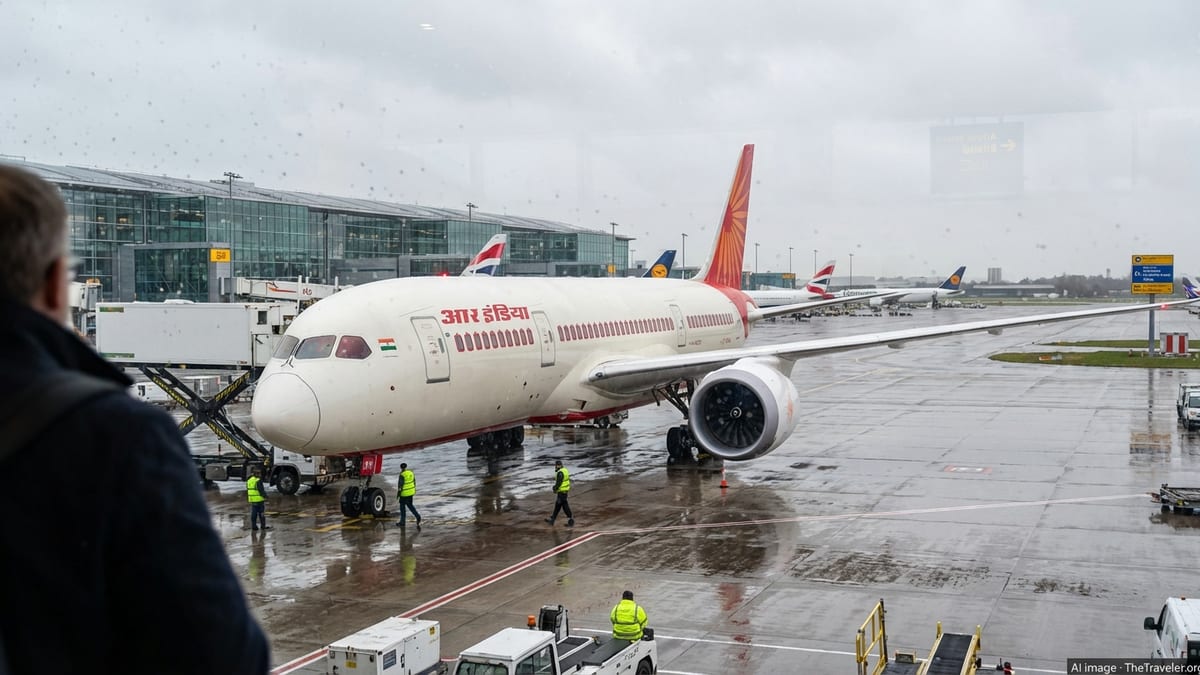
How the incident unfolded at Heathrow
According to real-time flight tracking data and passenger accounts posted on social media, disruption began in the early evening when aircraft movements on Heathrow’s southern runway were suddenly halted. Arrivals were instructed to go around or enter holding patterns while departures remained on stand.
Posts on aviation forums and traveller message boards describe fire appliances deployed near the southern runway threshold, with several flights reporting last-minute changes to their approach. Some aircraft that had been sequenced to land were diverted to other London airports, including Luton, while others returned to their origin or held until operations stabilized.
Publicly available information from Heathrow’s live departure boards showed a growing list of delayed and cancelled services as the evening progressed. While the northern runway continued to accept some arrivals, the loss of one runway at peak time quickly led to congestion, extended taxi times and crews reaching duty limits.
Runway closure and impact on flights
Reports indicate that Heathrow temporarily closed the southern runway while fire crews attended the incident. At an airport that typically operates near capacity, the sudden reduction in runway availability significantly reduced the flow of arrivals and departures.
Passengers reported being held on board aircraft at the gate, waiting for new departure slots, while others described missed connections and last-minute hotel stays after their flights were cancelled. Some long-haul services appeared to be prioritized for available slots, with a number of short-haul European flights grounded or turned back to terminals.
Data from flight tracking services shows a pattern of go-arounds near Heathrow around the time of the incident, consistent with a short-notice closure of a runway used for final approach. Several aircraft inbound to Heathrow were observed diverting to alternative airports in the UK, adding further disruption for travelers already en route.
What is known about the fire
Early accounts from travelers and local observers describe a fire near the end of the southern runway, with visible smoke and airport fire appliances in attendance. Discussion in online travel communities suggests the fire was contained to an area adjacent to the runway rather than involving an aircraft, although official details had not been fully set out at the time of writing.
There were no immediate reports in public coverage of injuries connected to the incident. The primary effect appeared to be operational, with the focus on securing the scene, protecting airport infrastructure and ensuring the runway environment was safe before flights could resume on that side of the airfield.
Heathrow’s published operational procedures show that any incident affecting fire cover or safety on or near a runway can lead to an immediate suspension of movements until fire and rescue teams confirm conditions are acceptable for aircraft operations. In practice this often results in a temporary closure while checks and clean-up are completed.
Response, safety protocols and gradual recovery
Information shared by passengers and aviation watchers indicates that the airport initially concentrated all activity on managing the emergency response around the southern runway. Fire crews appeared to remain on scene for an extended period, suggesting a cautious approach to reopening the affected area.
As the situation stabilized, Heathrow shifted more movements to the northern runway, in line with standard practice when one runway is unavailable. This allowed some arrivals and departures to continue, but the reduced capacity led to knock-on delays throughout the evening schedule.
Published guidance on Heathrow’s emergency operations outlines that when normal fire and rescue coverage is depleted, movements can be restricted or suspended entirely until the required category of cover is restored. Once fire services complete their assessment and any debris, equipment or residual hazards are cleared, runway use can be progressively increased and airlines given updated slot information.
What affected passengers can do next
Travel rights in situations like a runway closure depend on the cause and jurisdiction, but aviation regulators in the UK and European Union typically classify incidents linked to safety, infrastructure or external events as extraordinary circumstances. In such cases, airlines are usually required to provide care, such as meals and accommodation when passengers are stranded, but may not owe financial compensation for delays.
Passengers whose flights were diverted, delayed or cancelled as a result of the Heathrow fire are advised, based on publicly available consumer guidance, to keep boarding passes, booking confirmations and receipts for any reasonable expenses incurred. Airlines often request this documentation when processing claims for reimbursement or rearranged travel.
For those with upcoming flights routed through Heathrow, airline alerts and the airport’s live flight information pages are expected to provide the most up-to-date status. Even after the immediate incident is resolved, residual disruption can continue as aircraft and crews are repositioned and schedules gradually return to normal.