


More news on this day
From the French Riviera to the Aegean and Adriatic, a growing number of travelers are abandoning Europe’s mega–cruise hubs in favor of smaller ports, as fresh regulations, overtourism concerns and shifting consumer tastes redefine what a Mediterranean holiday looks like.
Get the latest news straight to your inbox!
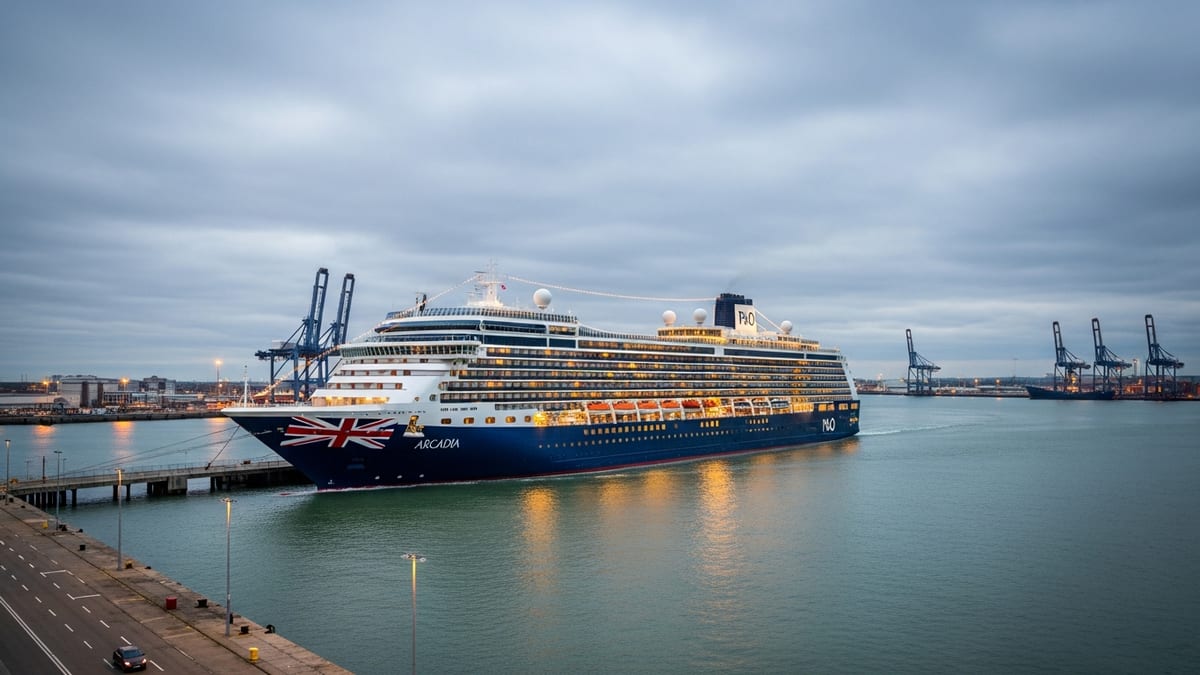
Regulations Push the Riviera Toward Smaller Ships
Along the French Mediterranean, tighter rules on ship size and emissions are accelerating a pivot away from the era of giant vessels crowding city-center harbors. In Cannes, new limits coming into force in January 2026 will bar most cruise ships carrying more than 1,000 passengers, part of a broader push by local authorities to favor cleaner, smaller and less visually imposing vessels. The policy is intended to cut air pollution and daily visitor spikes while rewarding cruise lines that deploy modern, lower-impact ships.
Similar thinking is emerging in other French ports that once competed for ever-larger ships. Environmental protections around the bays of Marseille and Nice, including new marine protected areas and stricter navigation rules, are encouraging cruise planners to rethink itineraries built around a handful of high-volume stops. Smaller Riviera harbors, from Villefranche-sur-Mer to Sanary-sur-Mer, are increasingly positioned as alternatives that can host expedition and boutique ships with lighter footprints.
For travelers, the result is a quieter, more local experience. Rather than disembarking alongside thousands of fellow passengers on a concrete cruise terminal, guests on small-ship itineraries are more likely to step off into historic quays, walkable old towns and working fishing harbors. Local tourism boards are marketing these ports as gateways to slow-paced coastal breaks, framed as a corrective to the congestion long associated with marquee stops such as Marseille.
Greece Spreads Cruise Traffic Beyond Mykonos and Santorini
In Greece, cruise activity continues to grow overall, but it is no longer confined to the most famous islands. Data published by the Hellenic Ports Association shows that 48 Greek destinations now receive cruise calls, with total visits and passenger numbers rising again in 2025 after record seasons in 2023 and 2024. Piraeus, Mykonos and Santorini still dominate in absolute traffic, yet a widening network of secondary ports is beginning to share the load.
Travel industry coverage points to rising interest in Cycladic and Dodecanese islands that were once afterthoughts in mainstream cruise planning. Ports such as Naxos, Paros, Milos and smaller Aegean islands are appearing more frequently on itineraries by lines operating mid-sized and boutique ships. These vessels, which often carry a few hundred guests rather than several thousand, can access harbors that are too shallow or compact for the largest ships, offering passengers less crowded waterfronts and easier movement ashore.
Public commentary on mass tourism has also influenced perceptions of flagship destinations. Online travel forums and reports increasingly describe Santorini and Mykonos as overwhelmed at peak times, particularly on days when multiple large cruise ships are anchored off the caldera or harbor. In contrast, lesser-known islands are promoted for their quieter beaches, intact village life and the chance to arrive by a single small ship rather than a flotilla.
This diversification is changing the geography of Greek cruise holidays. Itineraries departing from Piraeus, Lavrio or Thessaloniki now mix classic postcard names with smaller ports such as Symi, Astypalea or the so-called Small Cyclades. For travelers seeking a balance between iconic sights and a sense of escape, these routes position small ports as the highlight rather than the supporting act.
Croatia’s Adriatic Harbors Embrace Capacity Management
Croatia’s Adriatic coast is experiencing its own recalibration between growth and sustainability. Official statistics from the national bureau of statistics report that the number of foreign cruise vessels entering Croatian waters has continued to climb, with more journeys and passengers recorded in both 2024 and 2025. Dubrovnik, long a symbol of overtourism, remains the country’s busiest cruise port, with hundreds of calls each year.
However, port authorities in Dubrovnik have spent several seasons introducing operational caps and scheduling tools designed to flatten peak-hour pressure. Berthing criteria now limit how many ships can dock or anchor at the same time, and daily passenger targets aim to keep visitor numbers within thresholds described as manageable for the historic walled city. Publicly available information from the port indicates that only a small fraction of cruise days now exceed 8,000 passengers, a significant change from earlier years when extreme peaks were more common.
These measures are opening space for other Croatian ports to gain visibility. Split has expanded its role as both a ferry and cruise hub, while smaller Adriatic stops, from Šibenik and Zadar to islands such as Korčula and Hvar, are increasingly featured on itineraries operated by small-ship specialists. These ports offer access to national parks, vineyard-covered islands and medieval town centers, with daily visitor flows that are easier for local infrastructure to absorb.
The shift benefits passengers looking for a softer landing in popular destinations. Instead of battling crowds at a single over-subscribed port, travelers on boutique Adriatic cruises may call at several compact harbors over a week, blending UNESCO-listed sites with lesser-known islands where cruise tourism remains a side business rather than the primary economic engine.
Environmental and Cultural Concerns Reshape Demand
Across the Mediterranean, environmental regulation is adding momentum to the small-port trend. European Union measures on greenhouse gas emissions from shipping, alongside national and local initiatives on air quality and marine protection, are pushing operators to reassess older, fuel-intensive vessels and concentrated deployment patterns. Industry reporting indicates that newer ships ordered for the region increasingly prioritize cleaner fuels, shore-power connectivity and itineraries that balance port calls more evenly.
At the same time, residents in heavily touristed cities have become more vocal about the strain that sudden surges of cruise visitors place on housing, transport and public spaces. While policy responses vary from port to port, the political and social cost of relying on high-volume cruise traffic has risen. Smaller towns that can integrate a few hundred additional day visitors without major disruption are seen as more compatible with long-term community goals.
Travelers are responding to these signals. Surveys and booking trends highlighted in European tourism analyses show growing interest in slower, more immersive trips that prioritize cultural encounters, regional food and nature over box-ticking sightseeing. Small cruise ports, often surrounded by landscapes of vineyards, fishing coves or protected coves, align closely with this demand and are marketed accordingly by cruise lines and local tourism bodies.
For many visitors, the allure lies in the contrast. A week that starts in a major embarkation city such as Barcelona or Piraeus can quickly shift tone once the ship turns toward lesser-known harbors in France, Greece or Croatia, where time stretches more gently and the ratio of locals to visitors feels more balanced.
How Boutique Itineraries Are Redefining the Mediterranean Cruise
The cumulative effect of these trends is a redefinition of what a Mediterranean cruise represents. Rather than a circuit of the same seven or eight marquee ports, new itineraries emphasize regional clusters of small harbors stitched together into thematic journeys. On the French coast, that might mean a route linking Cannes with smaller Riviera villages and Corsican ports. In Greece, it could be a loop of mid-sized and tiny islands in the Cyclades or Dodecanese, while in Croatia, island-hopping along the Dalmatian coast is increasingly framed as a cruise product in its own right.
Cruise lines that specialize in smaller ships are leaning into this repositioning, marketing the ability to dock closer to historic centers, avoid tender queues and access ports beyond the reach of mega-ships. Larger companies, facing both regulatory pressure and changing customer expectations, are adding more small-port calls to existing routes and experimenting with deploying a subset of their fleets to boutique-style itineraries.
For destination managers in France, Greece and Croatia, the challenge now is to harness this shift without repeating past patterns of overconcentration. Many are investing in modest port upgrades, shore-power infrastructure and visitor management tools designed to handle incremental growth while preserving local character. If these efforts succeed, Europe’s smallest cruise ports may come to define the region’s most desirable holidays, offering travelers a Mediterranean that feels less like a checklist and more like a series of lived-in coastal communities.