


Hilton Grand Vacations, the vacation ownership and timeshare arm of the Hilton brand, hires thousands of team members across sales, marketing, call centers and resort operations. If you are heading into an interview with the company in 2026, especially for a sales or vacation package role, understanding how the process works and what hiring managers look for can make a real difference. This guide walks through common interview questions, sales interview expectations, scheduling and flexibility, background checks, and concrete ways to prepare with confidence.
Get the latest updates straight to your inbox!
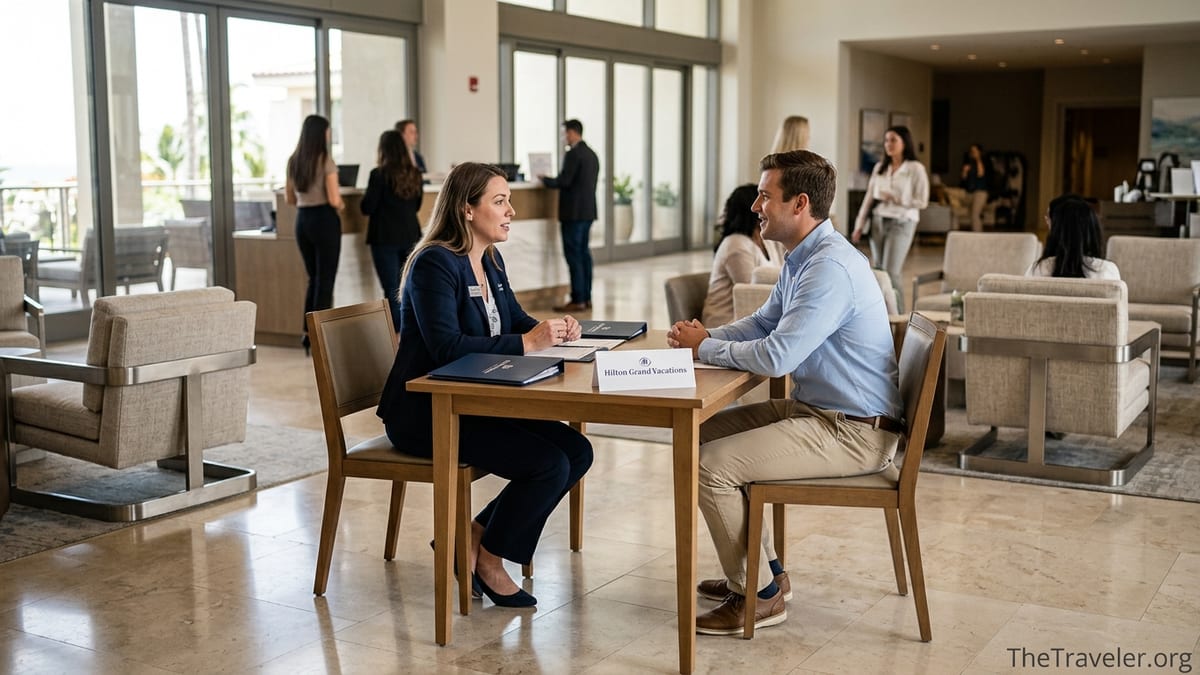
What To Expect From Hilton Grand Vacations Interviews
Candidates today report that Hilton Grand Vacations interviews are generally straightforward and on the easier side compared with many corporate hiring processes, particularly for front-line roles such as vacation package sales agents, call center reservations staff, and on-site marketing representatives. Recent interview feedback on major job platforms describes short processes, often involving an initial phone or video screen followed by one or two interviews with a recruiter or hiring manager. For many hourly roles, the entire timeline from application to decision can be around one to two weeks, sometimes less if a resort or call center is staffing up quickly.
For example, a 2026 vacation package sales candidate in Orlando described applying online, being invited to an on-site interview at a resort office, and completing the process the same week. Another candidate for a timeshare consultant role reported receiving an offer the day after their first interview, which reflects how quickly locations can move when they need sales talent. By contrast, corporate or analytical roles, such as revenue reporting analyst or data analyst positions in Las Vegas or Orlando, may involve a more traditional multi-step process including recruiter screens, hiring manager interviews and occasionally panel conversations.
Most candidates characterise the tone as professional but sales driven. Interviewers often highlight high-income potential for top performers in vacation ownership sales and talk openly about commission structures, lead flows, and performance expectations. At the same time, some applicants recount less polished experiences, like delayed communication from recruiters or scheduling mix-ups. Going in prepared for a fairly brisk but not always perfectly organised process can help you stay patient and focused on showcasing your fit.
Because Hilton Grand Vacations operates in classic resort markets like Orlando, Las Vegas, Hawaii, New York, and popular coastal destinations, hiring volumes in these cities can spike seasonally. If you are applying during a busy travel period, such as summer school holidays or around year-end, you may find that managers are interviewing many candidates in a day. In Orlando, for instance, some locations accept walk-in interviews for vacation sales roles and will slot you between scheduled candidates, which can create waiting times but also offers a chance to observe the environment and team culture while you wait.
Common Hilton Grand Vacations Interview Questions
Despite the variety of roles, several questions appear again and again in Hilton Grand Vacations interviews. For sales and marketing positions, you can expect a mix of behavioural questions and scenario-based prompts that test how you think about persuasion, resilience, and guest service. Variations of “Tell me about yourself and why Hilton?” come up often, as reported by candidates who interviewed for both sales and corporate roles in 2025 and 2026. Hiring managers want to hear a concise story that connects your past experience to hospitality, travel, and customer-facing work.
Another common thread in recent interviews is scheduling. In Orlando, one vacation package sales candidate was explicitly asked whether their existing travel dates were negotiable and was told that paid time off was not permitted within the first 90 days in that role. The question “Are your existing travel dates negotiable?” may sound simple, but it is a test of your flexibility and your understanding of the job’s demands. For call center and resort-based positions, you may also be asked about your comfort working evenings, weekends, and holidays, since peak guest traffic often falls outside standard office hours.
For timeshare and vacation ownership sales roles, interviewers often probe your sales mindset with questions like “Tell me about a time you turned a ‘no’ into a ‘yes’,” “How do you respond when a customer is skeptical about the value of a product?” or “What is your experience with contracts or financial products?” A Las Vegas interview set for a manager-level role included a creative question along the lines of “If you were on a billboard, what would it look like?” which allows a candidate to show their personal brand, confidence, and communication style. Be ready for a few imaginative prompts in addition to the standard ones.
Corporate candidates, like those applying for analyst or back-office positions, mention more traditional competency questions such as “Walk me through a time you used data to solve a problem,” “How do you manage competing deadlines?” or “Describe a challenging cross-functional project.” However, even in these roles, expect at least one or two questions tying your skills back to the hospitality and membership model, such as “How would you measure the success of our vacation ownership products?” or “What would you look at to understand member satisfaction?”
Inside Sales & Timeshare Interview Expectations
The heart of Hilton Grand Vacations’ business lies in selling vacation ownership products and associated vacation packages, so sales interviews are designed to assess whether you can thrive in a high-energy, target-driven environment. Official sales job descriptions for roles like Vacation Package Sales Agent, Vacation Sales Representative or Timeshare Consultant emphasise high-income potential for top performers, the need to explain complex membership benefits clearly, and comfort handling objections about price, commitment, and long-term value. Interviewers want to know that you can balance persuasion with compliance and genuine guest care.
In practical terms, this means you may be asked to role-play a short sales interaction, either on the phone or in person. For example, a recruiter might say: “Imagine you are calling a Hilton Honors member who recently stayed at a resort in Las Vegas. In two minutes, explain a promotional getaway offer and invite them to attend a vacation ownership presentation.” While you might not be given exact script lines, you should familiarise yourself with how Hilton Grand Vacations describes its club membership, point systems, and promotional packages so you can sound natural and accurate.
Sales leaders also look closely at your resilience. Timeshare and promotional vacation sales involve frequent rejection, strict daily call or tour quotas, and detailed performance tracking. In some roles, you may be expected to work from a resort booth at a property near attractions in Orlando or Las Vegas, approaching guests throughout the day. Interviewers may ask, “Tell me about a time you had a rough day in sales. How did you reset and come back strong?” Concrete examples from past roles, such as working in retail electronics, car rentals at an airport, or phone-based insurance sales, can go a long way to proving you understand what repeated rejection feels like and have strategies to manage it.
Another recurring theme in feedback from current and former Hilton Grand Vacations sales staff is that enthusiasm and energy matter. Some candidates describe their interviews as “more upbeat than a typical corporate meeting,” with managers sharing success stories about high-earning reps and team events. Even if you are naturally reserved, practice speaking clearly, smiling during phone interviews, and showing you are comfortable engaging strangers. Dropping in brief real-world examples, such as explaining how you sold resort upgrades at a theme park hotel in Orlando or upsold excursions at a Caribbean tour desk, helps managers picture you working on their sales floor.
Scheduling, Flexibility, and Work-Life Realities
Scheduling and flexibility are central to Hilton Grand Vacations interview conversations, particularly for front-line resort and sales positions. Candidates in 2026 have noted that some vacation package roles come with rigid early schedules, such as fixed 11 a.m. to 7 p.m. shifts, and company expectations that new hires avoid taking time off in their first 90 days. This is common in high-volume sales environments where teams are trying to ramp up quickly, but it can catch unprepared candidates off guard. If you already have non-negotiable trips or family commitments in your first few months, be ready to discuss them honestly.
For instance, if you live in Las Vegas and are interviewing for an on-site marketing role at a Strip resort, you might be offered shifts that cover midday and evening hours to capture peak guest traffic. Those shifts may include Fridays through Sundays and holiday periods like Memorial Day or New Year’s Eve. In the interview, a manager could ask, “Are you comfortable working most weekends?” An effective response not only says yes or sets clear boundaries, but also shows you understand why weekends are so important in a resort city where visitors often arrive Thursday night and leave Monday.
Call center-based roles, such as Vacation Package Sales Agent in a reservations telemarketing environment, may provide more predictable schedules once the initial training period is over. Newly hired agents might attend full-time daytime training for a few weeks in a central office in Orlando, Las Vegas, or a regional hub, then transition to assigned shifts that could range from early morning to late evening. During interviews, recruiters may ask whether you are open to rotating shifts, overtime during peak seasons, or occasional mandatory meeting days. Doing a realistic check of your transportation, childcare, or school commitments before you interview can help you answer confidently.
Because the company’s resorts serve guests from many time zones, some support roles may extend beyond standard nine-to-five hours to align with East Coast, West Coast, or even international travellers. A job that supports Hawaii properties from a mainland office, for example, might start or end later than typical local office roles. When a recruiter asks, “Do you have any restrictions on your hours?” they are assessing not only your personal situation but also whether you understand that hospitality roles revolve around guest demand, not office norms.
Background Checks, Drug Testing, and Compliance
Like most major hospitality employers in the United States, Hilton Grand Vacations uses pre-employment background checks for many positions. Public questions and answers from current and former employees suggest that a third-party screening company typically reviews criminal history and may also verify employment or education for certain roles. The depth of the check can vary by job level and location, and policies may change over time, so you should always read the conditions in your written offer carefully and ask for clarification if you are unsure what will be reviewed.
Candidates often want to know whether there is a drug test. Employee discussions on work review sites and forums indicate that, historically, some hourly roles did not routinely require pre-employment drug testing, though post-incident tests could occur after workplace injuries. However, drug testing practices can vary by state and by job, and employers periodically revise their policies. For roles with safety-sensitive responsibilities, such as certain maintenance, security, or transportation positions, you should be prepared for the possibility of a pre-employment or random test and factor that into your preparations and timeline.
Background checks typically occur after a conditional offer, not before an interview. That means you do not need to bring sensitive documents to your first meeting, but you should be ready to provide accurate information when you fill out official forms. If you have lived or worked in multiple states, be aware that screenings can sometimes take longer as records from different jurisdictions are verified. Some candidates report that their background status remained “in process” for days or weeks before onboarding was finalised, so it is wise not to resign your current job until you have written confirmation of a cleared background check and start date.
During the interview itself, recruiters may ask high-level questions about your eligibility to work in the country, your ability to pass standard background procedures, or any non-compete agreements with current employers. They are not typically collecting detailed legal history at that stage, but honesty is essential. Providing misleading information on an application, even for seemingly minor details, can be grounds for rescinding an offer later, which is a real risk in tightly regulated sectors like timeshare sales that interact with financial commitments and long-term contracts.
How To Prepare: Practical Steps Before Your Interview
Preparation for a Hilton Grand Vacations interview should combine company-specific research with classic sales or service practice. Start by reviewing the specific job description for your target role, whether it is a Vacation Package Sales Agent in an Orlando call center, a Guest Services Associate at a Waikiki resort, or a Revenue Analyst in Las Vegas. Take note of the key responsibilities and phrasing in the posting. For instance, if the description stresses “sharing accurate and engaging information about Hilton Grand Vacations resorts, partner accommodations, current promotions, and premium offers,” be ready with examples of how you have explained complex products or promotions in past roles.
Next, familiarise yourself with the basics of Hilton Grand Vacations’ vacation ownership model. You do not need to become an expert overnight, but you should understand that the company sells timeshare interests and club memberships that allow members to use points at Hilton-branded resorts and partner properties worldwide. Reading public marketing materials or owner FAQs can help you grasp how points, seasons, and maintenance fees generally work. In an interview, you might say, “I know vacation ownership is a long-term commitment, so I appreciate how important it is for sales professionals here to explain the details clearly and honestly.” That simple sentence shows you recognise the weight of the purchase.
Then, prepare three or four strong stories from your experience that demonstrate key skills Hilton Grand Vacations values: closing sales or meeting quotas, handling difficult customers, learning complex systems quickly, and working flexible schedules. For example, you might describe how you consistently exceeded daily membership sign-up targets while working at a fitness club, or how you learned a new reservations platform at a ski resort in Utah ahead of schedule and used it to speed up check-in times. Practice telling these stories using the situation, task, action, result format so you can keep them concise and impactful.
Finally, plan concrete questions to ask your interviewer. In Orlando or Las Vegas sales roles, you might ask, “What does a typical day look like for your top-performing vacation package agents?” or “How do you support new hires during their first 90 days while they are learning the products and scripts?” For resort operations roles, you could ask about team size, cross-training opportunities, or how the property handles peak holiday traffic. Thoughtful questions show that you are serious about understanding both the challenges and the opportunities in the job, not just the earning potential.
Real-World Examples: From Application To Offer
To make the process more concrete, it helps to picture what an application-to-offer journey might look like. Imagine you are a customer service associate at a retail outlet in Orlando who wants to transition into hospitality sales. You apply online in early August for a Vacation Package Sales Agent position at an HGV call center in the city. Within a few days, a recruiter emails you to schedule a 30-minute video screen. During that call, you discuss your retail sales numbers, your comfort using headsets and customer relationship software, and your availability for shifts that could run from 1 p.m. to 9 p.m., including weekends.
Impressed by your enthusiasm and your willingness to work peak shifts, the recruiter invites you to an in-person interview at the call center the following week. You arrive early and notice the floor buzzing with agents wearing business-casual attire, large monitors displaying call metrics, and supervisors coaching team members. The hiring manager asks you to role-play a short outbound call to a fictional Hilton Honors member, then walks you through the commission structure, including a base hourly rate plus tiered bonuses for booked packages. Two days later, you receive a conditional offer by email, contingent on a background check. After about a week of waiting, your background clears and you receive your official start date.
Consider another scenario in Las Vegas, where you apply for a resort-based Vacation Sales Representative role positioned in a high-traffic lobby near the Strip. After submitting your resume on a Sunday, you receive a call from a recruiter on Tuesday asking if you can attend a walk-in interview at the resort the next day. When you arrive, you see a small queue of applicants already waiting. A coordinator checks you in and explains that managers are taking candidates in order of arrival, mixed with scheduled interviews. You end up waiting around 30 minutes past your time slot but use that window to observe how current reps approach guests, how they describe promotional tours, and how the team interacts.
In the interview, the manager asks about your experience with contracts from your previous role at a car rental desk, how you feel about approaching strangers multiple times per hour, and whether you have any upcoming travel that would conflict with the first 90 days. You disclose a family wedding trip six months out, which the manager says will likely be fine as long as it is requested far in advance. You then ask how long new reps typically take to start hitting their tour or package goals. The manager describes a typical ramp-up period of a few months and the training support provided. That conversation gives you a grounded sense of the job’s realities, not just the glossy sales pitch.
The Takeaway
Interviewing with Hilton Grand Vacations, especially for sales and vacation package roles, combines the energy of a commission-driven environment with the hospitality expectations of a major global travel brand. Candidates in 2025 and 2026 describe interviews that are generally straightforward and relatively quick, but that place strong emphasis on availability, resilience, and the ability to communicate clearly about complex, long-term travel products.
If you are preparing for an interview, focus on three areas: understand the basics of the company’s vacation ownership model, prepare specific stories that show you can sell, serve and adapt, and think realistically about your schedule and flexibility in the first months on the job. Go in ready to ask practical questions about training, performance expectations, and scheduling, and be transparent about your own constraints. With thoughtful preparation and a grounded view of the work, you can turn your Hilton Grand Vacations interview into a genuine opportunity rather than just another conversation.
FAQ
Q1. What is the typical Hilton Grand Vacations interview process length?
The process for hourly roles such as sales agents or resort staff often takes about one to two weeks from application to decision, though it can be faster in busy hiring periods.
Q2. Are Hilton Grand Vacations interviews really as easy as people say?
Many candidates describe the difficulty as easy to moderate, but success still depends on solid preparation, clear communication, and strong examples of sales or service experience.
Q3. How important is previous sales experience for timeshare or vacation package roles?
Previous sales experience is a strong advantage, but managers may consider candidates from customer service, retail or call centers who can demonstrate persuasive skills and resilience.
Q4. What kinds of scheduling questions should I expect in the interview?
Expect direct questions about your availability for evenings, weekends, holidays, and your ability to avoid taking time off during the first 60 to 90 days in some roles.
Q5. Does Hilton Grand Vacations conduct background checks on all candidates?
Most reports suggest that many roles involve a standard pre-employment background check through a third-party provider after a conditional offer is made.
Q6. Will I have to take a drug test before being hired?
Practices can vary by role and location, and policies can change, so you should review your offer documents and ask the recruiter directly about current testing requirements.
Q7. How can I stand out in a Hilton Grand Vacations sales interview?
Use concrete stories showing you met or exceeded targets, handled rejection, and explained complex offers clearly, and show genuine enthusiasm for travel and hospitality.
Q8. What should I wear to an interview at a resort or call center location?
Business-casual attire is usually appropriate: think collared shirt and slacks or a professional dress, with clean, comfortable shoes suitable for walking the property.
Q9. Are there opportunities to move from sales or front-line roles into corporate positions?
Many employees report internal mobility, and successful performers in sales or operations sometimes transition into training, revenue management, or corporate support roles over time.
Q10. What is one thing candidates often underestimate about Hilton Grand Vacations roles?
Candidates sometimes underestimate how demanding the schedule and performance expectations can be, especially in timeshare sales, where consistent effort and resilience are essential.