


More news on this day
Hitachi Rail is taking on a broader role in Queensland’s rail modernisation as European Train Control System technology moves from pilot testing to wider deployment across South East Queensland’s busy commuter network.
Get the latest news straight to your inbox!
Alliance model underpins Queensland’s digital signalling rollout
Publicly available project information shows that Queensland is using an alliance-style delivery model to accelerate European Train Control System, or ETCS, across its core suburban rail network. The Sequence Signalling and Systems Alliance brings together Hitachi Rail, Queensland Rail and the Cross River Rail Delivery Authority in partnership with the state’s transport department, with the aim of delivering a common digital signalling platform for South East Queensland.
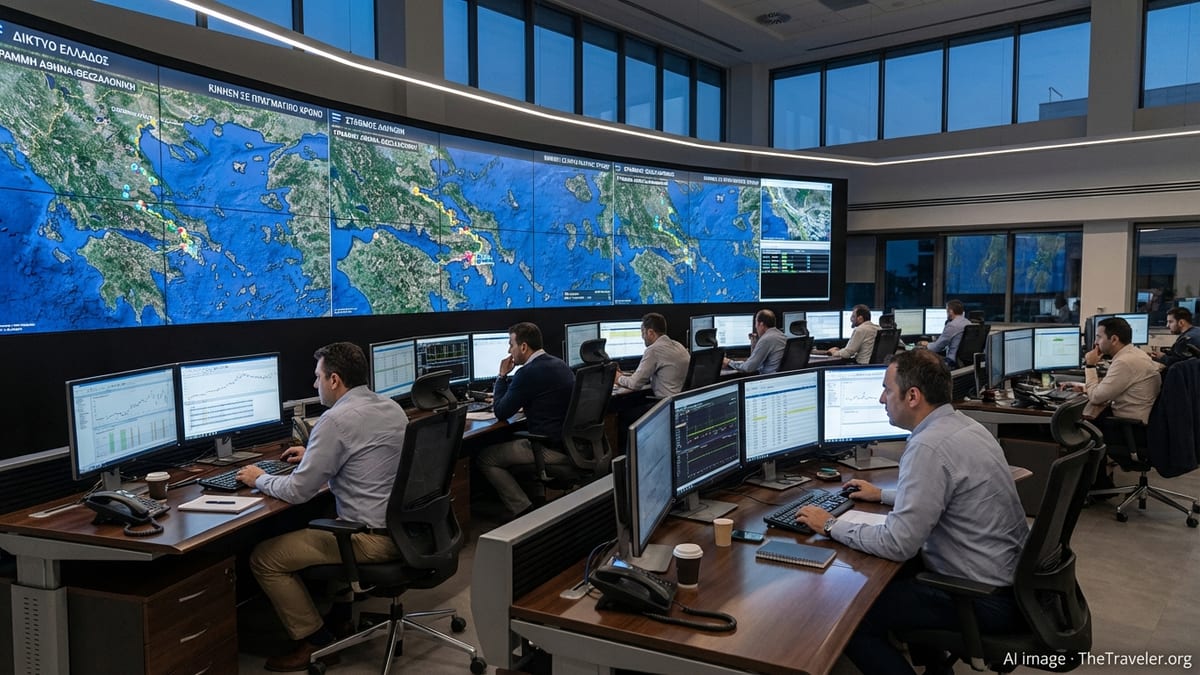
According to reports on the Cross River Rail program, ETCS Level 2 is a central component of how trains will operate through Brisbane’s new inner-city tunnels and on adjacent surface corridors. The system uses continuous communication between trains, trackside equipment and a control centre to determine safe speeds and braking curves, allowing trains to run closer together while maintaining safety margins.
Earlier audit and project review material for Queensland’s major rail investments indicates that the alliance contract with Hitachi Rail was structured to accommodate future stages of ETCS deployment beyond the initial core section. This contractual approach is intended to streamline subsequent extensions, reduce integration risk and keep technical standards consistent across the network as additional lines are brought into the digital system.
Hitachi Rail’s own public material highlights Queensland as one of its flagship ETCS programs in the region, positioning the state’s network as an example of how digital signalling can increase capacity and reliability without the need for entirely new heavy rail corridors.
From Shorncliffe pilot to network-wide expansion plans
The first stage of ETCS in Queensland has focused on the Shorncliffe line, a suburban corridor north of Brisbane used as a controlled environment to test onboard and trackside equipment, software and operating procedures. Cross River Rail documentation notes that ETCS equipment has been fitted to selected trains, installed along the Shorncliffe alignment and integrated with Queensland Rail’s Rail Management Centre.
Recent project updates indicate that live testing and staff training on the Shorncliffe section are continuing through 2026, with test trains operating under ETCS supervision to validate performance in real-world conditions. This pilot phase is regarded as essential for fine-tuning the system before it governs high-frequency services through the new underground sections and across much busier mixed-traffic corridors.
Parliamentary material and state planning documents point to a progressive expansion strategy following the Shorncliffe and inner-city deployment. Over the next decade, ETCS capability is expected to extend to further parts of the South East Queensland network, aligning with national moves to make ETCS the standard for new digital signalling investments.
In this broader program, Hitachi Rail’s role encompasses design, installation and integration of trackside systems, as well as supporting the fit-out of rolling stock with onboard ETCS equipment. The work is being coordinated to minimise disruption to passengers while enabling staged commissioning line by line.
Beenleigh to Varsity Lakes corridor becomes next ETCS focus
The next major step in expanding ETCS has been confirmed for the busy corridor between Beenleigh and Varsity Lakes on the Gold Coast line. The Queensland Department of Transport and Main Roads reports that in September 2024 it awarded a contract to the Sequence Alliance, involving Hitachi Rail and Queensland Rail, to deliver ETCS between Beenleigh and Varsity Lakes as part of a broader package of rail upgrades.
Project information for this southern section indicates that the work includes installing ETCS trackside equipment, upgrading signalling interfaces and preparing the corridor for higher-capacity operations. The upgrades are timed to complement separate works to quadruplicate tracks and remove level crossings between Kuraby and Beenleigh, which are designed to unlock additional paths for both suburban and Gold Coast services.
Public updates from the department outline that temporary construction compounds and work sites along the corridor will support ETCS installation through to at least mid-2026. These activities are being scheduled alongside other civil and station upgrade works so that signalling changes are integrated with new track layouts, platforms and turnback facilities.
As the Beenleigh to Varsity Lakes section comes online under ETCS, it is expected to create a continuous digitally signalled spine from inner Brisbane to the Gold Coast, positioning the corridor for more frequent services and improving resilience during peak tourism and event demand.
National policy shifts support Queensland’s ETCS ambitions
Hitachi Rail’s expanded scope in Queensland is unfolding against a wider national shift toward ETCS as the preferred digital signalling platform. Industry commentary and federal transport policy updates note that infrastructure and transport ministers agreed in 2025 to require new digital signalling investments to comply with ETCS standards, aiming to improve interoperability and reduce long-term lifecycle costs across Australian networks.
Hitachi Rail has publicly framed Queensland’s Cross River Rail and associated ETCS rollout as a key example of this policy direction in action. By specifying ETCS Level 2 for the inner-city tunnels and linking upgrades on adjoining lines, Queensland is aligning its technology choices with national expectations while creating a proving ground for future deployments elsewhere in the country.
Reports from audit offices and infrastructure advisory bodies describe ETCS in South East Queensland as both a capacity project and a risk-management tool. Digital signalling is expected to provide more precise control over train movements, reduce the likelihood of certain types of incidents and support more reliable timetables as patronage grows.
For Hitachi Rail, the policy environment, combined with Queensland’s long-term network plans, positions the state as a cornerstone market for its ETCS portfolio, reinforcing the case for ongoing investment in local engineering, testing and support capabilities.
Capacity, sustainability and passenger benefits on the horizon
Public-facing explanations of ETCS provided by industry and project partners emphasise its potential to move more trains safely on the same tracks. By using continuous communication and in-cab signalling, the system can reduce headways, enabling operators to add services at peak times without compromising safety margins.
In the context of South East Queensland, these gains are particularly important on constrained approaches to the Brisbane central business district and on growth corridors to the Gold Coast and Sunshine Coast. As population and travel demand increase, ETCS is expected to help defer or complement the need for entirely new rail corridors by extracting more capacity from existing infrastructure.
Hitachi Rail also links ETCS deployment to broader sustainability objectives. Smoother driving profiles and fewer signal checks can reduce energy consumption and wear on braking systems, while more reliable services are intended to encourage passengers to shift from private cars to rail, easing congestion and emissions in growing urban areas.
For passengers, the most visible effects of Hitachi Rail’s expanding ETCS footprint in Queensland are likely to be more frequent services, improved punctuality and a system that can better handle disruptions. While most of the technology remains behind the scenes, the shift to digital signalling marks a significant change in how the state’s rail network is controlled and how it will grow over the coming decade.