


More news on this day
Super Typhoon Bavi is unleashing a historic shock to East Asia’s summer travel network, with Japan, Taiwan, and eastern China confronting hundreds of flight cancellations, port closures, and cascading disruptions across some of the region’s busiest tourism corridors.
Get the latest news straight to your inbox!
Flights Across Japan, Taiwan and China Slashed as Bavi Intensifies
Air travel across the western Pacific is being reshaped in real time as Super Typhoon Bavi tracks between Taiwan and the southwestern islands of Japan before heading toward the east coast of China. Forecasts indicate the system will remain a powerful typhoon through the weekend, bringing destructive winds, intense rainfall, and hazardous conditions to major aviation hubs and island destinations.
Japanese media reports show extensive cancellations on routes serving Okinawa Prefecture and nearby island chains, including Miyako and Ishigaki, where carriers have suspended or heavily reduced flights over July 10 and 11. Domestic operators have preemptively grounded entire day schedules on some routes, aiming to keep aircraft and crew out of the storm’s path while airport authorities scale back operations.
Taiwan’s aviation and maritime networks have moved into emergency mode as the storm’s outer bands sweep the island. Publicly available information from local broadcasters notes that domestic flights linking Taipei, Taichung and Kaohsiung with outlying islands such as Penghu, Kinmen and Matsu have been widely canceled, alongside selected international services to Japan, Hong Kong and cities in eastern China.
Across the Taiwan Strait and along the Yangtze River Delta, major Chinese coastal airports are preparing for severe disruption as Bavi approaches landfall. Advisories from multiple international airlines show cancellations or schedule changes for flights to and from Shanghai, Hangzhou, Ningbo and other key gateways during the July 11 to 12 peak impact window, with flexible rebooking policies activated for affected passengers.
Tourism Corridors Shut Down From Island Resorts to Coastal Cities
The typhoon’s path cuts directly through some of East Asia’s most popular leisure routes, turning what should be one of the busiest travel periods of the year into an improvised evacuation and sheltering operation. Summer holiday traffic to Okinawa’s resort islands, Taiwan’s offshore archipelagos and eastern China’s coastal cities has been particularly hard hit.
In Japan, tourism flows to Okinawa, Miyakojima and Ishigaki, prized for beaches and diving, have effectively paused. Japanese outlets report large clusters of vacationers sheltering in hotels as tour operators suspend excursions and ferry companies halt inter-island services. Many travelers are being advised to extend stays rather than attempt last-minute departures in deteriorating weather.
Taiwan’s famed island-hopping circuits have also been frozen. Public service broadcasters in Taipei list full-day suspensions of ferry routes linking the main island with Lanyu, Green Island, Penghu and Kinmen for multiple days, severing important lifelines that carry both tourists and local residents. On land, scenic coastal areas and national parks have announced phased or full closures in anticipation of landslides, flash floods and dangerous surf conditions.
Along China’s east coast, early summer promotions aimed at drawing visitors back to cities such as Shanghai and Hangzhou have been abruptly overshadowed by emergency planning. Hotel operators in low-lying waterfront districts are moving guests away from sea-facing rooms, while river cruises and coastal excursions have been suspended. Travel agencies are rapidly reworking itineraries that once linked Japan, Taiwan and China within a single multi-country package, now splintered by the advancing storm.
Mass Cancellations, Flexible Policies and Stranded Travelers
The sheer scale of Bavi’s footprint has forced airlines and ferry operators to cancel services across multiple jurisdictions at once, leaving many travelers scrambling for alternatives. Regional and long haul carriers have issued rolling updates in recent days, warning that flights transiting Taiwan, southern Japan and parts of eastern China may be delayed, rerouted or dropped entirely with little notice.
Major Asian airlines serving the region have introduced special ticketing guidelines for journeys scheduled during the core impact period, generally waiving change fees and fare differences for one-time rebooking on affected routes. Some low cost carriers are offering travel credits or refunds as they suspend operations on shorter regional sectors most exposed to the storm’s track.
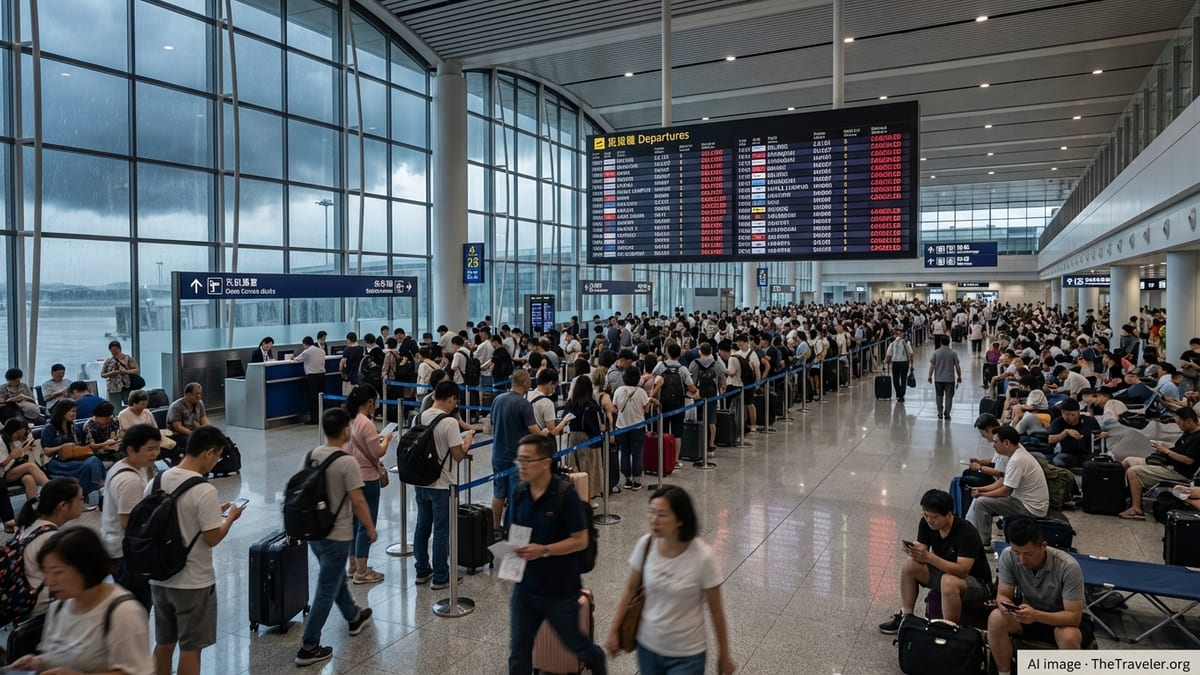
Despite these measures, reports from passenger forums and social media indicate widespread confusion, with some travelers discovering cancellations only hours before departure as carriers adjust schedules in lockstep with fresh meteorological data. Stranded passengers at hubs such as Taipei Taoyuan and large Japanese and Chinese airports describe long lines at service counters, limited inventory on replacement flights, and uncertainty over when normal operations will resume.
For those already in resort destinations, the priority has shifted from returning home to staying safe. Travel advisories emphasize remaining indoors, monitoring local announcements and avoiding coastal areas subject to storm surges and powerful waves. Many visitors are choosing to shelter in place and rebook for dates well after the current typhoon window to reduce the risk of further disruption.
Rail, Road and Sea Networks Buckle Under Extreme Conditions
While the headline impact has been in the air, Super Typhoon Bavi is also disrupting ground and sea transport that underpin domestic tourism within Japan, Taiwan and China. Rail operators in Taiwan have warned of potential delays and temporary suspensions on lines exposed to strong crosswinds and landslide-prone mountain sections. Early indications point to precautionary slowdowns on high speed rail services during the storm’s peak, with local trains on vulnerable coastal stretches facing full closures if conditions worsen.
In Japan, regional railways serving coastal and island-adjacent areas are preparing for schedule reductions, particularly where tracks run close to the shoreline or over bridges susceptible to high winds. Local governments have publicized the possibility of highway closures due to falling debris and flooding, a move that would further complicate evacuation efforts and the delivery of supplies to isolated tourist communities.
Maritime transport has already seen some of the earliest and most extensive shutdowns. Ferry links between Taiwan’s main island and its offshore counties have largely been suspended for several days, and reports from Chinese coastal provinces indicate similar moves for routes connecting small islands with larger ports. These closures effectively strand island residents and visitors alike, reinforcing the reliance on pre-storm preparations and local shelter infrastructure.
Logistics operators warn that the combined impact on air, sea and land transport will ripple through regional supply chains, potentially affecting everything from hotel food deliveries to fuel supplies for emergency generators. For tourism-driven economies on smaller islands and in coastal towns, even a short interruption during peak season can create lasting financial stress.
Uncertain Outlook for Recovery and Future Travel Planning
Meteorological agencies across East Asia expect Bavi to weaken after potential landfall in China, but the exact timeline for normalization of transport links remains unclear. Airports and ports typically require additional time to inspect infrastructure, clear debris and reposition aircraft and vessels once winds subside, meaning that disruptions can persist for days beyond the storm’s departure.
Travel industry analysts note that the reach of this event underscores how vulnerable interconnected tourism corridors have become to extreme weather in a warming climate. Multi-stop itineraries linking Japan, Taiwan and China are now exposed to a wider envelope of powerful storms that can force simultaneous shutdowns across several countries, complicating contingency planning for operators and travelers alike.
Booking patterns are already beginning to adjust. Travel agencies report a growing preference for flexible tickets, comprehensive travel insurance and itineraries that build in buffer days around peak typhoon season. Some travelers are choosing to concentrate trips within a single country rather than combining multiple jurisdictions, hoping to reduce cross-border complexity when storms form.
For now, Super Typhoon Bavi has turned one of the world’s most dynamic travel regions into a patchwork of closures, emergency schedules and stranded passengers. As airlines, railways and ferry operators work to restore services, the episode is likely to shape how Japan, Taiwan and China plan for and communicate around future typhoon-driven travel emergencies.