


More news on this day
Super Typhoon Bavi is driving a fresh wave of aviation disruption across East Asia, with Beijing Capital International Airport cancelling dozens of flights and reporting hundreds of delays as the powerful storm sweeps past China’s eastern seaboard and snarls connections to multiple continents.
Get the latest news straight to your inbox!
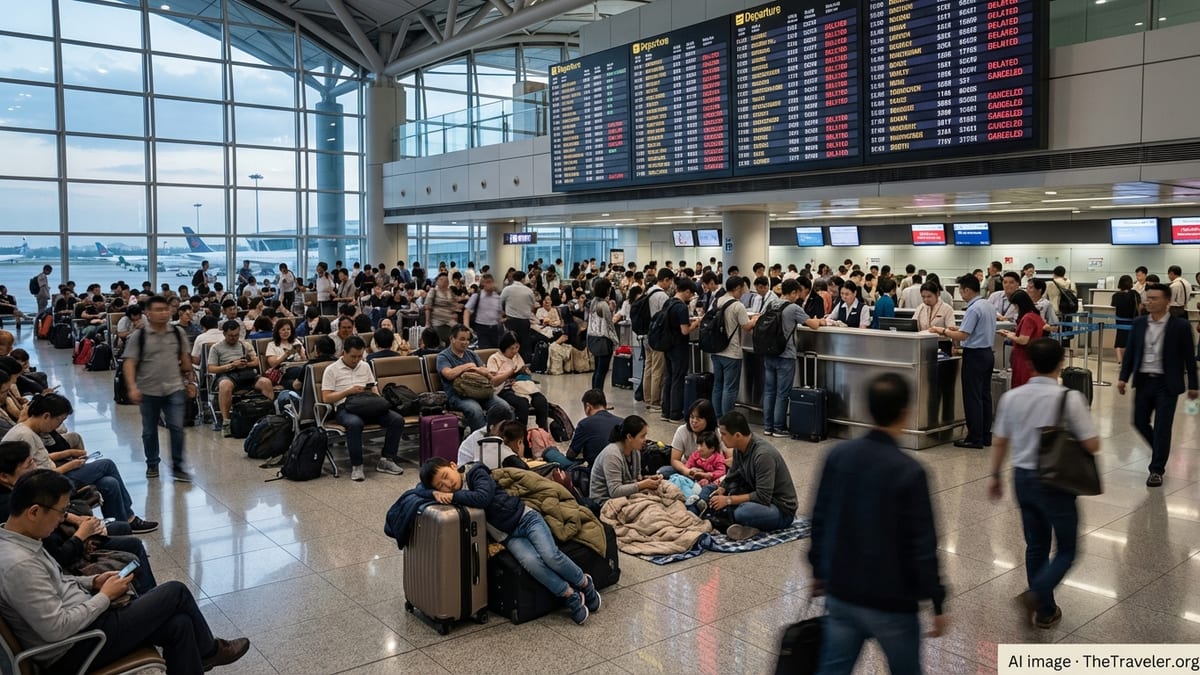
Beijing Operations Strained as Storm Alters Flight Plans
Publicly available flight tracking data for Beijing Capital International Airport on Friday indicates a sharp deterioration in on time performance as the outer bands of Super Typhoon Bavi brush eastern China. Airport monitoring dashboards show 25 flights scrubbed from the schedule and at least 371 departures and arrivals running late, an operational squeeze that ripples through the day as aircraft and crews fall out of position.
While the typhoon’s core remains offshore, the combination of gusty crosswinds, heavy cloud and air traffic flow restrictions along key corridors into coastal China has prompted airlines to trim frequencies, consolidate services and pad turnaround times. Delays in Beijing are being compounded by earlier disruptions at hubs closer to the storm track, including Shanghai and airports in Taiwan, which supply a steady stream of inbound aircraft and passengers into the Chinese capital.
The figures are modest compared with past extreme weather events that have wiped out hundreds of Beijing flights in a single day, but the pattern is typical of a fast evolving typhoon scenario in which carriers initially pare back the network and then adjust dynamically as updated forecasts narrow the storm’s path.
International Links to Europe, Asia and the Gulf Hit
The disruption is being felt well beyond mainland China. Long haul services connecting Beijing with France have been affected as airlines retime or reroute flights to avoid the most turbulent airspace associated with Bavi, with some services pushed into overnight slots and others experiencing extended holding patterns before landing. Changes on these trunk routes are creating missed connections for onward travel to other European destinations.
Shorter regional sectors are under even greater pressure. Services between Beijing and South Korea, Thailand, Hong Kong and Macau sit directly in the broader influence zone of the storm, and schedules show an elevated rate of cancellations and rolling delays. Some flights have been proactively removed from sale for the coming days as carriers seek to protect operational resilience and reduce the likelihood of passengers becoming stranded in transit.
Air links from the Chinese capital to Central Asia and the Gulf are also being reshaped. Flights to Kazakhstan and the United Arab Emirates rely heavily on airspace that skirts Bavi’s projected arc, and publicly posted travel advisories from several airlines serving East China state that passengers should anticipate aircraft swaps, altered routings and last minute time changes as dispatchers navigate a narrow window between safety margins and network continuity.
Airlines Issue Travel Waivers and Flexible Policies
Major Asian carriers with extensive China and regional networks have published special notices for passengers whose itineraries intersect with the storm. Low cost and full service airlines alike are offering fee free changes, refunds or rebooking for travel dates coinciding with Bavi’s closest approach to East China, typically covering departures over a two to three day window.
Information available on airline websites shows that carriers have been progressively expanding these waivers as forecast tracks and intensity estimates for Bavi are updated. In some cases, passengers booked on flights that are still scheduled to operate are being allowed to move their journey forward or backward by several days without penalty, a strategy aimed at easing peak day loads and reducing the number of travellers potentially marooned by a sudden deterioration in conditions.
Industry analysts note that flexible policies have become a standard part of the response toolkit for large storms across the western Pacific. By encouraging voluntary changes ahead of time, airlines can spread demand more evenly across multiple days, free up seats on recovery flights and avoid chaotic scenes at airport service desks when weather related cancellations spike.
Regional Hubs Brace for Knock On Effects
Beyond Beijing, airports across the region are bracing for further disruption as Bavi tracks north and interacts with seasonal monsoon systems. Large hubs in Hong Kong, Taipei, Shanghai and Seoul have already logged waves of cancellations and extensive delays over the past 48 hours, and carriers warn that even airports not directly under typhoon warnings may continue to see irregular operations as aircraft repositioning and crew duty time limits ripple across the network.
Travel forums and social media posts from passengers transiting East Asia describe rebookings that involve additional stops, overnight layovers and routing changes that detour far west of the storm. For travellers starting their journey in Europe or North America, this can translate into significant elongation of total travel time, even when their long haul sector operates close to schedule.
Asia’s interconnected hub system means that a concentration of delays and cancellations in one weather affected area can quickly propagate along popular leisure and business corridors. The current wave of adjustments tied to Bavi is intersecting with the busy northern summer holiday period, amplifying the strain on already full flights to and from destinations such as Bangkok, Dubai and Paris.
What Passengers Passing Through Beijing Should Expect
For travellers scheduled to fly into or out of Beijing Capital International Airport over the coming days, the numbers emerging from airport operations provide several practical signals. A relatively small pool of outright cancellations compared with a much larger tally of delays suggests that many flights are still operating, but often at significantly revised times, and sometimes with changed aircraft types or onward connection options.
Airlines are urging passengers via their public channels to monitor flight status frequently on the day of travel, arrive early at the airport and ensure contact details are up to date in booking records so that schedule changes can be communicated promptly. Where possible, those with tight same day connections in Beijing are being advised in publicly available guidance to consider moving to earlier feeder flights or building in longer layovers.
Travel planners say that while Bavi is a powerful storm, the pattern of measured cancellations, heavy but manageable delays and widespread use of waivers suggests that carriers and airports across the region are drawing on extensive experience with previous typhoons. For Beijing, the current episode underscores how even a glancing blow from a major system tracking further east can still send shockwaves through one of the world’s busiest aviation networks.