


More news on this day
Europe’s ambition to build a faster, more unified rail network is gaining momentum as Hitachi advances digital signalling projects in Romania, positioning the country as a key test bed for the next generation of cross-border train operations.
Get the latest news straight to your inbox!
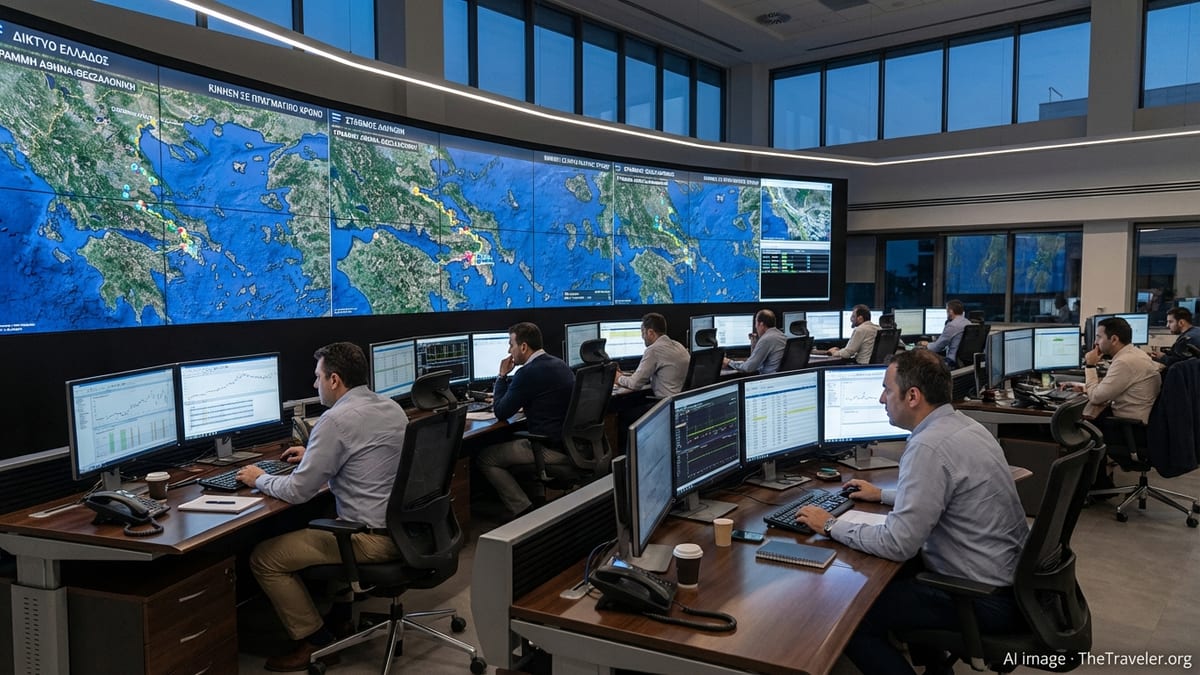
Digital Signalling Takes Root in Eastern Europe
Publicly available material from Hitachi and European rail authorities indicates that Romania is emerging as an important implementation ground for the European Rail Traffic Management System, or ERTMS, the EU’s flagship digital signalling standard. The system is designed to replace a patchwork of national legacy technologies with a single framework that can manage train control across borders.
According to technical documentation and company literature, Hitachi is involved in delivering modern control, command and signalling systems on Romanian corridors that form part of the wider trans-European transport network. These deployments focus on the European Train Control System component of ERTMS, which uses continuous communication and in-cab signalling to supervise train speeds and headways, rather than relying solely on trackside signals.
Romania’s rail network statement for the current timetable period highlights ongoing works to introduce ERTMS across priority freight and passenger routes. The inclusion of these upgrades in national planning documents suggests that the technology is transitioning from pilot projects to operational infrastructure, creating a foundation for more frequent and more reliable services that can connect with neighbouring states.
Industry observers note that these steps in Romania align with a broader European strategy to digitise railways, particularly on key freight and passenger corridors stretching from Central Europe toward Black Sea ports. As more segments adopt interoperable signalling, cross-border operations can be planned with fewer technical hurdles, supporting both tourism and trade.
How ERTMS Changes the Passenger Experience
ERTMS is often described as a back-end technology, but its influence is felt directly by travellers. By standardising signalling and train protection, the system is designed to allow trains from different countries and manufacturers to run safely on the same infrastructure, potentially reducing the need for locomotive changes or long dwell times at borders.
Technical papers on ERTMS and ETCS describe how the system continuously monitors train position and speed, transmitting movement authorities directly into the driver’s cab. This digital oversight allows infrastructure managers to run trains closer together while maintaining safety margins, effectively increasing capacity on existing tracks without visible new lines or stations.
For passengers on international routes linking Romania with Hungary, Bulgaria and beyond, the cumulative effect can be shorter journey times and better timetable stability. Where legacy signalling once limited speeds or required extra margins to account for equipment differences, digital signalling can provide more predictable operations, particularly on busy mixed-traffic corridors that carry both freight and long-distance passenger services.
Travel planners also point out that interoperable signalling is a prerequisite for many new high-speed and overnight services now being discussed across the continent. As operators look to expand networks of night trains and long-distance daytime routes, consistent digital control systems reduce technical barriers to running through-services across multiple national networks.
Romania’s Strategic Role in Europe’s Rail Map
Romania’s geography gives it a strategic role in the European transport network, linking Central Europe with the Black Sea and forming part of several core trans-European corridors. Digital signalling deployments within its borders therefore carry significance beyond the domestic market, particularly for routes connecting to ports and border crossings.
Planning documents and sector analyses describe Romania as a key bridge between EU member states and neighbouring non-EU countries. As ERTMS-equipped lines expand eastward, there is potential for smoother freight flows and more attractive long-distance passenger journeys to and from cities such as Bucharest, Cluj-Napoca and Constanța.
Reports from rail policy forums highlight that modern signalling is considered essential if Romania is to capture a larger share of Europe’s high-value logistics flows and international tourism. Faster, more reliable trains supported by digital control could make rail a more compelling alternative to regional air travel on medium-distance routes, especially as the EU encourages a shift toward lower-emission transport.
At the same time, Romania’s experience with complex infrastructure and governance challenges is seen as a test case for how ERTMS can be rolled out in environments where funding, coordination and technical capacity must all be carefully managed. Successful activation of digital signalling in such contexts may offer a blueprint for other emerging rail markets in Europe.
Hitachi’s Expanding European Rail Footprint
Hitachi has become a prominent supplier of digital signalling and rail technology across Europe, with activities that extend well beyond Romania. Public company materials and past project announcements describe roles in delivering ERTMS-based systems in markets such as Italy and the United Kingdom, as well as digital tools for metro networks in Northern Europe.
The company’s signalling business focuses largely on ETCS Level 1 and Level 2 solutions, which are now being deployed across major European freight and passenger corridors. These levels of ERTMS rely on trackside equipment, radio communications and onboard computers to manage train movements to common European specifications.
Analysts note that experience accumulated on earlier high-speed and regional projects is now informing new schemes in Central and Eastern Europe, including Romania. By reusing technical building blocks and operational knowledge, suppliers such as Hitachi are able to accelerate rollouts and adapt systems to local requirements, while staying within EU interoperability frameworks.
For Europe’s rail passengers, the growing presence of common digital signalling suppliers means that trains built or equipped in one country are increasingly able to operate reliably in another. This gradual harmonisation under ERTMS is central to EU ambitions for a genuine single rail area, where rolling stock and operators can move between markets with fewer technical constraints.
Implications for Future Cross-Border Travel
As Hitachi’s digital signalling initiatives in Romania progress, travel specialists are watching for signs of broader changes in how people move around the continent. Once key corridors are fully equipped and certified, operators will have more flexibility to schedule cross-border services without the same level of technical fragmentation that has long characterised European rail.
In practice, this could support more competitive journey times between Central Europe and the Black Sea region, making rail more attractive for both leisure and business travellers. It also opens the door to new through-services that bypass traditional bottlenecks, provided infrastructure and rolling stock are aligned on standards.
Policy commentary suggests that digital signalling improvements, including those involving Hitachi in Romania, will need to be paired with investments in track, stations and rolling stock in order to deliver their full benefits. However, signalling is seen as the necessary digital backbone that enables those future upgrades to achieve maximum impact.
For now, the gradual activation of ERTMS-based systems in Romania is being viewed as a symbol of Europe’s wider rail transformation. As more countries and corridors adopt the same digital language for train control, the prospect of a more seamless, climate-friendly rail network for European travelers moves from long-term aspiration toward on-the-ground reality.