


Pigeon Island National Landmark sits at the very tip of northern Saint Lucia, joined to the mainland by a narrow causeway just across the bay from Rodney Bay’s resorts. It combines low-effort hiking, calm beaches and some of the island’s most significant military history in a compact area that can fit into half a day. Whether it is worth visiting depends on what you enjoy most on holiday. This guide breaks down Pigeon Island for hikers, history buffs, beach lovers, families, cruise passengers and photographers, with practical details on costs, time, weather and when you might prefer another northern Saint Lucia attraction instead.
Get the latest updates straight to your inbox!
What Exactly Is Pigeon Island?
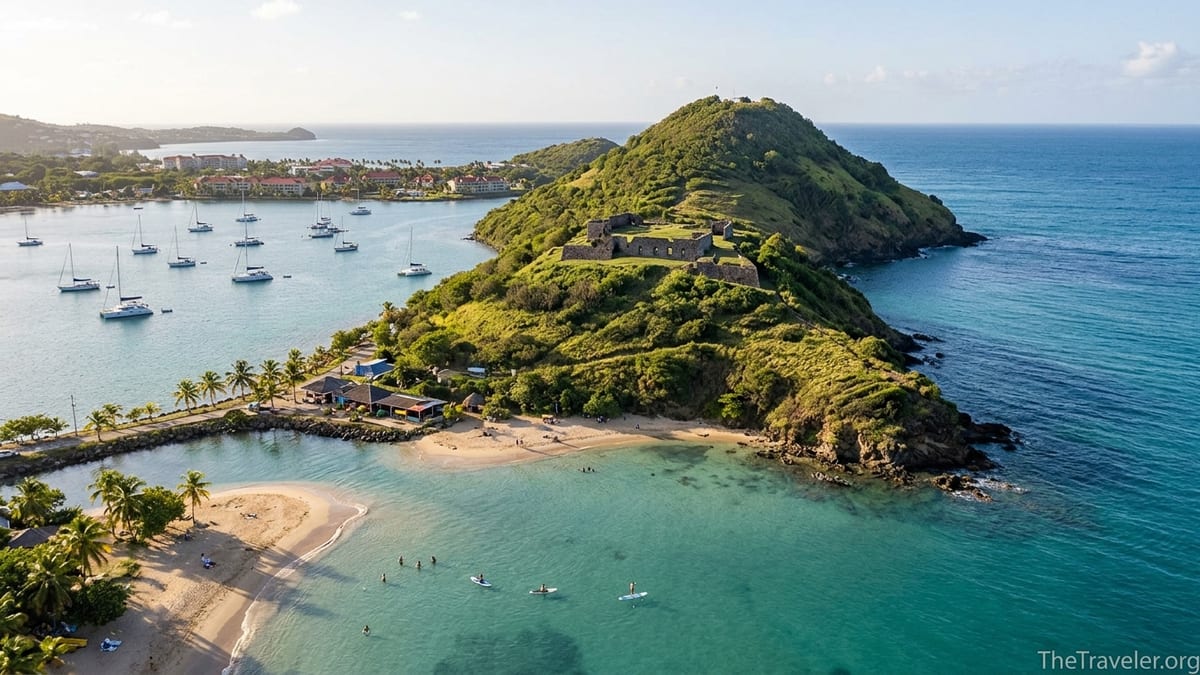
Pigeon Island is a 44-acre peninsula at the northern end of Saint Lucia, facing the open Caribbean Sea on one side and sheltered Rodney Bay on the other. Once a true offshore islet used as a British naval lookout, it was joined to the mainland in the 1970s by a man-made causeway and later declared a National Landmark managed by the Saint Lucia National Trust. Today it blends grassy headlands, two small beaches, hiking paths and stone ruins from the 18th and 19th centuries.
Most visitors arrive from nearby Rodney Bay, about a 10-minute taxi ride away, or from resorts at Cap Estate just over the hill. At the entrance gate you pay a day admission and receive a wristband that allows you to wander freely among the trails, gun batteries and picnic lawns. You will not find loud watersports or big beach clubs inside the landmark; instead, the atmosphere is closer to a quiet coastal park with historical features and a couple of laid-back beach bars just outside the gates on the public shoreline.
Because of its compact size, Pigeon Island works especially well if you want a “taste of everything” in one outing: a modest hike, some local history, a swim and a cold Piton beer at the water’s edge. Visitors often pair it with lunch or shopping in Rodney Bay, or with sunset drinks at a marina restaurant looking back toward the island’s twin headlands.
History and Atmosphere: Is It Worth It for History Lovers?
For such a small piece of land, Pigeon Island has an outsized role in Saint Lucia’s colonial story. In the late 18th century, British Admiral George Rodney established a base here and built Fort Rodney high on the hill to watch French ship movements in nearby Martinique. Stone ramparts, cannon platforms and the outline of barracks still crown the ridge, and interpretive signs explain how the island changed hands as Britain and France fought for control of Saint Lucia.
History enthusiasts will appreciate that you can still walk through roofless stone rooms, peer into powder magazines and stand beside rusted cannons pointed toward the sea. The setting gives immediate context: from the upper viewpoints you see the curve of Rodney Bay, the northern coastline and, on a clear day, a grey outline of Martinique on the horizon. It is easier to understand why this headland mattered so much to the British Navy than by reading a plaque in town.
That said, Pigeon Island is not a full-scale open-air museum with costumed guides and reconstructed interiors. Displays are relatively minimal and some ruins are simply signed and left as they are. Travelers used to large European fortresses may find the remains modest in comparison, but many visitors comment that the unpolished feel makes it easier to imagine real soldiers stationed here rather than a modern re-creation. If you want deeper context, consider timing your visit when a National Trust guide is available, or reading a short history of Saint Lucia before you go.
Hiking Fort Rodney and Signal Peak: How Tough Is It?
The typical hiking route at Pigeon Island is short but rewarding. From the entrance, a dirt and stone trail leads up to Fort Rodney on the lower hill, then continues to a higher viewpoint often called Signal Peak. Most reasonably fit visitors complete the entire circuit in about 60 to 90 minutes, including time for photos, and many hike in sandals or regular sneakers rather than specialized boots.
The path to Fort Rodney involves a series of stone steps and some steeper dirt sections. There are handrails in the steeper spots, but in wet weather the rock can be slick, so it pays to move carefully. The extension to Signal Peak is narrower and steeper again, with some loose gravel and sun-exposed sections. If you have done challenging Caribbean hikes like the Gros Piton trail in southern Saint Lucia, you will likely find Pigeon Island easy; if you are used to flat beach strolls only, you may need to pause for breath on the climbs, especially in the midday heat.
The reward is one of the best panoramic viewpoints in northern Saint Lucia. From the top you look down over Rodney Bay’s marinas and hotels, out to the open sea and back across the jagged coastline toward Castries. Photographers often come for late afternoon light when the water turns deep blue and the low sun gives texture to the hills. Families should know that children who are comfortable with uneven steps usually manage the Fort Rodney section without trouble, though very young kids and anyone with knee or balance issues may prefer to stop at the lower viewpoints rather than continuing to the highest ridge.
Beaches, Swimming and Beach Club Options
Inside the landmark, Pigeon Island offers two small crescent beaches. The main one sits near the base of Fort Rodney on the Rodney Bay side, with gently sloping sand, typically calm water and a few trees offering natural shade. It is popular with families, who appreciate that the water stays shallow for some distance and that the headland shelters the bay from strong swells on most days. On weekends you will see local groups picnicking on the grass just behind the sand.
The second beach, near the old pier on the eastern inner side, tends to feel quieter and can offer clearer water for snorkeling along the rocky edges when conditions are good. You will not find the high-visibility coral gardens of Soufrière’s Anse Chastanet or Sugar Beach here, but casual snorkelers often report sightings of small tropical fish and occasional rays around the rocks. Bringing your own mask is wise, as rental options in the park are limited and not always guaranteed.
Immediately outside the landmark gates along the causeway are additional public beaches with a more beach-club feel. Here you may find loungers and umbrellas for daily rental, simple beach bars serving grilled fish and rum punch and sometimes small watersports operators. If your main priority is a long, activity-packed beach day with jet skis and inflatable water parks, many visitors still prefer nearby Reduit Beach in Rodney Bay. Pigeon Island’s charm lies in its quieter, more natural shoreline paired with historical surroundings.
Practicalities: Entrance Fee, Time Needed and Weather
Pigeon Island charges a per-person entrance fee collected at the main gate by the Saint Lucia National Trust. As of 2026, adults typically pay the equivalent of a modest museum ticket in a North American city, with reduced rates for children; prices are subject to change, so it is worth checking your hotel or local tourism information on the day. Card payments may not always be available, so carrying some Eastern Caribbean dollars or small US dollar bills is practical.
Most travelers find that two to four hours is sufficient for a relaxed visit. A common pattern is to arrive mid-morning, hike to Fort Rodney and Signal Peak before the heat peaks, then come back down for a swim and simple lunch either from a nearby beach shack or a picnic you brought yourself. Cruise passengers often fold Pigeon Island into a half-day private tour that also includes a brief stop in Castries or shopping in Rodney Bay, while independent visitors based in Gros Islet or Cap Estate may drop in for a late afternoon walk and sunset view.
Weather in northern Saint Lucia is warm and humid year-round, with relatively drier, more settled conditions from around December to April. Seas off Rodney Bay are usually calm enough for swimming most days, though passing showers are always possible in the tropics. In the wetter months, typically June through November, trails can be muddier, and cloud cover might obscure long-range views to Martinique, but the landscape is greener and crowds are lighter. Whatever the season, bringing water, a hat and sunscreen is essential: much of the hiking route is fully exposed to the sun.
Who Will Enjoy Pigeon Island Most?
Pigeon Island particularly suits travelers who like variety in a compact package. Couples staying in Rodney Bay often choose it for their first morning on the island, using the easy hike and fort ruins as a soft introduction before tackling bigger excursions like the drive to Soufrière or a Gros Piton hike on another day. The combination of gentle walking paths, shaded lawns and short climbs makes it attractive to mixed-ability groups, where some members might prefer to relax by the water while others explore higher viewpoints.
Families with school-age children often rate Pigeon Island highly because it offers space to run and explore without the intensity of a full mountain hike. Kids can scramble over old stone walls, learn a bit of colonial history from the signs and then cool off in the sea. For beach-first travelers, the sand itself is pleasant rather than spectacular, but the quieter setting compared with busier resort beaches can be a welcome change, especially on weekdays.
Photographers and drone-free content creators will find plenty of material: crumbling stone arches framed by blue sky, narrow paths between cactus and low shrubs, sailboats anchored in Rodney Bay and, in the late afternoon, golden light hitting the fort walls. While commercial drone use is restricted and subject to local rules, many travelers are satisfied with handheld camera shots from the ridge paths and viewpoints. The overall feel is relaxed and uncrowded outside of peak holiday periods and occasional local events.
When You Might Prefer Another Northern Saint Lucia Attraction
Pigeon Island is not ideal for every type of traveler. If you want a long, uninterrupted strip of sand with lots of beach bars and rental options for jet skis, kayaks and stand-up paddleboards, Reduit Beach on the south side of Rodney Bay generally delivers more of that classic resort-beach experience. It runs for nearly a mile, backs onto multiple hotels and has vendors offering everything from fresh coconuts to banana boat rides, which some visitors find more exciting than the quieter coves at Pigeon Island.
Serious hikers who treat a Caribbean trip as a chance for a challenging climb might find the short trails of Pigeon Island underwhelming and will be better served by day trips to Gros Piton or the Tet Paul Nature Trail near Soufrière. Although those excursions require a long drive from the north, they offer more elevation gain, lusher rainforest scenery and close-up views of Saint Lucia’s iconic twin peaks. Travelers staying just two or three nights and focused on high-impact experiences may justifiably prioritize those southern adventures over a half-day at Pigeon Island.
Some history aficionados also choose to skip Pigeon Island if they are short on time, especially if they have already explored similar coastal forts elsewhere in the Caribbean. While the story here is interesting, it is not supported by a large museum or extensive exhibitions, and those looking primarily for in-depth interpretation may be happier dedicating time to cultural visits in Castries or village tours instead. Finally, during very rainy spells or when heat and humidity feel oppressive, the exposed trails and limited shade on the upper slopes may make a leisurely café or spa day in Rodney Bay more appealing than climbing to the fort.
Tips for Families, Cruise Passengers and Accessibility
For families, timing your visit early in the day or late in the afternoon helps avoid the most intense sun on the upper trails. Many parents bring a lightweight picnic and set up on the grassy areas just behind the main beach, letting children alternate between paddling in the shallow water and exploring the nearby ruins. There are basic restroom facilities near the entrance, but it is sensible to bring your own snacks and plenty of water rather than relying solely on on-site vendors, which can be limited or closed outside busy periods.
Cruise passengers docking in Castries can usually reach Pigeon Island in about 30 to 40 minutes by taxi, depending on traffic along the coastal road. Independent travelers sometimes negotiate a round-trip fare with a driver at the cruise terminal that includes waiting time while they explore the landmark for two or three hours. Another common option is to join a small-group tour that pairs Pigeon Island with a stop at Reduit Beach or a short walking tour in Castries, allowing you to sample several northern highlights within a single port day.
Accessibility is a mixed picture. The lower lawns, some coastal paths and portions of the main beach area are reasonably flat and can be navigated with care by visitors who prefer to avoid steps, though surfaces are often uneven grass or compacted earth rather than paved walkways. The climbs to Fort Rodney and Signal Peak, however, involve steep steps, narrow dirt tracks and occasional rocky ledges, which may be unsuitable for travelers with significant mobility challenges. If you or a member of your party uses a wheelchair or has difficulty with stairs, it is worth framing Pigeon Island as a scenic seaside park and picnic spot, without feeling pressure to reach the highest viewpoints.
The Takeaway
For many visitors to northern Saint Lucia, Pigeon Island earns its reputation as one of the region’s most satisfying half-day outings. It offers a rare combination of accessible hiking, tangible military history and calm coves for swimming, all within a compact, easy-to-navigate landscape just minutes from the island’s main resort hub at Rodney Bay. You can climb to a hilltop fort, stand beside cannons framing views toward Martinique, then cool off in gentle surf below, often without crowds or commercial noise.
Whether it is worth visiting ultimately depends on your priorities. Travelers seeking challenging mountain treks or an all-day party beach with non-stop watersports may be better off focusing on destinations like Gros Piton or Reduit Beach. But if you appreciate quieter natural spaces, enjoy light to moderate walks, want to introduce children to Saint Lucia’s history or simply crave a few hours away from your hotel sun lounger without committing to a full island tour, Pigeon Island is an excellent choice. Build it into your itinerary as an unhurried morning or afternoon, and you are likely to leave with a deeper sense of the island than a beach-only stay can provide.
FAQ
Q1. How much does it cost to visit Pigeon Island?
Admission is charged per person at the gate and is comparable to a modest city museum ticket, with reduced rates for children. Prices can change, so it is wise to confirm current rates with your hotel or a local tourism office shortly before you visit and carry some cash in Eastern Caribbean dollars or small US bills.
Q2. How long do I need at Pigeon Island?
Most visitors spend between two and four hours. That is usually enough time to hike up to Fort Rodney and Signal Peak at a relaxed pace, explore the ruins, swim at one of the small beaches and enjoy a simple picnic or beachside snack before heading back to Rodney Bay or your cruise ship.
Q3. Is the hike at Pigeon Island suitable for beginners?
The main trails are short and manageable for most reasonably fit beginners. Expect stone steps, some steeper dirt sections and exposed sun, but no technical climbing. Many people complete the round trip in sandals or regular sneakers. If you are comfortable walking up several flights of stairs, you will likely be fine on the lower Fort Rodney route.
Q4. Are there good beaches inside the landmark?
Pigeon Island has two small but attractive beaches with generally calm, clear water, especially on the Rodney Bay side. They are ideal for a relaxed swim or for families with children who prefer gentle waves. For a longer, more activity-heavy beach experience with more bars and watersports, nearby Reduit Beach usually offers more options.
Q5. Can I visit Pigeon Island easily from a cruise ship?
Yes. Cruise passengers docking in Castries often take a taxi or pre-booked tour to Pigeon Island, with travel time typically under an hour each way. Many itineraries combine a two- to three-hour visit at the landmark with a short stop at Reduit Beach or shopping in Rodney Bay before returning to the port.
Q6. What should I wear and bring for a visit?
Wear light, breathable clothing, a sunhat and comfortable shoes suitable for steps and uneven ground. Pack sunscreen, water, a swimsuit and towel if you plan to swim, and a small snack or picnic if you want to linger on the lawns. A basic daypack and a camera or phone for photos are also worthwhile.
Q7. Is Pigeon Island a good choice for young children or older travelers?
For young children and many older travelers, the lower parts of Pigeon Island work very well, thanks to grassy picnic areas, gentle beaches and easy coastal paths. The steeper upper trails to Fort Rodney and Signal Peak can be challenging for visitors with limited mobility or balance issues, so it is sensible to treat those climbs as optional rather than essential.
Q8. When is the best time of day to go?
Morning and late afternoon are typically the most pleasant times. Temperatures are cooler, the sun is less intense on the exposed ridges and visibility for long-range views is often good. Midday can feel hot on the upper slopes, so if you must visit then, plan to hike first and finish with shade and swimming at the beach.
Q9. How does Pigeon Island compare with other Saint Lucia attractions?
Pigeon Island offers a lighter, more compact experience than major southern sights like the Pitons or the Sulphur Springs. It is ideal if you are based in the north and want an easy half-day outing with a mix of scenery, history and swimming. If you have limited time and crave dramatic volcanic landscapes or rainforest hikes, you might prioritize a full-day trip south instead.
Q10. Is Pigeon Island worth it if I am only interested in beaches?
If your main goal is to spend the day on a big sandy beach with many restaurants, bars and watersports, you may value Reduit Beach or other resort beaches more highly. Pigeon Island’s beaches are smaller and quieter, and the landmark’s appeal lies as much in its fort ruins and viewpoints as in its sand. Beach-focused travelers who enjoy a touch of history often find that combination worthwhile.