


More news on this day
Australia’s most beloved holiday escapes, from Bali to the Gold Coast and the tropical north, are emerging as some of the country’s worst offenders for flight delays, with new performance data highlighting how leisure routes buckle when peak season demand collides with limited capacity and fragile airline schedules.
Get the latest news straight to your inbox!
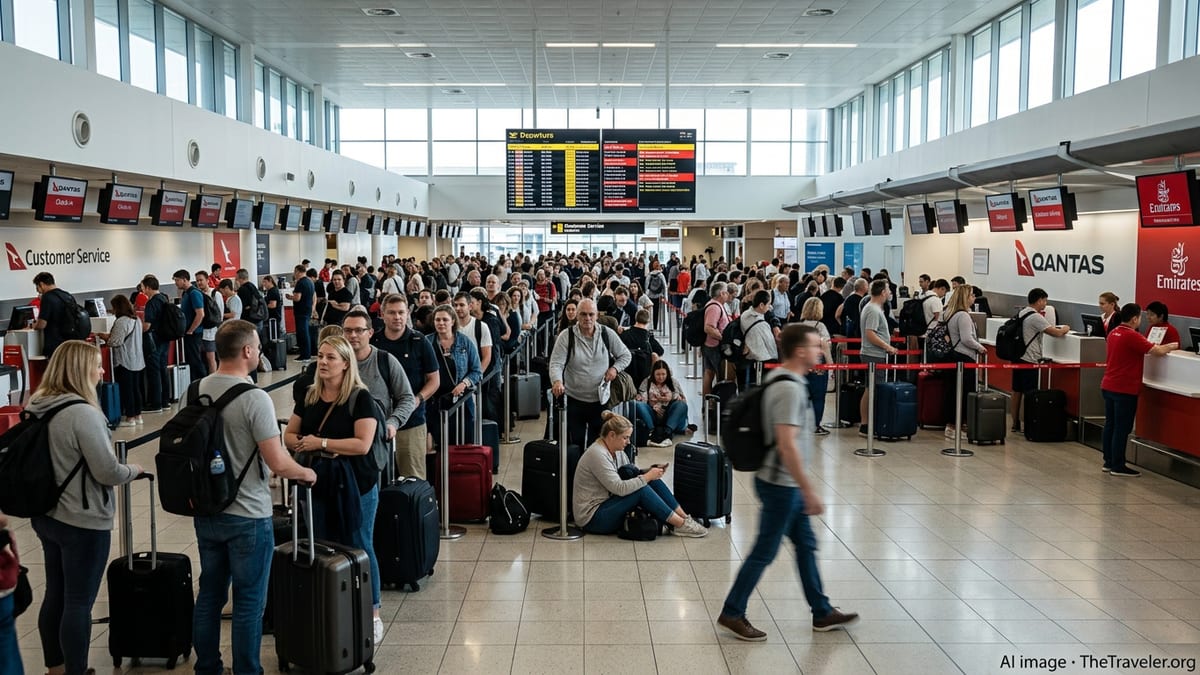
Data reveals leisure routes at the back of the queue
Recent on-time performance figures released by the Bureau of Infrastructure and Transport Research Economics and network data published by Airservices Australia indicate that while overall domestic punctuality has improved slightly in 2026, popular leisure routes still suffer disproportionate disruption compared with key business corridors.
Industry reporting shows that primary trunk routes such as Sydney to Melbourne and Brisbane to Sydney have benefited from additional frequencies and tighter operational controls, which help absorb schedule shocks. In contrast, many holiday-focused services operate with thinner timetables, meaning a single late inbound aircraft can cascade into hours of knock-on delays for outbound passengers heading to the beach or the reef.
Analysts note that the pattern is particularly visible in school holidays and the southern winter, when Australians flock to warmer destinations. Flights that combine heavy leisure demand with constrained airport capacity, such as those to the Gold Coast, Sunshine Coast, Cairns and Bali, consistently appear near the bottom of punctuality league tables when peak-month data is broken out.
These findings underscore a widening divide between work and play in the Australian aviation network. While reliability has become a high-profile focus on corporate routes, many families booking an annual getaway are still encountering queues, rolling delay estimates and last‑minute gate changes on services that are supposed to begin their holidays.
Gold Coast and Sunshine Coast emerge as delay flashpoints
Operational reports from May and early June 2026 highlight coastal Queensland as a major stress point in the domestic system. Gold Coast and Sunshine Coast airports, both heavily reliant on inbound holiday traffic from Sydney, Melbourne and Adelaide, experienced repeated late arrivals and departures as airlines struggled to turn aircraft quickly during long weekends and school-break peaks.
Publicly available flight-tracking and schedule data suggest that these airports, which have grown rapidly as low-cost carriers expanded beachbound capacity, can be vulnerable when weather or congestion affects major southern hubs. With fewer alternative slots available compared with larger airports, even short runway or apron delays can push departures back by an hour or more.
Travel industry coverage has also highlighted how concentrated timetables exacerbate the problem. Many carriers bunch services into narrow mid-morning and late-afternoon waves to suit check-in and hotel transfer patterns, but this limits operational flexibility. When an early rotation is delayed, subsequent flights often inherit the disruption, particularly on high-demand Gold Coast and Sunshine Coast routes that operate close to aircraft and crew limits.
For holidaymakers, the effect is tangible: full domestic terminals, long queues at security and check-in, and departure boards peppered with creeping delay times. While overall cancellation rates remain relatively modest, the prevalence of “severe” delays of more than an hour at these coastal gateways has become a defining feature of the peak-season experience.
Tropical north under strain as Cairns and Townsville fill up
The tropical north, traditionally viewed as a reliable escape from southern winters, has also seen punctuality pressures mount. Network summaries from Airservices Australia for April and May 2026 point to increased holding patterns and extended taxi times around Cairns and Townsville as visitor numbers climb back to, and in some cases exceed, pre-pandemic levels.
Aircraft operating into the region often undertake long rotations that begin in southern capitals before continuing onward to multiple Queensland ports. Industry observers note that once early-morning flights out of Sydney, Melbourne or Adelaide are delayed, there is little slack left in the system by the time aircraft reach the reef gateways. Afternoon departures back to the capitals then depart late, carrying delays into the evening peaks.
Route-level data indicates that leisure-heavy services on corridors such as Brisbane to Cairns and Sydney to Cairns exhibit higher average delay minutes than comparable stage-length business routes. Seasonal weather adds another variable, with afternoon storms and tropical downpours routinely slowing arrivals and departures during the build-up and wet season.
With more international tourists returning to Far North Queensland and domestic travellers chasing warmer temperatures, airport infrastructure and airspace management in the region are coming under renewed scrutiny. Capacity enhancements and schedule smoothing are being discussed in industry circles, but for now many passengers heading to the reef and rainforest continue to face unpredictable departure and arrival times.
Bali and overseas beach breaks top the long‑haul delay list
Among international holiday hotspots, Denpasar in Bali stands out as a persistent trouble spot for Australian travellers. Flight listings show a dense web of services from Sydney, Melbourne, Brisbane, Adelaide and smaller ports, heavily concentrated around school holidays and long weekends when demand spikes for affordable overseas beach breaks.
Travel reporting over recent seasons has repeatedly documented packed departure halls in Australian gateways on Bali-bound days, as low-cost and full-service carriers alike grapple with tight turnarounds and high load factors. When operational or weather issues strike, these routes have limited slack, and departure delays of more than an hour are common on the busiest days.
Analysts point out that Bali runs share many traits with domestic leisure routes that suffer poor performance: high dependence on a small number of daily frequencies, heavy reliance on narrowbody aircraft doing long rotations, and strong clustering of departures at popular times. Once an early service slips, crews reach duty limits and aircraft miss preferred slots, making recovery before the next wave difficult.
Comparable patterns are evident on other short- and medium-haul holiday routes from Australia, including services to Fiji, Phuket and the Pacific islands. These flights cater overwhelmingly to leisure passengers, yet rely on network structures designed primarily around business and domestic schedules, leaving them exposed when disruption hits.
What delays on holiday routes mean for Australian travellers
The concentration of delays on popular holiday hotspots has practical consequences that go beyond inconvenience. Families and groups often build tightly timed itineraries around resort check-ins, tour departures and connecting regional flights, so a two-hour delay into a coastal or island gateway can cascade into missed transfers, extra accommodation costs and lost prepaid activities.
Consumer advocates in Australia have repeatedly highlighted that, unlike in some overseas jurisdictions, there is no comprehensive statutory compensation framework for passengers affected by lengthy delays and cancellations. As a result, travellers to holiday destinations frequently rely on the goodwill policies of individual airlines and the fine print of travel insurance, which can vary widely in coverage and eligibility.
Industry advisories now routinely encourage passengers heading to delay-prone destinations such as the Gold Coast, Sunshine Coast, Cairns and Bali to build extra buffers into their plans. Recommendations include avoiding last-flight-of-the-day options where possible, allowing generous margins before cruises or tours, and travelling with carry-on luggage to reduce the risk of bags missing delayed or retimed services.
For airlines and airports, the growing focus on leisure-route reliability is reshaping priorities ahead of upcoming school holiday peaks. Network planners are weighing the cost of adding spare aircraft and crew or smoothing schedules against the reputational risk of repeated holiday disruption, while regulators and consumer groups continue to monitor how Australia’s most-loved destinations are served by its most delay-prone flights.