


More news on this day
Fresh disruption at Hartsfield-Jackson Atlanta International Airport is rippling across the United States and beyond, with 149 delays and five cancellations affecting a web of flights operated by or on behalf of Delta Air Lines, Southwest, Endeavor, Air France and other carriers that depend on the busy hub to move passengers through the national and transatlantic network.
Get the latest news straight to your inbox!
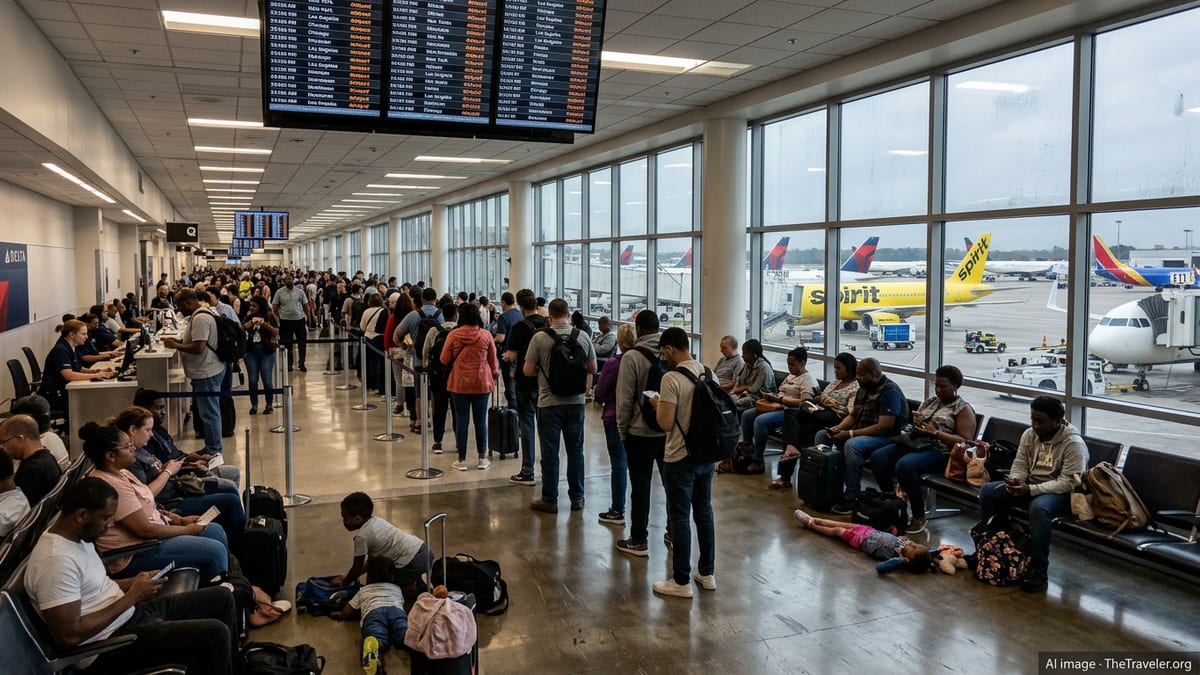
Atlanta’s Role as a Mega-Hub Amplifies Disruption
Atlanta’s Hartsfield-Jackson airport consistently ranks among the world’s busiest hubs by passenger volume, handling tens of millions of travelers every year on large domestic and international networks. Publicly available airport traffic reports show that Delta Air Lines remains the dominant carrier at the airport, supported by a mix of U.S. low-cost airlines such as Southwest and international partners including Air France. This dense concentration of routes means that operational problems rarely stay local for long.
When a cluster of delays and cancellations emerges in Atlanta, the effects frequently extend far beyond Georgia. Connections to major domestic destinations such as New York, Dallas, Denver and Orlando, as well as long-haul flights to European gateways like Paris and London, can be pushed off schedule. Even a modest number of disrupted departures can cause missed connections and out-of-position aircraft and crews across multiple time zones.
On the current day of disruption, 149 delayed flights and five cancellations represent a relatively small percentage of Atlanta’s total daily operations, but the impact is magnified because so many travelers use the airport to connect between flights. Passengers on regional jets operated by Endeavor under the Delta brand, or on codeshare flights carrying Air France or other European airline numbers, may experience the same disruptions as those booked directly on mainline services.
According to flight-tracking dashboards, delays leaving Atlanta today are spread across early-morning and mid-day departure banks rather than clustered in a single weather-related shutdown. That pattern points to a combination of everyday pressures, including tight aircraft rotations, crew scheduling constraints and congestion in the surrounding airspace, rather than a single, extraordinary incident.
Delta, Southwest, Endeavor and Air France Among Affected Carriers
Delta’s central role in Atlanta’s operations means that the carrier is particularly exposed whenever the hub experiences irregular operations. Flight performance data compiled over the past several months show that some Delta services into and out of Atlanta have recorded increased average delays as the carrier works to accommodate heavy demand and a busy summer schedule. Regional operator Endeavor, which flies many Delta-branded connections with smaller aircraft, often absorbs a portion of that strain through closely timed turnarounds.
Southwest Airlines, which runs a point-to-point network but competes aggressively for domestic passengers in and out of Atlanta, is also part of today’s disruption picture. Weather systems and congestion moving across the Southeast can simultaneously affect Southwest’s departures to cities such as Dallas, Houston, Denver and Las Vegas, leading to late inbound aircraft and delayed outbound flights. When those delays intersect with issues at other Southwest bases, schedules can remain out of sync well into the evening.
On the international side, Air France and other SkyTeam partners rely heavily on Atlanta for transatlantic feed. Many European-bound passengers travel on Delta-operated flights that carry Air France or other European airline codes, making it more difficult for travelers to immediately identify which company is responsible for handling disruptions. A delayed Delta departure to Paris or Amsterdam can therefore appear under several different airline codes while representing a single aircraft held at the gate.
Regional carriers and codeshare partners are especially vulnerable during these disruptions. Flights marketed by a major airline but operated by a smaller partner can be among the first to be retimed or canceled when crews and aircraft are in short supply. That dynamic can concentrate inconvenience on travelers heading to or from smaller U.S. cities that have limited alternative service.
Knock-On Effects Across the U.S. and Transatlantic Routes
The 149 delays and five cancellations logged around Atlanta today come against the backdrop of a broader pattern of irregular operations at major airports. Recent data from travel-compensation platforms and consumer reports show that earlier this year, passengers at Atlanta and other large hubs endured hundreds of disruptions on peak travel days, often tied to storm systems, air-traffic flow restrictions and high passenger volumes heading into holiday periods.
When disruptions start at an early hub wave, downstream connections at airports such as New York LaGuardia, Chicago, Dallas-Fort Worth and smaller regional fields can experience rolling delays deep into the schedule. For example, a morning departure that leaves Atlanta behind schedule may cause a late arrival into a midwestern city, followed by a further-delayed return leg to the Southeast. By the end of the day, what began as a short ground hold can translate into hours of accumulated delay for passengers several flights removed from the original problem.
Transatlantic operations are particularly sensitive to timing issues in Atlanta, as long-haul flights often depend on precise banks of feeder traffic. Travelers heading from secondary U.S. cities to European capitals frequently connect through Atlanta in the late afternoon and evening. If regional or domestic flights arrive late, long-haul departures may be held to allow connections, or passengers may be rebooked onto later services from other hubs, which can extend travel times by an entire day.
In some cases, disruptions at Atlanta interact with localized problems elsewhere, such as runway maintenance, thunderstorms or temporary staffing constraints at destination airports. This layered effect means that the 149 delays attributed to the Atlanta hub are only part of a larger web of operational challenges that airlines are managing across the U.S. and on transatlantic corridors.
What Today’s Numbers Mean for Passengers
For travelers, the current tally of 149 delays and five cancellations serves as a snapshot of broader risks that accompany travel through a major hub at any time of year, and especially during the busy summer peak. Historical performance statistics indicate that even on relatively clear-weather days, airlines using Atlanta must manage tight schedules and high gate utilization, leaving little margin when unexpected issues arise.
Passengers connecting through Atlanta on Delta and its regional affiliates, or on Southwest and international partners, face the greatest exposure when their itineraries hinge on short connection times. A delay of 45 minutes on an inbound flight can erase the cushion for a planned connection, especially when terminals are crowded and boarding for onward flights begins well before the published departure time.
Public guidance from travel experts and consumer advocates increasingly emphasizes the importance of monitoring real-time flight status through airline apps and airport displays, particularly when itineraries rely on busy hubs. Same-day schedule adjustments, rolling delays and equipment changes are now common features of air travel, and today’s operational challenges at Atlanta illustrate how quickly a normal day can shift into a more complicated journey for hundreds or thousands of passengers.
The disruptions also renew attention on passenger rights in the event of significant delays or cancellations. Guidance from regulators and consumer organizations describes when travelers may be eligible for refunds or other assistance, depending on the cause of the disruption and whether the affected flight is domestic or international. As airlines refine their schedules and staffing models heading deeper into the 2026 summer travel season, travelers passing through Atlanta are likely to remain focused on how carriers manage irregular operations and communicate day-of-travel changes.
Growing Scrutiny of Reliability at Major U.S. Hubs
Today’s disruption at Atlanta comes as regulators, consumer advocates and airlines themselves are paying closer attention to operational reliability at major U.S. hubs. Recent Air Travel Consumer Reports and airport traffic summaries highlight how a small concentration of large airports handles a disproportionate share of national passenger traffic, placing added pressure on carriers to maintain resilient operations at those locations.
Atlanta’s central position in Delta’s network, combined with the presence of Southwest and a wide array of domestic and international partners, makes it a test case for how well airlines can manage recovery after routine disruptions. Performance metrics for on-time arrivals and departures are increasingly scrutinized by travelers who must decide whether to book itineraries that connect through the hub or to route around it using alternative cities when possible.
Industry analysts note that as demand continues to recover and grow, airlines may face difficult choices between maximizing aircraft utilization and building in larger buffers to absorb operational shocks. Today’s total of 149 delays and five cancellations illustrates how even a relatively modest level of disruption at a mega-hub can dominate the travel experience for thousands of passengers in a single day. For the broader system, the episode underscores how dependent U.S. and transatlantic air travel remains on the smooth functioning of just a handful of critical airports, with Atlanta near the top of that list.