


Buying travel insurance from India often comes down to a few familiar names, and Bajaj Allianz (now rebranded as Bajaj General Insurance) is usually near the top of the list. But how good is its travel insurance in real life when you go beyond the brochure headlines and compare the actual coverage, limits and fine print with what travelers genuinely need on the road in 2026? This review breaks down Bajaj Allianz’s main travel products, tests them against realistic trip scenarios, and highlights where the policies work well and where you should be cautious before clicking “Buy.”
Get the latest updates straight to your inbox!
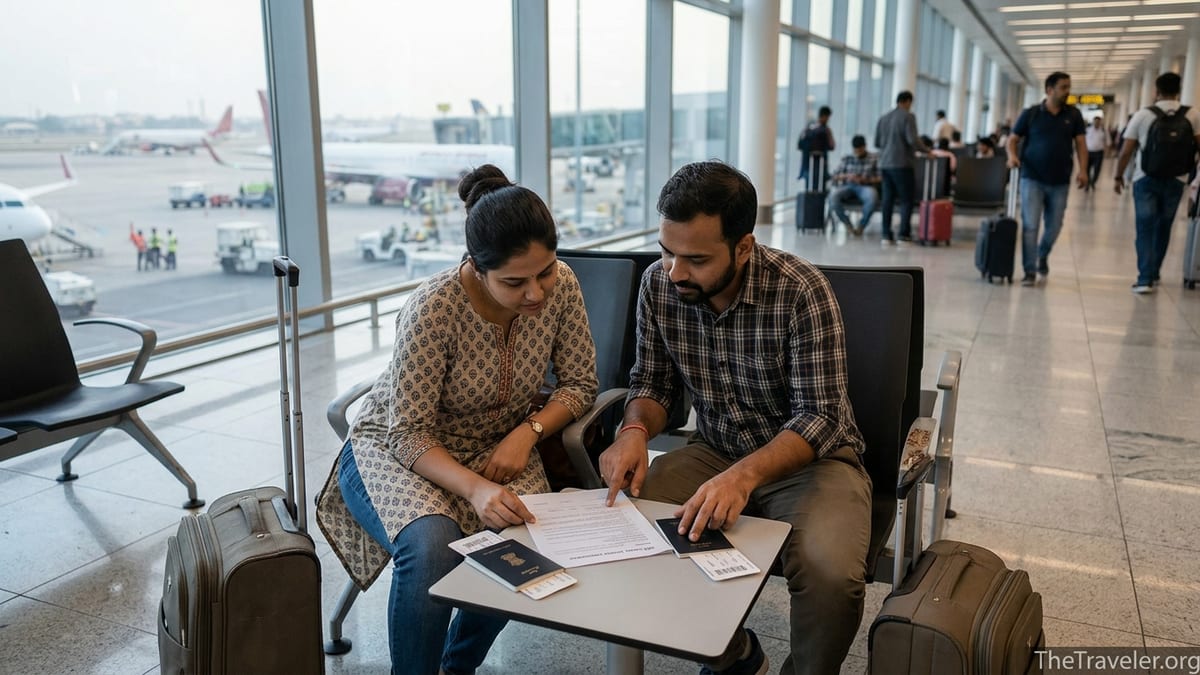
What Bajaj Allianz Travel Insurance Actually Offers Today
Bajaj Allianz’s international travel insurance lineup currently revolves around the Travel Prime International family of plans and other variants such as Travel Ace and legacy products like Travel Companion and Travel Elite that are still widely sold through agents and aggregators. These products are aimed primarily at Indian residents travelling abroad, whether for a short holiday, a Schengen visa trip, or a long multi-city itinerary.
On the official side, Travel Prime International is advertised as a comprehensive overseas plan with worldwide cashless hospitalisation, multiple sum insured options and 24/7 assistance. Older brochures for Travel Companion and Travel Elite, which are still referenced by third-party sellers, show typical medical limits beginning around 50,000 US dollars and going up to 500,000 US dollars on the more premium variants, with add-ons like personal accident, baggage loss, trip delay, trip cancellation and personal liability.
You will also find domestic-focused travel products, such as Bharat Bhraman for trips within India, and separate global health insurance policies that can overlap with travel needs for long stays. For most leisure travellers leaving India for a one- or two-week trip, however, it is the international travel insurance category that matters, and that is where this review focuses.
It is important to understand that plan names and sub-variants (Silver, Gold, Platinum, Prime, Elite) can differ slightly between the Bajaj Allianz website, brokerage sites and offline agents. Before you rely on any advertised benefit, you should download the exact policy wording for the variant you are buying and confirm that limits and sub-limits match what you have been quoted.
Coverage Limits: How Much Protection Do You Really Get?
The headline selling point for Bajaj Allianz’s earlier international plans like Travel Elite was strong medical coverage at relatively low premiums. For example, older Elite brochures showed emergency medical expenses and evacuation coverage up to 500,000 US dollars with a 100 US dollar deductible, alongside smaller fixed benefits for items like trip delay and baggage loss. Travel Companion marketing highlighted packages starting at under 400 Indian rupees for very short trips of four days with medical limits around 50,000 US dollars, which is broadly in line with what several competitors offer at the entry level.
In real terms, a 50,000 US dollar medical limit may be sufficient for a typical two-week trip to Southeast Asia, where a night in a good private hospital can cost in the range of 150 to 300 US dollars and even a modest surgery might run to a few thousand dollars. It looks far more fragile if you are flying to the United States, where a single day in an intensive care unit can easily cross 7,000 to 10,000 US dollars and a complicated hospital stay might exhaust 50,000 US dollars shockingly fast. For senior travellers or anyone with a history of health issues, the higher 200,000 to 500,000 US dollar options are far more realistic for North America, Japan or Western Europe.
Beyond medical expenses and evacuation, Bajaj Allianz’s baggage and trip-related limits are more modest. Baggage loss benefits on popular plans typically cap out at around 500 to 1,000 US dollars, often with a per-item sub-limit, while daily allowances for baggage delay or trip delay may be in the range of 30 to 60 US dollars per twelve hours up to a relatively small maximum. In practice, this might cover a change of clothes and basic toiletries after an airline misroutes your bag in Dubai or Frankfurt, but it will not fully compensate a business traveller for missing an important meeting due to a long delay.
The key point when comparing Bajaj Allianz with other large travel insurers is that the medical headline limits can be competitive, particularly in the mid and upper tiers, but the supporting non-medical benefits are usually more conservative. If you are mainly concerned about catastrophic medical bills abroad and less about lost shopping, that trade-off may be acceptable. If you want generous trip cancellation or interruption cover relative to your total trip cost, you may need to examine whether the sums insured are high enough for your itinerary budget.
How Bajaj Allianz Compares To Other Big Travel Insurers
When you compare Bajaj Allianz to global players such as Allianz Partners, it helps to look at how plans are structured. An Allianz “Prime” single-trip plan for a US-based traveller might, for example, bundle 50,000 US dollars of emergency medical coverage and 500,000 US dollars of emergency medical transportation alongside robust trip cancellation, interruption and delay benefits. Bajaj Allianz’s Travel Prime International suite for Indian residents uses a similar tiered approach, but some variants lean more heavily towards medical and emergency care and less towards high-value trip cancellation.
Price-wise, Bajaj Allianz often looks attractive when quoted in Indian rupees for standard leisure trips. A young couple from Mumbai planning a 10-day holiday in Thailand might find a Bajaj Allianz policy with 100,000 US dollars of medical cover and basic baggage and delay protection for the equivalent of a few hundred rupees per day for the family. A comparable plan from a global brand sold through an international comparison website might cost slightly more once currency conversion and service charges are factored in, although the difference narrows for older travellers or higher coverage bands.
Customer experience is more mixed. On the positive side, Bajaj Allianz promotes truly cashless hospitalisation abroad via assistance partners, which is crucial if you are admitted after an accident and the hospital insists on an upfront guarantee of payment. On the negative side, there have been online complaints about difficulty reaching call centres and frustration around claims handling for some of the company’s other product lines. While those anecdotes do not relate solely to travel insurance, they are a reminder that strong limits on paper mean little if you cannot easily access support at 2 a.m. from a foreign emergency room.
The most honest way to see Bajaj Allianz in the competitive landscape is as a solid, mainstream choice for Indian travellers who prioritise medical protection and are buying their policy in India before departure. It is rarely the absolute cheapest once you normalise for coverage quality, but it is often good value at mid-range coverage levels. If you need niche benefits like generous “cancel for any reason” coverage or high trip cost protection for luxury cruises, international specialist providers may have better tailored options.
Real-world Scenarios: When Bajaj Allianz Works Well and When It Struggles
Consider a straightforward example: a 32-year-old traveller from Bengaluru flying to Bali for seven nights in November. She buys a Bajaj Allianz plan with 100,000 US dollars of medical cover and standard add-ons. On the fourth day she slips by the hotel pool, fractures her wrist and is taken to a private hospital in Denpasar. The hospital estimates around 4,000 US dollars for imaging, surgery and an overnight stay. In this scenario, the policy’s cashless hospitalisation feature and the generous medical limit are likely to handle the entire bill, leaving her to pay only the deductible if applicable. The baggage and trip benefits are irrelevant, and her real-world experience would probably be positive.
Now imagine a more complex case. A 64-year-old man from Pune with controlled hypertension books a 15-day tour of the United States, including New York, Niagara Falls and Orlando. To save money, he chooses a Bajaj Allianz plan with a 50,000 US dollar medical limit. On day six in New York he suffers a heart attack, is admitted to a major private hospital, undergoes angioplasty and spends three days in the hospital plus an additional two days in monitored care. Even if the claim goes smoothly, the total bill could exceed 100,000 US dollars. Once the policy’s 50,000 US dollar cap is reached, any additional costs are his responsibility. In hindsight, paying extra for a 200,000 or 500,000 US dollar limit would have made far more sense for this high-cost destination.
There are also non-medical examples. Take a family of four from Delhi flying to Paris and Switzerland for a 10-day Schengen trip, with a combined trip cost of roughly 6 lakh Indian rupees including flights, hotels and rail passes. They purchase a Bajaj Allianz plan with trip cancellation cover of the equivalent of 2,000 US dollars. Two weeks before departure, their child is hospitalised with dengue and they must cancel. If the insurer accepts the claim, the payout will still be limited to 2,000 US dollars, which may not fully reimburse the entire non-refundable trip cost. The policy performs as advertised, but the family may still feel under-insured.
The lesson from these scenarios is not that Bajaj Allianz fails on its promises, but that you have to match the plan’s limits and structure to the realities of your destination, age and financial exposure. For shorter trips to countries with moderate healthcare costs, mid-level Bajaj Allianz plans can work very well. For the United States, Canada, Japan or expensive cruises where pre-paid trip costs are high, you need to be much more deliberate in choosing higher sums insured and possibly comparing multiple insurers.
Key Exclusions and Fine Print Travelers Often Miss
Like all travel insurers, Bajaj Allianz builds a long list of exclusions into its policy wordings. Understanding these is essential to avoid unpleasant surprises when you file a claim. Common exclusions include pre-existing conditions that are not declared or covered under a specific rider, losses arising from intoxication or drug use, intentional self-harm, participation in certain adventure sports outside the permitted list, and travelling against medical advice.
One area that still confuses many travellers is how Covid and epidemics are treated. Bajaj Allianz has offered specific pandemic-related products in the past, and its group and travel policy wordings now clearly define Covid and link coverage to those definitions. In broad terms, if you contract Covid and require emergency medical care during a covered trip, your valid travel medical benefits can respond, subject to limits and conditions. However, fear of travelling due to disease outbreaks, general government advisories, or border closures without a personal illness are typically not covered reasons for trip cancellation or interruption.
Another frequent pain point is documentation. Bajaj Allianz’s claim process for travel insurance emphasises that claims can be denied if an incident falls outside the policy’s purview or if supporting documentation is inadequate. In practical terms, that means you must obtain detailed medical reports, original invoices, airline statements for delays or baggage issues, and police reports for theft or loss within the required time frame. For example, if your checked-in bag disappears on a flight from Delhi to London via a European hub, you must file a Property Irregularity Report with the airline before leaving the airport and keep all correspondence to support both the airline and insurance claims.
Policy duration and extensions are another subtlety. If your travel insurance expires while you are still travelling, new incidents after the expiry date are not covered, even if your trip was extended for reasons beyond your control unless the policy specifically allows certain automatic extensions. If you are planning an open-ended itinerary, like a six-month multi-country backpacking trip, you should confirm maximum trip length allowed and whether you can extend while abroad.
Pricing, Value For Money and How To Choose the Right Plan
At a headline level, Bajaj Allianz travel insurance can look extremely affordable. Older brochures for Travel Companion, for instance, mention premiums for short four-day trips starting from under 400 Indian rupees exclusive of taxes, with increasing slabs as trip duration and coverage rise. On modern comparison sites, you will often see Bajaj Allianz quoted among the lowest three to five options for a standard one-week holiday in nearby regions with moderate medical limits.
However, the true value for money only becomes clear when you examine what you are getting for each rupee. You should look carefully at the medical limit, the evacuation and repatriation benefits, and then the fine print around deductibles and sub-limits for out-patient care, dental treatment or daily allowances. A “cheap” plan with a 50,000 US dollar limit and strict sub-limits may be worse long-term value than a slightly more expensive Bajaj Allianz variant that raises the medical limit and relaxes certain caps.
As a practical strategy, start by mapping your trip. If you are a 28-year-old solo traveller going to Vietnam and Cambodia for 10 days with a total trip cost of around 1.5 lakh Indian rupees, a Bajaj Allianz plan in the 100,000 to 200,000 US dollar medical range is likely to offer strong protection for a modest premium, especially if you are willing to live with relatively lean baggage benefits. If you are a 55-year-old couple flying to the United States for three weeks with a trip cost above 5 lakh Indian rupees and some pre-existing conditions, you should treat 250,000 to 500,000 US dollars of medical and evacuation cover as a baseline, check whether pre-existing conditions are covered in emergencies, and then compare Bajaj Allianz against two or three other insurers at that level.
Also consider whether you need a single-trip policy or a multi-trip annual plan. Bajaj Allianz offers options for frequent travellers, which can be cost-effective for businesspeople flying abroad every month. The break-even point will vary, but if you take more than three or four international trips a year, the per-trip cost of an annual policy often undercuts repeated single-trip purchases, and you benefit from uniform coverage terms across the year.
The Takeaway
Evaluated honestly after comparing coverage, Bajaj Allianz travel insurance stands out as a solid, middle-of-the-road choice for Indian travellers who want dependable medical protection abroad without paying for bells and whistles they may never use. Its strengths are clear: widely available plan options, good access to higher medical limits on premium variants, cashless hospitalisation through international assistance partners and competitive pricing for many mainstream holiday itineraries.
Its weaknesses are equally important to acknowledge. Entry-level plans can be underpowered for high-cost destinations like the United States, non-medical benefits such as baggage and trip cancellation are often modest relative to total trip costs, and customer service reviews across the company’s broader portfolio are mixed. The complex array of plan names and variants, some of which are still marketed via older brochures, also means a higher onus on the buyer to read the specific policy wording before relying on any advertised benefit.
If you match the plan carefully to your destination, age, health and trip value, Bajaj Allianz can be very good value for money, particularly for short and medium-haul leisure travel from India. For expensive long-haul trips, senior travellers, or those needing very strong trip cancellation and interruption protection, it is wise to compare Bajaj Allianz with at least one or two alternative insurers at the same coverage level. As with any insurance, the right choice is less about brand loyalty and more about the exact wording and limits printed on the page you are signing.
FAQ
Q1. Does Bajaj Allianz travel insurance cover Covid-related medical treatment while I am abroad?
In most current policy wordings, if you contract Covid during a covered trip and need emergency medical treatment, it is generally treated like any other illness, subject to the plan’s terms, limits and exclusions. Fear of travel due to Covid, general advisories or border closures without personal illness is typically not covered for trip cancellation, so you should always verify the latest wording for your specific plan.
Q2. Is Bajaj Allianz travel insurance accepted for Schengen visa applications?
Yes, Bajaj Allianz’s international travel policies are commonly used by Indian travellers applying for Schengen visas, provided the plan you select meets the minimum requirements such as sufficient medical coverage and repatriation benefits. When applying, carry the insurance certificate showing your name, trip dates, coverage amount and geographic validity for the Schengen area.
Q3. How much medical coverage should I choose for a trip to the United States with Bajaj Allianz?
For travel to the United States, it is prudent to opt for at least 200,000 US dollars of medical and evacuation coverage, and many travellers choose 500,000 US dollars if available, especially for longer trips or older travellers. Healthcare costs in the United States can quickly exceed lower limits, so saving money by choosing the minimum coverage often proves a false economy.
Q4. Are pre-existing medical conditions covered under Bajaj Allianz travel insurance?
Standard Bajaj Allianz travel plans typically exclude routine treatment of pre-existing conditions, but some may cover emergency medical expenses arising from pre-existing diseases under specific conditions or riders. The definitions are strict, so you should disclose your medical history accurately, check exactly what is considered a pre-existing condition, and get written clarification from the insurer or intermediary if you are unsure.
Q5. Does Bajaj Allianz pay for trip cancellation if my visa is refused?
Many travel policies in India, including some from Bajaj Allianz, do not automatically cover trip cancellation due to visa rejection unless this is explicitly listed as a covered reason. You should read the cancellation and curtailment section of your chosen plan and not assume visa refusal is included; if in doubt, treat non-refundable bookings carefully until your visa is granted.
Q6. How are baggage loss and delay claims handled with Bajaj Allianz?
Bajaj Allianz normally requires you to first report baggage issues to the airline or carrier and obtain official reports such as a Property Irregularity Report for lost or delayed bags. Claims for baggage loss or delay are then paid up to the policy limit and any per-item sub-limits, often after deducting compensation received from the airline and subject to proof of ownership or purchase for higher-value items.
Q7. Can I extend my Bajaj Allianz travel insurance if I decide to stay abroad longer?
Some Bajaj Allianz plans allow extension of coverage before the original policy expires, usually subject to the insurer’s approval, payment of additional premium and confirmation that no claim is ongoing. Rules vary by product, so if there is any chance you will prolong your trip, check extension conditions at the time of purchase and keep customer service contacts handy.
Q8. What should I do in an emergency to use my Bajaj Allianz travel insurance?
In an emergency, seek local medical help first and then contact the assistance number on your policy document or card as soon as practical, ideally before hospital admission for non-life-threatening issues. The assistance provider can arrange cashless treatment where available, guide you to appropriate facilities, and explain what documents you must collect for the claim, such as medical reports, prescriptions, invoices and discharge summaries.
Q9. Is Bajaj Allianz travel insurance good for students going abroad for higher studies?
Bajaj Allianz offers student-focused overseas health and travel plans that many Indian universities and foreign institutions accept, especially when cost is a concern. That said, some universities in countries like Germany, Canada or the United States require specific local-compliant health coverage, so students should compare Bajaj Allianz’s student products with institution-approved plans and confirm compliance before relying on any external policy.
Q10. How can I make sure I am buying the right Bajaj Allianz travel plan for my trip?
Start by listing your destination countries, trip duration, total non-refundable costs and any health considerations, then match these against different Bajaj Allianz plans and coverage levels. Pay close attention to medical limits, evacuation cover, trip cancellation sums and exclusions, and consider taking quotes from at least one or two other insurers at similar coverage levels so you can judge whether the Bajaj Allianz option offers genuinely good value for your specific itinerary.