


Driving to Hong Kong International Airport can be convenient, but only if you understand how the parking works before you arrive at Chek Lap Kok. With multiple official car parks, changing rates, evolving SkyCity developments, and high demand during holidays, a little planning can save you both time and money. This guide walks through how airport parking at Hong Kong International Airport typically works in 2026, what drivers can expect to pay, and smart alternatives if you are leaving your car for several days.
Get the latest updates straight to your inbox!
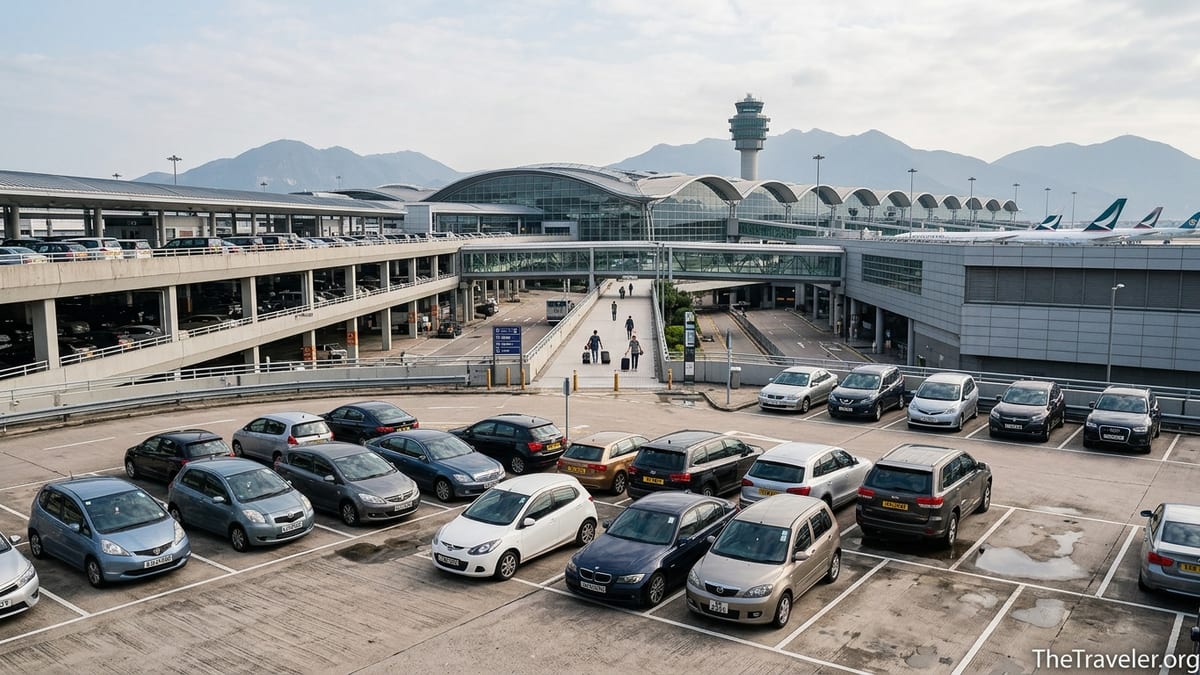
How Parking at Hong Kong International Airport Is Organized
Hong Kong International Airport (HKIA) is built on reclaimed land at Chek Lap Kok, and most official parking is clustered close to Terminal 1 and the AsiaWorld-Expo / SkyCity area. The main facilities for private cars are Car Park 1 and Car Park 4 next to the terminal, plus Car Park 5 on Sky City Road near AsiaWorld-Expo. These are all operated as official airport car parks with 24-hour access and standardized pricing for hourly and daily stays.
Car Park 1 and Car Park 4 are generally treated as the primary short-stay and medium-stay options for passengers using Terminal 1. They are within walking distance of the check-in halls, connected by footbridges and covered walkways. Car Park 4 in particular includes both indoor and outdoor sections, which is useful if you want your car protected from Hong Kong’s heavy summer rain and strong sun.
Car Park 5 sits a little further from the terminal, near AsiaWorld-Expo and the broader SkyCity district. It is also open 24 hours and is often used by travelers who are comfortable with a slightly longer walk or shuttle connection in exchange for more available spaces. As of late 2025, the dedicated SkyCity Car Park closed to public parking and drivers are now generally directed to Car Park 5 or to the 11SKIES complex car park next to SkyCity, which has its own rules and pricing.
Because Hong Kong’s parking market is tightly managed and space is constrained, rates at all three airport car parks are relatively similar and broadly in line with central city parking. There are however a few important features, such as a short free period in some car parks, that make a significant difference for quick drop-offs and pick-ups.
Current Parking Rates and How Long-Term Pricing Typically Works
Official airport guidance and third-party parking services indicate that hourly rates at HKIA’s main car parks generally sit around the low-20s Hong Kong dollars per hour for private cars. For example, open sources summarizing airport rates in 2026 show Car Park 1 and the indoor section of Car Park 4 at roughly 24 Hong Kong dollars per hour, while the outdoor section of Car Park 4, Car Park 5 and the former SkyCity car park are around 20 Hong Kong dollars per hour. Daily caps are typically about 160 to 192 Hong Kong dollars for cars, depending on whether you choose indoor or outdoor parking.
For drivers leaving a car for several days, HKIA uses a stepped long-stay structure rather than a purely per-hour calculation. Public rate tables show that outdoor parking in Car Park 4, Car Park 5, and the SkyCity area has a long-stay package of about 470 Hong Kong dollars for the first three days, and then roughly 160 Hong Kong dollars for each additional day. That means a seven-day trip might cost in the region of 1,110 Hong Kong dollars for outdoor long-stay parking. For an indoor bay in Car Park 4 the daily cap is slightly higher, around 192 Hong Kong dollars, which can add up over a week but is still attractive if you want covered parking.
These figures are useful benchmarks rather than guarantees. HKIA, like many major airports, reviews parking charges periodically, and special promotions or seasonal adjustments can appear with relatively short notice. Drivers planning a long stay should always check the latest official parking information for exact pricing close to the date of travel, especially around Golden Week, Chinese New Year, and Christmas when demand spikes.
Motorcyclists also have dedicated parking bays with significantly lower rates. Public schedules show motorcycles in Car Park 4 paying around 8 Hong Kong dollars per hour, with daily caps that are a fraction of car rates. This makes riding to the airport a cost-effective option for solo travelers, though you sacrifice luggage space and comfort, particularly in summer humidity or heavy rain.
Short-Stay, Pick-Up and Drop-Off: Using the Free 30-Minute Window
For quick drop-offs and pick-ups, the most important detail at HKIA is the short free period available in some of the official car parks. Car Park 1 and Car Park 4 offer about 30 minutes of complimentary parking once within any three-hour period. If you exit within that half-hour window, you pay nothing at the barrier. If you exceed 30 minutes, the parking charge for your entire stay applies from the moment you entered.
In practice, this free window is extremely useful if you are meeting arriving family or dropping off someone who is already checked in. For example, if you pull into Car Park 1, walk to the arrivals hall, help your parents with luggage, and head out again within 25 minutes, you will typically exit without charge. However, if their luggage takes longer at the carousel and you leave after 35 minutes, you will be billed for the full 35-minute stay, usually calculated according to the hourly rate rounded up to the next billing block.
Crucially, this complimentary 30-minute offer does not apply at Car Park 5 or at the former SkyCity Car Park area. Drivers waiting for arriving passengers and expecting free parking at Car Park 5 are often surprised by a bill if they are simply idling in a bay while monitoring flight updates. If you are only there to wait for a message that someone has cleared immigration, you are usually better off using Car Park 1 or 4 and keeping a close eye on the clock.
Because the free half-hour can only be used once every three hours, professional drivers and frequent greeters need to plan accordingly. For instance, if a private hire driver has two pick-ups separated by just over an hour, they cannot rely on the complimentary period twice in quick succession in the same car park and should factor full hourly charges into their pricing.
Long-Stay Parking Strategies for Trips of Several Days
If you are leaving Hong Kong for a multi-day trip and want to park at or near the airport, cost and convenience need to be balanced carefully. With long-stay rates around several hundred Hong Kong dollars for the first three days and a few hundred more for each additional block, a one-week stay in an official car park can quickly exceed 1,000 Hong Kong dollars. For a family of four flying to Southeast Asia, that might still be reasonable compared with four Airport Express tickets plus a taxi at each end, but solo travelers may find it expensive.
One common approach is to park in the outdoor section of Car Park 4 or in Car Park 5, both of which tend to be slightly lower in cost than indoor bays while still being official airport facilities. Travelers on a five-day business trip, for example, often pick Car Park 5, accept the short walk or shuttle, and treat the roughly 630 Hong Kong dollars for five days as a manageable business expense, particularly if they are carrying a sample case or equipment that is cumbersome on public transport.
Another strategy is to pair an airport-area hotel stay with long-stay parking. International booking platforms and hotel loyalty programs regularly feature “park and stay” or “park and fly” packages near major airports worldwide. In Hong Kong, hotels in areas like Tung Chung, Tsuen Wan or even Shatin sometimes run self-drive packages that include overnight parking. One Shatin property, for example, has been advertising a three days two nights room package with complimentary overnight parking for one car through late 2026. In practice, a driver might use such a package for a pre-flight stay, leave the car parked during the trip if permitted, and then return to collect it and stay an extra night.
These combined hotel and parking deals can be particularly appealing if you have an early morning departure. Rather than leaving New Territories or the eastern side of Kowloon at 4 a.m., a family can check into a hotel with parking the evening before, enjoy dinner nearby, sleep properly, and take a short taxi ride to the airport at sunrise, leaving the car safely parked until their return.
Cheaper Alternatives: Airport Express Park & Ride and City Car Parks
For cost-conscious drivers, one of the most effective ways to reduce total trip expense is to combine city parking with the Airport Express train. The MTR Corporation runs official “Park & Ride” car parks at several Airport Express stations, including Hong Kong Station on Hong Kong Island. Public information shows that at Hong Kong Station, for example, hourly parking can be around 13 Hong Kong dollars with special park-and-ride discounts for Airport Express users, and night parking offered at relatively low half-hourly rates. Payment is typically with Octopus or major credit cards.
In a real-world scenario, a Central office worker flying to Singapore for a three-day trip might drive to Hong Kong Station on Friday evening, park there, and take the Airport Express to HKIA. The car stays securely parked in Central while they are away. On Sunday night they return on the Airport Express and drive home. Depending on the exact parking tier and duration, this can undercut the cost of leaving the car for three days at Car Park 4 or 5, especially when Airport Express group or advance-purchase discounts are available.
Beyond official park-and-ride schemes, some drivers choose to park in commercial car parks in Tung Chung or other parts of Lantau and then continue to the airport by bus or taxi. For instance, a long-stay commercial car park in Tung Chung town center may offer a flat daily rate that is slightly lower than the airport’s long-stay package, while bus routes and taxis connect Tung Chung to the terminal in under 15 minutes in normal traffic. The trade-off is the extra step of transferring between car and public transport and the need to confirm opening hours and security at the off-airport facility.
Whichever option you choose, it is important to consider not only headline rates but also your arrival and departure times. Some city car parks have restrictive overnight access, while Airport Express services do not run all night. If your arrival into Hong Kong is scheduled for after midnight, official airport car parks, which operate 24 hours with staff on duty, may offer far more peace of mind than saving a small amount by parking in town.
How to Pay, Practical Tips and Common Pitfalls
Payment at HKIA’s official car parks is usually made at pay stations or directly at the exit barrier. Cash, contactless cards and major credit cards are widely accepted, and Octopus is common in Hong Kong car parks in general. Drivers should keep their entry ticket safe because replacement fees can be high, and losing a ticket can trigger a charge for the maximum daily or even multi-day rate until staff can verify the actual length of stay.
On busy weekends or during major travel peaks, the most common frustration is queuing for both entrances and exits. Drivers report that Sunday evenings after long holiday weekends can see long lines at the exit barriers of Car Park 4 and Car Park 5 as multiple flights arrive within a short window. Building an extra 20 to 30 minutes into your schedule for exiting the car park and reaching the North Lantau Highway can prevent stress if you have a tight schedule after landing.
Another regular pitfall is misunderstanding the 30-minute free parking rule. Some people park in Car Park 1 or 4, spend 25 minutes checking in, and then decide to stay for a coffee or last-minute shopping that pushes them beyond the complimentary window. Because the free period is conditional on exiting within 30 minutes, the entire stay suddenly becomes chargeable. To avoid this, treat the free half-hour strictly as a drop-and-go option and move to regular paid parking if you know you need longer.
Finally, remember that illegal parking around the airport perimeter is not a realistic alternative. Hong Kong’s transport authorities enforce no-stopping zones and unauthorized parking areas vigorously, particularly around key infrastructure like HKIA. Fines, tow-away actions, and even impound charges can quickly exceed the cost of a legitimate parking space and may disrupt your trip home if you return to find your car has been removed.
Security, Safety and Weather Considerations
Security at HKIA’s official car parks is generally strong by regional standards. Facilities are lit at night, monitored by CCTV, and patrolled. However, as with any major transit hub, it is unwise to leave visible valuables in your vehicle. Laptops, camera bags, shopping, and small suitcases should be locked in the boot or taken with you. Insurance policies for Hong Kong-registered cars typically expect owners to take reasonable precautions, and claims may be complicated if it appears that items were deliberately left in plain sight.
Weather is another practical factor. Hong Kong’s subtropical climate brings intense sun in summer, heavy rain during typhoon season, and occasionally strong winds. Drivers who plan to leave a car for more than a few days often prefer indoor levels of Car Park 4 to protect paintwork and interiors from direct sun and wind-blown debris. During typhoon signals, multi-storey indoor parking can also feel more reassuring than fully exposed outdoor lots.
Aeronautical enthusiasts have in the past used high levels of Car Park 4 for plane spotting, drawn by the view of taxiways and runways. Recent reports suggest that airport authorities have tightened access rules after some visitors behaved irresponsibly, running between parked cars to photograph rare aircraft movements. This is a reminder that, although the car parks are open to the public, they remain operational facilities first, and passengers should behave courteously to staff and other drivers.
At night, families may appreciate parking closer to lifts, payment machines and main pedestrian routes, especially if returning from a late flight with tired children and luggage. The indoor sections of Car Park 4 in particular feel similar to large shopping mall car parks, with clear signage and lifts leading directly toward the terminal concourse.
The Takeaway
Parking at Hong Kong International Airport is straightforward once you understand the basic structure. Car Park 1 and 4, close to Terminal 1, work best for short stays and same-day trips, especially if you can take advantage of the 30-minute free parking window for quick drop-offs and pick-ups. Car Park 5 and outdoor sections of Car Park 4 provide slightly more economical long-stay options for multi-day journeys, while indoor bays offer protection from Hong Kong’s weather at a modest premium.
For longer holidays or business trips, it is worth comparing official airport long-stay packages with alternatives like Airport Express park-and-ride schemes at Hong Kong Station or commercial car parks in Tung Chung and other neighborhoods. In some cases, a hotel package that bundles a room with parking can deliver better overall value, especially if you have an early departure or late arrival.
Above all, plan ahead. Confirm up-to-date rates close to your travel date, think about your flight times relative to parking opening hours and public transport schedules, and build in a buffer for busy days at the car park exits. With a bit of preparation, driving to HKIA can be a convenient, predictable part of your trip rather than a last-minute headache.
FAQ
Q1. Which car park at Hong Kong International Airport is best for short-term parking?
The closest options for short-term parking are Car Park 1 and Car Park 4 next to Terminal 1. They are within a few minutes’ walk of the departure and arrival halls and are ideal for same-day trips, quick business travel, and picking up or dropping off passengers when you need a little more time than the curbside drop-off area allows.
Q2. Is there any free parking period at Hong Kong International Airport?
Yes. Car Park 1 and Car Park 4 generally offer a complimentary parking period of about 30 minutes once in any three-hour window. If you exit within that half-hour, you do not pay. However, if you stay beyond 30 minutes, the entire stay is charged from your entry time. Car Park 5 and the SkyCity area do not usually offer this free half-hour.
Q3. How much does it typically cost to park at HKIA for one day?
Publicly available rate tables suggest that daily caps at HKIA’s official car parks are usually in the range of about 160 to just under 200 Hong Kong dollars for private cars, depending on whether you use outdoor or indoor parking. These figures can change, so you should always confirm the latest official prices before you travel.
Q4. What should I expect to pay for long-stay parking of three to seven days?
For outdoor long-stay parking in Car Park 4 or Car Park 5, indicative pricing is around 470 Hong Kong dollars for the first three days, plus about 160 Hong Kong dollars for each extra day. That means a seven-day stay might land in the region of 1,100 Hong Kong dollars. Indoor bays cost a bit more. Actual amounts can vary with future tariff adjustments.
Q5. Are there cheaper alternatives to parking directly at the airport?
Yes. Many drivers use Airport Express park-and-ride car parks at stations like Hong Kong Station, where hourly and night rates combined with train fares can be cheaper than leaving a car at HKIA for several days. Others park in Tung Chung or other Lantau car parks and then take a short bus or taxi ride to the airport. These options require an extra transfer but can significantly reduce total cost.
Q6. Can I book parking in advance at Hong Kong International Airport?
HKIA has historically allowed advance booking for certain promotional parking offers, but availability and terms change over time. Some regional airports now offer online pre-booking with discounts, and similar arrangements may be introduced or updated in Hong Kong. Before a long trip, check the official airport website or customer service channels to see whether advance reservations or online discounts are currently offered.
Q7. Is it safe to leave my car at the airport for more than a week?
Official airport car parks are well lit, monitored by CCTV and patrolled, and are generally considered secure for multi-day or even multi-week stays. Many local residents routinely leave cars in Car Park 4 or Car Park 5 during extended holidays. As always, do not leave valuables visible in the cabin, ensure your car is locked, and consider indoor parking if you are concerned about weather exposure.
Q8. How does motorcycle parking work at HKIA?
Motorcycle bays are available in some of the official car parks, including Car Park 4, with hourly and daily charges that are much lower than car rates. Riders typically pay a single-digit Hong Kong dollar amount per hour, with reduced daily caps, which makes motorcycling an economical way to reach the airport. Spaces are more limited than for cars, so arriving early around peak holiday periods is wise.
Q9. Are there any special parking arrangements for travelers with disabilities?
Designated disabled spaces are provided in the main airport car parks, including Car Park 5, usually close to lifts and pedestrian exits. Some facilities offer discount schemes or extended free periods for disabled drivers or passengers holding appropriate permits. Because the details can change, it is best to check the airport’s latest accessibility information or contact the airport’s customer service line before your trip.
Q10. What happens if I lose my parking ticket at the airport?
If you lose your parking ticket, you will generally need to visit a manned payment counter or call for assistance at the exit barrier. Staff will verify your entry time using their system, and you may be charged a replacement fee or, in the worst case, the maximum daily or multi-day rate until your stay can be confirmed. To avoid this, keep your ticket in a safe place, such as your wallet or phone case, as soon as you enter the car park.