


More news on this day
Some of the world’s largest hotel companies are ramping up investments in India, betting that a powerful surge in domestic travel will keep rooms filled even as growth in other major tourism markets cools.
Get the latest news straight to your inbox!
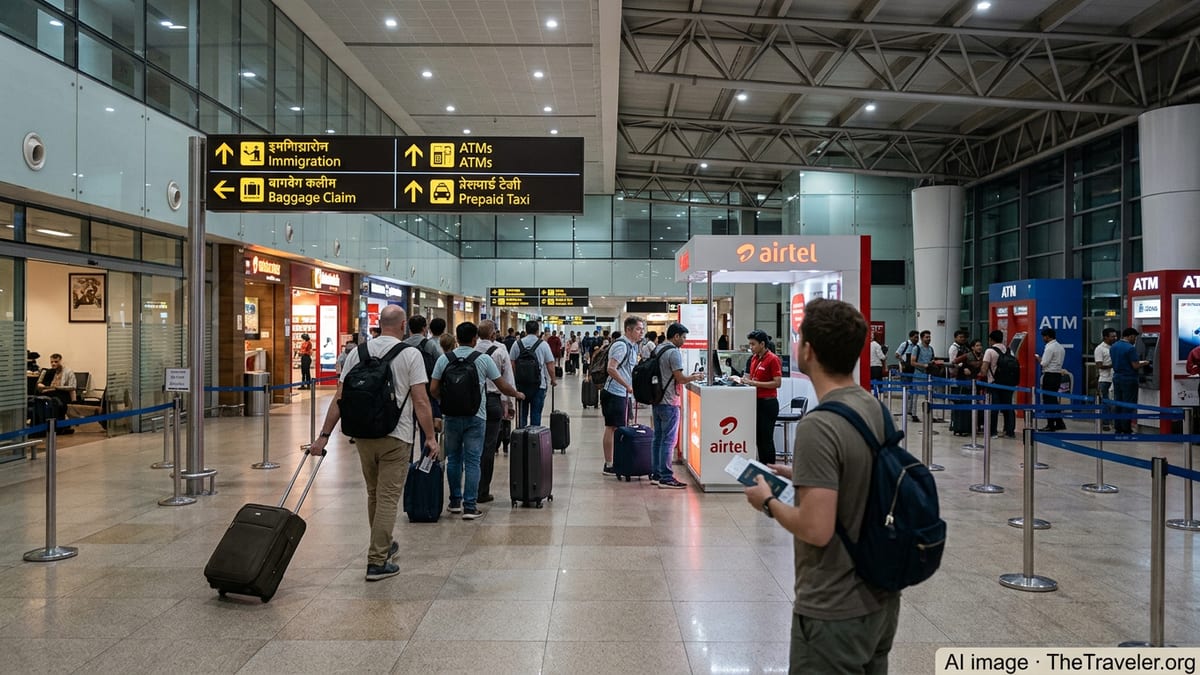
Domestic Demand Becomes the Main Growth Engine
Recent industry reports indicate that India’s hotel market is being reshaped by a structural rise in local travel rather than a rebound in foreign visitors. Domestic tourism has emerged as the most consistent pillar of demand, supported by a growing middle class, expanding aviation networks and a cultural shift toward frequent short breaks, destination weddings and religious tourism.
Published data on hotel performance show that branded properties in India now sustain occupancy levels close to 68 percent nationwide, with average daily rates still rising at mid single to low double digit percentages year on year. Analysts describe this as rate led growth, where operators rely more on pricing power than on a rapid buildout of new supply to drive revenue gains.
Government figures and consultancy research suggest that domestic travel visits are on track to more than double between the middle of this decade and 2030, implying double digit annual growth in internal tourism activity. That trajectory has encouraged chain operators and property owners to view India’s hotel cycle as less vulnerable to external shocks than in the past, when international arrivals and corporate travel from overseas played a larger role in filling rooms.
Credit and brokerage research on the sector notes that premium hotel room supply grew at a modest low single digit pace in the fiscal year to 2024, while demand increased at roughly three times that rate. With new capacity still constrained relative to earlier investment booms, this imbalance has allowed hoteliers to push room rates higher without a noticeable impact on occupancy in most key markets.
Global Brands Accelerate India Pipelines
The tightening market has drawn in global hotel giants, many of which now reference India as one of their most important long term growth engines. Industry data compiled by advisory firms show that chains such as Marriott, IHG, Accor and Radisson collectively control a rising share of India’s branded room inventory and have aggressive signed pipelines stretching into the next decade.
Hotel development research cited in recent coverage indicates that India now has more than 690 new hotel projects in various stages of planning and construction, representing well over one hundred thousand additional branded rooms. A significant portion of those projects are aligned with international brand families, reflecting owners’ preference for global distribution systems and loyalty platforms as they target a broader base of domestic travelers.
Marriott, already identified by sector analysts as the largest international chain in India by room count, has highlighted the country in its global development updates, with double digit growth in revenue per available room and a swelling pipeline. The company has also introduced new concepts tailored to India’s scale driven mid market, signaling that its strategy is not limited to luxury or upper upscale properties in major metros.
Indian groups are responding in kind. Publicly disclosed data from listed hospitality companies show record years for signings, with large domestic operators adding dozens of new hotels to their brand portfolios, from upscale city properties to boutique leisure resorts and conversion friendly midscale flags. This parallel buildout by both global and domestic brands underscores how central India’s travel demand story has become to hotel investment decisions.
Tier 2 and 3 Cities Move Into the Spotlight
While Mumbai, Delhi and other top metros remain core to hotel companies’ earnings, the most dynamic development activity is increasingly shifting to smaller cities. A recent investment review shared in business press coverage found that a record number of new hotel signings in 2024 were located outside traditional tier 1 markets, as operators chase new demand corridors opened by highways, regional airports and industrial clusters.
Consultancy reports describe a marked increase in branded hotel projects in state capitals, manufacturing hubs, pilgrimage centers and emerging tourism circuits. Cities that were once served almost exclusively by unbranded guesthouses are now seeing proposals for internationally flagged midscale hotels and locally managed boutique properties aimed at business travelers, wedding groups and weekend leisure guests.
Developers point to multiple demand streams converging in these markets: regional corporate travel generated by small and medium enterprises, social events that span several days, and rising interest in short religious and nature focused breaks among urban residents. Because land and construction costs can be lower than in the biggest metros, owners often find that returns on investment in secondary cities are competitive when occupancy stabilizes.
Analysts, however, caution that the speed of expansion in some micro markets needs to be calibrated carefully. Travel infrastructure and supporting attractions lag in certain locations, and a sudden influx of similar midscale properties could compress margins if demand ramps up more slowly than projections suggest.
Resilience Amid Global Slowdown and Travel Volatility
India’s bullish hotel story stands in contrast to a softer outlook in several mature tourism economies, where growth in room rates has slowed and travelers show signs of trading down. Global hotel chain disclosures for 2025 point to muted revenue trends in parts of Europe and China, while India continues to deliver double digit gains in key performance indicators.
Several factors underpin this divergence. Macroeconomic forecasts still place India among the fastest growing large economies, and domestic consumption of services, including travel and hospitality, has remained robust. Aviation statistics highlight the country as one of the fastest growing domestic air travel markets, with hundreds of millions of passengers flying annually and new routes linking secondary cities directly.
The sector has also demonstrated resilience in the face of operational shocks. A high profile airline scheduling crisis in late 2025 disrupted thousands of flights and weighed temporarily on leisure and corporate travel, particularly in December, traditionally one of the busiest months for hotels. Yet year end analyses show that the broader trend of rising domestic demand remained intact, and many operators used the episode to refine contingency planning and diversify their demand mix.
Industry commentators argue that this combination of structural economic growth, a young population with rising disposable incomes and a cultural embrace of travel as a lifestyle choice makes India less exposed to the cyclical dips in long haul international tourism that affect other markets. For hotel giants balancing portfolios across regions, that resilience is a powerful counterweight to slowing momentum elsewhere.
Big Opportunities, Emerging Risks
Behind the bullish projections, sector studies also flag a series of emerging risks that investors and operators will need to navigate. One concern is a potential overheating of land prices in especially attractive micro markets, including parts of gateway cities and high profile leisure destinations. Rising project costs can stretch development timelines and challenge the economics of mid market hotels that rely on relatively affordable room rates to capture mass domestic demand.
Another issue is the risk of capacity bottlenecks in skills and staffing. As hundreds of new properties move from pipeline to opening across cities and resort areas, the industry must attract and retain enough trained talent to maintain service standards. Reports suggest that wage pressures are already building in some roles, which could squeeze margins if not matched by productivity gains.
There is also an ongoing debate within the sector about sustainability and the environmental footprint of rapid hotel expansion. Water use, waste management and energy efficiency are becoming more prominent concerns for regulators, destination planners and travelers themselves. Brands that can credibly align rapid growth with concrete sustainability practices may find it easier to maintain pricing power and brand loyalty over the long term.
Despite these challenges, the consensus emerging from public filings, brokerage research and hospitality consultancy reports is that India’s domestic travel boom is reshaping the global growth map for hotel companies. For the industry’s biggest players, expanding in India is increasingly viewed not as a tactical bet, but as a core strategy to counterbalance slowing cycles elsewhere.