


More news on this day
Severe thunderstorms sweeping across the Denver metro area on Monday have disrupted operations at Denver International Airport, triggering a federal ground delay program and leaving hundreds of flights running behind schedule.
Get the latest news straight to your inbox!
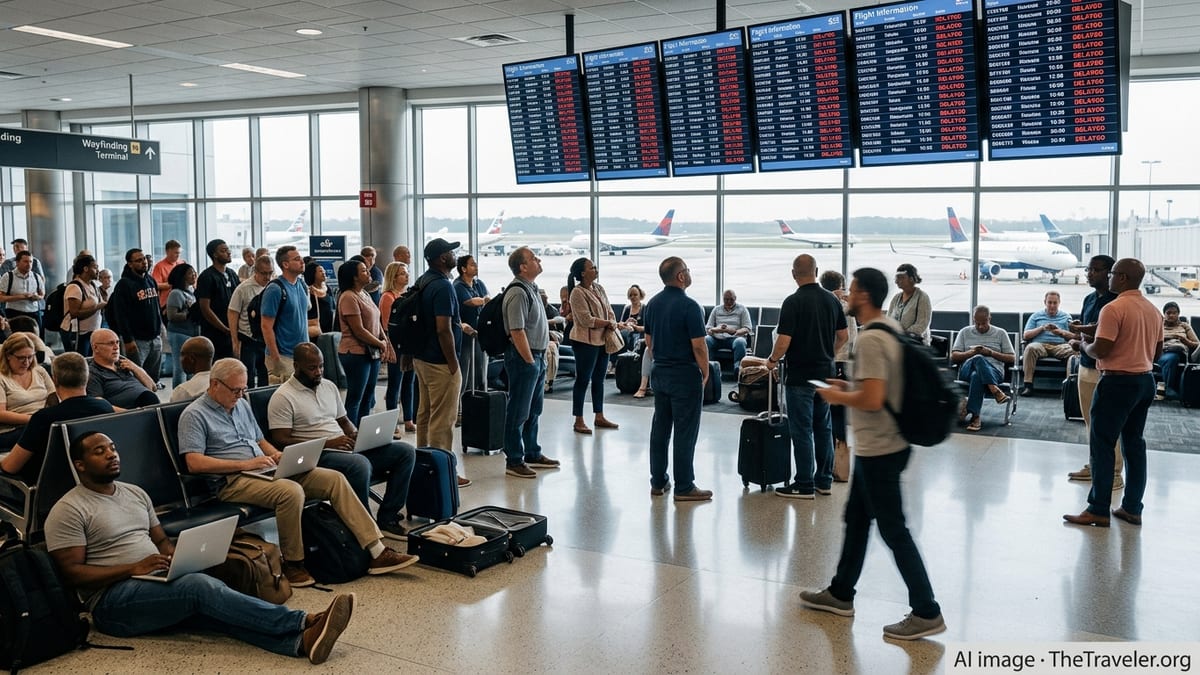
Storms Slow One of the Nation’s Busiest Hubs
Publicly available flight-tracking data on Monday afternoon showed several hundred departures and arrivals at Denver International Airport facing delays, with ripple effects across major domestic routes. Aggregated figures from FlightAware and other tracking dashboards indicated that more than 350 flights into and out of Denver were operating behind schedule at various points in the day as thunderstorms moved through the region.
Reports indicate that the heaviest disruption developed in the afternoon, when convective storms intensified along the Front Range and over the eastern plains. Airlines trimmed departure rates and adjusted arrival sequences as storm cells passed near key approach and departure corridors, reducing the number of aircraft that could safely move through Denver’s airspace at any given time.
Denver International Airport is one of the country’s primary connecting hubs, and even modest constraints can generate wide-reaching delays. When thunderstorms force aircraft to be spaced farther apart on approach and departure, the effect compounds quickly, creating rolling schedule impacts that can persist into the evening peak.
According to published coverage from Colorado-based outlets, the disruptions came as the broader metro area confronted severe weather concerns, including a tornado watch in parts of the Front Range and forecasts for large hail in areas east of the city.
FAA Ground Delay Program Further Restricts Traffic
Information posted on the Federal Aviation Administration’s Denver status page on Monday listed a ground delay program in effect for Denver International Airport arrivals, citing weather and thunderstorms as the cause. Ground delay programs are traffic management tools that require departing flights bound for a congested airport to wait on the ground at their origin until an allotted slot becomes available.
In practice, that means a flight scheduled to leave another U.S. airport for Denver may be held at the gate or on the taxiway for an extended period before takeoff. Average arrival delays at one point in the afternoon were listed at more than an hour, according to the FAA’s summary, with individual flights experiencing shorter or longer holds depending on the timing of storm cells.
Publicly viewable airport dashboards showed that while the bulk of impacted flights were delayed rather than canceled, a smaller number of departures and arrivals were scrubbed altogether as carriers attempted to keep aircraft and crew within mandated duty limits. Those cancellations added to the disruption for travelers whose connections relied on tight turnaround times at Denver.
The combination of thunderstorms, reduced arrival rates and the ground delay program turned what might have been a routine summer afternoon into a difficult operating environment for both airlines and airport staff.
Travelers Confront Long Waits and Missed Connections
Passengers passing through Denver on Monday afternoon reported lengthening wait times as revised departure estimates slipped by 15 or 20 minutes at a time, then reset again as storms lingered over key flight paths. Social media posts and traveler forums described crowded gate areas and concourses as delayed flights stacked up across multiple airlines.
Reports indicate that connecting travelers were particularly vulnerable to missed onward flights. Because Denver serves as a major hub for United, Southwest and Frontier, delays affecting a single inbound aircraft can cascade to multiple subsequent departures, especially in the late afternoon and evening when schedules are tightly sequenced.
Publicly available information from passenger-rights groups advises travelers facing weather-related disruption to monitor airline apps and airport information screens closely, as flight estimates can change repeatedly when traffic management programs are in place. Travel guidance also commonly recommends that affected passengers keep receipts for meals or hotels in case individual airline policies provide vouchers or partial reimbursement, even when the underlying cause is weather.
With storms still active over parts of the region into the evening, airlines were expected to continue adjusting their operations, rerouting aircraft where possible and rebooking passengers onto later flights or alternate connections.
Seasonal Thunderstorm Patterns Challenge Denver Operations
The latest round of delays highlights the seasonal challenge that summer thunderstorms pose for Denver International Airport. Aviation-focused weather case studies from federal meteorological services describe a recurring pattern in which convective storms form over the mountains and foothills in the afternoon before moving east across the plains, often intersecting airways used by jets arriving and departing Denver.
When storm cells sit over or near the airport, controllers may be forced to adjust runway configurations, reroute arrivals through less direct paths or temporarily halt departures until lightning and wind shear risks subside. These adjustments reduce the capacity of the airport relative to its normal throughput, creating the conditions that lead to ground delay programs like the one implemented on Monday.
Historical data shows that Denver’s summer weather frequently produces short but intense bursts of disruption, where the airport remains open but operates at significantly reduced volume. Even when only a fraction of the day’s flights are directly affected, the knock-on effects across tightly timed airline networks can persist for hours as crews time out and aircraft fall out of position.
Industry analyses of previous severe-weather events have pointed out that Denver’s role as a central hub in the U.S. network means that local thunderstorms can have national consequences, affecting passengers whose journeys begin or end hundreds or thousands of miles away.
What Passengers Can Expect Over the Next 24 Hours
Short-range forecasts on Monday evening indicated that storms would gradually shift eastward, suggesting that the intensity of local thunderstorm activity near the airport could ease overnight. However, even after skies improve over Denver, residual disruption can linger as airlines work through backlogs of delayed aircraft and displaced crews.
Based on typical recovery patterns after a ground delay program, early-morning departures on Tuesday are often prioritized in an effort to reset the schedule. Publicly available advice from travel experts suggests that passengers booked on Tuesday flights should still verify their departure times before heading to the airport, as some first-wave services may operate with substituted aircraft or adjusted timings.
For travelers still stranded in Denver late Monday, airline customer-service channels and self-service tools within mobile apps were expected to remain the primary avenues for rebooking. Seats on later departures and alternate routings can become scarce when a large hub experiences widespread delays, so consumer advocates often encourage travelers to act quickly when rebooking options are presented.
While Monday’s storm-related disruption added another difficult day to what has already been a weather-challenged year for parts of the U.S. aviation system, operational data suggests that once thunderstorm activity clears the immediate vicinity of Denver, airlines and airport partners can typically restore more normal flows within a day, barring additional severe weather systems developing in the region.