


More news on this day
Travelers at Fort Lauderdale–Hollywood International Airport faced mounting frustration today as 81 delayed departures and arrivals and four flight cancellations disrupted a wide web of routes linking the United States with Canada, Mexico, the Bahamas and key Caribbean destinations.
Get the latest news straight to your inbox!
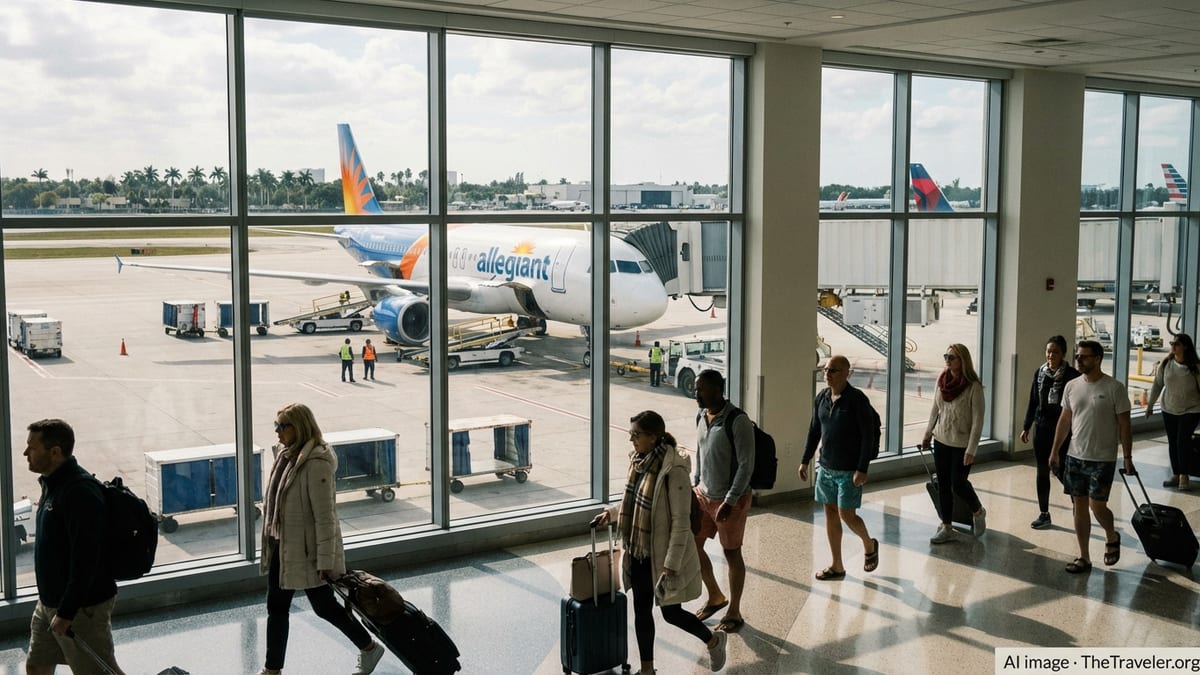
Operational Disruptions Ripple Through a Major Leisure Gateway
Fort Lauderdale–Hollywood International Airport is a critical South Florida hub for sun-bound travelers, handling heavy traffic to and from the Bahamas, Mexico and a range of Caribbean islands, as well as major Canadian and U.S. cities. On this busy holiday travel day, publicly available flight tracking data point to elevated disruption levels, with dozens of flights delayed and a handful canceled, leaving passengers stranded in terminals and on aircraft.
Reports from live flight-status dashboards show 81 total delays connected to Fort Lauderdale operations and four outright cancellations. While these figures are modest in national terms, they represent a concentrated shock for one airport and for specific cross-border and island markets that rely on relatively few daily frequencies. Even short gaps in service can strand hundreds of travelers and sever onward connections in both directions.
Fort Lauderdale’s mix of low-cost and network carriers, many focused on leisure travel, can amplify the impact of irregular operations. Holiday peaks, high load factors and tight aircraft utilization schedules often leave little slack in the system. Once a delay cycle begins, the knock-on effects can roll into later banked departures for hours.
The situation underscores the vulnerability of high-volume leisure gateways during peak periods. As more passengers crowd limited terminal space and gate areas, a cluster of delays quickly becomes a pervasive disruption, especially when compounded by even a small number of flight cancellations.
Cross-Border Links to Canada and Mexico See Strain
Multiple airlines use Fort Lauderdale as a pivotal link between U.S. cities and Canadian gateways such as Toronto and Montreal, as well as Mexican resort and business destinations. Schedule data and recent route maps show a string of nonstop services from Fort Lauderdale to points in Canada and Mexico, reflecting strong demand from both leisure and visiting-friends-and-relatives travelers.
When 81 delays and four cancellations are concentrated across a finite roster of international departures, the strain on cross-border connectivity becomes clear. A single canceled roundtrip can effectively erase one day’s direct option between a U.S. gateway and a Canadian or Mexican city, particularly for secondary markets that may see only one or two daily flights.
Publicly available performance statistics for Fort Lauderdale also indicate that the airport has been among the U.S. facilities with relatively high delay rates in recent months. That broader pattern means that today’s disruption is landing on a route network that already contends with tight schedules and frequent weather or congestion-related slowdowns.
Travelers from Canada and Mexico connecting through Fort Lauderdale to Caribbean islands or other U.S. destinations face a heightened risk of missed connections when irregular operations mount. Reaccommodation options can be limited, especially on peak travel days when most flights are already operating close to capacity.
Bahamas and Caribbean Holiday Traffic Disproportionately Affected
The Bahamas and Caribbean region are particularly exposed when Fort Lauderdale experiences operational stress. The airport serves as a launchpad for high-frequency leisure flights to Nassau, Freeport and a web of island destinations including Jamaica, the Dominican Republic and popular resort hubs across the region.
On heavy outbound travel days, even minor delays compound quickly. If a morning departure to Nassau or Montego Bay leaves significantly behind schedule, aircraft and crew returning to Fort Lauderdale may arrive late for subsequent rotations, causing a cascade of late departures into the afternoon and evening. With four cancellations in the daily tally, some island routes likely see entire rotations scrubbed, forcing travelers to overnight or reroute through Miami or other hubs.
Island economies that rely on inbound visitors for hotel occupancy and cruise connections also feel the impact. Missed same-day links from Fort Lauderdale can translate into late arrivals at resorts, truncated vacations and, in some cases, lost bookings when travelers are unable to reach their destinations on time. According to published coverage of recent U.S. airport disruptions, patterns like these often ripple beyond the airport into local tourism and service sectors.
For return travelers heading back to the United States via Fort Lauderdale, today’s delays and cancellations mean an elevated risk of missed evening connections to home cities, potentially stretching disruptions into the weekend. This is particularly challenging for families and groups who planned tightly timed trips around limited vacation windows.
System-Wide Pressure and Limited Rebooking Options
The disruption at Fort Lauderdale is unfolding against a broader backdrop of system-wide delays across the United States. National airspace status dashboards show hundreds of delayed flights nationwide, with Florida consistently featuring among the more congested regions during peak travel periods. When multiple large airports experience strain at the same time, carriers have less flexibility to reroute aircraft and crews to relieve bottlenecks in South Florida.
Rebooking options for stranded travelers are further constrained by the heavy reliance on point-to-point, leisure-focused operations at Fort Lauderdale. While some passengers can be moved to nearby Miami International Airport or redirected via other hubs, many low-cost routes operate on limited schedules and offer few alternative departure times on the same day. Seats on later flights can sell out quickly, locking in overnight stays or extended layovers.
Public consumer-advocacy information notes that passengers affected by delays and cancellations often face differing levels of support depending on the cause of the disruption and the policies of the operating carrier. Weather or air traffic control constraints may limit compensation or hotel coverage, while mechanical or crew-related issues can yield broader rebooking and care options. Navigating these distinctions can be difficult for travelers who are already contending with long lines at service desks and overloaded call centers.
For travelers attempting to preserve vacation plans or make essential connections, the current disruption at Fort Lauderdale serves as a reminder of the need to leave generous buffers between flights, especially when relying on single daily connections to island or cross-border destinations.
Travelers Advised to Monitor Status and Prepare for Residual Delays
Given the volume of delayed flights and the confirmed cancellations, residual knock-on effects are likely to persist even after conditions begin to normalize. Aircraft and crews displaced by today’s disruptions may remain out of position for early departures on the following day, potentially generating another round of schedule adjustments.
Publicly available guidance from aviation and consumer resources typically emphasizes proactive monitoring of flight status, early check-in and direct engagement with airlines through mobile apps and customer-service channels. Travelers departing from or connecting through Fort Lauderdale in the next 24 hours are advised to monitor their itineraries closely and consider backup plans where feasible.
For those bound for Canada, Mexico, the Bahamas and other Caribbean destinations, the cluster of 81 delays and four cancellations at Fort Lauderdale highlights how quickly a single airport’s operational issues can reverberate across an entire region’s travel network. As carriers work to realign aircraft and crews, passengers may continue to feel the effects in the form of rolled departure times, gate changes and revised routings.
The episode illustrates how central Fort Lauderdale has become to the flow of leisure travelers across the Americas. Even a relatively contained bout of disruption can strand hundreds of passengers, challenge airline recovery efforts and momentarily dim one of the principal gateways connecting U.S. travelers with nearby island and coastal getaways.