


More news on this day
Hundreds of travellers across France are facing severe disruption after a fresh wave of flight delays and cancellations hit major airports including Paris, Nice and Marseille, with publicly available tracking data indicating more than 430 delayed services and at least 64 cancellations affecting carriers such as Air France, easyJet, Ryanair and several other European airlines.
Get the latest news straight to your inbox!
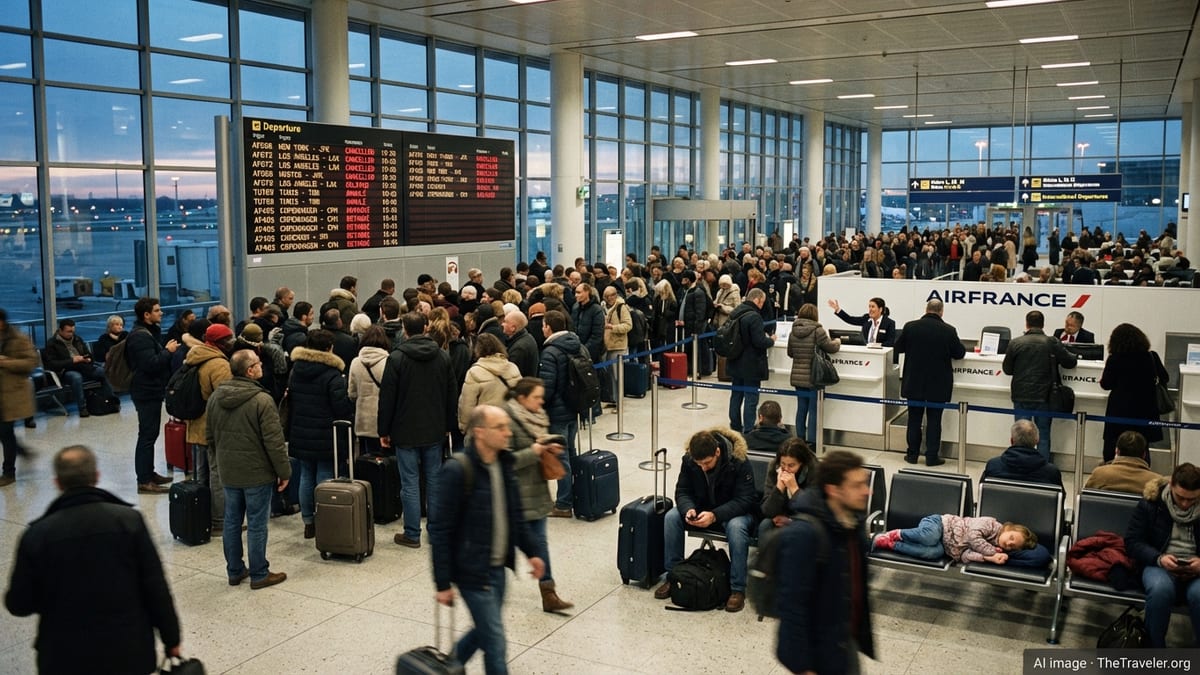
Airports Across France Struggle With Fresh Wave of Disruption
The latest disruption is affecting a broad swathe of the French air network, with impacts reported at Paris Charles de Gaulle, Paris Orly, Nice Côte d’Azur, Marseille Provence, Lyon, Toulouse and other regional hubs. Data from flight tracking and passenger rights platforms indicates that a total of more than 430 flights have been delayed, with over 60 services cancelled across the country.
The pattern mirrors earlier episodes this year in which single days of heavy disruption produced several hundred delays across French airports. In February, for example, monitoring by air passenger advocacy groups recorded more than 430 delayed flights and dozens of cancellations in a single day when adverse weather and air traffic management issues converged. Recent briefings on European network performance also highlight France as a persistent hotspot for en route delays, particularly in airspace overseen from Marseille and Reims.
The current wave of problems appears to be concentrated around peak travel periods, compounding the impact on holidaymakers at the start of the busy summer season. Travellers heading to Mediterranean destinations from Paris, Nice and Marseille report missed connections, extended waits on the tarmac and arrival times slipping into the late night hours.
While precise causes vary by airport and flight, publicly accessible operational updates point to a familiar mix of factors. Periods of unsettled weather across Western Europe, staffing constraints at some control centres and the knock on effects of earlier delays have all been cited in recent disruption summaries. In highly congested summer airspace, relatively small disturbances can quickly cascade into large numbers of delayed rotations for carriers operating tight turnarounds.
Air France, easyJet, Ryanair and Others See Knock On Effects
The disruption is cutting across a wide range of airlines, from France’s flag carrier to low cost and regional operators. Air France and its partners have seen repeated pockets of delays at Charles de Gaulle and Orly in recent weeks, with some days registering more than 100 affected departures and arrivals at Paris alone. Earlier in June, tracking data captured a spike of more than 100 delayed flights and several cancellations at Charles de Gaulle in a single day.
Low cost carriers including easyJet and Ryanair have also been heavily exposed, particularly on domestic and short haul European routes linking French cities with Mediterranean resorts, the United Kingdom and neighbouring countries. Previous monitoring across major French hubs has shown these airlines among the most frequently affected when network wide issues arise, simply because they operate dense schedules with multiple legs per aircraft each day.
Other carriers such as Transavia, Volotea and regional operators serving provincial airports are experiencing similar knock on impacts. Once a first rotation is held on the ground by weather, air traffic control restrictions or late arriving crews, the delay can ripple through three, four or more subsequent sectors, which helps explain why the headline figures for disrupted flights can climb so quickly on busy days.
Industry analysis of previous French disruption episodes suggests that even when average delays remain under an hour, the combination of missed onward connections, curtailed crew duty times and aircraft being out of position can prompt airlines to cancel selected services to stabilise their operations, contributing to the elevated cancellation count now being reported.
Structural Pressures in French Airspace Add to Summer Strain
The latest problems come against a backdrop of persistent structural pressure on France’s air traffic system. Recent European network briefings identify French airspace as accounting for close to one third of all en route air traffic flow management delays in the region so far this year, with area control centres responsible for sectors above Reims, Marseille and Brest flagged as particular hotspots.
Capacity constraints, staff shortages and the phased introduction of new air traffic management technology have all been cited in technical reports as contributing factors. While long term reforms are intended to improve efficiency, transitional phases can temporarily reduce available capacity, especially when combined with strong seasonal demand and convective summer weather.
France also has a recent history of industrial tensions within its aviation and air traffic sectors. Earlier this year, a two day air traffic control strike led to widespread disruption and hundreds of cancellations, while ground handling and airport service walkouts in Paris produced further knock on effects in June. Even when no industrial action is under way, operators remain wary of how quickly delays can accumulate when staffing is stretched.
These underlying issues mean that days of heavy disruption have become a recurring feature of peak travel seasons. Passengers now encountering queues and delayed departures at Paris, Nice and Marseille are being caught at the sharp end of a system that is already running close to its limits, with little spare capacity to absorb unexpected shocks.
What Travellers Are Experiencing on the Ground
Reports from passengers describe crowded terminals, long check in and security lines and departure boards dominated by orange and red delay markers at several major French airports. At hub facilities in Paris, even modest ground handling hiccups can lead to passengers missing tight connecting windows, particularly on long haul services that have fewer daily frequencies.
At leisure focused airports such as Nice and Marseille, holidaymakers heading to and from beaches along the French Riviera and beyond are particularly exposed when peak weekend departure waves are disrupted. Travellers have described holding patterns in the air as well as extended waits on aircraft already on the ground while slots are renegotiated and congestion is cleared.
Rail travellers are not entirely immune from disruption either, with separate reports highlighting ongoing works and operational issues on some high speed and regional lines. For passengers attempting to combine train and air travel, any delay on one leg can easily jeopardise a carefully timed connection at France’s major hub airports.
Despite the frustrations, publicly available performance data still shows that on an average day the majority of flights to and from French airports arrive broadly on time. The challenge for travellers is that on days like those now being reported, the minority of seriously affected flights represents a significant number of people and can dominate the experience of those caught up in it.
Passenger Rights and Practical Advice for Upcoming Trips
The latest disruption serves as a reminder for travellers to familiarise themselves with their rights under European air passenger protection rules before flying. Under EU and UK regulations, passengers may be entitled to meals, accommodation, rerouting and in some cases financial compensation when flights are heavily delayed or cancelled, although eligibility depends on the reason for the disruption and the length of the delay.
Advocacy organisations recommend that passengers keep boarding passes, booking confirmations and any written notices from airlines, as these documents can be important for later claims. When flights are disrupted, travellers are generally advised to check the airline’s app or website for rebooking options, as phone lines and airport service desks can become overwhelmed during large scale events.
For those yet to travel, practical steps can help reduce risk. Booking earlier departures, allowing generous connection times, and avoiding tight same day links between separate tickets can all provide more breathing space if delays occur. Travel planners also highlight the value of monitoring flight status in the 24 hours before departure and considering flexible tickets on rail or air routes when a trip involves critical events such as cruises, weddings or long haul connections.
With France expected to remain one of Europe’s busiest and most complex airspace regions throughout the 2026 summer, the latest series of delays and cancellations is unlikely to be the last. For now, travellers heading to or through the country are being urged by travel advisers and passenger groups to stay informed, build in extra time and prepare for the possibility that journeys may take longer than scheduled.