


More news on this day
Air-raid alerts were triggered in Riyadh over the weekend amid reported missile and drone launches attributed to Yemen’s Iran-aligned Houthi movement, underscoring a renewed security risk for travelers transiting Saudi Arabia’s capital and nearby transport hubs.
Get the latest news straight to your inbox!
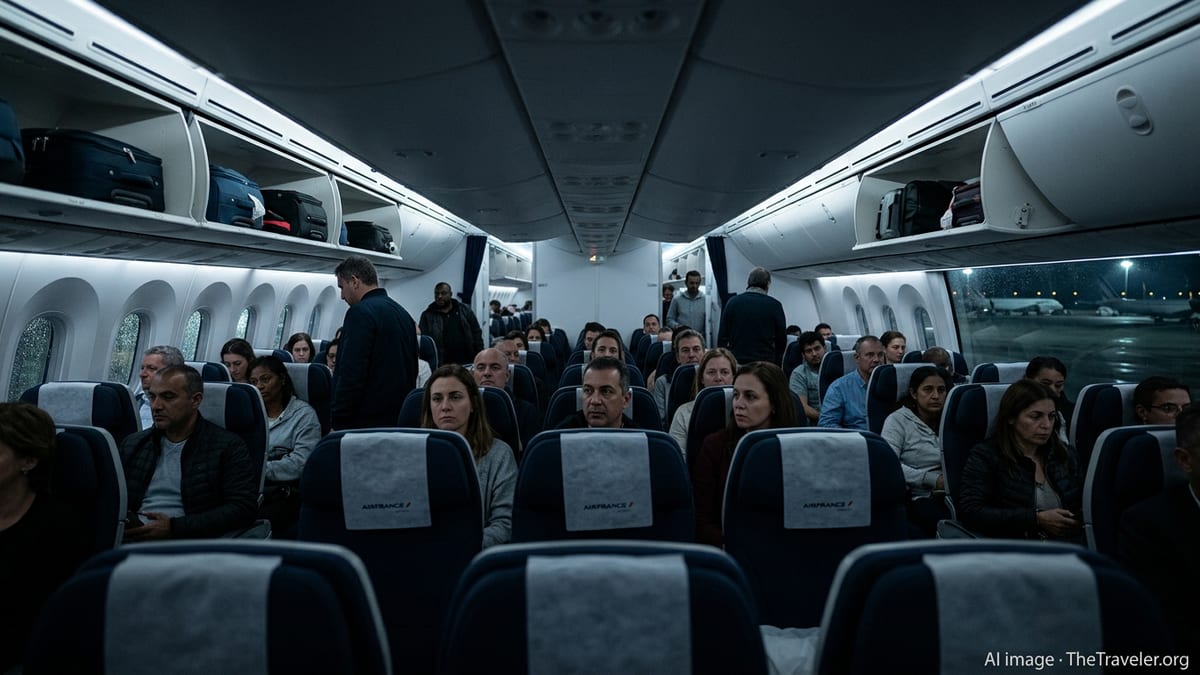
What the new alerts mean for Riyadh and nearby transport hubs
Published video coverage circulating on September 20, 2026 showed air-raid style alerts in Riyadh as the latest escalation played out between Saudi Arabia and the Houthis, whose long-running conflict with the kingdom has periodically spilled across borders. Separate reporting in recent days has described attempted strikes involving a ballistic missile targeting the capital, alongside drone activity aimed at multiple locations.
For travelers, the most immediate concern is the potential for short-notice disruptions around critical infrastructure, including airports. Video reporting from September 19, 2026 referenced activity near Riyadh’s King Khalid International Airport after an overnight alert, adding to traveler anxiety even when flights continue to operate.
While the broader regional context is complex, the practical takeaway for visitors is straightforward: security conditions can change quickly, and alerts may occur at night with little warning. Travelers with tight connections, early-morning departures, or airport hotel stays may be the most exposed to sudden operational changes, road restrictions, or heightened screening.
Targets beyond the capital and why Yanbu matters for travelers
Recent coverage has described attempted attacks not only linked to Riyadh but also to the Red Sea port city of Yanbu, as well as other Saudi locations including Taif, Baysh, and Farasan. Yanbu is especially sensitive because it sits on the Red Sea coast and is associated with major industrial and energy infrastructure, factors that can amplify security responses and ripple into transport patterns.
Travelers should keep in mind that impacts are not limited to the immediate strike area. Even when interceptions occur, debris risks have been highlighted in recent reporting, and precautionary measures can extend to surrounding districts, highways, and coastal approaches, particularly if drones are involved.
For those planning Red Sea itineraries, including coastal resorts, diving routes, or ferry and cruise-adjacent travel, any incident involving Yanbu can prompt heightened risk messaging, temporary maritime caution, or changes to local access. That does not automatically mean closures, but it does increase uncertainty and underscores the need for flexible planning.
How Saudi emergency alerts reach phones and what the tones indicate
Saudi Arabia’s Civil Defense operates a National Early Warning Platform that pushes emergency messages to phones using cell broadcast technology. Publicly available information describes it as a nationwide system designed to send warnings with a distinctive alert tone to mobile devices connected to Saudi networks.
Unlike app-based notifications, cell broadcast messages are designed to reach many devices quickly within a defined area. Government portal documentation also indicates that certain national-level warning messages can sound even when phones are set to silent, reflecting an approach aimed at maximum reach during time-sensitive events.
Saudi Civil Defense also provides public guidance on warning sirens, describing multiple tones intended to signal different phases of an incident, including instructions to move to a secured location such as a shelter, basement, or protected area within a home. For travelers in hotels, the most realistic equivalent is moving away from windows and exterior walls, and following hotel safety instructions and building announcements if provided.
Travel planning implications: flights, hotels, and getting around Riyadh
In practical terms, most visitors will experience an alert as noise, phone notifications, and heightened security posture, rather than direct exposure. Even so, short-term disruptions are possible, including delayed ground transportation, altered airport access routes, and changes in security screening procedures at major venues.
Travelers with flights through King Khalid International Airport should monitor airline channels closely and allow extra time for airport transfers if an alert occurred overnight. If you are staying near the airport or in a high-rise hotel, it is worth identifying interior areas and stairwells upon arrival, and confirming the property’s emergency procedures in advance.
For city movement, maintaining a buffer in schedules matters. If you have a fixed appointment such as a tour pickup, a long-distance bus transfer, or a domestic connection, consider building in extra time and keeping alternative routes in mind. Travelers relying on ride-hailing should anticipate potential surges in demand immediately after an alert, which can slow pickup times.
What official travel guidance currently emphasizes for Saudi Arabia
U.S. government travel guidance updated in mid-September 2026 referenced an ongoing threat environment that includes the risk of missile and drone attacks in the region. The advisory language points to broader civil aviation risk awareness and notes that threats can extend beyond one city or one day.
For travelers, this does not replace common-sense precautions, but it does reinforce the value of layered planning: keep travel documents and essential medications accessible, ensure phones can receive local emergency alerts, and avoid unnecessary time near sensitive facilities if an alert has just occurred.
Given the pace of developments, travelers with upcoming trips to Riyadh, Yanbu, or other mentioned locations may want to review change and cancellation terms for flights and hotels before departure, and prioritize bookings that allow modifications if conditions shift. When reliable, current operational information cannot be confirmed in advance, flexibility becomes the most valuable part of the itinerary.