


The American Express Centurion Lounge network has become one of the most coveted airport perks for frequent travelers, especially for those carrying premium Amex cards. By mid-2026 there are more lounges, stricter access rules, and bigger crowds than ever, which means a visit can be either a highlight of your trip or a frustrating detour. Understanding how access works, what to expect inside, and how to time your visit can make the difference between a glass of champagne in a quiet corner and standing in a waitlist queue watching your boarding time tick closer.
Get the latest updates straight to your inbox!
1. Who Can Actually Get In (and What It Really Costs)
Access to Centurion Lounges is more restricted than many casual travelers expect. In most cases, you must hold one of a small group of premium American Express cards: typically The Platinum Card from American Express, The Business Platinum Card from American Express, or the invite-only Centurion Card. These cards charge steep annual fees that often run into the hundreds of dollars, but they include unlimited visits for the primary cardholder when flying on a same-day ticket. Corporate and international Platinum products may have similar but not identical terms, so always check your specific card benefits before you travel.
Even if you hold a qualifying card, complimentary guest access is no longer the default for U.S. consumer Platinum and Business Platinum members. Since 2023, Amex has tied free guest access to high annual spend. Cardholders who spend at least $75,000 in eligible purchases across their Platinum account in a calendar year can unlock complimentary entry for up to two guests per visit for the rest of that year, the entire next year, and through January 31 of the following year. Those who do not meet the threshold must pay per guest, which can quickly add up on a family trip.
If you have not unlocked complimentary guest access, expect to pay around $50 per adult guest in U.S. lounges and roughly $30 for children between about 2 and 17 years old, with proof of age typically required. International locations follow the same broad pattern but may charge in local currency, and some non-U.S. Platinum products still include up to two complimentary guests by default. In practice, this means a couple traveling together on one Platinum cardholder account could pay about $50 just to bring a partner into, say, the Dallas–Fort Worth or Miami Centurion Lounge for a single visit.
A key detail many travelers miss is that, effective July 8, 2026, American Express requires all guests to be traveling on the same flight as the cardmember in U.S., London, Hong Kong, and Tokyo lounges. That will close a popular workaround where a single Platinum cardholder could escort friends or relatives on different itineraries into the same lounge. If you are planning a group trip later in 2026, you will need to ensure everyone is on the same flight or they will have to access the lounge separately with their own eligible cards.
2. Time Windows, Layovers, and When You May Be Turned Away
Centurion Lounge access is restricted not just by card type, but also by timing. In general, you can enter up to three hours before a scheduled departure of your flight, unless you are on a same-day connecting itinerary. For longer layovers, access rules tighten: effective July 8, 2026, Amex is specifying that on a layover you must arrive at the lounge no more than five hours before your connecting flight to be admitted. That change is aimed at preventing travelers from camping out all day and contributing to overcrowding.
In real terms, this means that if you land at Dallas–Fort Worth at 8 a.m. from Los Angeles and your onward flight to London departs at 6 p.m., you likely will not be able to spend the entire day in the DFW Centurion Lounge. Expect staff to check your connecting boarding pass and potentially ask you to return closer to your evening flight, typically within that five-hour window. If your layover is more modest, say three to four hours in Denver or Seattle, you should be comfortably inside the allowed timeframe.
Departure-only access is another frequent point of confusion. In most locations, Centurion Lounges are available only to passengers with same-day confirmed travel departing that airport, or connecting onward. If you land at your final destination and think you might pop into the local Centurion Lounge for a shower before heading to your hotel, you will almost always be turned away. For example, arriving into New York JFK on an evening flight without an onward boarding pass would not qualify you for lounge access that night.
Finally, access is always subject to capacity limits. During peak periods, especially Sunday afternoons and Monday mornings at major hubs like Atlanta, Miami, or Dallas–Fort Worth, staff may temporarily place arriving guests on a waitlist until seats free up. Travelers report typical waits of 10 to 30 minutes at the busiest lounges, which can be manageable for a long layover but stressful if you are boarding in under an hour. Building in extra time for a potential waitlist is one of the simplest ways to avoid disappointment.
3. Overcrowding Is Real: How to Pick the Right Time and Location
Centurion Lounges were originally designed as oases from crowded airport concourses, but their popularity has created crowding issues of their own. Locations at major hubs like Dallas–Fort Worth (DFW), Las Vegas (LAS), Miami (MIA), and New York LaGuardia (LGA) are frequently reported as standing-room-only during early morning bank departures and late afternoon or early evening peaks. In these periods, you might find yourself circling for a seat, waiting for showers, and facing lines at the hot food station.
That said, crowding patterns are highly predictable, and savvy travelers plan around them. Midday windows between the morning rush and evening bank often see much lighter traffic. For example, flyers transiting through Denver around 11 a.m., or Seattle between 1 p.m. and 3 p.m., often report a quieter lounge with open seating and short bar lines. Likewise, Saturday afternoons can be more relaxed in business-heavy airports like Philadelphia or San Francisco compared with packed weekday mornings.
The specific terminal and location matter too. Some airports have renovated or expanded Centurion Lounges that absorb more guests more comfortably. The newest lounges, such as those in Atlanta and Newark, have been designed with larger footprints, multiple seating zones, and extra power outlets based on lessons from earlier, smaller spaces. In Las Vegas, American Express has even introduced a separate speakeasy-style space, Sidecar by The Centurion Lounge, designed to spread guests across more square footage and provide a quieter setting for cocktails away from the main seating area.
If you are connecting through an airport that offers both a Centurion Lounge and airline-operated clubs, it can make sense to treat the Centurion as a stop for a proper meal, then move to a quieter airline lounge or even an empty gate for work or rest. Many frequent flyers with Amex Platinum and airline status will, for example, have dinner in the Centurion Lounge in Charlotte or Phoenix, then retreat to a nearby airline club or unused gate where seating pressure and noise levels are lower.
4. What You Will Find Inside: Food, Drinks, Showers, and Workspaces
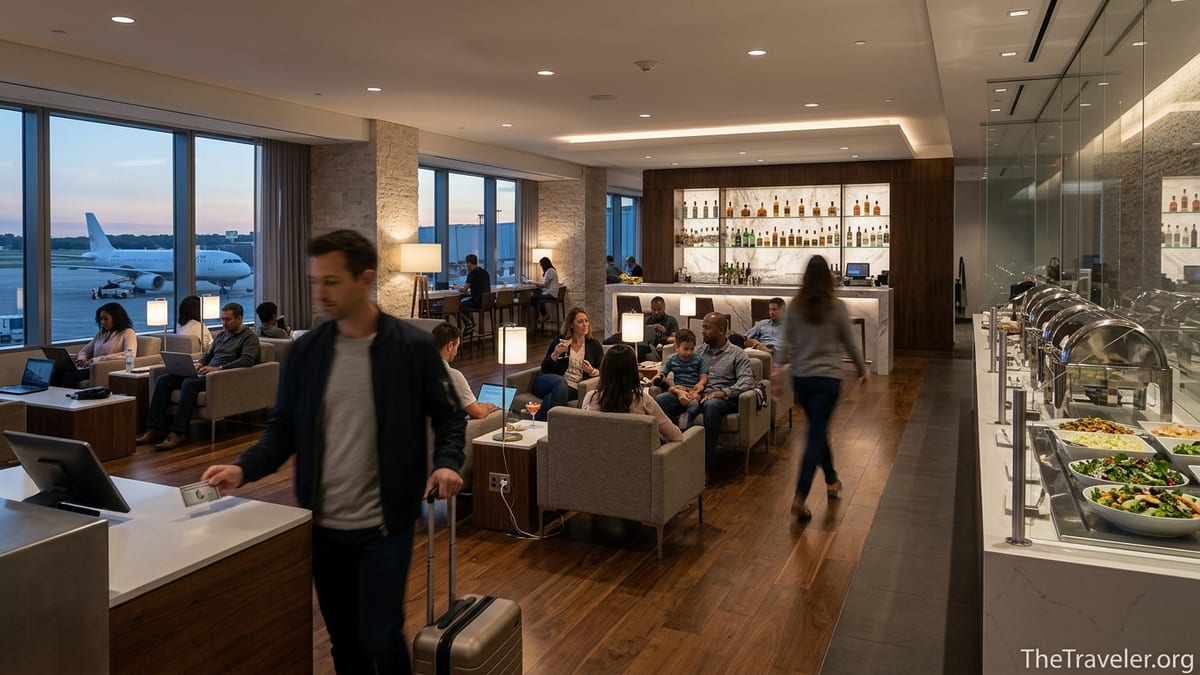
While policies and layouts vary by location, Centurion Lounges share a common baseline of amenities that usually outclasses the typical U.S. domestic airline lounge. Expect a complimentary hot buffet designed by local or celebrity chefs, a full bar with craft cocktails and regional wines and beers, espresso-based coffee drinks, and an assortment of snacks. In Dallas–Fort Worth, for instance, you may find Tex-Mex inspired dishes like braised pork and roasted vegetables, while the San Francisco lounge might feature West Coast flavors such as seasonal salads and locally influenced desserts.
Alcoholic drinks are included in the entry fee, but premium spirits or top-shelf cocktails may carry a surcharge in some locations. Bartenders typically highlight a short list of signature cocktails that rotate periodically and sometimes nod to the local city. Real-world examples include a mezcal-based drink with fresh citrus in Phoenix or a gin-forward cocktail inspired by London’s classic bar scene at the Heathrow lounge. Non-alcoholic options such as cold brew coffee, flavored sparkling waters, and mocktails have expanded noticeably in recent years to accommodate changing traveler preferences.
Most larger Centurion Lounges have a mix of seating zones designed for different purposes. You will usually find dining tables near the buffet, bar-height counters with power outlets for laptop work, soft chairs or sofas for relaxation, and quieter corners with lower lighting. Many locations also include small semi-private work cubbies or phone rooms intended for calls and video meetings, though demand can exceed supply at peak times. If work is your priority, head straight to the back of the lounge where quieter zones are often located, rather than stopping at the first open seat near the entrance or buffet.
Showers and wellness facilities are another hallmark of the network, especially in international or long-haul-focused airports. The London Heathrow lounge offers shower suites and a wellness room; the Atlanta lounge features outdoor terraces that provide fresh air and a break from recirculated terminal air; and several lounges, including Miami and Hong Kong, have nap or quiet rooms where lighting is dimmer. These facilities are typically managed by a host who takes your name and boarding time and then calls you when a room or shower is available, so it is smart to request your spot as soon as you arrive if you are on a tight connection.
5. How Centurion Lounges Compare to Other Premium Options
Travelers often wonder whether a Centurion Lounge is really better than the alternatives they might access with the same Amex Platinum or Business Platinum card. The answer depends on the airport. At U.S. hubs where airline clubs mainly offer packaged snacks, simple bar drinks, and limited hot food, Centurion Lounges usually provide a clear upgrade in terms of dining and design. For instance, many compare the buffet and cocktail program in the Miami Centurion Lounge favorably with typical domestic airline clubs in the same airport.
However, in international terminals with flagship airline lounges, the comparison can look different. At hubs like Frankfurt, Dubai, or Singapore, top-tier airline lounges for first and business class passengers may offer table-service dining, à la carte menus, private nap rooms, and extensive spa facilities that go well beyond what a Centurion Lounge provides. In those cases, travelers with a premium ticket on an airline such as Lufthansa, Emirates, or Singapore Airlines often choose the airline lounge as their primary stop and use Centurion only if they have extra time or want a change of scenery.
Another dimension is crowding and ambiance. Some frequent flyers now treat Centurion Lounges as a place for a quick high-quality meal and espresso before relocating to a quieter, less glamorous space. A traveler connecting through Dallas–Fort Worth might, for example, have dinner and a cocktail in the Centurion Lounge, then spend the next two hours working from a relatively empty gate, rather than staying in a packed lounge with a waiting list for showers and limited quiet zones.
Your own calculus should consider what matters most on that particular trip: Are you looking for food and drink, quiet work time, a shower, or a place for kids to relax? If you prioritize a peaceful environment, a nearly empty Escape Lounge or airline club accessible with the same Amex Platinum card might actually be more comfortable than a fully booked Centurion Lounge, even if the buffet is less impressive.
6. Practical Tips to Maximize Your Visit
With tighter rules and fuller spaces, a bit of strategy goes a long way. The first step is timing. Aim to arrive at the lounge as early in your eligible window as practical, especially during rush hours. If your flight departs at 6 p.m. and you can clear security by 3:15 p.m., heading straight to the lounge at 3:30 often beats waiting until 5 p.m., when the evening rush is in full swing. This is particularly effective at perpetually busy locations such as Las Vegas, Dallas–Fort Worth, and Miami.
Second, think about your priorities the moment you check in. If you are interested in a shower after an overnight flight into a hub like Atlanta or London, ask the front desk if there is a waitlist and place your name immediately. If you need to charge laptops and phones and join a video call, walk past the central bar and buffet to scout for power outlets and quieter corners before settling. Families traveling with children might head for areas with softer seating and more open space, which are often tucked toward the back of the lounge.
Third, plan for guest fees. If you are traveling with a partner or family and have not reached the $75,000 spend threshold for complimentary guests, decide in advance whether paying roughly $50 per adult and $30 per child is worth it for the specific airport and time of day. On a short 45-minute hop from New York LaGuardia to Boston, paying $100 for two adults to spend 30 minutes in a crowded lounge may feel like poor value. On a three-hour delay before a red-eye out of Seattle or San Francisco, the same cost might be a worthwhile splurge.
Finally, keep your card, ID, and boarding passes handy. Agents will generally ask for your physical Amex card, same-day boarding pass, and government-issued ID. In some locations, particularly outside the United States, mobile boarding passes may occasionally cause hiccups with scanners; having a printed backup can save time. If you are using a corporate or international Platinum card, bring documentation or app screenshots of your specific lounge benefits in case staff need clarification.
7. What Is Coming Next for the Centurion Lounge Network
American Express has continued to invest heavily in its lounge network as of 2026, signaling that Centurion Lounges will remain a central part of the Platinum and Centurion value proposition. New locations and expansions are underway at several major airports, including additional space at some of the most crowded hubs. Industry coverage has highlighted plans for more international lounges, such as a future location at Amsterdam Schiphol Airport, and a growing emphasis on design elements like outdoor terraces, wellness rooms, and speakeasy-style spaces similar to Sidecar by The Centurion Lounge in Las Vegas.
At the same time, Amex is tightening rules to manage crowding and maintain perceived exclusivity. The high spend requirement for complimentary guest access, the five-hour layover window, and the requirement that guests travel on the same flight as the cardholder are all examples of this trend. Travelers who once relied on the lounge as a social space for groups or extended families will find that these policies make such visits more expensive and logistically complex.
Competition is pushing standards upward as well. Capital One’s growing network of branded lounges and partner spaces, Chase’s Sapphire Lounges, and improved airline-operated clubs are all targeting the same premium travelers. In response, Centurion Lounges have leaned into local culinary partnerships, sophisticated bar programs, and higher-touch service elements like wellness rooms and curated art. For the traveler, this competition can be good news, as it encourages all providers to keep raising the bar.
Looking ahead, it is reasonable to expect more nuanced rules and possibly dynamic controls on access based on time of day, airport, and cardholder status. While specifics are not yet public, travelers should get in the habit of checking the official American Express lounge access page before each major trip, the same way they might verify baggage rules or airline seat maps. Treating lounge access as a variable rather than a guaranteed constant will help you avoid surprises as the network evolves.
The Takeaway
Visiting an American Express Centurion Lounge in 2026 can still feel like a genuine upgrade to your airport experience, but it is no longer as simple as flashing a card and walking into a serene hideaway. Access rules have grown more complex, guest benefits now hinge on high spending thresholds, and crowding is a persistent reality at the busiest hubs. Travelers who understand the fine print and plan their visits strategically, however, can still enjoy a strong mix of food, drink, showers, and workspace that outperforms most competing options in the same terminals.
Before your next trip, confirm which card you hold, who is traveling with you, and how the timing of your flights lines up with access windows and peak crowding periods. Decide in advance whether guest fees are worth paying and whether you might prefer to split time between the Centurion Lounge and another club or a quiet gate. With realistic expectations and a flexible plan, the Centurion Lounge network can remain one of the most valuable perks in your premium card wallet rather than a source of frustration at the start of your journey.
FAQ
Q1. Which American Express cards get me into Centurion Lounges?
Eligible cards typically include The Platinum Card from American Express, The Business Platinum Card from American Express, and the Centurion Card, plus certain international and corporate Platinum products with similar benefits.
Q2. Do I still get free guests with my Amex Platinum card?
Most U.S. consumer and Business Platinum cardholders no longer receive automatic free guests. Complimentary access for up to two guests usually requires at least $75,000 in eligible annual spend on the Platinum account.
Q3. How much do guest fees cost if I have not unlocked complimentary access?
If you have not met the spending threshold, expect to pay around $50 per adult guest per visit in U.S. lounges and roughly $30 for children aged about 2 to 17, with similar amounts converted into local currency at international lounges.
Q4. Can my guests be on a different flight from me?
From July 8, 2026, guests at U.S. Centurion Lounges and certain international locations such as London, Hong Kong, and Tokyo must be traveling on the same flight as the cardmember to be admitted.
Q5. How early can I enter a Centurion Lounge before my flight?
In most cases you can access the lounge up to three hours before your scheduled departure, or for a limited window during a same-day layover, subject to the five-hour connection guideline introduced in 2026.
Q6. Are Centurion Lounges open to arriving passengers?
Generally, no. You must have a same-day boarding pass for a departing or connecting flight from that airport. Arriving at your final destination usually does not grant you lounge access.
Q7. What kind of food and drinks are available inside?
Centurion Lounges typically offer a complimentary hot buffet designed with local culinary partners, a full bar with cocktails, wine and beer, espresso drinks, and an expanded selection of non-alcoholic options.
Q8. Do all Centurion Lounges have showers and quiet rooms?
Not every lounge has identical amenities. Many major hubs offer shower suites, quiet or nap rooms, and wellness spaces, but smaller or older lounges may have more limited facilities.
Q9. Is there a dress code for Centurion Lounges?
There is no formal dress code, but standard airport norms apply. You should be appropriately clothed, including footwear, and staff may refuse entry to guests who appear disruptive or intoxicated.
Q10. How can I avoid the worst of the crowding?
Try to visit outside peak times such as early weekday mornings and late afternoon bank departures, head straight to the back of the lounge for quieter seating, and arrive as early as your access window allows to beat the rush.