


The DBS Altitude Visa Signature is one of Singapore’s most popular entry-level air miles credit cards, thanks to its simple earn structure, complimentary airport lounge visits, and a package of travel protections that appeal to frequent short-haul flyers and occasional long vacations alike. Understanding exactly how the miles mechanics, lounge access and ancillary perks work in real life is the key to squeezing maximum value from this card on your next trip.
Get the latest updates straight to your inbox!
DBS Altitude Visa at a Glance
DBS positions the Altitude Visa as a straightforward miles-earning card for day-to-day spending and overseas travel. It sits below premium products like DBS Insignia or Vantage, but offers a solid mix of miles, limited lounge access, and travel benefits at an annual fee that is manageable for many working professionals. In mid 2026, the annual fee for the DBS Altitude Visa Signature is roughly in the mid-S$190 range before GST, with a first-year waiver typically available for new cardmembers, and subsequent waivers granted if you meet a minimum annual spend threshold set by the bank.
What sets the Altitude Visa apart is not a long list of luxury bells and whistles, but rather predictable value. You earn miles at a fixed earn rate on local and foreign currency (FCY) spend, and can convert them to a wide selection of airline and hotel partners. On top of that, the Visa version currently includes two complimentary global airport lounge visits per membership year, which is a tangible perk you can feel the moment you step into Changi Airport for an early-morning departure.
For a typical Singapore-based traveler who takes one or two regional trips a year to destinations like Bangkok, Tokyo, or Sydney and occasionally splurges on a long-haul holiday to Europe, the DBS Altitude Visa can work as a reliable “base” card. Used thoughtfully alongside bonus-category cards for online or dining spend, it forms part of a broader miles strategy rather than a standalone solution.
Because product details can change, travelers should always confirm current earn rates, annual fees, and lounge terms on the official DBS channels before applying, but the broad mechanics outlined below reflect how the card functions in practice in 2025 and 2026.
How Miles Earning Really Works
The DBS Altitude Visa earns DBS Points that convert into airline miles. Each DBS Point typically equals two miles when transferred to partners such as Singapore Airlines KrisFlyer or Cathay membership programmes, so understanding the DBS Point earn rate is crucial. As of 2026, most reviews and DBS’s own materials show that the Altitude Visa yields the equivalent of about 1.3 miles per S$1 on local spend and about 2.2 miles per S$1 on foreign currency transactions when calculated after converting DBS Points into miles.
Imagine you spend S$800 a month in Singapore on groceries at FairPrice, Grab rides, and dining at mid-range restaurants like Din Tai Fung and PS.Cafe, all charged to the Altitude Visa. Over a year, that is S$9,600 in local spend, generating roughly 12,480 miles at 1.3 miles per S$1. Add one 10-day holiday in Japan where you charge S$3,000 worth of hotels, JR Pass purchases, and restaurant meals in yen to the same card. At 2.2 miles per S$1 in FCY, that trip adds around 6,600 miles. Combined, you are approaching 19,000 miles from realistic everyday and travel spend, enough to cover a good chunk of a regional economy return ticket in a frequent-flyer programme.
These earn rates make the card particularly attractive for overseas travel expenses that cannot easily be shifted to online-only cards. Hotel check-outs at chains like Marriott or IHG, in-person shopping at department stores in Tokyo or Seoul, and walk-in restaurant bills are good examples where the 2.2 miles per S$1 earn rate can justify using the Altitude Visa despite foreign transaction fees. Even after factoring a typical FCY fee of about 3.25 percent, many miles collectors still find the miles value compelling when flights redeemed are worth 2 to 4 cents per mile in premium cabins.
Do note that some categories such as cash advances, fees, or certain government payments may not earn DBS Points. Before a big-ticket purchase like tuition fees or insurance premiums, it is wise to check DBS’s latest exclusion list, as the difference between earning 2,000 miles and zero miles on a S$1,500 charge is significant over a year.
Redeeming Miles: From DBS Points to Flights
Accumulated DBS Points on the Altitude Visa can be transferred to several airline frequent flyer programmes and occasionally hotel schemes, though KrisFlyer and Cathay are the most common choices for Singapore residents. Transfers are typically in fixed blocks, for example 5,000 DBS Points that equate to 10,000 miles, and a modest conversion fee applies per transfer. This means it is usually more efficient to convert in larger chunks rather than many small transfers.
Suppose you have amassed 30,000 DBS Points after two years of spending on your Altitude Visa, equivalent to 60,000 KrisFlyer miles. That balance can unlock a one-way business class ticket from Singapore to Tokyo on Singapore Airlines during saver award periods, or a return economy flight to cities like Taipei or Hong Kong, depending on current award charts. If you value a business-class flat bed at S$2,000 and pay only about S$80 in taxes and fees, each mile redeemed can be worth more than 3 cents, far above the cost of earning those miles via card spend.
Another popular play is using miles for spontaneous long-weekend trips when cash fares spike. For instance, return economy flights from Singapore to Bali over Chinese New Year can rise above S$500. If you use roughly 20,000 to 25,000 miles instead, even after paying taxes you may be getting meaningful value from points that accumulated gradually through daily spending and a couple of big overseas purchases.
Transfers from DBS to airline partners are not instantaneous. In practice, transfers to KrisFlyer often complete within one or two working days, while other programmes can take longer. Savvy travelers monitor award seat availability first, then initiate a transfer as soon as they see viable options. Because transfers are usually irreversible, you want a clear redemption goal in mind rather than speculatively moving all DBS Points into a single airline programme.
Lounge Access: What You Actually Get
One of the headline perks of the DBS Altitude Visa Signature is complimentary airport lounge access. Current materials and independent reviews in 2025 and 2026 highlight that the Visa version of the Altitude card offers two free lounge visits per membership year via a partner programme, while the Altitude American Express variant does not come with this specific lounge benefit. The exact lounge network may be branded differently over time, but recent documentation and product pages indicate that it is typically powered by a global lounge aggregator partnered with Visa.
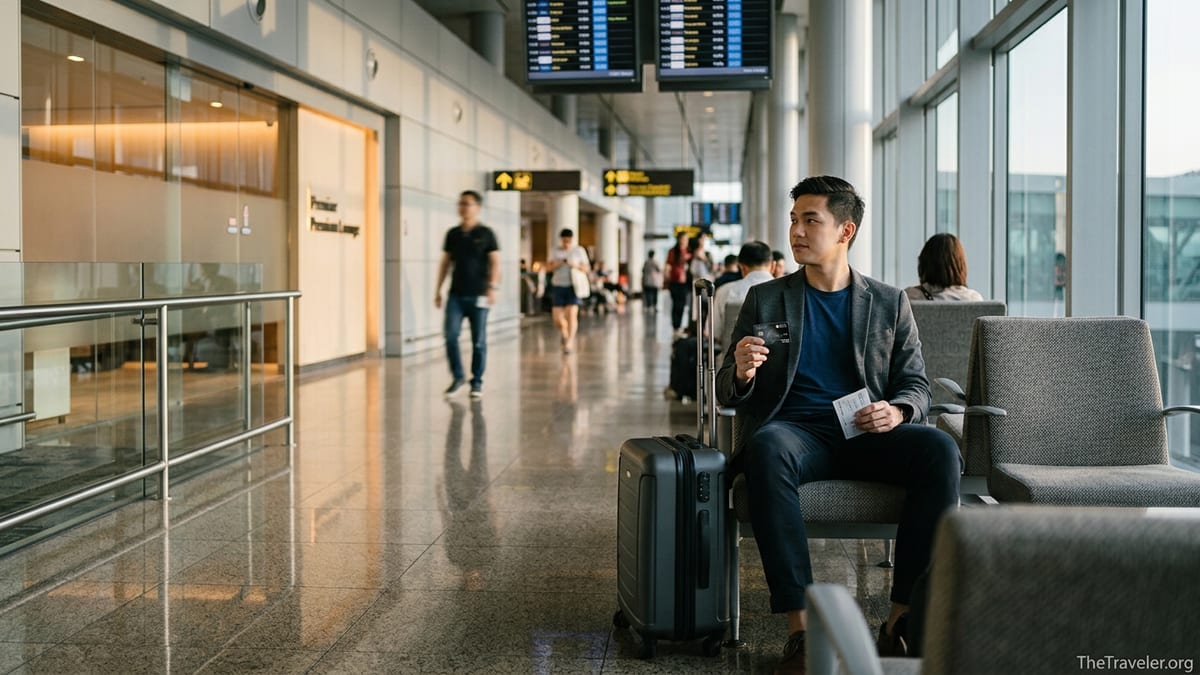
In practical terms, your two complimentary visits allow you to enter participating lounges at airports like Singapore Changi, Bangkok Suvarnabhumi, Kuala Lumpur International, or selected terminals in Tokyo and Hong Kong. Picture a 7 am departure from Changi Terminal 1 to Bangkok: rather than queuing at a crowded coffee chain, you can head to a contract lounge used by multiple airlines, find a quiet corner with armchairs, enjoy a hot breakfast buffet, and use the showers if you arrived straight from the office. Instead of buying a S$9 sandwich and S$6 coffee landside, you get unlimited snacks, drinks, and Wi-Fi included in your lounge visit.
Because the Altitude Visa’s benefit is visit-based, not time-based, how you schedule your airport arrival matters. Most lounges allow entry about three hours before departure. For a mid-morning flight to Tokyo, arriving around 8 am for an 11 am departure lets you comfortably have breakfast, clear some emails using the lounge’s stronger Wi-Fi, and still board without rushing. If you have a long layover in a connecting city such as Bangkok or Kuala Lumpur, you can use your second complimentary visit there to shower and rest before the next segment.
Once you exhaust the two complimentary visits, subsequent entries through the same programme are normally chargeable. Typical walk-up rates through lounge aggregators hover around US$25 to US$40 per person per visit, billed to your credit card. It rarely makes sense to pay these out-of-pocket when you can sometimes buy access directly from the lounge or via airline options at similar prices, unless the app offers a promotional rate. For families, remember that your two free visits are counted per person per entry; if you bring a spouse in as a guest, that generally consumes two passes in one go.
Travel Protections and Everyday Perks
While miles and lounges get the attention, the DBS Altitude Visa also wraps in several softer travel protections and conveniences that quietly add value. The bank typically includes complimentary travel insurance when you charge your full airfare to the card. For example, if you book a Singapore Airlines return ticket from Singapore to London fully on your Altitude Visa, you may receive automatic coverage for travel accident insurance and limited protection against delayed baggage or missed connections, subject to policy wording and caps. For a family of four, buying equivalent standalone coverage from a travel insurer can cost S$80 to S$150 for a two-week Europe trip, so bundling some coverage through the card helps offset the annual fee.
Cardholders also benefit from fraud protection and emergency support if their card is lost or compromised overseas. Imagine your wallet is stolen at a café in Paris. With a quick call to DBS, your card can be blocked, and the bank can arrange for an emergency card replacement or cash advance in many major cities, helping you continue your trip with minimal disruption. While this is a standard Visa feature across many cards, having it on a travel-focused product like Altitude is reassuring when you are far from home.
On the everyday side, DBS sometimes runs limited-time promotions for Altitude cardholders, such as elevated miles on specific online travel agencies, cashback on hotel bookings during certain campaigns, or bonus miles for large foreign-currency spends in a particular quarter. In past years, promotions have included boosted miles on selected flight and hotel bookings, though some of these have been phased out by 2025. Still, keeping an eye on seasonal promotions can occasionally tilt the math in favour of using your Altitude Visa instead of another card for a sizeable transaction.
Finally, pairing the Altitude Visa with DBS PayLah or other digital wallets can streamline local spending while preserving your miles earn. Tap-and-go payments for a S$5 kopi and kaya toast breakfast, S$100 weekly supermarket run, or S$50 Grab top-up all quietly add to your DBS Points balance over time, rather than leaving that spend unoptimized on a debit card with no rewards.
Real-World Spending Strategies with DBS Altitude Visa
To get genuine value from the DBS Altitude Visa, you need to plan your spending pattern rather than simply swiping it for everything. A common approach among Singapore miles collectors is to dedicate the Altitude Visa to categories that earn a flat rate without bonus caps, especially big foreign-currency transactions and large local purchases that do not fit into specialized bonus cards’ categories.
Consider a couple planning a two-week honeymoon in Italy with a S$8,000 total budget excluding flights. They might prepay S$3,000 of hotels on booking sites like Marriott or Expedia in euros, plus another S$2,000 destined for in-person restaurant, train, and attraction costs. Charging S$5,000 of that trip in FCY to the Altitude Visa could yield around 11,000 miles. Combined with a year of regular local spend, they might end up with 30,000 to 40,000 miles, which can meaningfully discount a future holiday to Japan or Australia.
Domestically, use the Altitude Visa for large one-off or irregular expenses such as a S$2,500 MacBook at an Apple Store, S$1,200 worth of annual insurance premiums (if eligible), or S$800 for a new sofa. Smaller day-to-day purchases like hawker meals or public transport might be better placed on specialized cards offering higher earn rates, but when in doubt, using the Altitude Visa at least ensures a steady 1.3 miles per S$1 rather than leaving value on the table.
Importantly, aim to redeem your miles for flights in premium cabins or during peak periods rather than for shopping vouchers or economy tickets on low-cost carriers. For example, using 60,000 miles for a one-way business class ticket to Tokyo on a full-service airline often represents better value than cashing them out for S$200 worth of department store vouchers. Thinking of your Altitude Visa spend as gradually funding future business-class trips helps keep your strategy aligned with high-value redemptions.
However, the miles game only works in your favour if you pay your statement balances in full every month. Interest charges on revolving balances can easily exceed any value derived from miles or lounge visits. Treat the Altitude Visa as a payment tool and rewards engine, not a borrowing facility.
Common Pitfalls and How to Avoid Them
New cardholders often fall into a few predictable traps. One is assuming that all spending automatically earns points at the headline rate. In reality, categories like cash advances, certain quasi-cash transactions, and selected bill payments are typically excluded. Before setting up a recurring charge, such as S$400 a month for insurance premiums or S$300 for education fees, verify whether they are eligible for points. Otherwise, you may channel thousands of dollars through the card over a year with no miles to show for it.
Another pitfall is overvaluing the complimentary lounge access. Two visits per membership year are valuable but limited. Some travelers mistakenly think the benefit is unlimited and then face surprise charges when they enter lounges beyond their quota. A simple habit is to track your lounge uses in a notes app. If you depart from Changi in March using one visit and from Bangkok in July using the second, treat any subsequent lounge entry invites via the app as payable unless you have confirmed a fresh allocation after card renewal.
Foreign transaction fees also deserve attention. If you are charged around 3.25 percent per overseas purchase and earn 2.2 miles per S$1, your cost per mile will depend on your personal valuation of miles. For example, on a S$1,000 hotel bill charged abroad, you might pay about S$32.50 in fees and earn 2,200 miles. If you redeem miles later at 2 cents of value each, the 2,200 miles are worth about S$44, giving a modest net gain. But if your redemptions are mostly for low-value economy tickets, the math may not be as favourable, and a no-FCY-fee card could be a better choice for that particular transaction.
Lastly, watch the annual fee and renewal bonus miles policy. Historically, DBS has offered bonus miles when you choose to pay the annual fee on the Altitude Visa rather than requesting a waiver, often around 10,000 bonus miles. If the annual fee is roughly S$196, those miles effectively cost about 2 cents each, which can be fair value if you regularly redeem for business class. However, from August 2026, DBS has signalled changes to how annual fee waivers are granted and how bonus miles are awarded, so review the latest terms in the year your renewal falls. There may be situations where it makes sense to pay the fee for miles, and others where requesting a waiver and forgoing the bonus is wiser.
The Takeaway
The DBS Altitude Visa Signature is best seen as a solid, uncomplicated workhorse for travelers who want reliable miles earning, a couple of lounge visits each year, and straightforward travel protections without committing to the ultra-high annual fees of top-tier cards. Its strengths lie in its clear earn structure, particularly on foreign-currency spend, and in the real-world convenience of walking into a lounge at Changi or Bangkok for a quiet meal before your flight.
When combined with a thoughtful miles strategy that uses specialised cards for bonus categories and reserves the Altitude Visa for big-ticket and overseas spend, the card can help fund aspirational redemptions such as business-class trips to Tokyo or Europe. The key is being deliberate: know which purchases earn miles, track your lounge visits, understand how and when to transfer DBS Points to airline partners, and keep an eye on evolving annual fee and bonus policies.
If you travel from Singapore at least once or twice a year, value comfort at the airport, and are willing to engage with the miles ecosystem enough to book award flights, the DBS Altitude Visa remains a competitive and practical tool in 2026. Used responsibly and strategically, it can turn everyday spending into memorable travel experiences at a cost that often beats paying cash for the same flights and perks.
FAQ
Q1. How many miles per dollar does the DBS Altitude Visa earn on local and overseas spend?
The card typically earns the equivalent of about 1.3 miles per S$1 on local spend and around 2.2 miles per S$1 on foreign-currency spend, after converting DBS Points into airline miles. Exact rates should always be confirmed with DBS before you apply or make major purchases.
Q2. How many complimentary airport lounge visits do I get with the DBS Altitude Visa?
Recent card materials and independent reviews indicate that the DBS Altitude Visa Signature usually provides two complimentary lounge visits per membership year via a global lounge partner network. After these are used, additional visits are chargeable at prevailing rates.
Q3. Can I bring a guest into the lounge using my DBS Altitude Visa benefit?
In most cases, you can bring a guest, but each guest entry will either consume an additional complimentary visit from your annual allocation or incur a separate charge. For example, admitting your spouse on the same day could use up both of your free visits in a single airport stop.
Q4. Which airlines can I transfer my DBS Points to from the Altitude Visa?
DBS Points from the Altitude Visa can be transferred to several frequent flyer programmes, with Singapore Airlines KrisFlyer and Cathay being the most popular among Singapore-based travelers. DBS occasionally partners with other regional and international airlines, so check the latest partner list before you plan a specific redemption.
Q5. How long do DBS Points and transferred miles typically take to credit?
DBS Points usually post to your account after the transaction is confirmed, typically within a few days. When you convert points to airline miles, transfers to KrisFlyer often complete within one to two working days, while other partners may take longer depending on their systems.
Q6. Is it worth paying the annual fee on the DBS Altitude Visa just to get the bonus miles?
That depends on how you value miles and how you plan to redeem them. If the annual fee is roughly S$196 and you receive around 10,000 bonus miles, you are effectively buying miles at about 2 cents each. This can be reasonable if you redeem mainly for business-class flights, but less attractive if your redemptions are for low-value economy tickets.
Q7. Does the DBS Altitude Visa include travel insurance when I book flights?
Yes, the card generally provides complimentary travel accident insurance and limited coverage for issues like baggage delay when you charge your full airfare to the card. Coverage limits and conditions apply, so you should always read the latest policy wording and consider separate comprehensive travel insurance for extensive or high-value trips.
Q8. Are foreign transaction fees on the DBS Altitude Visa worth paying just to earn miles?
Foreign transaction fees are typically around 3 percent or slightly higher. Whether they are worth it depends on how much you value the miles. If you redeem at around 2 to 4 cents per mile on premium cabin flights, the effective value can outweigh the fees. If you redeem for low-value rewards, a card with lower or zero FCY fees might be better for some purchases.
Q9. Can I use the DBS Altitude Visa as my only card for all spending?
You can, but many miles enthusiasts in Singapore prefer to pair it with specialised cards that offer higher earn rates on online, dining, or contactless payments. Using the Altitude Visa as your general-spend and overseas card, while putting category-specific spend on other cards, usually yields more miles overall.
Q10. How should I track and manage my DBS Altitude Visa miles and lounge visits?
A practical approach is to monitor DBS Points via the DBS digibank app, keep a simple spreadsheet or notes app record of your lounge entries, and set reminders before large upcoming trips to check award availability. Reviewing your points and travel plans every few months helps ensure you convert and redeem miles strategically rather than letting them sit idle.