


The United Arab Emirates has invested heavily in digitising government and simplifying interactions with public authorities. For internationally mobile professionals and employers, the practical question is how efficient UAE bureaucracy is in day to day life compared with other common destinations. This briefing examines the operational performance of UAE public administration, focusing on process speed, digital tools, transparency and predictability, and how these compare to peer economies.
Overall Position of UAE Bureaucracy in Global Comparisons
Across international governance and competitiveness benchmarks, the UAE tends to rank in the global upper tier for regulatory quality and government effectiveness, although it is not consistently in the very top cluster. Various indices place the country broadly alongside or slightly below leading small states such as Singapore and Denmark, but above many larger European countries and most emerging markets. For relocating professionals, this translates into a generally responsive and reasonably predictable administrative environment.
Global comparisons typically assess factors such as time to complete standard administrative procedures, perceived efficiency of public institutions, and ease of interacting with the state. The UAE performs particularly well in areas directly related to business operations and investor services, where authorities have concentrated reforms. In contrast, areas involving multi-agency coordination or discretionary approvals can still involve delays or fragmented workflows, though less so than in many regional peers.
The UAE’s federal structure, with significant powers at the emirate level, means bureaucratic performance is not fully uniform. Dubai and Abu Dhabi in particular have pursued aggressive digital government strategies and process simplification, and generally deliver faster and more integrated services than smaller emirates. Relocation decisions should therefore consider which emirate will be the primary place of residence and work, as this will shape the actual bureaucratic experience.
Compared with traditional relocation destinations in Western Europe, the UAE stands out for shorter formal processing times for many routine registrations and permits, heavily digital workflows, and extended working hours for many service channels. However, unlike in some mature OECD systems, the regulatory framework in the UAE can evolve relatively quickly, which can introduce periodic uncertainty even when administrative execution remains fast.
Digital Government and One Stop Platforms
Digitalisation is the defining feature of UAE public administration. Federal and emirate-level platforms provide unified entry points for a wide range of services, often accessible through mobile applications. Dubai and Abu Dhabi in particular promote single sign on environments where residents can access utilities, fines, document requests and a range of government and semi government services in one interface. For relocating professionals accustomed to offline or paper heavy systems, this represents a significant efficiency gain.
Typical processes such as applying for attestations, requesting official extracts, paying administrative fees or booking appointments are increasingly designed as end-to-end digital workflows. Biometric digital identities and app based wallets for official cards and certificates are also becoming standard, reducing the need for physical visits or multiple document copies. In comparative terms, this places the UAE ahead of many OECD countries that still rely on mixed paper and digital procedures.
However, the reality on the ground is that not all services are equally integrated. Certain procedures still require interaction with separate portals, sector regulators or semi government entities, especially in regulated sectors such as education, finance or healthcare. While each of these may be digitally accessible, users can encounter duplicated data entry or inconsistent user interfaces. From an efficiency perspective, this is still preferable to legacy paper based systems in many countries, but it falls short of the seamless, fully unified model often presented in policy narratives.
For employers managing multiple relocations, the availability of APIs and bulk digital services in free zones and major emirates can significantly reduce administrative workloads compared with jurisdictions that require individual in person visits for each assignee. The level of integration between immigration, labour and municipal systems is not yet fully harmonised, but the trajectory is clearly towards greater interoperability and automation.
Processing Times and Administrative Predictability
In practical terms, relocating professionals are often most concerned with the elapsed time from submitting an application to receiving an outcome. In the UAE, public authorities frequently publish indicative processing timeframes for standard services, and in many cases these are measured in working days rather than weeks or months. Routine steps like obtaining or renewing key identification documents or registering with utilities can often be completed relatively quickly compared with many European or North American jurisdictions.
Beyond headline timings, predictability is a critical aspect of bureaucratic efficiency. In the UAE, once eligibility criteria are clearly met and documentation is complete, processing tends to be consistent and within the stated timelines. Uncertainty arises mainly when requirements are interpreted differently between offices or when policy adjustments occur without long transitional periods. These issues do occur, but in frequency and impact they are typically less disruptive than in jurisdictions where backlogs are systemic.
In comparative perspective, countries with very mature but heavily constrained public sectors can experience chronic delays for routine registrations, whereas the UAE’s model focuses on resourcing front line services and leveraging technology to keep queues short. This does not eliminate the possibility of technical system downtime or surges in applications, but overall the risk of multi month waits for standard procedures is relatively low. Applicants who prepare documentation carefully and follow official checklists tend to experience minimal friction.
Nevertheless, for complex or discretionary processes, such as certain professional licensing or approvals for sensitive business activities, applicants can still experience iterative queries and requests for clarifications. While this is comparable to practices in many advanced economies, the lack of a long history of case law or codified guidance in some areas can make outcomes feel less predictable. Professional intermediaries familiar with local practice can significantly mitigate these risks for assignees.
Transparency, Documentation Burden and Language Issues
Transparency and clarity of administrative requirements are central components of perceived bureaucratic efficiency. In the UAE, official portals increasingly publish step by step guidance, lists of required documents and fee schedules. Compared with many emerging market peers, these resources are more comprehensive and are regularly updated. However, the coexistence of federal, emirate and free zone regulations can make it challenging for individuals to identify definitively which rule set applies in their specific case.
Documentation requirements in the UAE are generally moderate by international standards, though there is still a strong emphasis on certified and attested documents for certain procedures. For professionals arriving from countries where digital records and electronic verification are widely accepted, the need for notarisation or embassy level attestations for some academic or civil status documents can appear onerous. Once these baseline documents are prepared, however, repeat interactions with authorities tend to rely more on existing digital records and less on resubmission of full paper files.
Language is an important aspect of bureaucratic usability. While Arabic is the official language, most frontline administrative interfaces, especially in Dubai and Abu Dhabi, provide full English versions, and customer service staff commonly operate in English. This English accessibility is significantly higher than in many continental European or Asian jurisdictions, reducing the need for certified translations in everyday procedures. Nonetheless, certain legal texts and formal acts may exist only in Arabic, with English versions framed as unofficial translations, which can matter in complex or contentious cases.
In comparison with other relocation hubs, the UAE offers a relatively transparent and linguistically accessible environment for standard bureaucratic interactions. However, individuals should still expect to engage professional translation or legal support for high stakes matters, just as they might in other non English speaking jurisdictions, because authoritative interpretations ultimately rely on the Arabic originals of laws and regulations.
Service Culture, Accessibility and Problem Resolution
Service culture within public administration significantly shapes how efficient bureaucracy feels in daily life. In the UAE, authorities have implemented performance metrics and customer satisfaction targets for many front line services, and have opened multi channel contact centers such as phone, chat and email to handle queries. Extended service hours, including evenings and weekends for certain centers, provide more flexibility than in jurisdictions where public offices operate on limited weekday schedules.
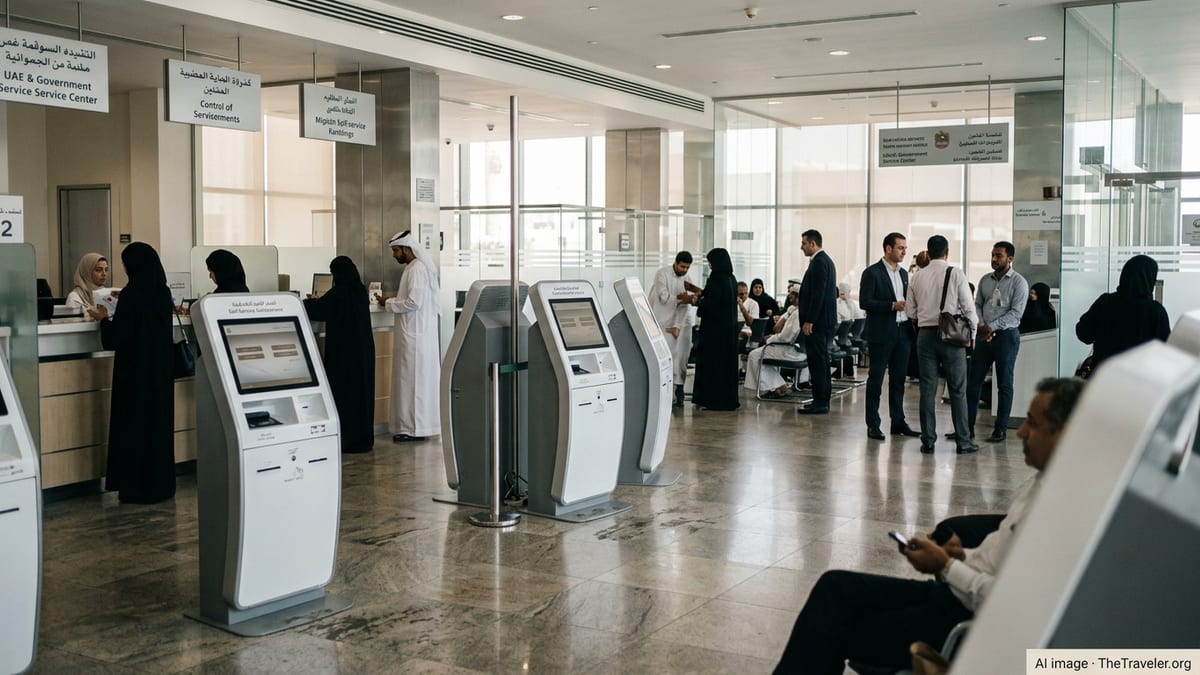
From a relocation perspective, the combination of digital portals and responsive call centers often allows issues to be resolved without physical visits. In practice, however, some matters still require in person attendance, particularly where biometric data, original document verification or identity checks are involved. Waiting times in major service centers are typically well managed, supported by ticketing systems and appointment scheduling, though peak periods can still produce queues.
Problem resolution mechanisms are another dimension of bureaucratic efficiency. The UAE provides structured channels for complaints and service escalation, including ombudsman style functions in certain regulators. While these may not resemble judicial style remedies found in some Western systems, they do create avenues for correcting administrative errors or addressing unreasonable delays. For straightforward cases, this framework can lead to relatively rapid corrective action compared with more formalised but slower appeal systems elsewhere.
Accessibility for people unfamiliar with local administrative culture is generally higher than in many comparable economies. Information desks and front line staff are accustomed to dealing with expatriates and often provide practical guidance beyond formal scripts. That said, outcomes can still depend on the initiative and discretion of individual staff members, and practices may vary between branches or emirates. Companies relocating staff typically benefit from appointing dedicated local administrators who can develop relationships with specific service centers.
Comparative Position Versus Key Relocation Competitors
When benchmarked against a small group of leading relocation destinations such as Singapore, Hong Kong, selected EU states and the United Kingdom, the UAE occupies a competitive but not uniformly superior position. In terms of digital experience, speed of routine transactions and English accessibility, it compares favourably, particularly against large bureaucracies that struggle with legacy IT systems and workforce constraints.
Where the UAE still trails top performers is in full regulatory integration and long term stability of administrative rules. Some highly rated jurisdictions offer near total cross agency data sharing and single point updates for resident information, whereas the UAE still requires individuals to update details across multiple systems in certain cases. Additionally, frequent policy refinement, while often designed to improve the environment, can create perceived volatility that undermines the benefits of fast execution.
Against regional competitors in the Middle East, Africa and parts of Asia, the UAE generally offers a substantially more efficient and predictable bureaucratic environment. This underpins its attractiveness as a regional headquarters location and as a hub for multinational operations. For professionals moving from countries with complex, slow or corruption prone administrations, the UAE’s structured digital bureaucracy is likely to feel significantly more manageable.
Ultimately, the UAE’s bureaucratic efficiency profile can be described as high performance and improving, though still evolving. For relocation planning, this means that while day to day administrative interactions are usually faster and more convenient than in many alternative destinations, organisations should build in flexibility to accommodate regulatory updates and variations between emirates or free zones.
The Takeaway
For individuals and organisations evaluating relocation to the UAE, bureaucratic efficiency is broadly a positive factor. The country delivers relatively fast processing, extensive digital government capabilities and high English accessibility, especially in major emirates. These strengths position it above many global peers in terms of the administrative burden associated with establishing and maintaining residence.
At the same time, the system is not entirely frictionless. The coexistence of multiple regulatory layers, periodic rule changes and residual requirements for attested documentation introduce complexity that may not be present in the very simplest international models. Reliance on digital platforms also means that occasional system outages or interface changes can temporarily disrupt processes.
From a relocation risk management perspective, the UAE’s bureaucracy can be considered efficient and generally predictable for standard interactions, with potential challenges concentrated in more complex or novel cases. Companies and individuals who invest in understanding emirate specific rules, preparing core documents in advance and using official digital channels are well positioned to benefit from the system’s strengths while minimising exposure to its remaining inefficiencies.
FAQ
Q1. Is UAE bureaucracy generally faster than in European countries?
In many routine administrative processes, published processing times and practical experience indicate that UAE authorities often complete tasks more quickly than many European administrations, although this varies by emirate and service type.
Q2. How digital is the bureaucratic process in the UAE?
The UAE has heavily digitised its public services, with most standard procedures available online or via mobile applications, particularly in Dubai and Abu Dhabi, though some services still require in person steps.
Q3. Are English speakers able to handle paperwork without translation?
For everyday administrative interactions, English language portals and staff support are usually sufficient, but complex legal documents and certain official texts may still require professional translation from Arabic.
Q4. Do different emirates have different bureaucratic rules?
Yes, federal rules coexist with emirate level regulations, and major free zones have their own frameworks, so exact procedures and requirements can differ between locations within the UAE.
Q5. How heavy is the documentation burden compared with other countries?
Documentation requirements are moderate by international standards, but there is a strong emphasis on properly attested and certified documents, especially for education and civil status, which can require advance planning.
Q6. How predictable are processing times in practice?
Once eligibility is clear and documents are complete, processing times are generally close to stated targets, with unpredictability arising mainly from policy changes or incomplete submissions.
Q7. Is corruption a concern in everyday dealings with UAE authorities?
For routine procedures, expatriates typically interact through formal digital channels and structured service centers, and informal payments are not a standard feature of the system.
Q8. How easy is it to solve problems if something goes wrong with an application?
There are established channels for complaints and escalations, and issues are often resolved through customer service centers, though complex disputes may still require legal or professional assistance.
Q9. Does the UAE have true one stop government platforms?
Major emirates provide broad multi service portals that function close to one stop platforms for many needs, but some procedures still require navigating separate agency or regulator systems.
Q10. Is UAE bureaucracy suitable for companies relocating multiple employees?
For organisations managing multiple relocations, the combination of digital workflows, published timelines and high service availability makes the UAE comparatively efficient, especially when supported by local administrative expertise.