


The United Arab Emirates presents an unusual combination for expatriates: a heavily regulated environment with comparatively streamlined, highly digital public services. For relocation decision makers, the key question is not whether rules exist but how complex it is in practice for foreign nationals to navigate them. This briefing evaluates the relative complexity of bureaucracy in the UAE for expats, drawing on available indices, digital government reforms, and on-the-ground process design to outline a pragmatic "bureaucracy complexity score" for the country.
Defining a Bureaucracy Complexity Score for the UAE
For relocation planning purposes, bureaucracy complexity can be framed as the combined burden of procedures, documents, in-person visits, and processing times that expatriates face when dealing with public authorities. This includes tasks such as residence administration, work and business setup steps, identity documentation, attestations, and routine government interactions. In the UAE, these processes are shaped by a centralized regulatory model, extensive outsourcing to service centers, and rapid digitalization.
Objective global benchmarks place the UAE among the less bureaucratic jurisdictions worldwide, especially for business and government efficiency. Prior to its discontinuation, the World Bank’s Doing Business 2020 data ranked the UAE in the global top tier on ease of doing business, with starting a business typically requiring only a small number of procedures and a matter of days when using standard online channels. At the same time, expatriates must navigate a dense rule set, detailed documentation requirements, and frequent policy tweaks, which can introduce friction for those unfamiliar with local norms.
From a relocation intelligence standpoint, a pragmatic “bureaucracy complexity score” for the UAE should therefore distinguish between formal regulatory density and day-to-day user experience. While the underlying legal framework is extensive, the implementation is supported by one-stop platforms, integrated digital IDs, and specialized centers that often reduce the operational burden for foreigners compared with many other emerging markets.
Overall, the UAE can reasonably be positioned in the low-to-moderate bureaucracy complexity band for expats: not minimal, but significantly more streamlined and digitized than many peer destinations in the Middle East and beyond. The following sections unpack the key elements that drive this score.
Global Benchmarks and Perception of Government Efficiency
International competitiveness and government performance rankings consistently reflect the UAE’s focus on limiting bureaucratic friction. In recent global competitiveness assessments, the country has ranked near the top of the world on government efficiency and has been highlighted specifically for the absence or minimization of bureaucracy within public administration. This positioning is aligned with national strategies explicitly aimed at reducing red tape and simplifying service delivery.
At a more granular level, the UAE has historically performed strongly on ease of doing business indicators, particularly around starting a business and dealing with permits. While the global Doing Business series has been discontinued, the most recent available data show that basic corporate setup and registration in the UAE often require a relatively small number of procedures and are counted in days rather than weeks under standard conditions. For expats involved in entrepreneurship or investment activities, this translates into a comparatively favorable administrative environment.
Perception surveys among expatriates mirror these findings. Recent expatriate satisfaction data place the UAE in the global top tier for “Expat Essentials,” which covers administration and digital access, with a clear majority of foreign residents reporting little or no difficulty dealing with local bureaucracy. One recent survey noted that roughly two-thirds of expats expressed no significant problems with the bureaucracy, compared to a notably lower global average, indicating that many foreign residents find the system manageable once understood.
These external benchmarks suggest that, at a macro level, the UAE scores well on bureaucracy complexity for expats. However, they do not fully capture the micro-level inconveniences, documentation strictness, and variability between emirates and service providers that relocation planners must factor into practical timelines.
Digital Government and the "Zero Bureaucracy" Agenda
A defining feature of the UAE’s bureaucracy landscape is the long-term investment in e-government and digital public services. Over the last two decades, federal and emirate-level authorities have systematically migrated procedures to online platforms, culminating in unified portals and smartphone applications that integrate identity, payment, and document submission. The UAE ranks highly in international e-government and e-participation indices, and Dubai in particular has been recognized regionally for its digital service provision and institutional frameworks.
Federal and local authorities are now working under explicit “zero bureaucracy” and similar programs designed to cut steps, documents, and waiting times. For example, federal initiatives invite residents and businesses to report unnecessary procedures and propose simplifications, which are then evaluated as part of a national service redesign effort. This approach, combined with an emphasis on paperless transactions and digital signatures, steadily reduces the procedural footprint experienced by expatriates over time.
For expats, the practical impact of this digitalization is visible in areas such as residence and identity management, labor procedures, and fee payment. Many previously in-person processes, including some attestations, tax interactions, and document requests, can now be completed fully online through official apps integrated with the national digital identity system. This markedly lowers the number of physical visits required per administrative cycle and reduces the need to navigate multiple uncoordinated offices.
That said, the transition is not uniform. Certain processes still require in-person biometric capture, medical checks, or original document presentation, and some residents report that while digital channels exist, service centers remain the de facto route for resolving complex or exceptional cases. From a complexity scoring perspective, the overall trajectory is clearly downward, but expats should still expect a hybrid of online and offline interactions.
Service Center Ecosystem: Amer, Tasheel, Tadbeer and Others
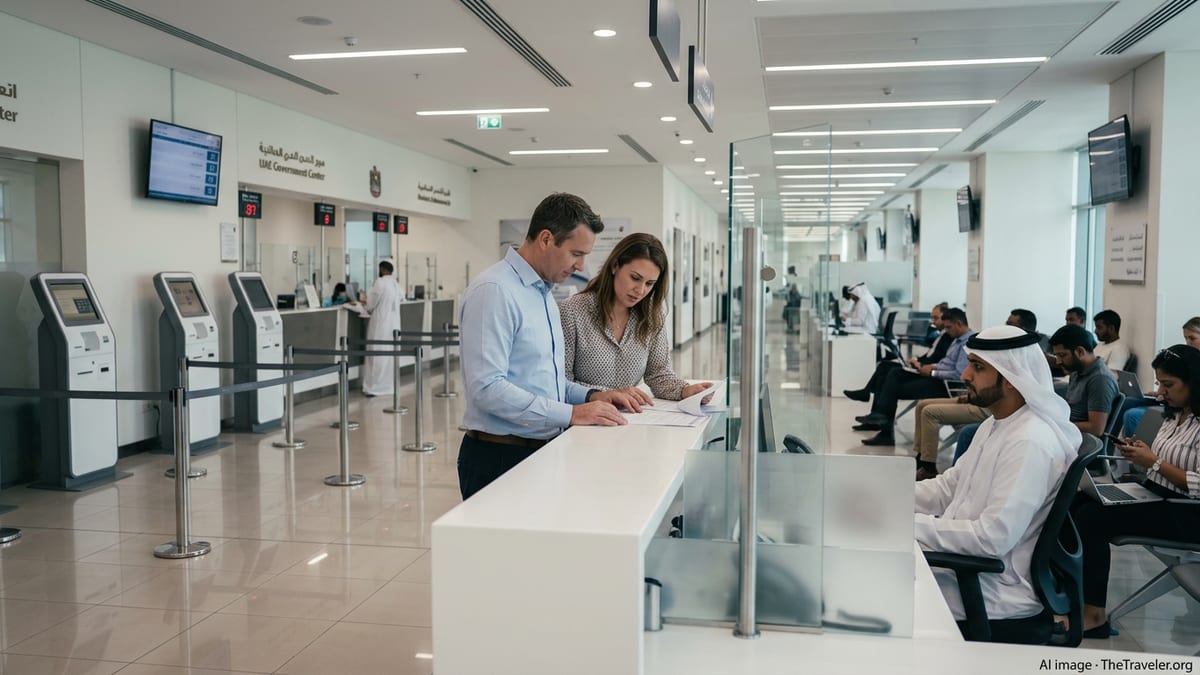
A distinctive component of the UAE administrative model is the extensive use of semi-government service centers that act as one-stop interfaces between residents and various ministries. For expatriates, the most relevant brands include Amer centers for residency and immigration services, Tasheel centers for labor and Ministry of Human Resources procedures, and Tadbeer centers for domestic worker recruitment and sponsorship services. These centers are typically privately operated under government authorization but follow standardized processes and fee structures.
In practical terms, these centers convert what could be a multi-office bureaucracy into a structured, guided process. Staff handle data entry, form preparation, submission through official electronic systems, and coordination of next steps such as medical appointments or biometric registrations. Many centers also provide integrated payment processing and appointment booking. Residents increasingly have the choice between visiting a physical center or using fully online variants of the same services, with remote submission and communication through official portals and messaging channels.
This model significantly reduces complexity for expats who are unfamiliar with Arabic-language forms or the precise documentation required for each transaction. Instead of learning the underlying regulatory architecture, most users follow a service checklist managed by center staff. However, this comes with some trade-offs. Service quality can vary between individual centers, and expatriates may encounter inconsistent advice, unnecessary add-on services, or longer-than-expected waiting times during peak periods or before public holidays.
From a bureaucracy complexity standpoint, these centers act as a buffering layer. They do not remove regulatory obligations, but they translate them into a transactional experience that is generally more predictable than navigating ministries directly. Expats who engage reliable centers or corporate PROs typically experience a relatively low subjective bureaucracy burden, even if the underlying process still involves multiple formal steps.
Process Design: Steps, Documents, and Time Burdens
When evaluating bureaucracy complexity, relocation planners should look past marketing claims of “one stop” service and examine the actual number of steps, documents, and touchpoints required for common expat interactions. Typical sequences for expatriates in the UAE involve a series of linked procedures rather than a single integrated transaction, even if much of it is orchestrated by a service center.
For example, a standard work-related residence process for a foreign employee may require: initial approval and entry permit issuance, medical fitness testing at an authorized facility, biometric capture for the national identity card, residence permit stamping in the passport or its electronic equivalent, and issuance or renewal of the Emirates ID. Each of these elements is governed by distinct rules and validity periods. Center staff can often combine appointments within a half-day window, but the overall process can still extend over several working days depending on document readiness and appointment availability.
Document demands remain a key driver of perceived complexity. Certified translations, legalized academic qualifications, authenticated civil status documents, and employer letters are frequently required. For some nationalities and certain visa types, security checks or additional clearances may add to processing times. Although many supporting documents can be uploaded digitally, the pre-arrival effort to secure apostilles or embassy attestations in the home country can be substantial and is an important hidden component of the bureaucracy score.
Time burdens are generally moderate by international standards. Under normal conditions, many core procedures are processed within a few working days to a couple of weeks. However, expatriates report occasional delays around holiday periods, system upgrades, or policy changes. Because most processes are rules-based with limited discretion, there is relatively little room for negotiation or flexibility when documentation is incomplete, which can lead to repeated visits or resubmissions and increase the practical complexity of the experience.
Variability Across Emirates and Between Online and Offline Channels
Another factor influencing the bureaucracy complexity score is the decentralization of some procedures between the seven emirates. While there is a shared federal framework, implementation details, portals, and service providers are not fully standardized nationwide. Dubai and Abu Dhabi tend to offer the most mature digital ecosystems and service center networks, which usually translates into a smoother experience for expatriates residing there compared with some smaller emirates.
Online channels present a mixed picture. For digitally fluent expats, direct use of official applications and portals can reduce both costs and steps by eliminating intermediary service fees and avoiding unnecessary visits. Residents who manage their own applications through federal apps report transparent government fee breakdowns and the ability to complete many actions within a few hours, provided all documentation is prepared in advance. This suggests that for certain user profiles, the effective bureaucracy burden is relatively low.
Conversely, expatriates unfamiliar with local terminology, Arabic forms, or specific procedural rules may find direct digital interaction challenging. As a result, many still rely heavily on call centers, WhatsApp chats with service agents, or in-person visits to clarify requirements. Reports of inconsistent helpline advice or opaque instructions can add subjective complexity, even where the formal process is short. In addition, not all processes are fully available online; biometric capture, medical tests, and some attestations still require physical presence, regardless of how the application is initiated.
Relocation planners should therefore anticipate a dual-track system: a relatively low-complexity digital path for prepared, tech-comfortable expatriates, and a more traditional, agent-mediated path that is administratively simpler for the user but may involve more cost and waiting time. The underlying number of legal steps is similar in both cases, but the perceived bureaucracy can differ markedly.
Recent Simplification Initiatives and Emerging Pain Points
In recent years, the UAE has launched targeted initiatives to compress historically fragmented procedures into unified “bundles.” One notable example is an integrated work and residency platform that consolidates multiple services from different ministries into a single, sequenced process. Public communications about such initiatives emphasize reductions in the number of separate procedures, the number of required documents, and the number of physical visits needed to obtain or renew work and residence status.
On the fiscal administration side, programs under the “zero bureaucracy” banner encourage residents and businesses to report redundant steps or overlapping requirements in tax and other government interactions. Authorities highlight reductions in forms, approvals, and touchpoints as measurable outputs of these reforms. Taken together, these initiatives indicate an ongoing political and administrative commitment to streamlining bureaucracy and improving user experience for residents, including expatriates.
However, practical pain points persist. Expatriates report occasional bottlenecks at peak times in service centers, particularly before public holidays or during seasonal surges in applications. Service quality can be uneven across different branches of the same center brand, and some users encounter conservative interpretations of rules or reluctance from frontline staff to process less common scenarios, especially for family structures, non-standard employment arrangements, or newly introduced visa categories.
Another recurring friction point is the management of exceptions and errors. While standard cases move through systems quickly, resolving data mismatches, historical overstays, or previous visa complications often requires repeated visits, manual interventions, or consultations with senior officers. This can sharply increase the perceived complexity for a small but important subset of expatriates. As with any rules-heavy system, the UAE bureaucracy is most efficient for those who fit the standard templates and have complete documentation from the outset.
The Takeaway
For relocation decision makers, the UAE’s bureaucracy complexity profile is best described as structured but increasingly streamlined. On a global comparative scale, the country offers a relatively favorable environment for expatriates in terms of government efficiency, digital service maturity, and the availability of guided service centers that manage procedural details on the applicant’s behalf.
At the same time, the formal rule set remains dense, with strict documentation standards, multiple linked steps for core residence and work processes, and limited discretionary flexibility when requirements are not met. Complexity is particularly noticeable for atypical cases, multi-jurisdictional document chains, and residents operating outside standard employment models.
Overall, the UAE can be assigned a low-to-moderate bureaucracy complexity score for expatriates. For well-prepared individuals and corporate assignees supported by experienced intermediaries, the day-to-day burden of interacting with public authorities is generally manageable and often significantly lighter than in many other emerging markets. For less prepared arrivals or those with complex personal or professional profiles, advance planning and document readiness are essential to keep the bureaucracy experience within acceptable bounds.
FAQ
Q1. How bureaucratically complex is the UAE for expatriates compared with other countries?
The UAE generally sits in a low-to-moderate complexity range for expats, with more rules than some Western countries but substantially more efficient and digitized processes than many regional peers.
Q2. Do expatriates need to visit multiple government offices for standard procedures?
In most routine cases, expatriates can rely on integrated service centers or unified online platforms, which consolidate interactions with several authorities into a single visit or digital workflow.
Q3. How important is digital literacy for navigating UAE bureaucracy as an expat?
Digital literacy significantly reduces perceived complexity, as many processes are available through official apps and portals; tech-comfortable expats can often complete key steps in hours rather than days.
Q4. Are bureaucracy levels similar across all emirates in the UAE?
The underlying rules are broadly aligned, but practical complexity can vary by emirate, with major centers such as Dubai and Abu Dhabi generally offering more mature digital services and service center networks.
Q5. What are the main drivers of bureaucracy complexity for expats in the UAE?
Key drivers include strict documentation and attestation requirements, multi-step linked procedures for residence and work, and the need for in-person biometrics and medical checks in many cases.
Q6. How do Amer, Tasheel, and similar centers affect bureaucracy for expatriates?
These centers act as one-stop intermediaries that manage forms, submissions, and payments, reducing the need for expats to navigate multiple ministries, although service quality and waiting times can vary.
Q7. Has bureaucracy improved in recent years for foreign residents in the UAE?
Yes, ongoing e-government initiatives and “zero bureaucracy” style programs have progressively reduced paperwork, steps, and in-person visits, especially for standard, well-documented cases.
Q8. What types of expat cases tend to face higher bureaucratic complexity?
Non-standard profiles, such as complex family structures, irregular work arrangements, previous visa issues, or incomplete foreign document attestations, often experience more steps, checks, and visits.
Q9. Can expatriates handle procedures themselves, or is professional assistance recommended?
Digitally confident expats with straightforward situations can often manage procedures themselves, but many choose service centers or corporate PROs to minimize errors and avoid repeated visits.
Q10. What practical steps can expats take to reduce bureaucratic friction before relocating to the UAE?
Key steps include securing legalized and translated civil and academic documents in advance, understanding basic process sequences, and identifying reputable service centers or corporate support before arrival.