


More news on this day
A Ryanair flight from eastern France to Marrakech departed without its passengers after an unexpected police operation on board, leaving 192 travelers stranded at Châlons Vatry Airport and intensifying scrutiny of how airlines and authorities handle major disruptions.
Get the latest news straight to your inbox!
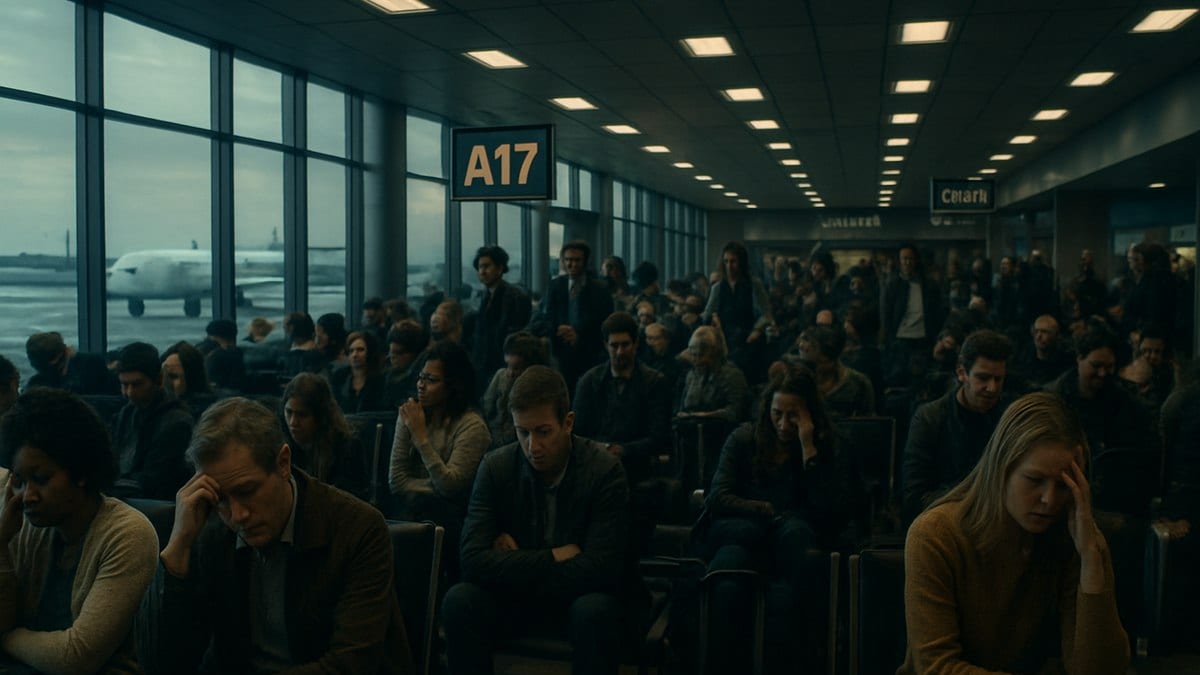
Empty Departure From Châlons Vatry Airport
According to published coverage, the incident occurred on 14 April when a Ryanair flight scheduled to operate from Châlons Vatry Airport to Marrakech left the French airport with no passengers on board. The aircraft repositioned while 192 ticketed travelers remained in the terminal, unable to board after being held back during a police intervention.
Reports indicate that the flight had been diverted to Vatry earlier, and French police subsequently boarded the aircraft to carry out checks. Passengers were escorted off and kept in the terminal area while procedures continued, leaving them unable to rejoin the aircraft before it departed again.
Publicly available information shows that the passengers had completed check-in and security formalities for their journey to Morocco, but were nonetheless prevented from boarding the onward flight. Coverage of the episode describes confusion in the terminal as travelers realized the plane had taken off empty while they remained on the ground.
The decision to move the aircraft without its passengers has sparked widespread criticism on social media and in regional outlets, with many questioning why alternative arrangements were not in place before the jet departed.
Confusion Over Responsibility and Passenger Care
Following the empty departure, stranded passengers reportedly faced hours of uncertainty at Vatry, a smaller regional airport east of Paris that is not accustomed to handling large volumes of disrupted travelers. Accounts cited in media reports describe families with children and older passengers waiting late into the evening with limited information about what would happen next.
Coverage suggests that local authorities, airport staff and Ryanair’s ground handling providers each played different roles in managing the situation, but responsibilities for communication, accommodation and rebooking were not immediately clear to those affected. Some passengers eventually received hotel arrangements and transport, while others reported difficulty in securing assistance.
Publicly available information indicates that the passengers were later offered rerouting options so they could continue their journeys to Morocco on subsequent services. However, the timing and clarity of these arrangements appear to have varied, contributing to frustration among those who had already endured a forced overnight stay far from their intended destination.
The episode has revived long-running questions in Europe about how well airlines, airports and public agencies coordinate when unexpected security or immigration checks disrupt scheduled flights, especially when travelers are already airside and have complied with all standard procedures.
EU Passenger Rights and Legal Context
The case of the 192 passengers left in France is unfolding against the backdrop of European Union rules that set minimum standards for air travel disruptions. Under Regulation EC 261/2004, travelers departing from EU airports are entitled to care and assistance in the event of denied boarding, long delays or cancellations, including meals, accommodation when necessary and rebooking or refunds.
Legal specialists cited in broader coverage of similar events note that determining whether compensation applies in a particular case depends on the specific circumstances, including whether the disruption stems from extraordinary events such as security operations or from decisions attributable to the airline. In complex scenarios where state authorities intervene, responsibility can be contested and may ultimately be assessed by courts or national enforcement bodies.
Consumer organizations frequently encourage passengers in such situations to keep records of expenses and communications, and to pursue formal claims if they believe their rights have not been fully respected. The Ryanair incident at Vatry is likely to draw attention from advocacy groups that already monitor disruptions linked to strikes, diversions and operational constraints across Europe.
The episode also coincides with ongoing debate in Brussels over potential updates to EU air passenger protections. Proposals to revise existing rules have circulated in recent years, with some stakeholders calling for clearer definitions and faster resolution mechanisms when disputes arise after large-scale disruptions.
Spotlight on Ryanair’s Operations in France
Ryanair, Europe’s largest low-cost carrier by passenger numbers, has a significant presence across French regional airports, even as its relationship with local authorities has sometimes been strained. In recent years the airline has cut or threatened to cut routes from several French airports, citing rising aviation taxes, airport charges and repeated air traffic control disruptions.
Reports from industry and regional media highlight that Ryanair has closed or reduced operations at bases such as Bordeaux and has warned that additional French regional airports could see service reductions. The carrier has also repeatedly criticized the impact of French air traffic control strikes on its network, arguing that overflights and holiday routes are disproportionately affected.
The empty departure from Châlons Vatry adds a new, highly visible controversy to this broader context. While the immediate cause involved a police operation rather than industrial action or scheduling cuts, the event feeds into a wider narrative of unpredictability facing travelers who rely on low-cost links between France and destinations in North Africa and southern Europe.
Travel industry analysts note that repeated high-profile disruptions can influence passenger perceptions of both airlines and airports, particularly when social media images of stranded travelers circulate widely. How Ryanair and French authorities address the aftermath at Vatry may therefore shape future decisions by travelers weighing cost against reliability.
Implications for Summer Travel Across Europe
The Vatry incident comes as Europe prepares for another busy summer travel season, with airlines expecting strong demand on leisure routes to Morocco and other Mediterranean destinations. Capacity constraints, staffing challenges and the possibility of renewed air traffic control strikes continue to raise concerns about reliability.
Recent traffic and punctuality data for France show that the country’s airspace remains one of the most disruption-prone in Europe, with knock-on effects for carriers that use French overflight corridors even when they do not land in the country. Low-cost airlines, which operate tight schedules and rapid turnarounds, can be particularly vulnerable when an unexpected event forces a diversion or prolonged ground stop.
Observers point out that while the circumstances in Vatry are unusual, the resulting experience for passengers fits a pattern seen in other disruptions in recent years: limited early information, long waits for concrete solutions and lingering disputes over compensation. The case is likely to be cited in discussions among policymakers and consumer advocates seeking to ensure more robust contingency planning.
For travelers, the episode serves as a reminder of the importance of monitoring airline apps and airport announcements, understanding basic EU passenger rights and allowing flexibility in itineraries where possible. As investigations and administrative reviews proceed, the 192 passengers left behind in eastern France have become emblematic of the human cost when operational decisions and legal responsibilities collide in modern European air travel.