


Among high-end tour operators, Butterfield & Robinson has a reputation for beautiful routes, small groups and almost frictionless logistics. It also has a reputation for being expensive. For travelers considering a top-tier guided trip, a natural question arises: how pricey is Butterfield & Robinson in practice compared with other luxury brands like Abercrombie & Kent, Backroads or DuVine, and what do you actually get for that premium?
Get the latest updates straight to your inbox!
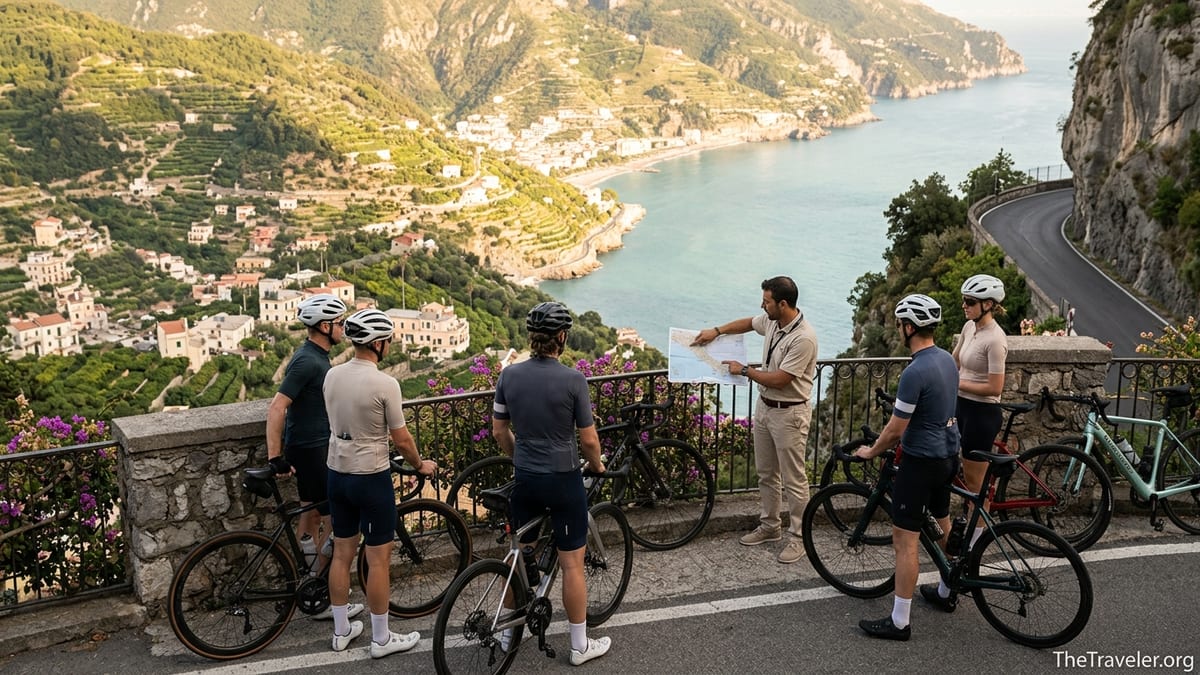
How Butterfield & Robinson Positions Itself in the Luxury Market
Butterfield & Robinson sits at the very top end of the active and experiential travel space. The company specializes in cycling, walking and culturally immersive itineraries that lean heavily on boutique hotels, in-depth local guiding and high guide-to-guest ratios. The trips are marketed to travelers who are comfortable spending the price of a small car on a week or two away, in exchange for not having to think about logistics once the trip starts.
Unlike mainstream escorted tours that might move 30 to 40 people around by coach, Butterfield & Robinson typically caps its scheduled “small group” departures at a much lower number, often closer to a dozen travelers. Groups are usually accompanied by multiple expert guides, a dedicated support vehicle and, on bike trips, a mechanic-level focus on equipment. That staffing model is resource intensive and feeds directly into per-person pricing.
The company also tilts hard toward atmospheric accommodations and private experiences. On a European itinerary, that could mean nights in historic palazzi, design-forward country inns or wine estates rather than big-box luxury brands, and prearranged vineyard lunches or after-hours museum visits that would be difficult to replicate independently. When you compare prices, it is important to recognize that you are paying not just for transport and hotels, but also for that tightly curated style of access.
All of this means that when you line up Butterfield & Robinson next to other well-regarded luxury operators, you should expect it to land consistently in the upper price band, especially in Europe and North America where its product is strongest.
Real-World Butterfield & Robinson Pricing: What Trips Actually Cost
Looking at current departure prices gives the clearest sense of how expensive Butterfield & Robinson really is. For example, a six-day Amalfi Coast walking and hiking small group trip in 2026 is currently advertised from about 12,795 US dollars per person, based on double occupancy. That price covers five nights of upscale lodging, most meals, guided hikes along the coast and inland villages, luggage transfers and local transport between trailheads and hotels.
Shorter European itineraries are often only modestly less expensive. A five or six day bike journey through classic wine regions or popular Mediterranean coastlines can easily sit in the 9,000 to 12,000 dollar range per person, depending on the season and hotel choices. That means a couple could be looking at close to 20,000 dollars before flights for under a week of travel, particularly in peak months like May, September and October when demand is highest.
Even outside Europe, pricing remains firmly in top-tier territory. In North America, four to six day bike trips in established wine regions or national park gateways often start in the mid- to high-7,000 dollar range per person and climb from there if the route includes iconic properties or private experiences such as behind-the-scenes tastings. In practice, once you factor in pre- or post-trip nights and long-haul flights, many travelers find that a single scheduled Butterfield & Robinson departure for two can easily cross the 25,000 dollar mark all-in.
Private and fully bespoke itineraries sit another step above. Families commissioning a tailor-made, guide-accompanied journey for six to eight people routinely see proposals that work out to well above 2,000 dollars per person per day, particularly in regions where the operator is layering in chartered boats, exclusive-use villas or complex logistics across multiple countries.
How B&R Compares With Abercrombie & Kent and Other Flagship Brands
To understand where Butterfield & Robinson sits, it helps to stack it against other names that occupy similar psychological space in travelers’ minds. Abercrombie & Kent is the most obvious comparison on the general luxury side, while companies like Backroads and DuVine are close peers on the active-travel front. There are also ultra-luxury safari and rail specialists, but those often involve such different cost structures that they are best treated as separate categories.
Abercrombie & Kent’s published prices for its Small Group Journeys give a useful benchmark. Current eight to fourteen day itineraries in regions like Northern Italy, Spain and Portugal or Japan often start around the 11,000 to 16,000 dollar per person mark for high-season departures. An 11-day Northern Italy program, for example, is priced from about 14,800 dollars per person, while an eight-day Peru and Machu Picchu journey sits from roughly 8,500 dollars per person. Safari programs, especially in East and Southern Africa, frequently run between 13,000 and 25,000 dollars per person for ten to fourteen days.
When you convert those trips to a per-day cost, Abercrombie & Kent’s small group offerings often land somewhere between about 900 and 1,800 dollars per person per day, depending on region and accommodation level. Butterfield & Robinson’s six-day European trips at roughly 12,800 dollars per person are effectively over 2,000 dollars per person per day. That suggests that, at least for its flagship cycling and walking itineraries, Butterfield & Robinson often prices above Abercrombie & Kent’s standard small-group touring on a daily basis.
Among active specialists, the pattern is similar. DuVine’s four-day “California Couture” Napa wine country bike trip, for instance, is currently priced from about 4,900 dollars per person for four days, or roughly 1,200 dollars per person per day in a core US destination. Many of its European six-day bike trips in popular regions like Tuscany or Provence hover in the 5,000 to 7,000 dollar per person range. Compared to a 12,800 dollar, six-day Amalfi trip with Butterfield & Robinson, you are often looking at B&R costing close to double in like-for-like, high-end cycling contexts.
Backroads, another large player in premium active travel, often prices its six-day “premier” level bike or multi-sport trips in Europe between roughly 5,000 and 8,000 dollars per person. Even if you account for differences in hotel category or inclusions, that still typically leaves Butterfield & Robinson occupying a higher price bracket than many of its closest competitors in the active space.
Per-Day Costs, Inclusions and Hidden Extras
Focusing on headline trip prices can obscure how much a journey really costs once everything is factored in. A more useful comparison across operators is the per-day rate together with what is, and is not, included for that money. On a Butterfield & Robinson six-day itinerary priced at 12,800 dollars per person, the effective per-day cost exceeds 2,000 dollars. That usually includes upscale lodging, most meals, high-end bike equipment where relevant, support vehicles, local transport inside the itinerary and a dense program of guided activities.
A comparable Abercrombie & Kent 10-day cultural journey priced at 14,800 dollars works out closer to 1,480 dollars per person per day. That program typically includes internal flights, high-end hotels, most meals and entrance fees, but not always the same level of physical activity infrastructure, specialist biking gear or one-on-one guiding time that you might see on a cycling-focused Butterfield & Robinson trip. On the other hand, many A&K small group journeys use a single Resident Tour Director for the group rather than a multi-guide escort model, which lowers operational cost.
On DuVine’s four-day wine country trip at roughly 4,900 dollars per person, the per-day rate is nearer 1,225 dollars. Guests receive quality bikes, guides, transport, many meals and tastings, but hotels might be positioned at a slightly less rarefied level than B&R’s most coveted properties, and group sizes can be marginally larger. That differential helps explain how two experiences that feel broadly comparable on paper can come in thousands of dollars apart.
Hidden extras also influence the final bill. Some operators bundle airport transfers, premium bike upgrades or all wine with dinner, while others treat those as add-ons. Gratuities are another variable: cycling companies usually suggest a daily guide tip that can add several hundred dollars per person by the end of a week-long trip. When comparing Butterfield & Robinson to its peers, travelers should review detailed inclusion lists side by side and ask for an estimate of likely out-of-pocket costs beyond the published trip price.
Where Butterfield & Robinson Delivers Value for the Premium
The fact that Butterfield & Robinson often prices at or above the top of the market does not automatically make it poor value. For certain types of traveler and certain kinds of itinerary, the premium can feel justified. The company’s long history in European active travel means routes are usually exceptionally well honed. A cycling journey through the Luberon or along the Dalmatian Coast is likely to use quieter, more scenic backroads that would be difficult to discover on your own on a first visit.
Accommodation choices are another point of differentiation. Rather than defaulting to the best-known five-star flag in a destination, Butterfield & Robinson often opts for smaller, character-rich properties, such as family-run country estates in Tuscany or historic monasteries converted into design hotels in Spain. For many guests, waking up in a centuries-old stone farmhouse overlooking vineyards or in a clifftop inn with only a dozen rooms is a key part of the experience and worth paying extra for.
Guides arguably matter more on active trips than on many cultural tours, because they are simultaneously route planners, safety managers, local interpreters and de facto hosts. Butterfield & Robinson invests heavily in guide recruitment and training, and it is common to see glowing guest feedback about guides anticipating needs before they arise, offering thoughtful route adjustments on the fly or arranging impromptu detours to a village festival or unadvertised winery. Those intangible touches are difficult to quantify in a price comparison, but they are often why repeat guests return even as costs climb.
Travelers also report that B&R’s logistics tend to feel “frictionless” compared with more mass-market tours. Bags reliably appear in your next room before you arrive, bikes are adjusted within minutes, and last-minute weather changes are handled quietly behind the scenes. For high-earning professionals or multi-generational families who place a premium on not having to troubleshoot anything on vacation, that kind of invisible infrastructure can be the difference between an expensive trip and an expensive trip that feels truly relaxing.
When a Lower-Priced Operator Might Make More Sense
Despite its strengths, Butterfield & Robinson is not the right fit for every traveler. For some, the price premium simply will not translate into noticeably better enjoyment compared with slightly less expensive brands. If your main goal is to ride a bike between pretty villages in Provence, drink good local wine and stay in comfortable four- or five-star hotels, a DuVine or Backroads trip might deliver that experience at 60 to 80 percent of the B&R price.
Similarly, if you are more interested in broad cultural immersion than in meticulously engineered cycling routes, a luxury cultural operator such as Abercrombie & Kent can represent better value on a per-day basis. A 14-day Spain and Portugal circuit with A&K priced from about 15,400 dollars per person, which includes internal flights and a wide mix of guided city tours, countryside excursions and museum visits, often undercuts what a two-week, fully hosted, custom Butterfield & Robinson itinerary through the same region would cost.
Travelers who are willing to be more hands-on with planning can also combine a few targeted splurges with independent travel to mimic parts of the Butterfield & Robinson experience. For instance, you could book a five-night stay at a well-reviewed agriturismo in Tuscany for perhaps a few hundred dollars per night, hire a local bike guide for two of the days and arrange private tastings directly with wineries. The resulting per-person total would likely be a fraction of a six-day B&R trip, albeit without the same level of curation or seamlessness.
Finally, destination matters. In regions where hotels and services are inherently expensive and complicated to manage, such as parts of Africa or remote islands, relying on a specialist operator, whether B&R or another brand, often remains the most sensible choice even at a premium. In mature, easy-to-navigate destinations, the gap between independent travel and top-tier guided tours widens considerably, and travelers should reflect carefully on how much structure and support they truly need.
Practical Tips for Comparing Butterfield & Robinson Quotes
When you receive a Butterfield & Robinson proposal or look at a scheduled departure online, resist the temptation to react to the headline number alone. Instead, translate the trip into a per-day cost, then compare that to at least two other operators running somewhat similar itineraries in the same region. If a six-day B&R bike trip in the Amalfi Coast runs about 2,100 dollars per person per day and a roughly comparable DuVine or Backroads trip sits around 1,200 dollars per day, you have a clear frame for evaluating whether the difference feels justifiable given your preferences.
Next, look line by line at inclusions. Are airport transfers, premium bike models, wine at lunch and dinner, and special activities such as hot-air balloon rides or private boat charters built into the base price, or will they be extra? Does the competitor include one fewer meal per day or use slightly more modest accommodations? A trip that appears cheaper at first glance can end up equal or more expensive once those differences are accounted for.
It is also wise to ask the operator how flexible the itinerary is and what, if anything, can be adjusted to bring the price into a more comfortable range. Some travelers have success trimming one or two nights from a route, opting for slightly less extravagant room categories, or sharing certain activities with another small group rather than keeping everything completely private. Butterfield & Robinson and its peers are often willing to offer suggestions on how to preserve most of the experience while moderating the total cost.
Finally, consider the “opportunity cost” of the trip in your broader travel plans. For the 25,000 to 30,000 dollars that two people might spend on a single week-long B&R cycling journey in peak season, you could potentially take two or three shorter, still-comfortable trips elsewhere, or one guided journey and one independent adventure. There is no objectively correct choice, but being explicit about what you are trading off can make your decision feel more deliberate.
The Takeaway
Butterfield & Robinson is, by most measurable standards, one of the more expensive ways to see the world on an organized trip. Its six-day European cycling and walking itineraries that approach or exceed 12,000 dollars per person place it above many actively oriented competitors and often above the per-day pricing of broad-based luxury operators like Abercrombie & Kent. Yet those higher numbers reflect structural choices: very small groups, multiple guides, tightly curated hotels and routes, and an emphasis on removing nearly all friction from the travel experience.
For travelers who value those qualities, who care more about how a trip feels than about the fine print on a spreadsheet, Butterfield & Robinson can deliver excellent value even at a premium price. For others, especially those who are happy with a bit more improvisation or who enjoy doing some of their own planning, similar destinations and comfort levels are available at noticeably lower cost through other luxury tour companies or through a mix of independent arrangements and targeted local guiding.
Ultimately, the question is less “Is Butterfield & Robinson too expensive?” and more “Is Butterfield & Robinson priced appropriately for what I, personally, want from this particular trip?” Answer that honestly, with a clear view of the numbers and of the alternatives, and you will be well positioned to choose the style of luxury travel that feels right for you.
FAQ
Q1. Is Butterfield & Robinson more expensive than Abercrombie & Kent?
In many cases, yes on a per-day basis, especially for European cycling and walking trips where Butterfield & Robinson’s six-day itineraries can exceed 2,000 dollars per person per day, while Abercrombie & Kent’s small group cultural journeys often fall below that.
Q2. How much does a typical Butterfield & Robinson trip cost per person?
A common range for scheduled six-day trips in popular regions is roughly 9,000 to 13,000 dollars per person, excluding flights, with private or bespoke itineraries often costing more.
Q3. Why are Butterfield & Robinson’s trips priced so high?
Prices reflect very small groups, multiple guides, high-end or boutique accommodations, extensive included activities, quality equipment on active trips and meticulous behind-the-scenes logistics.
Q4. Are there cheaper luxury cycling alternatives to Butterfield & Robinson?
Yes. Operators such as DuVine and Backroads frequently offer high-quality cycling itineraries in Europe and North America at noticeably lower per-person prices, though often with slightly different hotel tiers or group sizes.
Q5. Do Butterfield & Robinson prices include flights?
International flights are almost never included. Some itineraries may include internal flights or train segments within the region, but you should check each trip’s inclusion list carefully.
Q6. How does tipping work on a Butterfield & Robinson tour?
Guide gratuities are usually not included in the trip price. The company provides suggested tipping guidelines, and tips can add several hundred dollars per person on a week-long journey.
Q7. Can I reduce the cost of a Butterfield & Robinson itinerary?
Sometimes. Options may include traveling in shoulder season, choosing slightly less expensive room categories, shortening the itinerary by a night or two, or joining a scheduled group trip instead of commissioning a fully private journey.
Q8. Are Abercrombie & Kent’s trips considered luxury even if they cost less?
Yes. Abercrombie & Kent positions itself firmly in the luxury segment, typically using upscale hotels and offering comprehensive itineraries, but its broader scale and slightly larger groups can keep per-day prices below those of niche active specialists.
Q9. Is it cheaper to plan a similar trip independently?
Often it can be, especially in well-developed regions like Western Europe. However, independent planning requires more time and effort and may not replicate the same level of access, logistics support and curated experiences.
Q10. Who is the ideal traveler for Butterfield & Robinson?
The ideal client is a traveler who values small groups, active days, distinctive hotels and highly polished logistics, and who is comfortable paying a significant premium to minimize friction and maximize ease throughout the trip.