


When you dream about cycling through Burgundy vineyards or hiking between Tuscan hill towns, the next question arrives quickly: do you book a luxury operator like Butterfield & Robinson or plan the trip yourself? In 2026, with flights, hotels, and tours all more expensive than a few years ago, the decision is not just about comfort. It is about value, control, and how you want to experience your time away from home.
Get the latest updates straight to your inbox!
Who Butterfield & Robinson Is Really For
Butterfield & Robinson is a Canadian-based luxury tour operator founded in 1966 and widely regarded as one of the leaders in high-end active travel. Its trips focus on biking, walking, and hiking, paired with upscale hotels, notable food, and in-depth local guiding. Recent industry profiles describe the company as increasingly centered on personalized, small-group and bespoke itineraries rather than mass-market bus tours. Many itineraries cap group size well below typical coach tours, and the company emphasizes its own network of local guides rather than relying on anonymous subcontractors.
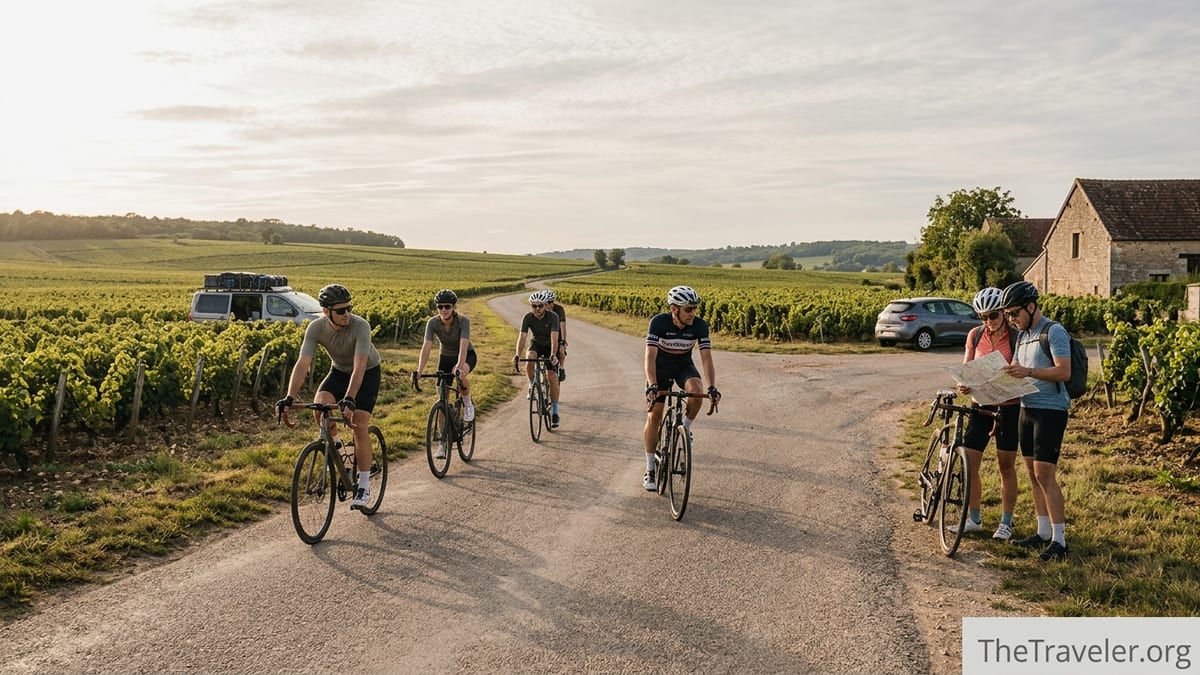
In practice, a Butterfield & Robinson guest is usually someone who values time and seamlessness more than shaving every possible dollar from their budget. A typical couple might book a six-night cycling itinerary in Burgundy that includes five-star hotels, luggage transfers each day, gourmet dinners in Michelin-recommended restaurants, and private wine tastings arranged at estates that can be difficult to access independently. They are comfortable paying extra to arrive in Beaune, be handed a high-end road or e-bike fitted to them, and simply follow the guide or GPS route while their luggage appears in their room each evening.
This model especially appeals to travelers in demanding careers, multigenerational families, and solo travelers who want social connection without the logistics burden. In online forums, you frequently see repeat Butterfield & Robinson guests mentioning trips like the Amalfi Coast or Camino de Santiago where they did not want to worry about narrow cliffside roads, ferry schedules, or baggage transfers. Instead, they were happy to pay a premium for on-the-ground experts to quietly handle those stress points.
If you recognize yourself in those examples, then Butterfield & Robinson may be a strong fit. If you are instead excited by tinkering with train timetables or hunting down independent guesthouses on booking platforms, you might find their style too curated and structured.
What a Butterfield & Robinson Trip Actually Includes
To compare Butterfield & Robinson with planning everything yourself, it helps to understand what their trips usually include. Although details vary by itinerary, a typical small-group cycling or walking trip will bundle boutique or luxury accommodations, most breakfasts, many dinners, support vans, professional guides, high-quality equipment such as premium bicycles or e-bikes, luggage transfers, and a set of pre-arranged experiences. Those might include a truffle hunt in Piedmont, a private olive oil tasting in Crete, or an after-hours museum visit in a major city.
For example, a six- or seven-day small-group biking trip in Europe with similar luxury operators commonly runs into the several-thousand-dollar range per person before flights. While Butterfield & Robinson does not always publish full prices across all itineraries, trade coverage and comparable active-luxury competitors suggest that guests are often spending what could easily amount to a full mid-range independent two- or three-week European holiday for the same per-person amount. In exchange, almost every day’s logistics are pre-planned: luggage is moved for you, support vehicles are nearby if you are tired or the weather turns, and restaurant reservations are already secured.
Contrast that with a self-planned cycling trip along the Danube: you might book three-star guesthouses at roughly 120 to 160 dollars per night for two people, rent bikes locally for perhaps 30 to 40 dollars per day each, and spend 60 to 100 dollars daily on meals and local attractions. Over a week, a couple could complete the trip for a total of maybe 2,000 to 2,800 dollars plus flights if they are willing to do all the route planning, bag transfers, and booking work themselves. Butterfield & Robinson’s version of a week-long cycling holiday would likely cost a multiple of that, but with four- or five-star hotels, substantially upgraded meals, and much deeper support baked in.
Another key inclusion is expert, human attention before you leave home. Butterfield & Robinson and similar operators usually assign a specialist who knows that region intimately to adjust pacing, route options, and pre- or post-trip nights. That kind of design work is comparable to hiring a private travel designer in addition to booking a tour. If you are the sort of traveler who wants to email a single person about airport transfers, bike frame size, and whether your eleven-year-old can manage a particular climb, you may find this concierge-style support invaluable.
The Real Cost Difference vs Planning It Yourself
On paper, guided luxury tours are almost always more expensive than independent travel when you compare simple line items like hotel prices and train tickets. A mid-range independent traveler in Western Europe in 2026 might reasonably expect to spend something around 150 to 250 dollars per person per day on a self-planned trip, including comfortable accommodation, meals at mid-range restaurants, local transport, and a few paid attractions. Budget-conscious travelers willing to stay in modest guesthouses, self-cater some meals, and choose cheaper destinations in Central or Eastern Europe can often get by for considerably less.
By contrast, industry analyses of multi-day guided tours to Europe often place average per-day costs around 300 dollars per person or more, with luxury operators reaching far beyond that figure depending on hotel class and inclusions. In other words, a ten-day independent itinerary might come out to 2,000 to 3,000 dollars per person excluding flights at a mid-range level, while a ten-day high-end guided tour from a company like Butterfield & Robinson could comfortably run into the five-figure range for a couple, especially once you add business-class flights or suite upgrades.
However, the headline comparison does not tell the whole story. Many travelers underprice their independent trips when comparing them to guided options because they forget to add what one analyst calls the “mistake tax.” That is the cost of wrong turns that require last-minute hotel changes, non-refundable train tickets you miss, or taxi rides that become necessary after you misread a bus schedule. For instance, a self-planned family trip through Italy might look cheaper on a spreadsheet, but if a missed connection in Florence forces you to rebook a last-minute hotel and pay for an additional high-speed train, you can end up spending several hundred dollars more than expected.
There is also the value of included experiences. A Butterfield & Robinson night in a wine region could involve a private cellar tasting and dinner at a restaurant that normally books out weeks in advance, all rolled into the trip price. If you try to create a similar evening on your own, you may find that last-minute reservations carry a premium, private tastings have minimum spend requirements, or certain experiences are simply not available to independent travelers. That does not necessarily mean the guided option is “cheaper,” but it does mean a fair comparison should look at what kind of experiences you can realistically secure on your own at a similar standard.
Control, Flexibility, and How You Like to Travel
Cost is only one dimension of the decision. The other big question is how much control you want over the rhythm and details of your trip. When you plan independently, you can wake up in Lisbon and decide on the spot whether to catch the train to Sintra or spend all day wandering the Alfama district. You can swap a museum for a food tour because you are tired, or extend your stay in a small Croatian island you unexpectedly love. That kind of flexibility is hard to match in a structured, pre-booked itinerary.
On a Butterfield & Robinson trip, the shape of each day is usually set in advance. There is often some flexibility built in, such as routes of different difficulty levels or the option to ride in the support van for part of the day, but the core structure remains. For some travelers, this is a welcome relief: they do not want to think about train departure times or restaurant reservations after a long day in the saddle. For others, particularly creative or restless travelers, the idea of committing to a fixed daily plan six months before departure feels constraining.
Consider a couple planning a two-week holiday in Italy. If they book a Butterfield & Robinson Tuscany-to-Umbria walking trip followed by a few independent days in Rome, their week on the trail will be rich and densely planned, but they will have little freedom to spontaneously add a cooking class in a village they pass through or spend an extra unscheduled day at a hot spring they discover. If they instead rent a car, book agriturismo stays on their own, and choose local hiking routes from regional tourism websites, they will have complete freedom to follow their instincts, but they will also need to navigate Italian parking rules, rural road signs, and the occasional closed restaurant.
Your tolerance for that kind of uncertainty should strongly influence your choice. Some travelers enjoy working through small problems as part of the adventure; others find that a delayed bus or an overbooked hotel can sour an entire day. Butterfield & Robinson is designed for the latter group: those who want the emotional load of travel logistics removed, even at a significant price premium.
Safety, Support, and the Hidden Value of a Guide
Another area where a company like Butterfield & Robinson can be hard to replicate on your own is safety and in-trip support. On a self-planned trip, you are largely responsible for solving your own problems if you twist an ankle on a mountain trail, your train is cancelled due to a strike, or your luggage fails to appear on the carousel. You can buy travel insurance and rely on hotel staff or local tourism offices, but you are the one stitching solutions together in real time.
On a guided Butterfield & Robinson trip, problems are typically triaged by the guide and back-office team rather than by you. Imagine you are cycling in rural Portugal and your derailleur snaps miles from the nearest village. On your own, you might need to push the bike for hours or arrange an expensive taxi to the nearest town and hope a bike shop is open. On a Butterfield & Robinson trip, a support van can usually pick you up, deliver a spare bike, or reroute you to a wine tasting while repairs happen in the background. When trains in France or Italy face strikes or schedule changes, experienced local staff can rework transfer plans and private drivers faster than an overseas visitor can decipher the local news.
Guides also add a layer of cultural interpretation that travelers often underestimate. Eating at a family-run osteria is one thing; going there with someone who has known the owners for years, orders off-menu dishes, and can explain why the local wine is made a certain way is another. For travelers who have already done classic city sightseeing on their own, it is often this deeper connection that leads them to consider a company like Butterfield & Robinson for their next trip. They are not paying only for a room and a route map but for a host who opens doors, both literal and figurative.
That said, not every traveler needs this level of support. Western Europe and parts of Asia with strong tourism infrastructure can be remarkably forgiving for independent travelers, particularly those comfortable with smartphones, translation apps, and online booking tools. A tech-savvy couple navigating Japan’s trains with a rail pass and an app can avoid many classic pain points without ever joining a group tour. Your own comfort with ambiguity, language barriers, and problem solving should guide how much you value the reassurance of guided support.
Designing a DIY Trip That Feels Luxurious
If you lean toward planning a trip yourself but still crave some of the polish associated with Butterfield & Robinson, it is possible to design a hybrid, high-comfort trip independently. The key is to be intentional about where you spend and where you save. Start by choosing a narrower geographic focus rather than racing through half a continent. For instance, you might decide to spend a full week exploring only the Rioja wine region and the Basque coast rather than attempting Barcelona, Madrid, and southern Spain in one go. Fewer stops mean fewer transfers, fewer chances for mistakes, and more time to enjoy each place.
Then, selectively layer in curated experiences. In Burgundy or Piedmont, that could mean booking a one-day small-group wine tour with a local specialist, which might cost 150 to 250 dollars per person but includes transport, tastings, and a guide. On the Amalfi Coast, you might hire a private skipper for a half-day boat trip between Positano and Capri instead of trying to knit together ferries. In Kyoto, you might book a private cooking class in a local home or a guided neighborhood walk that focuses on lesser-known temples, while handling the rest of the city independently.
Accommodation is another lever. Instead of five-star hotels every night, consider a mix of comfortable four-star boutique properties and standout splurges. A week in Provence, for example, could include five nights in a charming but reasonably priced guesthouse and two nights in a château hotel with a pool and fine dining restaurant. The overall spend might still come in well below a fully guided luxury tour, yet the experience can feel equally special.
Finally, invest time in logistics. If you are planning a self-guided hiking trip in the Dolomites or a cycling loop in the Netherlands, research local companies that offer luggage transfers and route notes without full guiding. Many European operators sell self-guided packages where they book mid-range inns, move your bags each day, and provide GPS tracks, while you walk or ride on your own schedule. These packages often cost a fraction of fully guided luxury trips but remove some of the most stressful practicalities.
When Butterfield & Robinson Is Clearly the Better Choice
There are situations where the argument in favor of Butterfield & Robinson, or a similar high-end operator, becomes much stronger. The first is when you are traveling with a complex group: multiple generations, varying fitness levels, or people arriving from different airports. A family celebrating a milestone birthday with grandparents, adult siblings, and young children may simply not have the bandwidth to juggle rental cars, hotel preferences, and activity ideas that suit everyone. A bespoke Butterfield & Robinson itinerary can assign e-bikes to less fit riders, arrange non-cycling activities for non-riders, and time meals and rest days to match the group’s pace.
The second is when your destination or activity has genuine logistical or safety complexity. Long-distance trekking in remote parts of Patagonia, serious cycling in unfamiliar high-altitude terrain, or multi-country journeys across regions with limited English signage all raise the stakes of going it fully alone. In these cases, a company that maintains its own guide teams and support vehicles, and that can pivot quickly if weather or local conditions change, offers value that goes beyond convenience. Even in well-developed regions like Europe, seasonal issues such as mountain pass closures or heatwaves can be easier to navigate with professional backup.
A third scenario is a once-in-a-decade milestone trip where you want to minimize stress almost entirely. Couples planning a honeymoon through Mediterranean islands, or friends marking a 50th birthday with a week of food and wine in northern Spain, sometimes decide that they would rather spend more and let someone else handle the details. They may still add independent pre- or post-days, but anchor the core of the trip with a Butterfield & Robinson itinerary that guarantees a certain standard of lodging, dining, and guiding.
Finally, solo travelers who are nervous about being alone but uninterested in party-oriented group tours can find a middle ground with an operator like Butterfield & Robinson. Unlike cheap mass tours where group sizes can exceed forty people, many of B&R’s small-group trips keep numbers low enough that it is easier to form genuine connections. For someone taking their first big solo trip, knowing that every evening ends with a shared dinner and that there is a guide looking out for them can justify the higher cost.
The Takeaway
Choosing between Butterfield & Robinson and planning a trip yourself is really about deciding what you value most: control and cost, or curation and comfort. A B&R itinerary will almost always be significantly more expensive than a self-planned version visiting the same regions, but it brings with it a dense layer of thoughtful design, high-end accommodation and dining, and on-the-ground support that many travelers simply cannot or do not want to replicate on their own.
If you enjoy puzzle-solving, are willing to tolerate some uncertainty, and prefer to follow your curiosity without a fixed schedule, a well-researched DIY trip can be both rewarding and far more economical. With careful planning, selective splurges on private guides and standout experiences, and a realistic daily budget, you can approximate many of the pleasures of a Butterfield & Robinson trip at a fraction of the cost.
On the other hand, if your time is limited, your group is complex, or you are marking a once-in-a-lifetime occasion, the premium you pay for a B&R trip may feel entirely justified. In those moments, outsourcing logistics, risk management, and much of the decision fatigue lets you devote your energy to the experience itself. For many travelers, that is exactly what a vacation is supposed to buy.
FAQ
Q1. Is a Butterfield & Robinson trip worth the higher price compared with planning my own? For travelers who value seamless logistics, high-end hotels, and insider experiences, the premium can feel justified, especially on complex or celebratory trips. If you are more budget-focused and enjoy planning, a DIY itinerary will probably offer better monetary value.
Q2. How much more does a Butterfield & Robinson trip usually cost than going independently? Exact figures vary, but it is common for a week-long high-end guided trip to cost several times more per person than a self-planned version using mid-range hotels, local trains, and à la carte day tours.
Q3. Can I get similar experiences on my own, like private tastings or special access? Sometimes yes, especially in well-touristed regions where local operators advertise directly to the public. However, some behind-the-scenes visits and intimate events exist because of long-standing relationships that companies like Butterfield & Robinson have built over decades.
Q4. Is Butterfield & Robinson a good idea for my first trip to Europe? It can be, particularly if you feel anxious about language barriers, train systems, or driving. That said, many first-time visitors also do very well with self-planned trips focused on a few easy destinations connected by major rail lines.
Q5. When does it make more sense to plan the trip myself? Independent travel tends to work best when your itinerary is relatively simple, you are visiting places with good public transport and tourism infrastructure, and you are comfortable researching accommodations, tickets, and local customs in advance.
Q6. What are the risks of relying on a cheaper group tour instead of a company like Butterfield & Robinson? Lower-priced tours sometimes cut costs through large group sizes, lower-quality hotels, rigid schedules, or aggressive shopping stops that generate commissions. Higher-end operators generally avoid these tactics but charge more up front.
Q7. Can I mix a Butterfield & Robinson trip with independent travel? Yes. Many travelers book a B&R itinerary for a core week or ten days, then add independently planned days before or after in gateway cities such as Paris, Florence, or Tokyo to explore at their own pace.
Q8. How far in advance should I book a Butterfield & Robinson trip? For popular destinations and peak seasons, it is wise to start looking six to twelve months in advance, especially if you need specific dates, room types, or private departures for a family or group.
Q9. Do Butterfield & Robinson trips work for kids or older travelers? Many itineraries can be adapted for multigenerational groups using e-bikes, shorter walking days, and alternative activities, but it is important to discuss fitness levels and expectations with the company before booking.
Q10. How can I make a DIY trip feel almost as polished as a Butterfield & Robinson itinerary? Focus on fewer destinations, book well-reviewed boutique hotels, reserve one or two standout guided experiences in each region, and consider self-guided packages that include luggage transfers or route planning for hiking and cycling days.