


For travelers who like their days powered by pedals and hiking boots rather than tour buses, two names appear again and again: Butterfield & Robinson and Backroads. Both are leaders in premium active travel, both promise carefully scouted routes and high-touch service, and both come with price tags that reflect that ambition. Yet the experience on the ground can feel surprisingly different. This guide looks at how each company operates today, with concrete examples of trips, prices and guest feedback, to help you decide which one fits you better.
Get the latest updates straight to your inbox!
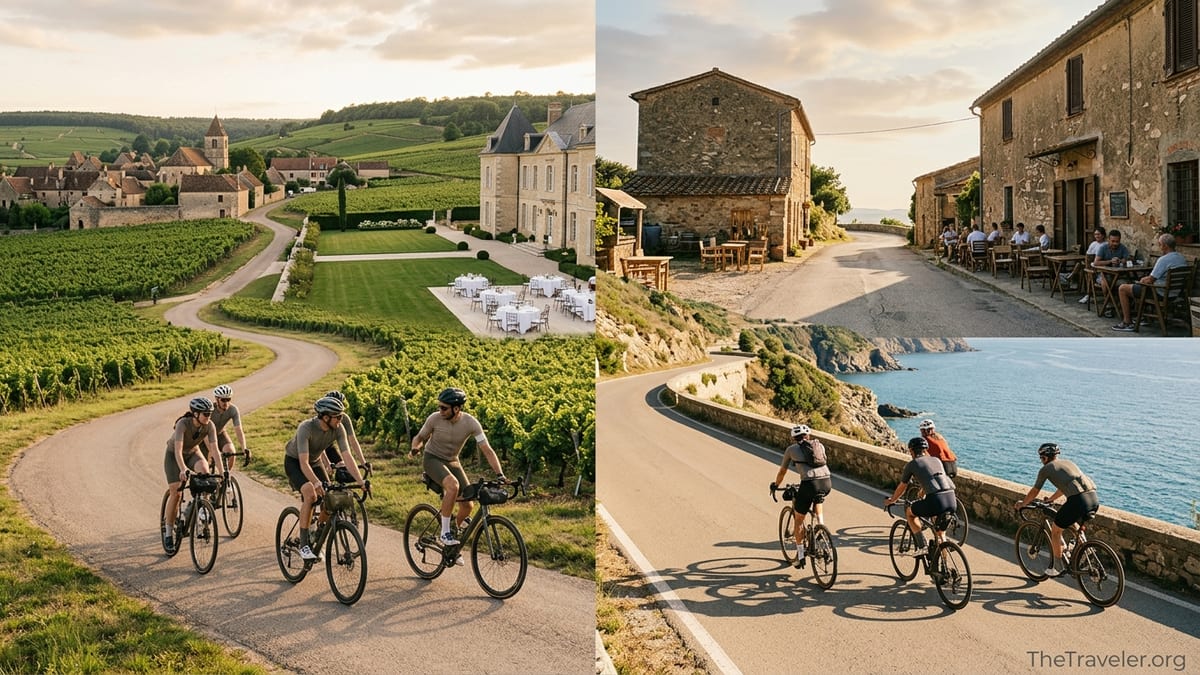
Two Heavyweights of Active Travel, Two Different Personalities
Butterfield & Robinson, founded in 1966 and based in Toronto, built its reputation on what it calls "slow down to see the world" travel. Think inn-to-inn biking in Burgundy, walking the Amalfi Coast or tasting Barolo in Piedmont, all wrapped in an explicitly luxury package. Recent small-group itineraries include a six-day Amalfi Coast Walking & Hiking trip priced from about 12,795 US dollars per person, a price point that signals just how top-tier B&R aims to be.
Backroads, founded in 1979 and headquartered in California, describes itself as the world’s number one active travel company. Its catalog is broader and more scalable: thousands of departures a year across more than 50 countries, from a six-day Croatia Bike Tour on the Dalmatian Coast starting around 4,999 dollars per person to a six-day Tuscany by the Sea bike trip from roughly 6,499 dollars. Its positioning is premium, but with a wider range of trip styles and price points than Butterfield & Robinson.
In practice, this means Butterfield & Robinson often feels like a boutique outfitter with a strong emphasis on ultra-comfort, food and wine, and discreetly high-end hotels. Backroads feels more like a polished, well-oiled machine designed to serve many types of active travelers, from families with teens to avid cyclists to first-time e-bikers, while still maintaining solid hotel and dining standards.
Neither company is "budget" by any stretch. Both cost several times what an independent self-organized trip might run. The decision is less about cheap versus expensive, and more about whether you want ultra-luxury and intimacy or breadth of choice and a slightly more approachable price band.
Itineraries and Destinations: Where Each Company Really Shines
Both brands offer European classics like Tuscany, Burgundy, Provence and the Camino de Santiago, but they design those experiences differently. On B&R’s Burgundy biking routes, for example, days are often structured around leisurely rides between wine villages, lunches at family-run domaines and stays in intimate chateaux or design-forward boutique hotels. The daily mileage can be modest, leaving space for cellar visits, private tastings and long dinners with serious wine pairings.
Backroads covers these same regions with a slightly sportier slant. A six-day Bordeaux & Dordogne bike tour might include more mileage options, detailed route choices for stronger riders, and a mix of casual and premier hotels at a price point around 6,199 dollars per person. The emphasis is on a satisfying day of movement with flexible activity levels and a support van always in play, rather than building every moment around Michelin plates and grand crus.
Outside Europe, Backroads clearly offers more breadth. The company runs lodge-to-lodge hiking in Peru, cycling on New Zealand’s South Island, multi-adventures in Japan and active river cruises on European waterways in partnership with operators such as AmaWaterways, where guests ride by day and return to the ship at night. There are also safari, culinary and home-base style trips on several continents.
Butterfield & Robinson has expanded beyond its European roots into destinations like Vietnam, Morocco and the Galapagos, but the sweet spot is still highly polished, often European itineraries with a strong slow-travel ethos. If your dream is three nights in a carefully restored Italian villa with guided walks through vineyard-covered hills, B&R is the more likely fit. If you want an active trip on almost any continent, with options for your kids or young adults, Backroads has the bigger catalog.
Luxury, Comfort and Hotels: How High-End Is “High-End”?
Travelers who have done both companies often note that Butterfield & Robinson generally sits a notch above Backroads in terms of pure luxury. A B&R small-group bike trip in Piedmont or Provence is likely to use five-star or very high-end boutique hotels as standard, with details like turn-down service, serious spa facilities and notable design. The company explicitly markets itself as a luxury operator, and that carries through in nightly rates and the style of the properties chosen.
Backroads offers two main hotel categories on most trips: Casual and Premiere. A Croatia bike departure using Casual Hotels at roughly 4,999 dollars might feature comfortable but not lavish waterfront inns, while a Premiere Hotels version in, say, Tuscany by the Sea around 6,499 dollars uses higher-end properties with more amenities. Many guests report that even Casual feels solidly comfortable, but it typically will not match the consistently top-tier level that Butterfield & Robinson prioritizes.
Dining follows a similar pattern. On a B&R trip through, for example, Burgundy, expect long-table dinners at acclaimed restaurants, multi-course menus and a curated wine program folded into the experience. Backroads also includes very good meals, but equal weight is given to fueling active days, accommodating a broad range of diets and keeping the atmosphere relaxed and social. Travelers looking for the most polished gastronomic experience, where wine and food are center stage, tend to gravitate to B&R.
It is worth stressing that Backroads is not a mass-market operator in disguise. Guest feedback frequently highlights "top notch" food and lodging on trips like e-biking in Tuscany or hiking near Chamonix. The difference is degree and consistency. If understated luxury and design-forward hotels are your top criteria, Butterfield & Robinson usually has the edge. If you want very good comforts with more variety in style and price point, Backroads fits well.
Group Size, Social Atmosphere and Who You Will Travel With
Group size and atmosphere can shape your experience as much as the route. Butterfield & Robinson tends to keep groups small, often in the low teens, which matches its boutique and high-touch positioning. With fewer guests, guides can pivot more easily for an invitation to a local festival, a spontaneous tasting or a slow lunch on a village square. Socially, B&R departures often skew toward couples or small groups of friends, frequently in midlife or retirement, and with a noticeable number of well-traveled repeat guests.
Backroads also operates small groups but at a larger global scale, with many departures running across seasons. On standard adult trips, you might see groups in the mid-teens to low twenties, supported by a four-person leader and van team on biking departures. The atmosphere is typically active and upbeat but not rowdy. Guests range from solo travelers in their 30s and 40s to couples in their 50s and 60s and small friend groups, plus a strong contingent of repeat travelers who move from Tuscany one year to Japan or Iceland the next.
For families, Backroads clearly dominates. It offers distinct family trip categories tailored to age groups, such as Kids & Teens, Teens & 20s and 20s & Beyond, with departures timed to school holidays. A typical example might be a multi-adventure trip in Costa Rica or the US national parks, mixing biking and hiking with rafting or zip-lining, and activities calibrated to younger travelers. Butterfield & Robinson does welcome families and can arrange bespoke private itineraries, but it does not specialize in age-banded group family trips to the same extent.
If you are sensitive to group dynamics and wealth signaling, anecdotal reports suggest Butterfield & Robinson can feel more overtly affluent in tone, particularly on marquee European itineraries. Backroads, while still firmly premium, often has a slightly broader demographic mix. Neither is inherently better; it comes down to whether you enjoy a subtly club-like luxury atmosphere or prefer a polished but more mixed group of active travelers.
Activity Levels, Support and Who Each Brand Suits Best
On paper, both companies grade trips by activity level and offer multiple daily mileage options. In practice, the active flavor is slightly different. Backroads has a robust reputation among cyclists and hikers who want real exertion with serious support. Strong riders can opt for long, hilly routes, while others choose gentler distances. On a Croatia bike tour, for instance, one guest might tackle a challenging coastal climb while another cruises a shorter, flatter route on an e-bike, both supported by leaders and a van that can pick up anyone who has had enough.
Backroads has also invested heavily in its Dolce Tempo collection: easygoing journeys built around slower cycling or walking, relaxed pacing and extra cultural or culinary time. A Dolce Tempo e-biking trip in Portugal’s Alentejo region might include light morning rides through vineyards and whitewashed villages, followed by afternoons by the pool or in local wineries, explicitly designed for travelers who like the idea of active travel but do not want to feel pushed.
Butterfield & Robinson’s trips are also solidly active, but with a more deliberate slow-travel ethos. Daily walking distances on a typical Amalfi Coast or Burgundy walking itinerary might be in the 6 to 10 kilometer range, with route variations available. The company offers self-guided options in select regions such as Burgundy, Tuscany and Provence, where guests are given detailed route notes, luggage transfers and on-call support but hike or bike on their own, an appealing middle ground for independent travelers who still want logistics taken care of.
If you are a very serious cyclist looking for higher-mileage days in places like the Dolomites or the Pyrenees, both companies can work, but Backroads’ larger catalog and more overt focus on athletic flexibility can be an advantage. If you prioritize cultural immersion and are content with moderate distances that leave time for long lunches, vineyard visits and strolls through villages, Butterfield & Robinson may feel like a better match.
Pricing, Value and What You Actually Get for Your Money
Price comparisons are tricky because itineraries, hotel categories and inclusions vary, but some patterns hold. Backroads trips are typically premium-priced compared with general small-group operators, with examples such as six days on the Dalmatian Coast by bike from around 4,999 dollars or six days in Portugal’s Azores for roughly 4,799 dollars. In many popular regions, these rates are two to three times higher than more basic small-group active operators, reflecting higher hotel standards, more support staff and a higher guide-to-guest ratio.
Butterfield & Robinson frequently comes in above even that. A six-day Amalfi Coast Walking & Hiking itinerary listing from about 12,795 dollars per person illustrates how steeply B&R prices can climb, especially on marquee European routes with top-tier hotels and elaborate culinary programming. For travelers used to paying upscale city hotel rates and fine dining prices, that premium can feel justifiable for a highly curated, low-hassle week in an iconic region.
Both companies typically include most breakfasts and dinners, selected lunches, on-trip transportation, luggage transfers, guide services and the use of high-quality bikes where relevant. What is less visible in the brochure price is the depth of pre-trip planning and on-the-ground scouting: backroad routes chosen to avoid traffic, relationships with local winemakers and hoteliers, and the ability to adjust hikes or rides in response to weather or group needs.
If your main goal is "best possible value per dollar," neither operator will beat a carefully self-planned trip using local guiding services. Where they shine is in delivering a near-frictionless experience that feels as if a knowledgeable friend has already ridden every road, tested every hotel and negotiated every dinner reservation. Between the two, Backroads tends to offer a broader range of price points and slightly lower averages, while Butterfield & Robinson delivers a narrower but more ultra-luxury band at the top of the market.
Trip Styles, Flexibility and Private or Custom Options
Beyond classic small-group departures, both brands now offer a spectrum of ways to travel. Backroads sells Private Trips, where an existing itinerary is run for your own group on your dates, and has introduced themed collections such as Women’s Adventures and trips geared specifically to travelers in their 30s and 40s. It also runs Active Ocean & River Cruises, where guests ride and hike by day and return to a ship at night, and Unplugged Bike Tours for guests who prefer traditional bikes instead of e-bikes.
Butterfield & Robinson divides its portfolio into Small Group, Bespoke and Self-Guided. Bespoke trips are fully customized, built from the ground up by in-house "experience designers" for private groups or families. Travelers might request a week of inn-to-inn hiking in the Swiss Alps with helicopter transfers and spa visits, or a villa-based week in Tuscany with daily guided walks and private cooking classes. Self-guided itineraries in regions like Burgundy or Tuscany are more structured but still independent, appealing to confident travelers who want freedom with a safety net.
In terms of flexibility on the ground, both companies encourage choosing longer or shorter routes daily and both remain attentive to weather or health issues. The difference is more dramatic at the booking stage. If you know you want something highly tailored, with room to specify hotel style, activities and even pacing, Butterfield & Robinson’s Bespoke department is purpose-built for that level of customization. Backroads Private Trips are more about taking an existing template and running it privately for your group with modest tweaks.
For many travelers, the choice of trip style can be as important as the choice of company. A solo traveler who wants company on the road might be happiest on a Backroads small-group hiking departure in the Dolomites. A multigenerational family celebrating a milestone birthday may gravitate to a B&R bespoke villa-based week in Provence that layers in private wine tastings and flexible daily walks suited to grandparents and teens alike.
The Takeaway
Both Butterfield & Robinson and Backroads occupy the top tier of active travel. Both will move your luggage, fine-tune route choices, sort out restaurant reservations and troubleshoot when weather, transport or health issues intrude. Choosing between them is less about quality in an absolute sense and more about style, priorities and budget.
Butterfield & Robinson is the better fit if you want an ultra-luxury, design-forward experience with a strong focus on Europe, slow travel, food and wine. Expect consistently high-end hotels, carefully choreographed meals and a social atmosphere that leans toward well-traveled couples and friends. You will pay a noticeable premium, but you are buying a very polished, boutique product.
Backroads is the better fit if you want an active-first trip with a wide range of destinations and trip types, from family adventures to easygoing Dolce Tempo e-biking and ambitious lodge-to-lodge hikes. Hotel standards are high, if not always ultra-luxurious, and the brand’s broad catalog means you are more likely to find a departure that matches your specific dates, activity level and travel party mix at a somewhat more accessible price.
If you can see yourself lingering over a grand cru in Burgundy after a gentle day of riding quiet vineyard lanes, Butterfield & Robinson is likely your match. If your dream is hopping from Croatia’s coastal roads to Japan’s country lanes and a lodge-to-lodge trek in Peru over the next few years, Backroads’ range, infrastructure and flexible pacing may serve you better. For many active travelers, the ideal answer is not either-or, but choosing the right operator for each kind of trip.
FAQ
Q1. Which company is more luxurious, Butterfield & Robinson or Backroads?
Butterfield & Robinson generally positions itself at a higher luxury level, with more consistently top-tier boutique and five-star hotels and an especially strong focus on food and wine.
Q2. Which operator is usually more expensive?
Butterfield & Robinson is typically more expensive, with marquee European walking and biking itineraries sometimes exceeding 10,000 dollars per person, while many Backroads trips fall in the 4,000 to 7,000 dollar range.
Q3. I am traveling with kids and teens. Which brand is better for families?
Backroads is usually the better choice for families, thanks to its dedicated family trip categories, age-specific departures and a wide selection of school-holiday friendly itineraries.
Q4. Are both companies suitable for solo travelers?
Yes. Backroads in particular sees a steady number of solo guests on adult departures, while Butterfield & Robinson can also work well for solos who enjoy intimate groups and are comfortable in a luxury environment.
Q5. How fit do I need to be for these trips?
Both companies grade trips by activity level and offer route options. Moderately active travelers are fine, especially with e-bike support, while more ambitious cyclists and hikers can choose longer, hillier options.
Q6. Do either Butterfield & Robinson or Backroads offer self-guided trips?
Butterfield & Robinson offers self-guided walking and biking itineraries in select regions such as Burgundy, Tuscany and Provence, providing route notes and support while you explore independently.
Q7. Can I book a fully private or custom itinerary?
Yes. Both offer private options, but Butterfield & Robinson’s Bespoke trips are designed for deeper customization, while Backroads Private Trips typically adapt existing itineraries for your group.
Q8. Which brand has more destinations outside Europe?
Backroads has broader global coverage, with trips across North and South America, Asia, Africa, Oceania and active river and ocean cruise offerings in partnership with select cruise lines.
Q9. How big are the groups on these tours?
Both run small-group departures. Butterfield & Robinson often keeps groups in the low teens, while Backroads groups may be slightly larger on some itineraries but still small enough for personalized attention.
Q10. If I care most about food and wine, which company should I choose?
Both include excellent dining, but Butterfield & Robinson puts particular emphasis on long, curated meals and serious wine programs, especially on European biking and walking trips, making it the stronger choice for food and wine focused travelers.