


More news on this day
Travelers passing through Heathrow, Charles de Gaulle, JFK and Dubai are better positioned than ever to reclaim serious money for lost, delayed or damaged luggage, as major carriers from British Airways to Emirates are increasingly bound by the hard limits and passenger protections set out in the Montreal Convention.
Get the latest news straight to your inbox!
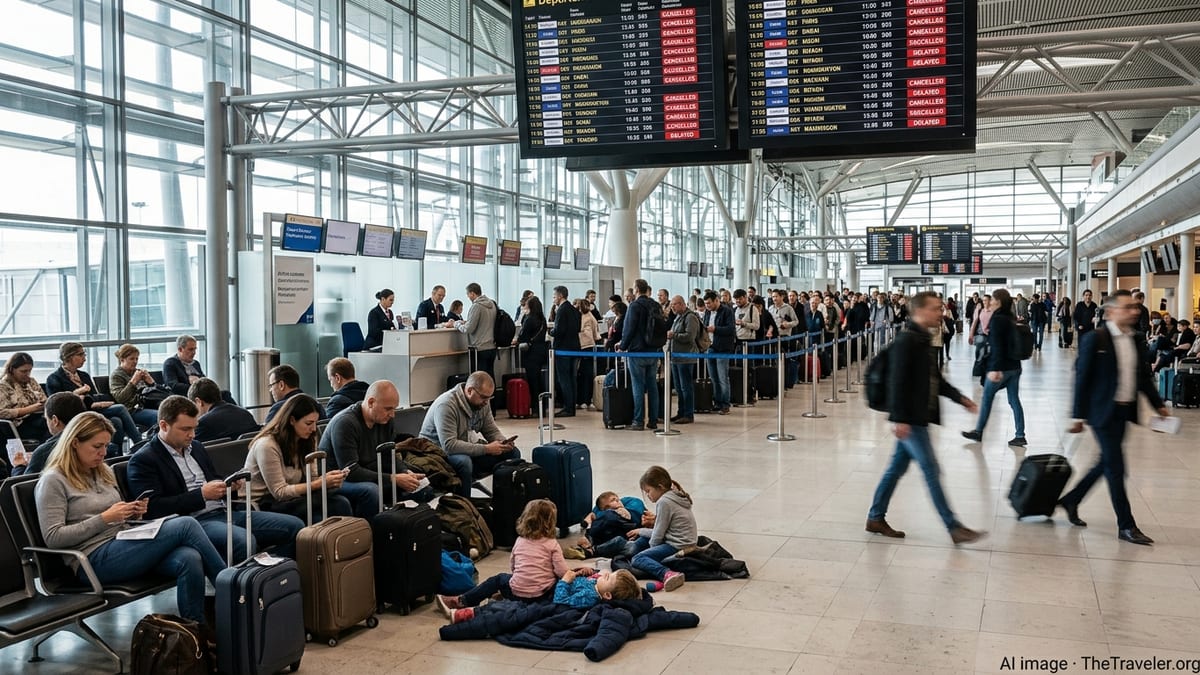
A Global Treaty Behind Airport Baggage Battles
The Montreal Convention of 1999 is the legal backbone that governs airline liability for international air travel, including what happens when checked bags vanish, arrive days late or are returned in pieces. The treaty has been ratified by most major aviation markets, meaning flights linking hubs such as London Heathrow, Paris Charles de Gaulle, New York JFK and Dubai International usually fall under its rules.
Under the Convention, airlines are strictly liable up to a capped amount when baggage is destroyed, lost, damaged or delayed, provided the incident occurs while the luggage is in the carrier’s charge. Industry and regulatory summaries show that for baggage the key ceiling is expressed in Special Drawing Rights, an International Monetary Fund unit that floats against major currencies.
The International Civil Aviation Organization periodically adjusts those liability limits to reflect inflation. A revision that took effect in late December 2024 raised the maximum amounts again, meaning travelers whose claims are properly documented can now reclaim more than they could just a few years ago for mishandled checked bags on covered routes.
For passengers, the practical effect is clear. If a suitcase packed for a transatlantic or long haul itinerary is lost, or arrives days late and forces emergency purchases, the Montreal framework turns what used to be a discretionary goodwill gesture into a defined obligation, up to the applicable SDR cap per person.
How Big the Payouts Can Be for Lost, Delayed or Damaged Bags
The treaty does not guarantee a fixed lump sum for every missing suitcase. Instead, it sets a maximum limit per passenger, within which travelers can claim documented losses. Legal and regulatory guidance indicates that the current baggage cap under the Montreal regime is now above the level widely cited earlier in the decade, when references to roughly 1,131 SDR were common. As SDR values and limits move, the real world payout potential in dollars, euros or pounds also shifts.
Consumer summaries compiled by regulators, law firms and passenger rights groups show that this cap typically translates into several thousand units of local currency for a fully documented claim. That can cover replacement clothing and essentials after a long delay, the depreciated value of missing items when a bag is deemed lost, or repair and partial replacement when luggage is returned damaged.
The Convention also recognizes delay as a distinct harm. When baggage arrives well after the passenger, airlines can be liable for “damage caused by delay,” which in practice often means reimbursing reasonable interim expenses such as clothing, toiletries and sometimes equipment needed for work trips or special events. Receipts are critical, and documentation of travel purpose can strengthen a claim.
Critically, these treaty rights apply even when an airline’s internal policy initially appears more restrictive. Public enforcement actions in the past have cited cases where carriers tried to cap compensation below Montreal limits or narrowed eligibility. Those episodes underline that where the Convention applies, it overrides more restrictive contract language in the fine print.
Major Carriers Align Policies With Montreal Convention
Large global airlines that funnel millions of travelers through Heathrow, Charles de Gaulle, JFK and Dubai now spell out Montreal-based liability in their own conditions of carriage and customer notices. Their policies are not identical, but they increasingly reference the same SDR-based caps and timelines established by the treaty.
British Airways, for example, includes Montreal-based baggage liability figures in its legal information for markets such as Canada, specifying a ceiling expressed in Special Drawing Rights that translates into several thousand Canadian dollars per customer. This mirrors the broader framework that applies when BA operates international routes touching airports like Heathrow and JFK.
Emirates publishes summary liability rules indicating that, where the Montreal Convention governs, its responsibility for loss, damage or delay of baggage is limited to the treaty’s SDR threshold per passenger. Publicly available information shows that this cap is applied on most international itineraries linking its Dubai hub to Europe, North America, Asia and Africa.
Delta Air Lines sets out similar language for international flights governed by Montreal, describing baggage liability in SDR terms per ticketed traveler. Air France and Lufthansa also reference the Convention in their passenger notices and terms, indicating that transport is subject to the liability regime established in Montreal and implemented through European regulations. For passengers, this convergence means that whether the carrier is European, Gulf-based or American, the underlying legal protections for mishandled bags on covered international routes are broadly aligned.
Why Heathrow, CDG, JFK and Dubai Travelers Are Uniquely Exposed
Heathrow, Charles de Gaulle, JFK and Dubai International are among the world’s busiest hubs for complex, multi-leg journeys that involve tight connections, code shares and interline baggage transfers. That complexity increases the risk that bags are misrouted, held up in security or left behind when schedules unravel.
Because these airports handle so many international itineraries, most baggage issues that occur on their flights fall under the Montreal Convention rather than older treaties or purely domestic rules. A single ticket from New York to Dubai via London or Paris, operated on a mix of British Airways, Air France, Delta, Emirates or Lufthansa aircraft, is typically treated as one international carriage under the treaty.
In practice, that means a traveler who checks in at JFK and discovers their suitcase missing on arrival in Dubai can invoke the same Montreal rights as someone flying from Heathrow to North America or from Charles de Gaulle to Asia. The operating carrier on the final leg is usually the primary contact for claims, but the Convention’s liability scheme applies across the journey, subject to jurisdictional rules.
These hubs have also seen waves of disruption in recent years, from weather events and staffing shortages to airspace constraints. Each shock has produced spikes in baggage delays and losses, prompting more travelers to explore formal claims rather than relying on ex gratia vouchers. As awareness of Montreal protections spreads through online forums, legal guides and consumer advocacy sites, travelers using these gateways are testing the limits of what airlines will pay.
What Passengers Must Do to Unlock Montreal Protections
Even with the Montreal Convention on their side, passengers still need to follow prescribed steps and deadlines to secure compensation. Airline notices and legal summaries emphasize the importance of reporting missing or damaged bags immediately at the airport baggage desk, obtaining a Property Irregularity Report and reference number, and keeping copies of all documents.
The treaty lays down time limits for written complaints. For damage to checked baggage, passengers generally must submit a written notice within a short period after receiving the bag. For delay, the window is measured in days from the moment the baggage is delivered. If the suitcase never reappears, industry practice grounded in Montreal’s rules is to treat it as lost once a specified number of days have elapsed, often 21, triggering a full loss claim.
Supporting evidence is essential. Receipts for emergency purchases, proof of the bag’s contents where available, boarding passes, baggage tags and correspondence with the airline all help substantiate a claim. Some carriers and third party advisers recommend explicitly referencing the Montreal Convention and its baggage liability provisions in written complaints to signal that the passenger is invoking treaty rights rather than seeking a discretionary goodwill payment.
If an airline offers a settlement that appears well below documented costs and the applicable SDR limit, passengers may escalate through internal complaint channels, national enforcement bodies or the courts in appropriate jurisdictions. Publicly available case examples show that when disputes are formally challenged, the Montreal framework often becomes the decisive benchmark for how much compensation is ultimately paid.