


N26 has become a popular choice for travelers who want to avoid the worst of traditional bank fees when spending abroad. Yet its mix of plans, free withdrawals, and foreign currency rules can be surprisingly confusing once you are standing in front of an ATM in Tokyo or trying to pay for dinner in New York. This guide walks through exactly how N26 works for international card payments and cash withdrawals today, and what that means in real-world travel scenarios.
Get the latest updates straight to your inbox!
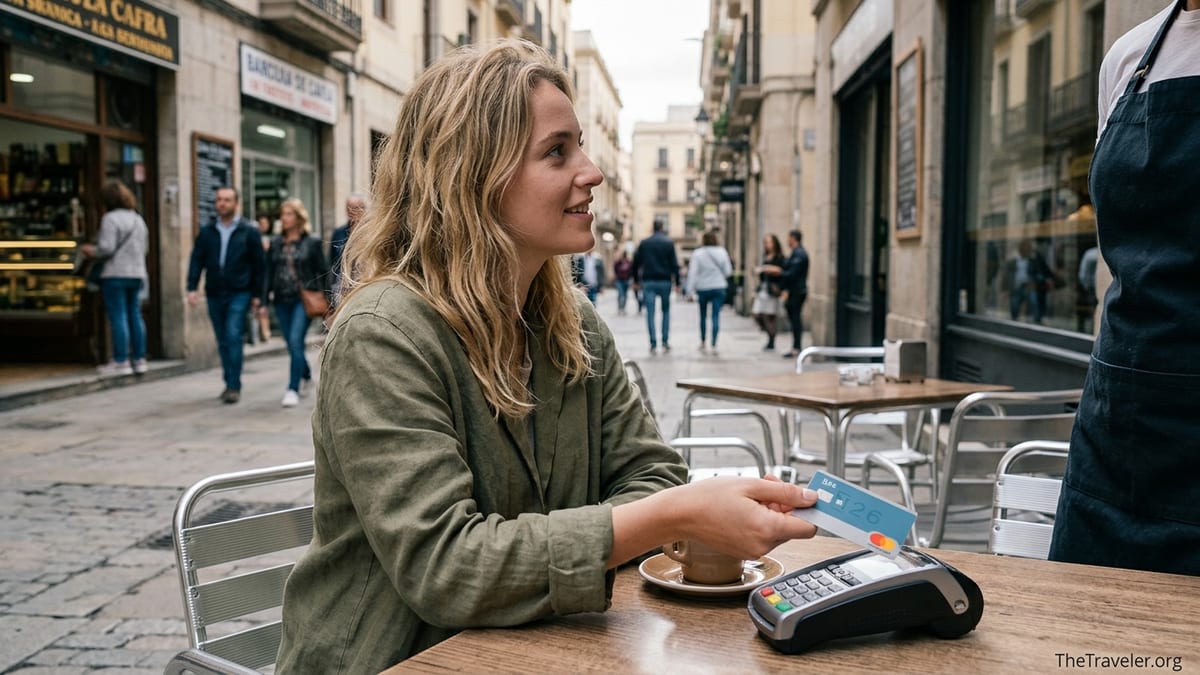
Overview: What N26 Actually Offers Travelers Abroad
N26 is a European app-based bank built around a Mastercard debit card and a mobile app. For travelers, its biggest selling point is that card payments in foreign currencies generally do not carry extra N26 fees on any of its main plans. Instead, your purchases are converted at the Mastercard exchange rate, which is usually close to the market rate and often cheaper than the 2 to 3 percent currency markups charged by many traditional banks.
Where things get more complicated is cash. N26 treats ATM withdrawals differently from card purchases. Within the euro area, you get a limited number of free cash withdrawals each month, then pay a fixed fee per extra withdrawal. Outside the euro area, N26 typically charges a percentage fee on ATM withdrawals for its basic plans, while the higher paid tiers include free foreign-currency cash withdrawals. Understanding that difference is crucial before relying on N26 as your main travel card.
In practice, this means an N26 card can work extremely well if you mostly pay by card in shops, restaurants, hotels, and online. Problems tend to appear for travelers who land in a country where cash is still widely used, such as Japan or parts of Southeast Asia, and then discover that repeated ATM withdrawals on a basic N26 plan quietly eat into their budget.
Because N26 operates in euros, it is particularly attractive to residents of the eurozone who travel outside the currency bloc. A traveler based in Spain or Germany, for example, can keep their savings in euros, then use the N26 card to pay in dollars, pounds, or yen at the Mastercard rate whenever they head abroad. The way you structure your plan and withdrawals will largely determine whether N26 is simply convenient or genuinely cost-effective.
N26 Plans and How They Affect International Use
N26 currently offers several personal account tiers in much of Europe, all with a Mastercard debit card: the entry-level Standard account with no monthly fee, mid-tier paid plans such as Smart or Go, and premium plans like You and Metal at higher monthly prices. The exact names and pricing can differ slightly by country, but the structure is similar: the more you pay in monthly fees, the more generous the travel and ATM perks become.
On the Standard plan, which many travelers start with, you pay no monthly account fee. Card payments in any currency are typically free of extra N26 charges, but the account is less generous with ATM access. You usually receive a small allowance of free withdrawals in euros within the eurozone each month, then pay a fixed fee for each additional euro withdrawal. For ATM withdrawals in foreign currencies, such as US dollars or Thai baht, N26 Standard commonly charges a fee of around 1.7 percent of the withdrawal amount.
The paid plans are aimed at more frequent travelers and users who value insurance and extras. Mid-tier offerings like Smart or Go tend to increase the number of free ATM withdrawals in euros and can add features like extra virtual cards or budgeting tools. Premium tiers such as You and Metal typically include free ATM withdrawals worldwide, including in non-euro currencies, and bundle in travel insurance packages. As of mid-2026, these premium accounts usually cost somewhere in the region of 9 to 17 euros per month, depending on country and exact plan.
For a long weekend away in London once a year, the no-fee Standard plan can be perfectly adequate, especially if you mostly pay by card and keep cash withdrawals small. If you are a digital nomad splitting your year between Lisbon, Bali, and Mexico City, the premium plans can quickly pay for themselves in saved ATM fees and added insurance. The key is to look honestly at how often you travel and how much cash you use abroad, then match a plan to your lifestyle rather than chasing perks you will never use.
Card Payments Abroad: Exchange Rates and Real Costs
N26 uses the Mastercard exchange rate for foreign currency card payments. This means that when you tap your N26 card to pay 50 dollars for dinner in New York, N26 does not typically add its own foreign transaction fee on top. Instead, Mastercard converts those 50 dollars to euros at its current rate, and N26 passes that through, sometimes with a small markup already built into the network rate. For most travelers, this is significantly cheaper than paying with a card that tacks on a separate foreign transaction fee of 2 or 3 percent.
Imagine you are a French traveler visiting New York. Your hotel bill is 500 US dollars. With N26, the amount might be converted at roughly the Mastercard rate, say around 0.91 euros to the dollar on a typical day, so the final charge would land near 455 euros, subject to small daily variations. A traditional French bank card with a 2.5 percent foreign transaction fee would add an extra 11 to 12 euros to that same purchase, which quickly becomes noticeable over a two-week trip.
The savings are even more striking for frequent online purchases in foreign currencies. A German freelancer paying for US-based software subscriptions in dollars every month, or a Spanish traveler booking hotels in Thai baht through an international site, can benefit from N26’s approach. Instead of being punished with opaque markups, they see charges converted at a transparent card-network rate that closely tracks the market. Over a year, that can mean hundreds of euros in avoided fees for heavy international spenders.
One important point for travelers: many shops and hotels abroad will offer “pay in your home currency” at the card terminal, especially in tourist centers. This is known as dynamic currency conversion. With N26, you almost always want to decline this and choose to pay in the local currency instead. If you let the merchant convert the amount into euros, they set the exchange rate and often apply a hidden surcharge. Letting N26 and Mastercard handle the conversion typically results in a better final price.
ATM Withdrawals Abroad: Fees, Limits, and Examples
Where N26 becomes more nuanced is cash withdrawals from ATMs. Within the eurozone, N26 generally offers a fixed number of free euro cash withdrawals each month that depends on your plan. For example, a Standard customer might get only a couple of free withdrawals, then pay around 2 euros per additional euro withdrawal. Premium plans like Metal often include far more free euro withdrawals, making them friendlier for heavy cash users even at home.
Once you step outside the euro area, the rules change. On basic and mid-tier plans, N26 charges a percentage fee on ATM withdrawals in foreign currencies. Many customers in Europe see a 1.7 percent fee on each withdrawal in dollars, pounds, yen, or other non-euro currencies. This fee comes on top of any charges from the ATM operator itself. In contrast, premium plans such as You or Metal usually waive N26’s own foreign-currency ATM fee, allowing unlimited or very generous free withdrawals abroad.
Consider a real-world example. A Portuguese traveler on the Standard plan lands in Bangkok and withdraws the equivalent of 200 euros in Thai baht from an ATM. At a 1.7 percent fee, N26 would charge about 3.40 euros for that single withdrawal, not including any local ATM surcharge. If the same traveler takes out cash four times during a two-week trip, the N26 fees alone could be around 14 euros, plus whatever each Thai bank charges per withdrawal. By contrast, if they held a Metal plan that includes free foreign-currency withdrawals, their N26 fee would be zero and only the local Thai ATM fee would apply.
Local ATM practices matter, too. In Japan, for instance, many travelers use 7-Eleven ATMs, which often accept international cards and may have clearer fee screens. A German N26 user withdrawing 30,000 yen at a convenience store in Tokyo would see the Japanese bank’s own fee, if any, on the ATM screen, and N26’s separate percentage fee (if applicable) in the app afterward. In the United States, ATM owners frequently charge a flat fee per withdrawal, often around 3 to 4 dollars, regardless of your bank. The combination of the local fee and a 1.7 percent N26 charge on a Standard plan makes it important to withdraw larger amounts less often.
Managing Cash vs Card: Practical Strategies in Popular Destinations
For most modern city trips, it is entirely possible to rely on your N26 card for almost everything and keep cash withdrawals to a minimum. Cities like London, Copenhagen, and New York are heavily card-based, and contactless payments are accepted on public transport, in cafes, and in supermarkets. In those environments, an N26 Standard or mid-tier card works extremely well: you avoid foreign transaction fees on card payments and only need occasional cash for small tips or older venues.
In more cash-centric destinations, strategy matters more. Take Japan as an example. While card acceptance has improved around Tokyo and Osaka, small ryokan guesthouses, local restaurants, and some rural train stations may still be cash only. A traveler with N26 Standard visiting for two weeks might decide to withdraw the equivalent of 300 to 400 euros in yen early in the trip, accepting a single 1.7 percent N26 fee plus any Japanese ATM fee, then using that cash carefully. Repeatedly taking out small amounts, like 20 euros at a time, would multiply the fees for no real benefit.
Southeast Asia offers another instructive case. In Thailand, Vietnam, and Indonesia, local ATMs often charge their own fixed fee per withdrawal, on top of whatever N26 charges. A French backpacker traveling through the region with a premium N26 You plan would at least avoid N26’s own percentage fee, but still need to watch for local ATM charges that might be 4 to 6 euros per withdrawal in local currency terms. The smartest move is often to withdraw the local bank’s maximum-per-transaction that you can safely carry, rather than dipping into the ATM for small amounts every couple of days.
In contrast, border-hopping within the eurozone is straightforward. A Spanish traveler driving from Barcelona to the south of France can use their N26 card almost as if they were at home. Card purchases in euros work with no extra fees, and ATM withdrawals in France count against the same domestic free-withdrawal allowance. In such cases, there is little reason to change cash strategy at all, aside from checking how many free withdrawals remain for that month in the app.
Daily Use Tips: Settings, Security, and Avoiding Surprises
N26’s app gives travelers several tools to control how their card behaves abroad. Before leaving home, it is worth opening the app and checking that “payments abroad” and online payments are enabled for your card. Many users disable these features for day-to-day security, but forgotten settings can lead to declined transactions at a restaurant halfway across the world. You can change these switches instantly in the app without contacting support.
It is also essential to keep a close eye on notifications. One of N26’s strengths is real-time alerts for every card payment or withdrawal. If you pay 40 pounds for dinner in London, your phone typically buzzes within seconds, showing the amount in both the local currency and euros. This is particularly useful in countries that sometimes add tips or service charges after you tap your card. If a delayed adjustment posts for more than you expected, you will see it immediately and can query the restaurant or N26 support.
Setting sensible transaction and withdrawal limits before a trip is another good practice. Inside the app, you can raise or lower daily limits to reflect your travel plans. For example, if you are about to check into a New York hotel that will pre-authorize 400 or 500 dollars on your card, temporarily increasing your daily limit can prevent an embarrassing decline. After the trip, many users lower their limits again to reduce potential damage if the card is ever compromised.
Finally, always decline offers at ATMs or payment terminals to convert the amount into euros on the spot. The screen might show a reassuring message like “Guaranteed rate” or “Avoid exchange rate risk,” but behind it is often a poor conversion rate. Choosing to be charged in local currency and letting N26 and Mastercard handle the conversion usually produces a better effective rate. A quick rule of thumb is simple: if the machine is offering to convert to euros, say no.
When a Premium N26 Plan Makes Sense for Travel
Not everyone needs an N26 premium plan, but for frequent travelers the numbers can work in their favor. The core advantages of higher-tier accounts, such as You or Metal, are free foreign-currency ATM withdrawals and bundled travel insurance. If you take regular trips outside the eurozone and rely heavily on cash, these benefits can outweigh the monthly fee relatively quickly.
Imagine you live in Berlin and visit non-euro countries four or five times a year. Each trip, you typically withdraw the equivalent of 300 to 400 euros in local currency a few times. On a Standard plan with a 1.7 percent foreign ATM fee, that might add up to 50 or 60 euros in N26 charges over the year, plus any local ATM fees. A premium plan costing around 10 euros per month could eliminate those N26 fees entirely. Add in the value of travel medical coverage, flight delay insurance, and rental car protections that these plans often bundle through partners, and the upgrade might start to look like a reasonable annual investment rather than a luxury.
There are also softer factors. Many long-term travelers appreciate having a metal card that is physically robust and less likely to crack, and some like the dedicated customer support channels that premium members can access. Others value the peace of mind of a single app where they can track spending, manage insurance claims, and adjust card settings without juggling multiple providers. On the other hand, travelers who already hold a strong standalone travel insurance policy and a separate fee-free ATM card might find that N26’s premium tiers duplicate services they have elsewhere.
A balanced approach for many users is to start on the Standard plan and upgrade only when their travel patterns clearly justify it. If you find yourself repeatedly withdrawing cash outside the eurozone, or booking complex trips where comprehensive insurance would help, moving up a tier before a big journey can be a smart, time-limited experiment. If the benefits do not feel worthwhile after a few months, you can reassess once you are back to more routine travel.
The Takeaway
Used thoughtfully, N26 can be a powerful tool for spending abroad. The absence of extra N26 foreign transaction fees on card purchases, paired with the Mastercard exchange rate, makes it an attractive choice for paying hotels, restaurants, and transport in local currency almost anywhere in the world. For travelers who pay mostly by card, even the free Standard plan can significantly cut costs compared with many traditional banks.
The main trade-off lies in ATM withdrawals. Standard and some mid-tier plans apply a percentage fee to cash withdrawals in foreign currencies, while premium plans generally waive that charge and add insurance perks. How much and where you travel, and how cash-heavy your destinations are, will determine whether those premium benefits are worth the monthly cost. Real-world examples from New York to Tokyo show that repeated small withdrawals can be expensive, while a few larger, planned withdrawals can keep fees manageable.
Success with N26 abroad comes down to a few simple habits: pay in local currency instead of euros, avoid dynamic currency conversion at terminals and ATMs, use the app to manage limits and security settings, and match your plan to your travel style rather than to marketing headlines. Do that, and N26 can serve as a reliable, transparent companion for international spending, whether you are planning a short city break or a year of long-haul adventures.
FAQ
Q1: Does N26 charge a foreign transaction fee on card payments?
In most European markets, N26 does not add its own foreign transaction fee on card payments. Purchases in foreign currencies are converted at the Mastercard rate, which is usually close to the market rate, although small network markups may apply.
Q2: How much does N26 charge for ATM withdrawals outside the eurozone?
On entry-level and some mid-tier plans, N26 typically charges a percentage fee, often around 1.7 percent of the withdrawal amount, for ATM withdrawals in non-euro currencies. Premium plans such as You or Metal usually waive this N26 fee, though local ATM operator fees may still apply.
Q3: Are ATM withdrawals in euros also free with N26?
Within the euro area, N26 offers a limited number of free euro cash withdrawals each month, which increases with higher-tier plans. Once you exceed your monthly allowance, you usually pay a small fixed fee per additional euro withdrawal, regardless of where in the eurozone you are.
Q4: Is it better to pay in local currency or euros when offered a choice?
It is almost always better to choose to pay in the local currency. When you allow the merchant or ATM to convert the transaction into euros, they set the exchange rate and often add hidden markups. Letting N26 and Mastercard handle the conversion usually results in a better effective rate.
Q5: Can I use my N26 card for contactless and mobile wallet payments abroad?
Yes. N26 cards work with major mobile wallets such as Apple Pay and Google Pay in supported countries. You can tap your physical card or phone to pay abroad, and the same rules on exchange rates and fees apply as with a regular chip-and-PIN transaction.
Q6: What happens if an ATM abroad adds its own fee?
Any fee charged by the local ATM operator is independent of N26’s fees and is usually shown on the screen before you confirm the withdrawal. If you proceed, you pay both that local fee and any applicable N26 withdrawal fee. Cancel the transaction and try another ATM if the fee seems high.
Q7: How can I check the exchange rate N26 used for a transaction?
You can tap on a specific card payment or ATM withdrawal in the N26 app to see details. For foreign currency payments, N26 typically shows the original amount in the local currency, the euro amount charged, and information about the exchange rate or any markup applied by the card network.
Q8: Is N26 a good primary bank account for long-term travelers?
N26 can work well as a primary account for long-term travelers, especially those based in the eurozone who spend substantial time abroad. Its strengths are low-cost card payments, solid app controls, and, on premium plans, free foreign-currency withdrawals and travel insurance. The main limitation is that frequent heavy cash use on basic plans can become expensive.
Q9: Do I need to notify N26 before I travel internationally?
In general, you do not need to inform N26 before traveling. The bank expects its customers to use their cards abroad and relies on real-time monitoring and app controls for security. However, ensuring your contact details are up to date and app notifications are enabled helps if N26 needs to verify unusual transactions.
Q10: Can I receive income in foreign currencies directly into my N26 account?
Most personal N26 accounts are denominated in euros and are designed to receive payments in euros via standard European transfer systems. If a client pays you from abroad, their bank or payment service will usually convert the funds into euros before they reach your N26 account. For holding or managing balances in multiple currencies, many travelers pair N26 with a dedicated multi-currency service.