


More news on this day
Indian Railways continues to provide special ticketing support to cancer patients who must travel long distances for treatment, combining fare concessions with access to a limited emergency quota that can turn a long waiting list into a confirmed berth in selected classes.
Get the latest news straight to your inbox!
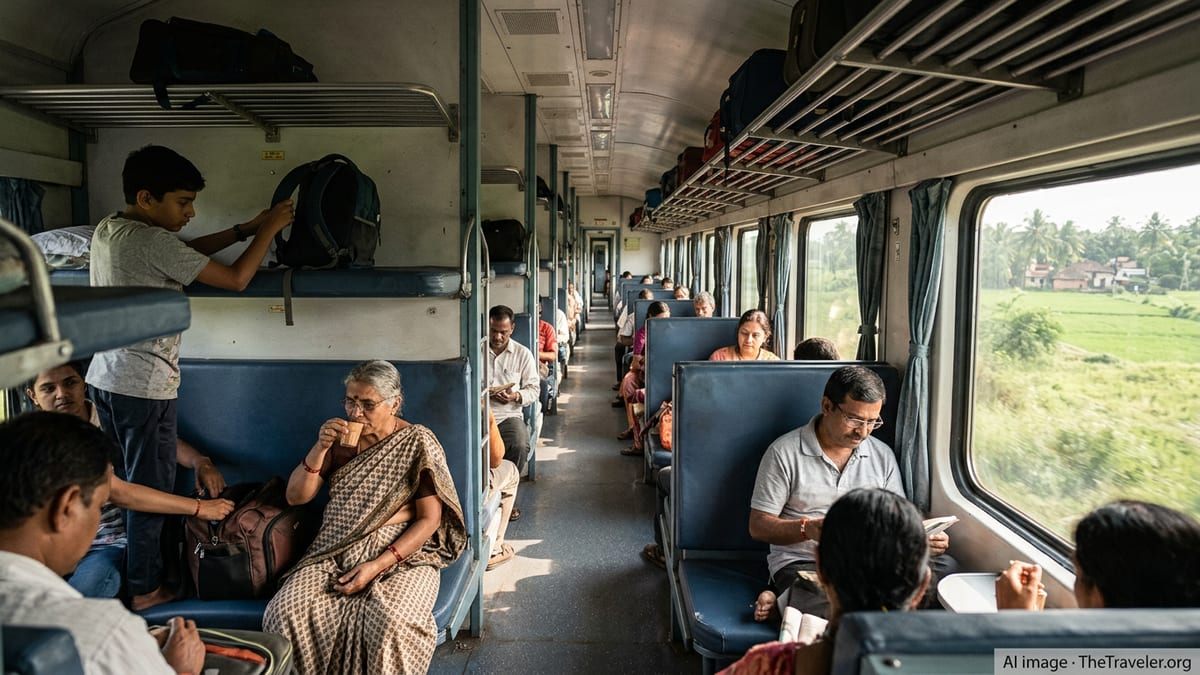
How the emergency quota for cancer patients works
Indian Railways sets aside a small pool of berths on most long-distance trains under what is broadly known as the Emergency Quota. Publicly available Railway Board circulars indicate that part of this quota can be used for confirmed reservations for cancer patients and their attendants when they travel on concessional tickets backed by hospital certificates.
Commercial circulars issued to zonal railways describe how this access is technically built into the Passenger Reservation System. When a valid concession for cancer treatment is applied at the time of booking at a reservation counter, the system can automatically draw from a fixed number of berths earmarked out of the train’s emergency quota in certain classes such as Sleeper, AC chair car and AC three-tier. This allows many cancer patients to receive a confirmed berth even when general quota seats show long waitlists.
The earmarking comes with clear numerical caps. Internal instructions stipulate that only a limited number of berths per train in each eligible class may be allotted in this way, so not every eligible passenger will necessarily obtain a confirmed ticket from the emergency pool. Once that cap is reached, further bookings for cancer patients are treated like any other concession ticket, moving into waitlist or RAC status depending on overall availability.
While the emergency quota is also used for categories such as VIP travel and operational exigencies, cancer patients remain one of the few civilian groups allowed automatic access through the central reservation system. Railway documents emphasize that if a berth released from this pool by cancellation is not needed for other urgent categories, it returns to general availability for waitlisted passengers closer to the day of travel.
Eligibility, concessions and documents required
The emergency quota facility for cancer patients is linked to long-standing fare concessions on Indian Railways. Updated concession lists show that cancer patients travelling for treatment or periodic check-ups are eligible for substantial reductions on the basic fare, with the exact percentage varying by class and whether an escort is accompanying the patient. The concession applies only to the base fare, with other charges such as reservation fees and superfast surcharges collected at full rate.
To qualify, passengers generally need a concession certificate issued by a recognized cancer hospital or oncology department. The certificate format follows a standard pattern notified by the Railway Board and must confirm that the individual is undergoing active treatment or is required to attend follow-up appointments. It also typically specifies the origin and destination stations relevant to the hospital where treatment is taking place.
Hospitals that work regularly with long-distance patients often issue separate outward and return concession forms, each with its own validity period. Public information from large cancer centers indicates that outward journeys for treatment may be valid for several months, while return journeys often carry shorter validity windows to reflect the expected treatment schedule. Railway guidelines make clear that any overwriting or corrections on these forms must be attested by the issuing authority to be accepted at booking counters.
The patient must carry original medical and concession documents during the journey. Ticket checking staff have the authority to verify that the person occupying the berth is the one named on the concession certificate and ticket, and that any escort travelling under concessional terms is the individual recorded in the documents. Name transfers are rarely allowed on cancer concession tickets, so accurate spelling and identification at the time of booking remain crucial.
Where and how to apply for a confirmed berth
For many cancer patients, the most practical route to a confirmed ticket remains the physical Passenger Reservation System counters at major stations. Booking staff can input the details from the cancer concession certificate, check whether emergency quota berths are still available for the chosen date and class, and, if so, issue a confirmed ticket drawing from that pool. If the emergency quota allocation for that class is already exhausted, the system will display only waitlisted or RAC options.
Reports from recent travellers suggest that success rates vary widely between routes. On heavily used cancer corridors, such as trains connecting regions with clusters of industrial pollution to tertiary cancer centers in metropolitan cities, emergency quota seats can be claimed quickly, particularly in popular sleeper and AC three-tier classes. On less congested routes or off-peak days, cancer patients may still find confirmed berths available under the scheme a few days before the date of travel.
Some zonal railways continue to require that certain emergency quota requests, particularly in higher classes like AC two-tier or first class, be routed through divisional or headquarters offices instead of relying only on automatic system allotment. In practice this can involve submitting copies of medical records, concession forms and an application explaining the urgency of travel. While this process can deliver a confirmed berth in exceptional cases, it often takes more time and may depend on local administrative practices.
Online booking for cancer concession tickets and associated access to the emergency quota is still limited. Passengers frequently report that they must first register their concession details with Indian Railways and then use specific accounts or counters to claim the benefit. As a result, many patients and their families plan at least one visit to a station booking office in advance of each treatment cycle to secure reservations.
Practical tips and evolving ground realities
Recent accounts shared by passengers and caregivers point to a mixed picture on the ground. In some regions, travellers describe being able to secure confirmed AC berths under the cancer concession and emergency quota even on relatively short notice, significantly reducing the physical strain of repeated journeys for chemotherapy or follow-up scans. Others report that while the fare concession remains in place, confirmed seats under any special medical quota have become harder to obtain on certain high-demand routes.
Publicly available circulars make it clear that emergency quota capacity per train is intentionally small, by design, to preserve flexibility for a variety of urgent needs. This means that during festival seasons, large events or periods of extraordinary demand, cancer patients may find that the emergency pool has already been used for other categories or exhausted quickly by earlier medical bookings. In these situations, the concession reduces cost but does not guarantee confirmation.
Travel planners who specialize in long-distance medical journeys often recommend that patients try to align treatment cycles with trains that historically see lighter demand, or to consider night trains where berths in multiple classes may be easier to secure. They also advise building in a buffer of at least a few days when scheduling critical treatment appointments around rail travel, particularly in corridors where only one or two convenient trains operate each week.
The rules governing concessions and emergency quota access are periodically revised through Railway Board circulars and software updates to the reservation system. Cancer patients and their families are therefore encouraged to confirm the latest eligibility norms and booking procedures with official railway information channels or reservation offices before making travel plans. As Indian Railways continues to modernize its passenger systems, observers will be watching whether digital tools expand or reshape the way life-saving journeys for cancer care are prioritized on the national network.