


More news on this day
Fresh rankings and industry benchmarks released through 2025 and early 2026 are sharpening the picture of how Singapore Airlines and Malaysia Airlines stack up on service, onboard comfort, and digital connectivity as Asia’s flag carriers race to keep increasingly connected travelers loyal.
Get the latest news straight to your inbox!
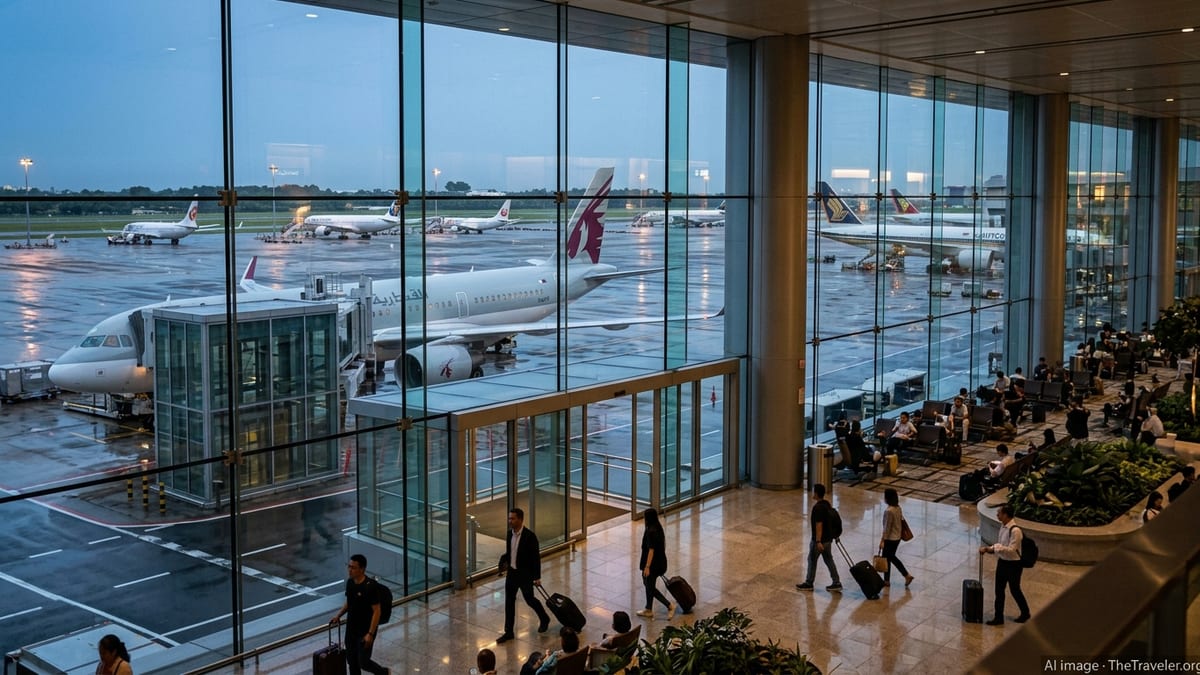
Global Rankings Put Singapore Airlines Near the Top in 2026
Recent award cycles place Singapore Airlines consistently among the world’s leading full service carriers, with the airline ranked second globally in the 2025 Skytrax World Airline Awards and reported as third in newly published coverage of the 2026 results. Industry reporting notes that Qatar Airways holds the top position in 2025 and 2026, with Emirates and Singapore Airlines rounding out the leading trio in the latest 2026 assessment. These positions underline Singapore Airlines’ sustained strength in premium service and long haul performance.
Skytrax data for 2025 also shows Singapore Airlines retaining prominent category awards, including recognition for cabin crew and first class products, reinforcing its reputation for service consistency at the front of the cabin. Together with repeated appearances in the top tier of global airline rankings over the past decade, the 2025 and early 2026 results indicate that the carrier continues to be benchmarked against the world’s most service focused airlines rather than purely regional peers.
External business rankings have added to that picture. Fortune’s 2026 list of the World’s Most Admired Companies places Singapore Airlines within the top 25 globally and identifies it as the most admired airline in its sector, according to publicly available summaries. This reinforces the alignment between passenger facing accolades and broader corporate perceptions of management quality, product innovation, and long term performance.
By contrast, Malaysia Airlines does not appear in the very top positions of recent global league tables but continues to feature in regional and product specific rankings. Industry coverage describes the carrier as rebuilding its premium positioning on key routes such as Kuala Lumpur to London and key Asia Pacific destinations, focusing awards ambitions more on specific cabin products, safety, and value rather than overall global dominance.
Cabin Service and Comfort: Diverging Strengths
Service quality and cabin comfort remain the core of both airlines’ brands, though current rankings suggest they compete in slightly different tiers. Passenger surveys compiled in Skytrax results for 2025 credit Singapore Airlines with one of the world’s highest rated cabin crews, particularly in premium cabins, with high scores for attentiveness, presentation, and consistency. Publicly listed awards from the airline highlight repeat wins for best first class and strong showings in business class categories.
Cabin comfort is another differentiator. Singapore Airlines continues to operate a long haul fleet built primarily around widebody aircraft such as the Airbus A350 and Boeing 777, as well as the ultra long range A350 variant on nonstop services to North America. These aircraft support lie flat seating in business class, private suites in first where offered, and relatively competitive seat pitches in economy on most long haul routes, which contributes to strong comfort scores in global rankings.
Malaysia Airlines has modernized significant portions of its long haul fleet with the Airbus A330neo and maintains a regional network across Asia with narrowbody aircraft. Industry reviews published through 2025 note that the airline’s latest business class products on refurbished or newly delivered aircraft offer lie flat seating and improved privacy, while economy cabins benefit from updated inflight entertainment and refreshed interiors. However, variations between older and newer aircraft can still affect passenger impressions of comfort and consistency.
Independent traveler reviews aggregated by aviation and travel outlets over the past year often describe Malaysia Airlines’ cabin crews as warm and personable, particularly on flights to and from its Kuala Lumpur hub, but note that the carrier’s overall ranking still lags regional leaders. The contrast positions Singapore Airlines as a global benchmark for service and comfort, while Malaysia Airlines is portrayed as a solid, improving full service option with some standout products on specific routes.
Inflight Connectivity: From Basic Access to High Speed Wi-Fi
Connectivity has emerged as one of the sharpest points of comparison between the two carriers, reflecting a broader industry shift identified in a 2025 Asia Pacific inflight connectivity benchmark and a 2026 global study that finds a large majority of airlines now offering some form of onboard Wi-Fi. These reports emphasize that travelers increasingly treat inflight internet as an essential part of the journey rather than a luxury add on.
Singapore Airlines has moved aggressively into high speed connectivity. A detailed 2026 guide published by an independent frequent flyer site reports that all of the carrier’s aircraft now have Wi-Fi capability following the retirement of its last non equipped narrowbodies in late 2025. The same analysis notes that most passengers in premium cabins and members of the airline’s loyalty program receive complimentary access, while other travelers can purchase data plans. The carrier is also in the process of rolling out next generation satellite connectivity, with reporting highlighting expected speeds of up to 1 Gbps per antenna as part of a Starlink powered solution on selected aircraft.
For Malaysia Airlines, connectivity has been expanding but from a smaller base. Publicly accessible aviation technology summaries state that the airline has introduced free Wi-Fi on its Boeing 737 8 fleet on selected routes, with plans announced to broaden coverage over time. Long haul widebody aircraft offer a mix of complimentary and paid options depending on cabin class and route, though specific speeds and coverage can vary. Industry observers point out that this incremental approach mirrors the investment constraints of many mid sized full service carriers, which must balance connectivity upgrades with fleet renewal and network priorities.
Regional benchmarks indicate that both carriers operate in a competitive Asia Pacific market where Japanese, Korean, and Gulf carriers are also enhancing inflight connectivity. In that context, Singapore Airlines appears closer to the front of the pack in both coverage and speed, while Malaysia Airlines is positioned among carriers that offer essential connectivity on key aircraft types but are still in the process of standardizing the product across their fleets.
Network Strategy and Passenger Experience in 2026
Network design and hub experience are increasingly intertwined with perceptions of service and comfort. Singapore Airlines benefits from operating out of Singapore Changi Airport, which regained the title of World’s Best Airport in Skytrax’s 2025 rankings, according to publicly available airport data. The combination of a highly rated airline and a repeatedly awarded hub reinforces the perception of a seamless premium journey for connecting passengers, particularly on Europe Asia and North America Asia itineraries.
Malaysia Airlines focuses its operations through Kuala Lumpur International Airport, leveraging a mix of regional and long haul services. While Kuala Lumpur does not occupy the same top tier ranking as Changi in recent airport league tables, it offers shorter minimum connection times on some intra Asia itineraries and serves as a competitive alternative for price sensitive travelers. Industry commentary notes that Malaysia Airlines often targets value conscious premium passengers by offering business class fares undercutting those of its regional rivals, trading on a combination of service and price.
Passenger experience reports through 2025 and early 2026 suggest that both airlines are investing in digitization beyond inflight connectivity. Mobile apps, online check in, and self service options at the airport are being refined to reduce friction in the travel journey. At Singapore Airlines, this includes tighter integration between its loyalty program, digital boarding passes, and onboard Wi-Fi access. At Malaysia Airlines, published coverage describes app based booking enhancements and efforts to streamline disruption handling for delays and rebookings.
These broader experience initiatives frame the service, comfort, and connectivity story in 2026 as part of a larger competition for long term loyalty in Southeast Asia. Singapore Airlines enters that contest with a strong global ranking and rapidly improving inflight connectivity, while Malaysia Airlines seeks to differentiate through warm service, refreshed cabins on key aircraft, and expanding but still developing digital capabilities.