


More news on this day
Saudi Arabia’s latest aviation milestone has taken flight, as new national carrier Riyadh Air launches Boeing 787-9 Dreamliner service between Riyadh and London Heathrow, strengthening the kingdom’s global connectivity and underscoring an ambitious plan to reach one hundred destinations by 2030.
Get the latest news straight to your inbox!
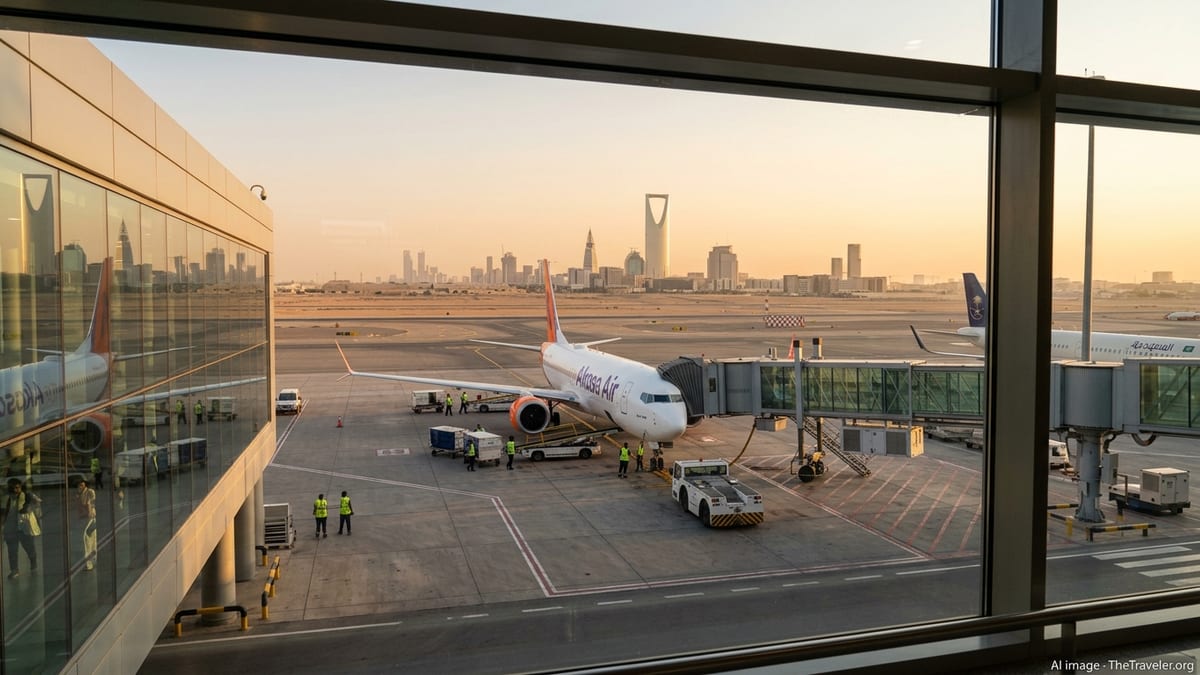
A Historic Riyadh–London Dreamliner Service Takes Off
The launch of Riyadh Air’s inaugural Dreamliner flight to London Heathrow on June 10, 2026, represents a pivotal step in Saudi Arabia’s rapidly evolving aviation and tourism strategy. Publicly available information shows that flight RX401 departed King Khalid International Airport in Riyadh and arrived at Heathrow early in the morning local time, operated by a new Boeing 787-9 Dreamliner configured for the carrier’s long-haul vision.
The route builds on an earlier phase of operations in which Riyadh Air used a leased “technical spare” widebody to establish an initial presence at London Heathrow in late 2025. The transition to factory-new Dreamliners now formalizes London as the airline’s flagship intercontinental link and signals the start of full-scale commercial services built around its own fleet.
Industry coverage indicates that the carrier recently took delivery of its first two 787-9 aircraft, followed by a third jet positioned in Saudi Arabia to support the accelerated launch. The move brought forward the full Dreamliner deployment on the Riyadh–London corridor from a previously scheduled July start, underscoring the strategic importance of securing daily capacity into one of the world’s busiest international hubs.
Riyadh Air’s decision to anchor its long-haul network on the Boeing 787 family reflects broader global trends in fuel-efficient twin-aisle aircraft. The type’s range and lower operating costs make nonstop connectivity between Saudi Arabia and key markets such as the United Kingdom more commercially viable, particularly as the kingdom seeks to attract higher volumes of leisure and business travelers.
Vision 2030, Tourism Targets and a New Global Hub
The Riyadh–London Dreamliner service is closely tied to Saudi Arabia’s Vision 2030 agenda, which places tourism and aviation at the center of efforts to diversify the economy beyond hydrocarbons. Official planning documents and recent reports describe a national aviation strategy that aims to more than triple passenger throughput to around 330 million travelers annually by 2030, while significantly increasing the number of international destinations served from Saudi airports.
Within this framework, Riyadh Air has been positioned as a digitally focused global network carrier designed to complement existing flag carrier Saudia. Publicly available Vision 2030 material highlights a target for Riyadh Air to reach over one hundred destinations by 2030, leveraging the country’s geographic position between Asia, Africa and Europe to build transfer traffic alongside point-to-point tourism flows.
The expansion of air connectivity is closely linked with Saudi Arabia’s plans to transform Riyadh into a top-tier global city and to host major international events. Development of the planned King Salman International Airport, envisioned as a mega-hub for both Riyadh Air and Saudia, is intended to handle passenger volumes comparable to leading global gateways such as Dubai, London Heathrow and Atlanta, reinforcing the strategic nature of new long-haul links to mature markets.
Tourism research and recent government reports indicate that Saudi Arabia has already recorded strong growth in visitor numbers, particularly from regional markets and key long-haul origin countries. Expanded direct air services are expected to support large-scale projects such as NEOM and the Red Sea developments, as well as religious tourism to Mecca and Medina, by making the kingdom more accessible to travelers from Europe, North America and Asia.
Connecting the UK, US, UAE, Iran and Egypt in a New Air Corridor
The Riyadh–London Dreamliner operation places Saudi Arabia more firmly within a global aviation narrative shaped by key markets including the United Kingdom, United States, United Arab Emirates, Iran and Egypt. These countries each play substantial roles in regional and international air traffic flows, and Saudi policymakers view enhanced connectivity as a way to capture a larger share of this movement of people and commerce.
In Europe, London Heathrow remains one of the most important global long-haul gateways, with extensive onward connections to North America and a dense short-haul network across the continent. By operating modern widebody aircraft into Heathrow, Riyadh Air gains access to high-yield corporate and leisure demand, positioning Riyadh as an alternative transfer point between Europe, Asia and Africa.
Across the Atlantic, publicly available filings and industry commentary suggest that Saudi authorities and Riyadh Air are preparing future applications and route rights for services to the United States, aligning the airline with long-haul growth patterns seen in carriers from the United Arab Emirates and Qatar. New direct links would place Saudi Arabia in closer competition with established Middle Eastern hubs that already connect the US with Asia and Africa.
Regionally, the growth of Riyadh Air complements existing connectivity between Saudi Arabia, the UAE, Egypt and Iran through a web of full-service and low-cost airlines. While political dynamics vary, published analyses of Middle East aviation show that Gulf and wider regional carriers have spent the past two decades building long-haul networks that bridge Europe, Asia and Africa. Saudi Arabia’s emerging strategy aims to insert Riyadh and Jeddah more prominently into these flows, thereby influencing how passengers move between markets as diverse as London, Cairo, Tehran, Dubai and major US cities.
Fleet Growth, Route Expansion and Competitive Pressures
Riyadh Air’s fleet and network strategy is ambitious. Publicly available orders and announcements indicate commitments for dozens of Boeing 787-9 Dreamliners along with narrowbody aircraft intended for medium-haul and regional routes. The airline’s stated objective of serving more than one hundred destinations by 2030 implies an aggressive ramp-up in aircraft deliveries, crew hiring and airport infrastructure.
Following the launch of the renewed Riyadh–London service, reports indicate that Riyadh Air is opening or preparing routes to additional cities including Jeddah, Dubai and Cairo, as well as further European destinations such as Manchester and Madrid. These moves seek to build a balanced portfolio of religious, leisure and business destinations that can feed through a Riyadh hub and support the broader Vision 2030 tourism targets.
The strategy unfolds in a competitive landscape already shaped by strong players like Emirates, Qatar Airways, Etihad Airways, Turkish Airlines and Egyptair, as well as long-established European and US carriers. Industry analysis suggests that Riyadh Air will leverage its modern fleet, digital customer proposition and the scale of national investment in tourism and infrastructure to differentiate itself, even as it faces pressure on yields and market share in crowded long-haul segments.
At the same time, observers note that regional geopolitical tensions, fluctuating fuel prices and evolving travel demand patterns present risks to long-term aviation planning across the Middle East. For Saudi Arabia, sustaining investor confidence and maintaining the pace of infrastructure delivery will be critical to ensuring that new aircraft orders and hub expansions translate into sustainable passenger growth rather than overcapacity.
An Emerging Aviation and Tourism Growth Story
The inauguration of Boeing 787 Dreamliner service between Riyadh and London Heathrow illustrates how Saudi Arabia is seeking to reposition itself within global travel flows. The route highlights the kingdom’s shift from relying solely on religious and domestic travel toward a more diversified tourism and business visitor base, supported by new visa policies, large-scale resort developments and cultural initiatives.
Published coverage of Saudi Vision 2030 and recent aviation strategy updates portray Riyadh Air as a central piece of this transformation. By focusing on digitally enabled services, modern long-haul aircraft and close coordination with airport development, the carrier is intended to function not only as a transport provider but also as a symbol of the kingdom’s broader economic transition.
As Riyadh Air expands beyond London to additional destinations across Europe, North America, the Middle East, Africa and Asia, its performance will serve as an indicator of how effectively Saudi Arabia can convert large aviation and tourism investments into sustainable traffic flows. The success of the Riyadh–London corridor, in particular, will be watched closely by competitors and policymakers alike as a test case for the kingdom’s ambition to emerge as a leading global aviation and tourism hub by 2030.