


Booking a private jet with NetJets is very different from typing dates into an airline website. Instead of one-off tickets, you buy access to a fleet through a jet card, lease, or fractional ownership. Once you are in the program, though, actually booking a flight is straightforward. This guide walks through the process step by step, explains what NetJets will ask you, and uses real-world style examples so you know what to expect before your first trip.
Get the latest updates straight to your inbox!
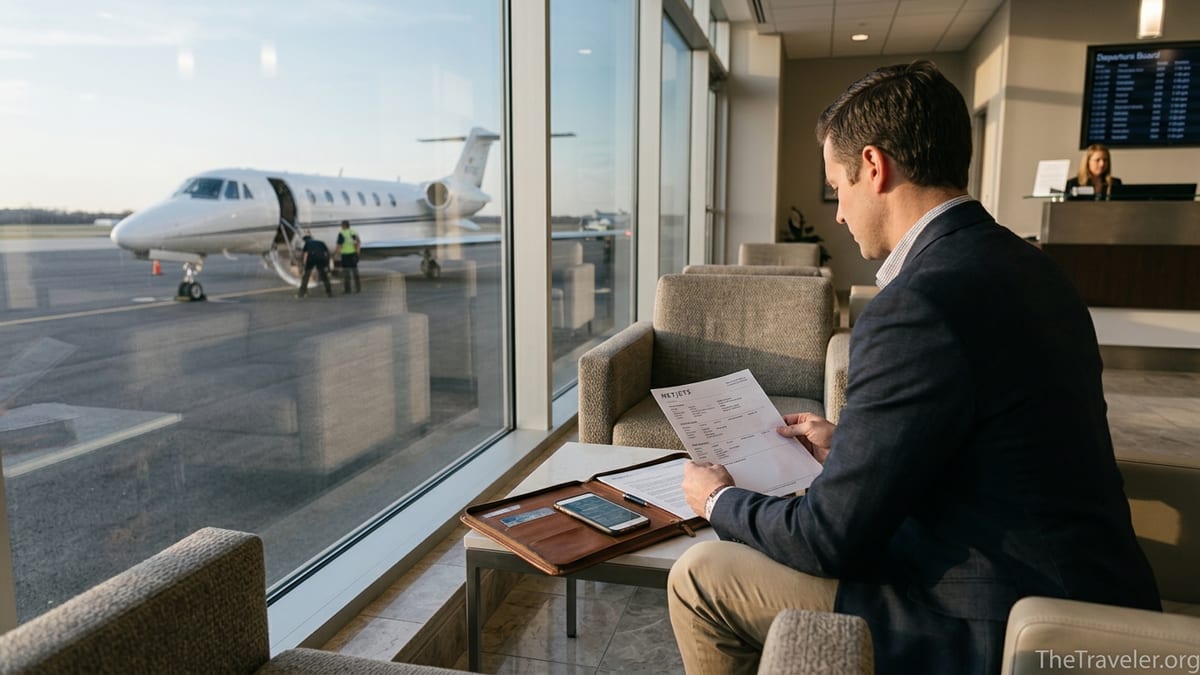
Understanding How NetJets Booking Works
Before you book a flight, it helps to understand what NetJets is and is not. NetJets is a fractional private jet operator that sells access to its fleet rather than single "tickets". Most travelers fly through one of three options: a NetJets Card with prepaid hours, a NetJets Lease, or a NetJets Share fractional ownership interest. Each option gives you guaranteed access to a specific cabin class and aircraft type, but the day-to-day experience of booking an individual trip is similar across programs.
For example, a business owner who expects to fly privately around 25 to 50 hours per year might choose an entry-level jet card. NetJets publicly notes that card programs start at around the low two hundreds of thousands of dollars, with 25 hours of flight time and about 275 days of annual access, though exact pricing depends on aircraft type and contract terms. Instead of paying every time you fly, you draw down from your prepaid hours as you book trips.
Heavier users, such as a family that flies between New York and Europe multiple times a year plus domestic holiday trips, may opt for a fractional share of a larger cabin jet. In that case, they purchase or lease a fraction of an aircraft, which secures them a set number of annual hours and may offer additional tax and customization benefits. Even so, when they want to go from Teterboro to Nice in July, they still follow the same basic booking steps as the jet card holder flying from Dallas to Aspen for a long ski weekend.
The key concept is that with NetJets you are reserving the use of an aircraft within a fleet that you already have access to, not shopping among many different one-off quotes as you might with on-demand charter. That means you spend less time comparing offers, and more time focusing on schedule, passengers, and special requests while NetJets handles the operational details.
Step 1: Choose and Activate the Right NetJets Program
The very first step, before you can book, is becoming a NetJets Owner. That starts with a conversation with the sales team, usually long before your intended first trip. They will ask about how often you fly, your mix of short hops versus long-haul, typical passenger counts, and whether you prioritize cost efficiency, cabin space, or the ability to cross oceans nonstop.
For instance, if you mainly fly two to four people from Chicago to Florida, Colorado, and the Caribbean, a light or midsize jet such as an Embraer Phenom 300 or Cessna Citation XLS might make the most sense. If you frequently fly six to eight people between the US coasts and occasionally to Europe, a super-midsize or large-cabin aircraft such as a Challenger 350 or Gulfstream G450 type may be recommended. The jet card, lease, or share you purchase is tied to one of these cabin classes, which then determines your standard hourly rate and booking guarantees.
After you sign your contract and fund the program, NetJets creates your Owner profile. You will receive account credentials to log in to the NetJets Owner portal and mobile app, and you will be introduced to your Owner Services Team. This team is essentially your central concierge and operations contact, the people you will email or call every time you want to book, modify, or cancel a flight.
Only once your contract is active and your account is set up can you make your first booking. This means you cannot sign up and fly the same day. Travelers planning to use NetJets for an important future event, such as a destination wedding or a key investor meeting, should typically allow weeks, if not a couple of months, to evaluate programs, negotiate terms, sign, and move through account onboarding before trying to reserve a specific trip.
Step 2: Gather the Information You Need to Book
When you are ready to request a flight, NetJets will need a standard set of details. Having them organized makes the booking conversation much faster, whether you are calling, emailing Owner Services, or using the NetJets mobile app. At a minimum, you will need departure and arrival airports, preferred departure time, date or date range, and the number of passengers. You also confirm whether the trip is one way, round trip, or a multi-leg itinerary.
Consider a typical example. You live in the New York suburbs and want to fly to Vail for a family ski trip. Instead of saying simply "New York to Vail," NetJets will ask which airports you prefer. From New York, that might be Teterboro, Westchester County, or White Plains. For Vail, it could be Eagle County Regional or even Denver with a ground transfer up to the mountains. They will also ask whether you want a first-morning departure to make afternoon skiing possible, or a relaxed afternoon departure to avoid an early wake-up with children.
Beyond the basics, NetJets will ask for names, dates of birth, and identification details for each passenger, including any unaccompanied minors or pets. They will also want to know about luggage, ski gear, golf clubs, or bulky items so the recommended aircraft type can safely and comfortably accommodate everything. If anyone has mobility or dietary needs, or if you want specific catering on board, it is best to mention this at the time of booking rather than waiting until the day before the flight.
If your itinerary involves international travel, there is another level of detail: passport information, visa requirements, and customs preferences. For example, if you are flying from Los Angeles to Cabo San Lucas, the NetJets team will coordinate with their international trip planning group to ensure customs and immigration procedures are arranged, the right documentation is in place, and you know when and where to clear border formalities along the route.
Step 3: Requesting a Flight by Phone, Email, or App
Once you know when and where you want to travel, you actually submit the booking request. Most Owners still rely on their dedicated Owner Services Team by phone or email, especially for more complex itineraries. Many also use the NetJets mobile app for simple point-to-point trips because the interface mirrors the questions an Owner Services representative would ask and shows real-time details about upcoming flights.
Using the phone example, you might call Owner Services and say you need to depart Teterboro for Miami on a Friday in February at about 3 p.m., returning Tuesday morning around 10 a.m. The representative will confirm your preferred airports, check your account to ensure you have sufficient hours available, and then come back with a proposed schedule. They may suggest moving the departure slightly earlier or later to minimize congestion or better match crew duty limits. If you are on a card or share with a specific cabin type, they will typically match you with that aircraft class and let you know if an upgrade or downgrade might be advantageous.
If you prefer to use the app, you would select your departure airport, destination, date and time, and passengers right on your phone or tablet. The app can show estimated flight time, the hours that will be debited from your balance, and details like fixed-base operator terminals at each airport. You can then submit the request, which flows to the operations team much like a phone or email booking. For straightforward trips, many Owners appreciate that they can do this in a few taps from the back of a car or between meetings.
In both cases, NetJets will review your request against your contract terms. For cardholders this might include rules such as required notice windows, potential peak-day surcharges, or blackout periods. For fractional owners and lessees, there may be specific rules around high-demand periods and guaranteed aircraft availability. If anything in your request triggers an exception, such as very short notice on a peak holiday Saturday, the Owner Services representative will explain options, which could include alternative times, different airports, or, in some cases, added repositioning charges or surcharges.
Step 4: Reviewing Pricing, Hours, and Confirmation Details
After NetJets verifies availability for your trip, they will present you with the cost in the context of your program. For a jet card, this usually means the number of hours that will be deducted at your contracted hourly rate and whether any additional charges apply. For fractional owners, the conversation may reference your remaining annual hours and variable hourly operating fees. In most cases, the pricing is a function of scheduled flight time, not the number of passengers.
To make this more concrete, imagine you hold a 25-hour light-jet card. You request a flight from Dallas Love Field to Aspen for four adults and two children, departing Thursday and returning Sunday. NetJets calculates that the outbound leg is about 2.5 flight hours and the return is similar. They confirm you will use approximately 5 hours of your card, subject to actual flight time, at your predetermined hourly rate. If your program includes guaranteed one-way pricing with no repositioning charges, you will not see fees for where the aircraft goes between those days, even if NetJets must move it for another client or maintenance.
On larger cabin jets or international flights, the all-in hourly cost can be considerably higher, sometimes into five figures per flight hour when you account for the aircraft type, crew, maintenance, and services. While NetJets does not post public rate cards, industry estimates show a wide band of typical hourly costs, from mid four figures for smaller jets up to well into the teens of thousands of dollars per hour for long-range aircraft. This underscores why having a clear idea of your annual flight hours and cabin-size needs is so important before you commit to a program.
Once you are comfortable with the cost and the schedule, you give verbal or written approval. NetJets will then issue an itinerary showing departure time, tail number once assigned, FBO terminal locations, and any special arrangements such as catering, ground transportation, or pet handling notes. This confirmation becomes your reference for any future changes and will also appear in your Owner portal and mobile app, where you can review details at a glance.
Step 5: Finalizing Passenger, Catering, and Ground Details
With the core booking confirmed, NetJets focuses on the finer points of your flight experience. This stage often unfolds in the days leading up to departure and can involve several small updates to your itinerary. If your party changes, for example, you can ask Owner Services to add a colleague to the manifest or remove someone who is no longer traveling. They will verify identification details and, for international flights, ensure all passport information is in order and transmitted to the necessary authorities.
Catering is another important consideration. NetJets can arrange everything from simple snacks and soft drinks to more elaborate meals and vintage wines, depending on the aircraft and route. A family flying from Boston to Orlando might ask for kid-friendly snacks, fruit, and a light lunch, while a corporate group flying from San Francisco to Vancouver for a board meeting might request a specific restaurant to supply appetizers and desserts. The earlier you provide these details, the easier it is for NetJets to coordinate with local vendors and the FBO.
Ground transportation often ties closely into the flight schedule. Many Owners prefer that NetJets book chauffeured cars at both ends of the trip, timed to meet the aircraft on arrival and whisk passengers directly to their hotel, home, or office. Others arrange their own drivers or ride-hailing services. In either case, you will want to confirm exactly where your car will meet you at the FBO, which can have multiple entrances and parking areas that look very different from a commercial terminal.
On the operational side, NetJets continues to monitor weather, air traffic conditions, crew scheduling, and maintenance in the days and hours before your flight. Occasionally they may recommend adjusting departure time, changing airports, or switching you to a different aircraft in the same cabin class to ensure a smooth and safe trip. When this happens, Owner Services will contact you with updated details, and you will see the changes reflected in your itinerary and app.
Step 6: Day-of-Flight Experience and On-Trip Changes
On the day of travel, the booking you completed earlier translates into a seamless airport experience. You typically arrive at the specified FBO terminal about 20 to 30 minutes before departure. There is no long check-in queue, but you will present identification, and in some cases security staff will perform a brief screening or bag check consistent with local regulations and NetJets safety protocols.
For example, if you are departing from a busy private aviation hub like Teterboro or Van Nuys on a Friday afternoon, the FBO might be crowded with other private flights, but your crew will already have your details and be waiting to greet you. They will confirm your destination, any intermediate stops, and catering arrangements. If weather or air traffic control has imposed a flow restriction, they will explain any expected delays and keep you updated as you relax in the lounge.
Once boarded, the cabin crew, if present, or pilots on smaller aircraft walk you through a safety briefing tailored to the jet type. They will point out exits, seatbelt requirements, and any specific rules about using devices or the on-board communication systems during taxi, takeoff, and landing. After that, the flight feels very much like your own private space: you and your guests can work, sleep, or socialize without the constraints of a commercial cabin.
Sometimes plans change mid-trip. Perhaps you decide to extend your stay in Napa by a day, or you need to reroute from London directly to Zurich instead of returning to your original plan. In these cases, you contact Owner Services by phone or through the app. They will recalculate availability, make any necessary permits or slot requests if you are overseas, and issue a revised itinerary. Depending on your contract, schedule changes may carry additional costs or draw down more hours, particularly when they involve peak travel days or short-notice adjustments.
The Takeaway
Booking a flight with NetJets is less about hunting for the lowest price on a single route and more about managing an ongoing relationship with a private aviation provider. Once you have chosen the right program for your travel profile, the step-by-step process is structured and predictable: define your itinerary, submit a request via phone, email, or app, confirm the schedule and hours, fine-tune passenger and catering details, and then arrive at the FBO for a streamlined departure.
For travelers who value consistency and time savings, the advantages are clear. A family flying from New York to the Caribbean for winter holidays, a law firm shuttling partners between key offices, or an investor traveling frequently between tech hubs all benefit from not having to renegotiate each trip. Instead, they rely on a known hourly structure, a dedicated Owner Services Team, and a well-practiced booking flow that fits easily into their calendars.
That said, NetJets is a significant financial commitment, and it is wise to work closely with their sales and advisory teams before signing a contract to ensure your estimated flight hours, cabin type, and notice requirements match your real-world travel patterns. Once you are confident that fit is right, the mechanics of booking individual flights become a straightforward part of your travel planning, offering a level of control and comfort that is difficult to replicate with commercial airlines or ad-hoc charter alone.
FAQ
Q1. Can I book a NetJets flight if I am not already a cardholder or fractional owner?
To book directly with NetJets you must first become an Owner through a jet card, lease, or fractional share program. Once your contract is active and funded, you can submit flight requests through Owner Services or the app.
Q2. How far in advance do I need to request a NetJets flight?
Booking windows depend on your specific program. Many jet card and fractional agreements allow relatively short-notice bookings for standard days and require more advance notice on peak or high-demand days. Your contract and Owner Services Team can explain the exact notice requirements for your aircraft type and region.
Q3. Can I change my departure time or date after I book?
Yes, you can usually modify departure times or dates, subject to aircraft and crew availability and the terms of your agreement. Changes made at very short notice or on peak dates may affect your cost or trigger additional charges, so it is best to contact Owner Services as soon as you know your plans have changed.
Q4. What happens if weather or mechanical issues affect my flight?
If weather, air traffic restrictions, or maintenance issues impact your trip, NetJets operations will work to adjust departure times, reroute, or substitute another aircraft in your cabin class when possible. Owner Services will keep you updated and reissue your itinerary with any changes.
Q5. Can I choose a specific aircraft model when I book?
Your contract is tied to a cabin class and often to a typical aircraft type, but day-to-day aircraft assignment depends on operational needs. You can express preferences, such as favoring a particular model for its cabin layout, and NetJets will accommodate when feasible, but specific tail numbers are not usually guaranteed.
Q6. How are pets handled on NetJets flights?
Pets are welcome on most NetJets flights, but you should declare them at booking so the aircraft can be prepared appropriately. Owner Services will advise on any carrier requirements, documentation, or restrictions based on your route, especially for international trips where animal import rules can be strict.
Q7. Do I pay extra for repositioning flights or empty legs?
Many NetJets programs include one-way pricing, which means you are charged for your occupied flight hours rather than for repositioning legs. The specifics vary by contract and aircraft type, so your sales advisor should clarify how repositioning is handled before you commit to a program.
Q8. Can I book multi-leg itineraries with several stops in one day?
Yes, you can arrange multi-leg trips, such as visiting three client cities in a day and returning home at night. When you book, provide all legs and approximate times so NetJets can evaluate crew duty limits, customs requirements if applicable, and airport operating hours before confirming the schedule.
Q9. Is catering included in the cost of my flight?
Basic snacks and beverages are often included, while more elaborate catering or specific restaurant items may be billed separately. When booking, you can discuss your preferences with Owner Services so they can confirm what is covered and what will appear as an additional charge on your account statement.
Q10. How do I see my upcoming trips and remaining flight hours?
You can review your upcoming flights, past trips, and remaining hours through the NetJets Owner portal and mobile app. These tools show itinerary details such as FBO locations, scheduled times, and in some cases tail numbers once assigned, helping you keep track of your travel and usage at a glance.