


More news on this day
Greece’s reliance on tourism is coming under renewed scrutiny as climate change brings more frequent heatwaves, wildfires and water stress, raising structural concerns over how long the country’s current growth model can hold.
Get the latest news straight to your inbox!
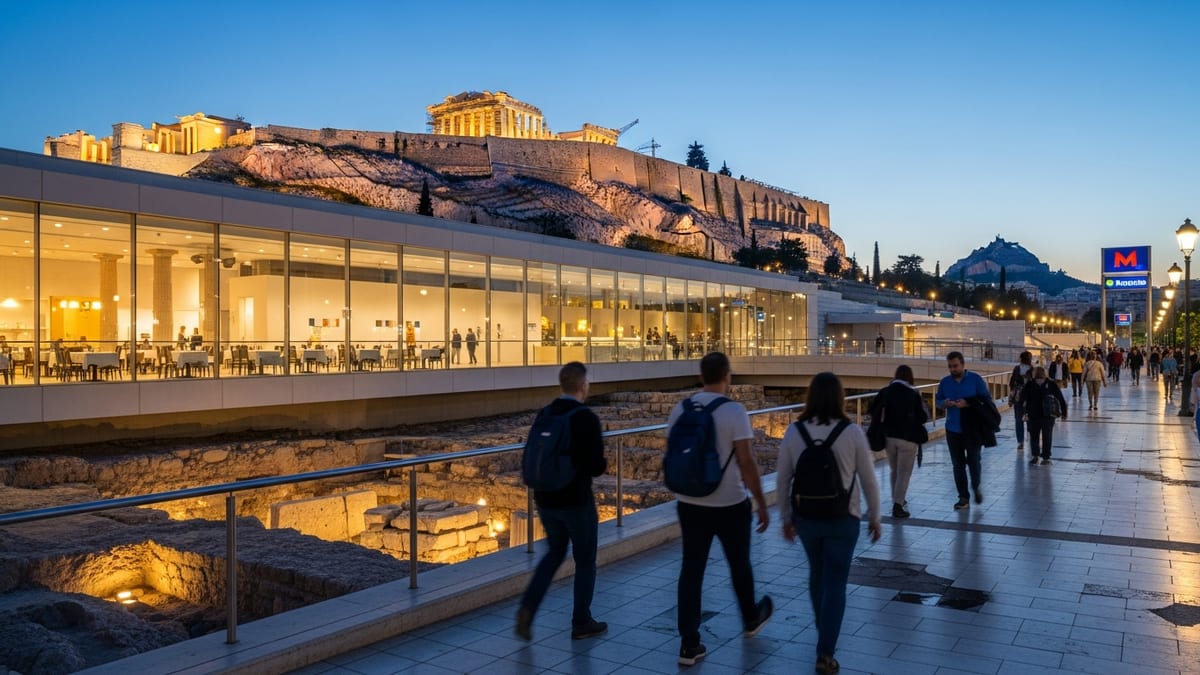
A Tourism Powerhouse on an Overheated Front Line
Publicly available economic assessments indicate that tourism directly accounts for around 13 to 18 percent of Greece’s gross domestic product and a substantial share of employment, placing the country among the most tourism-dependent economies in the European Union. Analysts note that this dependence has supported Greece’s recovery from its debt crisis and from the pandemic slump, but it also concentrates risk in a single, climate-exposed sector.
European and international institutions now consistently classify Greece as one of the EU economies most vulnerable to the long-term effects of climate change. Recent reports highlight chronic risks such as heatwaves, drought, floods, wildfires and coastal erosion, which directly intersect with the coastal infrastructure, cultural heritage sites and island communities that anchor Greek tourism.
Climate-related hazards are no longer framed as distant scenarios. The fire seasons of 2023 and 2024 brought large evacuations on popular islands and major wildfires in Attica, while heatwaves repeatedly forced closures of high-profile attractions, including archaeological sites in Athens, during peak summer hours. Environmental agencies also record rising climate-related economic losses, with tourism listed alongside agriculture and housing as sectors bearing the brunt.
These overlapping pressures have turned Greece into a test case for how a Mediterranean destination can reconcile short-term tourism revenues with growing climate volatility and the need to rebalance its wider economy.
Overtourism, Seasonality and Strains on Local Systems
European Commission analysis of tourism intensity and seasonality places Greece among the member states with the heaviest tourism footprint relative to population. Coastal and island regions record very high numbers of visitor nights compared with resident numbers, especially in the three peak summer months, a pattern that heightens exposure to sudden shocks such as extreme heat or transport disruptions.
Environmental profiles compiled at European level warn that rapid growth in construction and tourist activity is degrading coastal zones and intensifying pressure on water resources, particularly on smaller islands where aquifers and storage capacity are limited. Local infrastructure for waste, wastewater and energy can struggle to keep pace with sharp seasonal population spikes, amplifying both environmental damage and fiscal costs for municipalities.
Overtourism has also become a social and political concern in several of Greece’s best-known destinations. Reports from islands such as Santorini and parts of the Cyclades describe rising housing costs, congestion and conflicts over public space between residents and visitors. While these issues are not unique to Greece, the country’s strong reliance on tourism revenues means that local authorities face difficult trade-offs when considering restrictions or caps on visitor numbers.
Policy discussions increasingly link these pressures to broader economic resilience. Analysts argue that an overconcentration of activity in seasonal, climate-sensitive tourism can leave regions vulnerable to abrupt downturns if extreme weather events, safety perceptions or transport disruptions cause visitors to cancel or shift plans.
Climate shocks expose structural economic risks
Recent years have highlighted how climate events can ripple through Greece’s economy. Large-scale wildfires, especially those affecting tourist regions such as Rhodes in 2023, triggered what local observers described as the largest evacuation in the country’s tourism history. Although many core resort areas escaped physical damage and arrivals eventually recovered, travel industry analyses note that the images of smoke-filled beaches and emergency evacuations underscored the fragility of a model concentrated in a narrow summer window.
Successive heatwaves and fire seasons in 2023 and 2024 were accompanied by European-wide health warnings and disruptions to flights and ferry operations. Climate and economic studies point out that the peak tourist season coincides with the highest wildfire risk and most intense heat, raising questions about the long-term viability of a summer-centric tourism calendar without significant adaptation.
Credit-rating and economic surveillance reports now treat climate-related shocks as a material risk to Greek growth and public finances. Scenario exercises suggest that chronic climate impacts could shave several percentage points off cumulative GDP by mid-century, even under moderate warming paths, with tourism, agriculture and infrastructure investment singled out as especially exposed areas.
At the same time, international financial institutions highlight that tourism’s strong momentum has so far helped to offset pressures from energy costs and global uncertainty. This dual reality, where tourism is both Greece’s growth engine and a key climate vulnerability, is at the heart of emerging warnings about the need for economic rebalancing.
Policy Responses: Adaptation, Diversification and Data
The Greek government has begun to embed climate and tourism concerns into its broader reform agenda. Publicly available information on the national recovery and resilience plan, supported by European Union funds, shows a focus on green transition investments, civil protection upgrades and water management projects, alongside initiatives aimed at digitalisation and productivity improvements.
International organisations such as the OECD have called for a more systematic evidence base on tourism’s economic, environmental and social impacts in Greece. Recent work emphasises the need for better data on visitor flows, spending patterns and local pressures to inform strategies that can spread tourism more evenly across regions and seasons, and to support alternative forms of tourism beyond the traditional sun-and-sea model.
Policy analysis also stresses that adaptation must go beyond emergency response. Investments in shading, cooling, water efficiency, early warning systems and resilient transport links are framed as central to protecting both residents and visitors. There is growing interest in promoting shoulder-season travel, cultural and nature-based tourism inland, and diversified activities that are less exposed to heat extremes and coastal hazards.
However, experts note that these measures will take time to deliver and require coordination between national authorities, regional administrations, local communities and private operators. Without clear governance and accountability, there is a risk that piecemeal projects will not add up to the structural shift that climate science indicates is necessary.
A Crossroads for Greece’s Growth Model
Economic forecasts for Greece continue to show positive, if moderating, growth, supported in part by resilient tourism receipts and strong absorption of European funds. Labour markets have tightened compared with the years of crisis, and fiscal positions have improved, giving the country more room to invest in adaptation and diversification than in the previous decade.
Yet the combination of climate volatility and concentrated tourism exposure leaves the economy facing what some analysts describe as an inflection point. As southern Europe warms faster than the global average, projections suggest that extreme heat days will increase, wildfire seasons will lengthen and water scarcity will worsen, especially in coastal and island areas where much of Greece’s tourism infrastructure is located.
This outlook has prompted growing discussion about how to rebalance Greece’s economic structure over the coming decades. Proposals in public policy debates range from accelerating investment in higher-value manufacturing and technology services to expanding year-round cultural, educational and medical tourism that is less dependent on peak summer conditions. There is also renewed focus on upgrading agriculture and renewable energy as complementary growth pillars.
For now, visitor numbers and travel revenues remain robust, masking some of the underlying risks. But as climate impacts intensify and concerns over overtourism rise, Greece’s experience is being watched closely across the Mediterranean as an indicator of how coastal destinations can, or cannot, adapt their economies in time.