


More news on this day
Carnival Corporation has expanded its surplus meal donation program to the Dominican Republic, adding the Amber Cove cruise port near Puerto Plata to a growing network of destinations where prepared but unserved meals from its ships are redirected to local communities.
Get the latest news straight to your inbox!
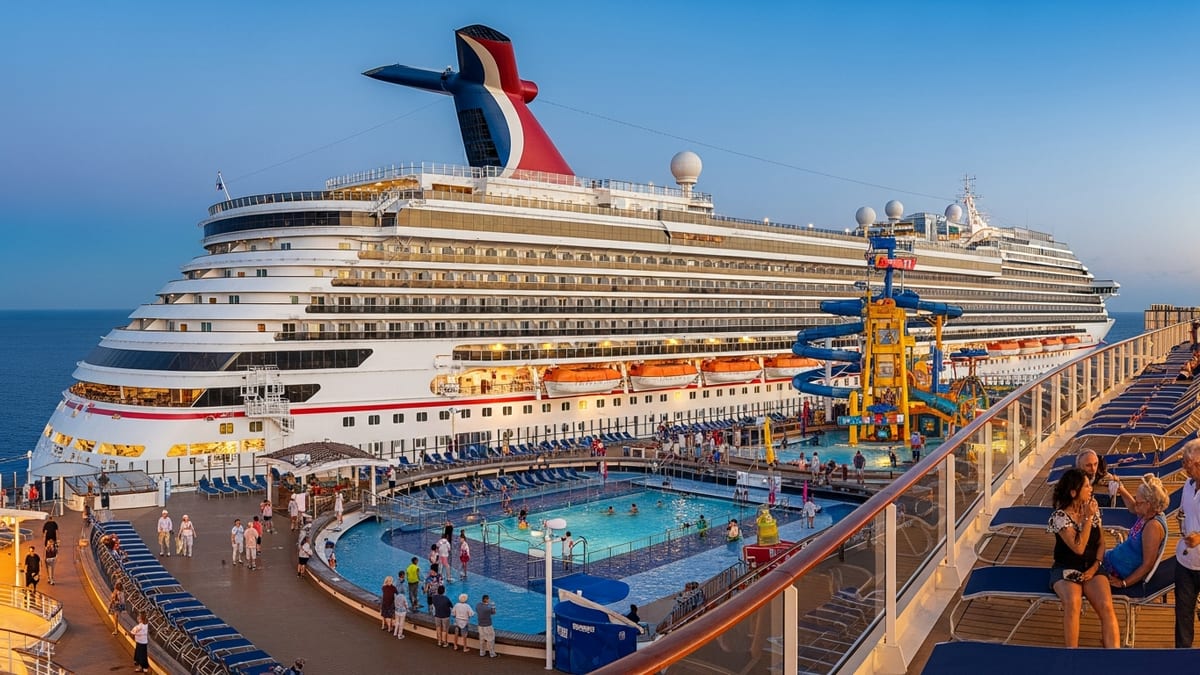
New Milestone for Cruise Meal Donations in the Caribbean
According to company statements and recent industry coverage, the new phase of Carnival Corporation’s surplus meal donation program began at Amber Cove with an initial delivery of around 200 portions from Carnival Cruise Line’s Mardi Gras. The meals were transferred from the ship to a local faith-based partner in Puerto Plata for redistribution to organizations that support families and older residents in the surrounding area.
Publicly available information indicates that the Dominican Republic is the second Latin American country to join the program, following an earlier rollout in Roatán, Honduras. The expansion reflects Carnival Corporation’s efforts to build a consistent framework for safely handling and donating surplus meals across multiple jurisdictions, particularly in the Caribbean and Latin America.
Reports note that the donation model focuses on prepared, unserved food that complies with strict safety, handling and traceability standards. Meals are cooled, stored and catalogued onboard before being moved ashore, with local partners coordinating last‑mile distribution to community organizations.
The company’s decision to extend the initiative to Amber Cove also underscores the growing role of private cruise destinations as platforms for broader social and environmental projects in the regions where they operate.
Part of the “Less Left Over” Food Waste Strategy
The surplus meal donation effort forms one element of Carnival Corporation’s broader “Less Left Over” food waste reduction strategy, which aims to reduce waste at every stage of the onboard food cycle. Corporate materials describe a mix of measures that range from more precise purchasing and menu planning to data‑driven forecasting tools that help culinary teams match production more closely to guest demand.
Where surplus still occurs, the meal donation program is used as a way to prevent high‑quality food from being discarded. Company reports suggest that since the initiative was first introduced in 2017, it has expanded to 19 ports worldwide and delivered more than 320,000 portions to community partners as of the end of 2025.
The Dominican Republic’s inclusion is presented as a next step in scaling this blueprint to additional markets. Recent sustainability updates from Carnival Corporation highlight food waste reduction as a key metric, with the group reporting notable cuts in food waste per person in recent years and positioning surplus meal donation as part of a circular economy approach at its destinations.
Coverage of the program also points to a broader industry conversation about how cruise operators can address both the perception and reality of food waste on large ships by integrating recovery, redistribution and education into their operations.
Focus on Local Partnerships in Puerto Plata
For the Dominican Republic launch, Carnival Corporation is working with the Archdiocese of Puerto Plata as its primary local program partner at Amber Cove. Published information indicates that this organization is coordinating with charities and community groups that assist vulnerable residents in and around the city.
The collaboration relies on standardized procedures that have been tested in other ports, including clear guidelines for receiving, storing and distributing surplus meals. Reports indicate that government entities and local stakeholders have played a role in approving and shaping these procedures to align with national food safety regulations and social priorities.
By concentrating the initiative initially at Amber Cove, the company is able to work within a controlled environment that it already operates, then adapt processes as the program grows. Available details suggest that donations are expected to expand to cover all Carnival Cruise Line ships that call at Amber Cove, which would increase the volume and regularity of meals available to community partners.
Observers of sustainability trends in travel note that this type of structured collaboration, anchored in a specific port community, can help ensure that surplus food reaches organizations with established local knowledge, rather than creating a parallel distribution network.
Regional Expansion Across Latin America
The move into the Dominican Republic follows Carnival Corporation’s first surplus meal donations in Latin America, carried out recently in Roatán. There, surplus meals from visiting cruise ships have been delivered to local partners supporting residents living near the company’s destination facilities.
Public information on the Latin American rollout emphasizes the importance of replicable processes, from onboard cooling and labeling systems to customs and health approvals at the port. The company has presented these steps as a model that can be shared with other destinations and potentially adapted by other operators.
In both Roatán and Puerto Plata, the surplus meal program sits alongside longer‑standing contributions such as local employment, port investments and community projects tied to tourism. Analysts following cruise industry sustainability efforts describe this combination of economic and social initiatives as increasingly important for destinations that depend heavily on cruise traffic.
As Carnival Corporation signals its intent to keep expanding the surplus meal program, industry commentary notes that Latin American and Caribbean ports are likely to remain a focus, given the high volume of itineraries and the presence of company‑operated destinations that offer controlled environments for new initiatives.
Implications for Sustainable Cruise Tourism
The extension of surplus meal donations to the Dominican Republic illustrates how cruise operators are using their onboard scale to address wider environmental and social issues. For Carnival Corporation, the initiative is framed as both an efficiency measure and a way to contribute to food security in the communities its guests visit.
Travel sector observers point out that surplus meal donation programs can help build local support for cruise tourism, particularly in regions where economic benefits are weighed against environmental concerns. By directing prepared, unserved meals to local organizations, operators can demonstrate that part of the value generated onboard returns to the surrounding communities in a tangible form.
More broadly, the program at Amber Cove adds to a growing list of examples where cruise lines are experimenting with circular economy practices at their private and partner ports. These range from waste reduction and recycling projects to renewable energy trials, and now surplus food redirection.
As the program grows across Latin America and beyond, its progress is likely to be watched by destination authorities, community groups and competing cruise brands seeking models for how large‑scale hospitality operations can better manage food resources while responding to local needs.