


Juan les Pins is often summed up in a single image: a long ribbon of beach clubs, buzzing bars and sun loungers packed shoulder to shoulder in July. Yet just a few streets back from the famous seafront, a different resort appears. Pine-shaded squares replace traffic, waves echo through rocky coves on Cap d’Antibes, and locals bargain over peaches at neighborhood markets. With a little curiosity and a willingness to walk a few extra minutes, you can experience Juan les Pins as a lived-in Riviera town rather than just a beach strip.
Get the latest updates straight to your inbox!
Step Back from the Sand: Understanding the Real Juan les Pins
Most visitors first meet Juan les Pins along Boulevard du Littoral, where private beach clubs, hotel terraces and gelato stands form a near-continuous wall facing the bay. In peak season, renting a sunbed on this main strip can easily run to several dozen euros per day, and the music rarely stops before midnight. It is lively and convenient, but it is only one face of the resort. The commune of Antibes Juan les Pins stretches over 25 kilometers of coastline, which means there are plenty of quieter corners if you know where to look.
Urban Juan les Pins is compact, and distances are shorter than they appear on the map. From the busiest part of the seafront to the residential streets behind it, you are usually only three or four blocks away. Turn inland after a morning swim and within five minutes you can be standing outside a neighborhood boulangerie picking up a fresh baguette for a fraction of what you paid for coffee on the beach. This shift in perspective, from seafront to side street, is often the quickest way to move beyond the standard resort experience.
Orientation also helps. Think of Juan les Pins as sitting between Antibes Old Town to the east and Golfe-Juan to the west, with the Cap d’Antibes peninsula curving like a protective arm. The main strip faces northwest toward Cannes and the Lérins Islands, which is why sunsets here are so impressive. Tucked behind and to the sides of this arc are gardens, coves, markets and jazz venues that most day trippers never see.
As you plan your days, it is worth building in time to explore those backstreets and adjoining neighborhoods. Rather than booking consecutive days of sunbeds on the central plage, alternate one classic beach day with a morning walk on Cap d’Antibes, or trade a cocktail bar sunset for a picnic in a public park. You will still enjoy the sea and the Riviera light, but with a richer sense of where you are.
Explore Gardens and Green Spaces Locals Actually Use
For a resort known for its nightlife, Juan les Pins hides an unexpected amount of greenery. One of the most rewarding places to escape the crowds is Exflora Park on the western edge of town. This publicly owned garden covers around five hectares and mixes formal Mediterranean planting with lawns, fountains and an olive grove. Entry is free, and opening hours stretch into the evening in summer, so it works equally well for a morning stroll or a post-beach cooldown.
Visitors often arrive at Exflora Park by bus from central Juan les Pins or Antibes, then wander the gravel paths between cypress trees and rose beds. In late spring, pergolas are heavy with wisteria and the air is scented with herbs from the planted terraces. Families spread blankets near the water features while office workers eat takeaway salads on benches under the olives. If you are staying in one of the holiday rentals in the Antibes-les-Pins area, you can walk directly into the park and then follow the underpass beneath the railway line to reach a quieter stretch of beach beyond the main strip.
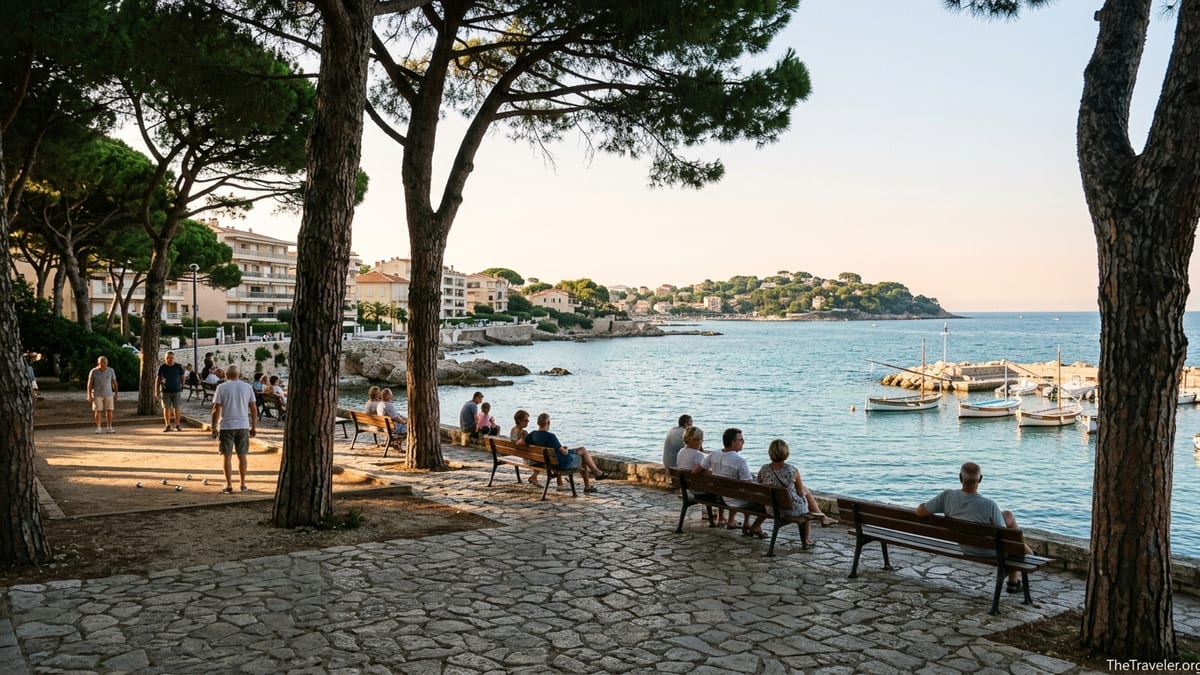
Closer to the center, the Pinède Gould is the pine grove that gives Juan les Pins part of its identity. By day, this public space beside the sea is a shaded playground of gravel paths, pétanque pitches and simple benches. Locals walk their dogs here, and children cycle small loops between the trees. On summer evenings the same grove transforms into an open-air cultural venue when the Juan les Pins Jazz Festival sets up its stage. Even if you do not have tickets for a headline show, it is worth stopping by at dusk to feel the atmosphere and perhaps catch a soundcheck drifting through the branches.
If you are combining town and countryside, the plateau of La Garoupe on Cap d’Antibes is another pleasant green escape. A short uphill drive or bus ride from Juan les Pins brings you to a modest parking area and walking paths that lead through scrub, pine and low stone walls. On clear days, the view sweeps over the entire bay, including the Juan les Pins skyline. A picnic here in late afternoon, when the light softens and tour buses thin out, is an easy way to enjoy the Riviera beyond its beaches.
Swap the Main Plage for Hidden Coves and Coastal Walks
Just beyond the last beach clubs of Juan les Pins, the coastline begins to break into smaller coves and harbors. Many visitors never follow it that far and instead stay on the main sand. Yet a short walk or local bus ride brings you to places where pine trees meet rocks and the sea feels far less urban. One such spot is the little port of l’Olivette on the western flank of Cap d’Antibes, a traditional harbor now used mainly for pleasure boats. Here, colorful wooden craft bob in a small bay framed by umbrella pines and old villas, and a narrow strip of sand and rock is used more by locals than by hotel guests.
From l’Olivette, the coastal road continues toward Plage des Ondes and Plage du Crouton, smaller public beaches that can be a calmer alternative to the central strip at busy times. There is usually no charge to spread a towel, and while there are fewer facilities, the trade-off is space and a more relaxed rhythm. If you prefer walking to sitting, look for signed paths that drop from the road to the rocks, where you can scramble down for a quick swim in naturally carved pools when the sea is calm.
For a fuller immersion in this wilder side of the coast, consider spending a morning on the Cap d’Antibes coastal path, often called the Sentier du Littoral or Tire-Poil trail. The main section traces the south of the peninsula, with limestone cliffs, clear water and views to the distant Alps. Although the dramatic photos might suggest a challenging hike, the path is more of a rugged coastal walk, and the elevation changes are modest. That said, there are steps, uneven stones and little shade in places, so sturdy shoes, water and sun protection are essential.
A practical way to experience the path from Juan les Pins is to take a local bus or taxi to the Garoupe area, start early to avoid the midday heat, and allow two to three hours. Build in time for a swim at one of the more accessible coves, where iron ladders bolted into the rock give safe entry to the sea. Back in town afterward, you will likely see the main strip differently, knowing that raw cliffs and quiet inlets sit only a short distance away.
Follow the Markets and Food Shops Off the Seafront
Beyond the line of ice cream counters and beachfront restaurants, Juan les Pins and neighboring Antibes have a rich everyday food culture that is easy for visitors to tap into. Start with the markets. While the covered Marché Provençal in Antibes Old Town is the star attraction, with stalls piled with tomatoes, cheeses and herbs each morning, Juan les Pins has more modest but very local markets of its own. One example is the open-air market at Pont Dulys, which typically operates on Friday mornings and serves the surrounding residential neighborhoods rather than the seafront hotels.
At these smaller markets you are more likely to overhear conversations in French than in English and to find practical items along with seasonal produce. Expect tables of courgettes, peaches and apricots in summer, alongside local olives, honey and fresh goat cheese. Prices are often lower than in tourist-oriented delicatessens, which makes them ideal if you have access to a kitchenette and want to prepare your own meals. Even if you do not, buying picnic ingredients for a lunch in Exflora Park or on a quieter beach can be both economical and memorable.
Look also for independent bakeries and neighborhood grocery stores a couple of streets inland from the beach. A typical French boulangerie will offer fresh baguettes, croissants and fougasse, the olive-oil enriched flatbread that pairs well with local tapenade. In the late afternoon, when some beach bars begin their happy hours, you can instead pick up still-warm bread, a small round of regional cheese and a chilled bottle of rosé from a corner shop for roughly the price of a single seaside cocktail. Eating on your balcony or in a garden square, you trade seafront spectacle for a quieter, more intimate evening.
For sit-down meals beyond the main drag, ask locals or accommodation hosts for recommendations in the streets between the railway station and the sea or in the direction of Antibes Old Town. Here you will find family-run pizzerias, creperies and casual Mediterranean restaurants where the menus feature grilled fish, niçoise specialities and homemade desserts at more moderate prices. Reservations are still a good idea in summer, especially on weekend nights, but the pace tends to be less frantic than in the busiest beachfront dining rooms.
Experience Jazz, Nightlife and Culture Beyond Cocktail Bars
Juan les Pins has been associated with jazz since the early twentieth century, and its annual summer festival remains one of the key cultural events on the Côte d’Azur. The main stage is set up in the Pinède Gould pine grove, where international artists perform under the open sky for several nights in July. Even if you are not a dedicated jazz fan, attending at least one evening performance can be a powerful way to experience the town beyond its beach clubs. The sound of saxophone or vocals drifting through the trees while the sea laps nearby is very different from a DJ set on the sand.
Tickets for headline nights can sell out, but there are often cheaper categories and occasional standing places. It is worth checking the program for collaborations, tribute nights and local acts, which sometimes offer better value than the biggest international names. Around festival time, smaller bars and cafes in Juan les Pins and Antibes frequently host their own live music evenings, from gypsy jazz trios to blues duos. Ask at the tourist office or scan posters near the railway station to find out what is happening during your stay.
Outside the festival period, nightlife in Juan les Pins runs from relaxed wine bars on backstreets to livelier pubs and late-night clubs near the seafront. If your aim is to experience the social life of the town rather than simply its tourist circuits, look for venues a block or two back from the water where locals gather after work. These places may serve simple tapas plates or boards of charcuterie alongside regional wines and craft beers, and happy hour prices are often significantly lower than in prime beachfront locations.
Cultural experiences extend into the daytime as well. The short train ride to Antibes gives access to the Picasso Museum housed in the Château Grimaldi, as well as galleries and craft shops in the Old Town’s narrow streets. Combine a morning of art or museum visits with an afternoon swim back in Juan les Pins and you will have balanced classic Riviera relaxation with a sense of place and history.
Walk, Ride and Use Local Transport to Join It All Up
One of the biggest shifts in perspective when moving beyond the main strip of Juan les Pins is realizing how walkable the area is. From the central beach to the railway station is often less than ten minutes on foot. Residential lanes leading inland are generally flat, and even the approach to Cap d’Antibes reaches only gentle elevations suitable for most reasonably fit walkers and cyclists. Using your feet instead of relying on taxis allows you to discover pocket parks, viewpoints and small businesses you would otherwise speed past.
Public transport is also practical and affordable. Local buses connect Juan les Pins with Antibes Old Town, Cap d’Antibes and Golfe-Juan, with single tickets typically costing only a few euros or less. For example, a short bus ride can drop you near Exflora Park, where you can explore the gardens, continue on foot to the beach via the underpass, and later catch another bus back toward the center after sunset. Using buses in this way unlocks a wider radius of experiences without the cost and parking challenges of a rental car.
The regional train network adds another layer of possibilities. Juan les Pins station is served by local TER trains running along the coast between Cannes and Nice, with onward connections toward Monaco and Ventimiglia. Trains are relatively frequent during the day, and journey times to nearby hubs are short. This means you can base yourself in Juan les Pins for easy beach access while planning day trips to places like Nice, Cannes or Villefranche-sur-Mer, then return to a quieter side street restaurant in the evening rather than dining in a more expensive neighboring resort.
Bicycles and electric scooters, available through local rental shops, can be a good middle ground between walking and public transport, especially outside the most crowded weeks of summer. A half-day rental lets you follow the coastline west toward Golfe-Juan, detouring to residential beaches and viewpoints, or loop around parts of Cap d’Antibes to link harbors, coves and high lookouts in a single outing. Always wear a helmet, respect local traffic rules and be cautious on narrow roads shared with cars and buses.
The Takeaway
Juan les Pins will likely always be known for its busy seafront, lined with beach clubs and backed by hotels and bars. Yet beyond that first impression lies a gentler and often more rewarding version of the town, one that unfolds in pine groves, neighborhood markets, rocky coves and evening jazz sessions under the stars. By choosing to step off the main strip, even for part of each day, you open up a richer relationship with this stretch of the French Riviera.
Practically, this means paying attention to what lies behind the beachfront: the bus that leads to a free public park, the stairway that drops from the road to a hidden swimming spot, the bakery filled with locals buying bread at sunset. It might mean trading one high-priced sunbed day for a morning on the coastal path and an afternoon picnic, or swapping a row of cocktail bars for a single concert in the Pinède. None of these choices requires sacrificing comfort; they simply rebalance your time toward experiences that feel more grounded and less scripted.
Whether you are visiting for a long weekend or staying for a week, try to treat Juan les Pins not just as a beach but as a small town you are temporarily part of. Greet the same barista each morning, learn the bus timetable to your favorite cove, and linger in the pine shade while children play boules nearby. In doing so, you will leave with memories that extend beyond the profile of the main strip and a clearer sense of why this corner of the Riviera continues to draw both visitors and long-term residents.
FAQ
Q1. Is Juan les Pins worth visiting if I am not into busy beach clubs?
Yes. While the main strip is lively, there are quieter public beaches, gardens like Exflora Park, pine groves and nearby Cap d’Antibes coves that offer a more relaxed atmosphere.
Q2. How do I reach the hidden coves near Juan les Pins without a car?
You can combine short local bus rides with walking. Buses from Juan les Pins stop near Cap d’Antibes, from where signed paths and small roads lead to coves, harbors and the coastal trail.
Q3. Are the Cap d’Antibes coastal paths suitable for children?
Sections of the coastal path are manageable for children used to walking, but there are uneven stones and drops. Good shoes, supervision and avoiding rough-sea days are important for safety.
Q4. When is the best time of year to experience Juan les Pins beyond the crowds?
Late spring and early autumn usually offer warm sea temperatures and long daylight with far fewer visitors, making it easier to enjoy parks, markets and coastal walks in comfort.
Q5. Can I enjoy the Juan les Pins Jazz Festival without an expensive ticket?
During festival days, you can often hear music from outside the Pinède Gould area, and some bars host free or low-cost live sets. Checking for lower-priced categories can also keep costs down.
Q6. Are there affordable food options away from the main beach strip?
Yes. A few streets inland you will find bakeries, small grocery stores and casual restaurants where prices are lower than on the seafront and menus cater more to locals than to tourists.
Q7. Is it easy to visit Antibes Old Town from Juan les Pins?
It is very easy. A short train or bus ride, or even a walk if you do not mind the distance, connects Juan les Pins with Antibes Old Town and its market, museums and harbor.
Q8. Do I need a car to explore Juan les Pins and the surrounding area?
No. Walking, local buses and regional trains are usually sufficient for exploring beaches, parks, Antibes Old Town and nearby towns along the French Riviera.
Q9. Are there family-friendly activities beyond the beach in Juan les Pins?
Families can enjoy playgrounds and pétanque areas in the Pinède, picnics and open lawns in Exflora Park, gentle coastal walks and short train trips to nearby aquariums and museums.
Q10. How can I avoid overpaying for sunbeds and beach access?
Look for clearly signed public sections of beach where you can lay a towel for free, or choose smaller coves and parks for swimming and sunbathing instead of the most central private clubs.