


On this bright corner of the French Riviera, Antibes and its seaside neighbour Juan les Pins sit so close together that a leisurely 25-minute stroll can take you from one to the other. Yet the impressions they leave on travellers could not be more different. One is all honey-stone ramparts, yacht-filled harbours and Picasso; the other lives for sandy beaches, sundowners and summer nightlife. If you only have a few days on the Côte d’Azur, which side of the bay deserves your suitcase and your sunset photos?
Get the latest updates straight to your inbox!
Two Riviera Personalities, One Easy Base
Antibes and Juan les Pins are technically part of the same commune, linked by a gentle curve of coastline on the Cap d’Antibes peninsula. In practice, they feel like two different moods of the Mediterranean. Antibes wraps around a historic old town of cobbled lanes, stone ramparts and working markets, with the Picasso Museum and Port Vauban’s superyachts as its modern calling cards. Juan les Pins, a ten-minute bus or five-minute train ride west, was developed later as a beach resort and today is defined by its sandy shoreline, pine-shaded promenade and summer jazz legacy.
For visitors, the good news is that you rarely have to choose one or the other forever. Many travellers sleep in one and spend long, lazy days wandering between both. Regional TER trains between Nice and Antibes run roughly every 15 to 30 minutes in daytime, with typical advance one-way fares around 7 euros from Nice to Antibes, and local buses and coastal footpaths make hopping between Antibes, Cap d’Antibes and Juan les Pins straightforward. That means your real decision is less about logistics and more about the atmosphere you want when you step out of your hotel door.
Imagine waking up in Antibes old town, buying still-warm pastries from a boulangerie near the Marché Provençal, then walking the 20 minutes to Juan les Pins for an afternoon of swimming off soft sand before catching sunset back on the ramparts. This kind of blended day is common here, but your base will still shape your strongest memories: will it be ochre streets or beach clubs that you recall first when you think of the Riviera?
First Impressions: Old-World Charm vs Holiday Buzz
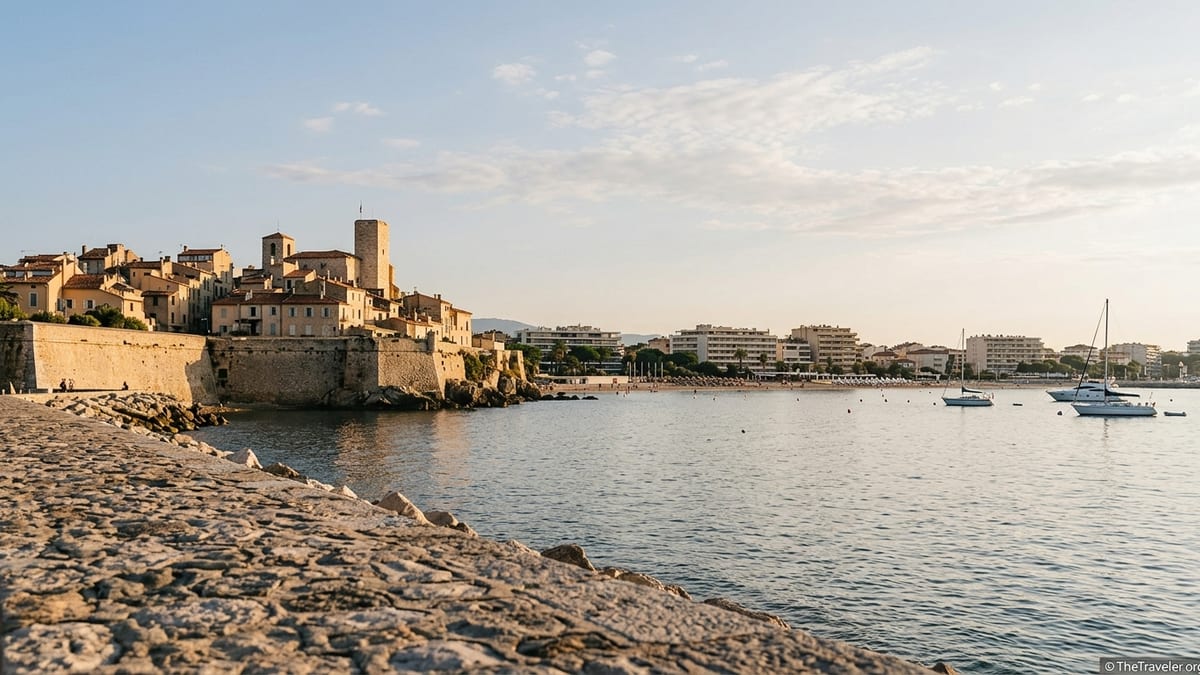
Antibes makes its impression as soon as you see its skyline from the sea or from the train window: a jumble of old stone houses perched on ramparts, dominated by the square tower of the Château Grimaldi, now the Picasso Museum. Arriving at Antibes station, it is a ten-minute walk down Avenue de la Libération to slip through one of the old town gates and into a maze of narrow streets like Rue Sade and Rue Aubernon. Here, laundry hangs from pastel shutters, locals linger at zinc-topped café counters and restaurant chalkboards list the day’s moules marinières. It feels like a lived-in town that happens to be by the sea, rather than a resort built for tourists.
Juan les Pins, by contrast, announces itself with a sweep of seafront hotels, palm trees and plenty of glass-fronted bars facing the bay. Step out of the station and you are two or three blocks from the waterfront, where places such as the Garden Beach area and various private plages set up rows of loungers in summer, music drifts from beach bars and scooters buzz along Boulevard Charles Guillaumont. It feels instantly like a holiday spot: less historic detail, more sea views and Aperol spritzes.
For travellers who fall in love with France through its stone alleyways and local markets, Antibes normally wins that first impression. If your vision of the Riviera is more about being as close as possible to the water with a towel over your shoulder and flip-flops on your feet, Juan les Pins may win your heart within an hour of arrival.
Beaches and Sea: Sand underfoot vs Cinematic Backdrops
One of the clearest differences between the two is the beach experience. Antibes proper offers several options: Plage de la Gravette, a sheltered crescent of sand tucked directly below the old ramparts; Plage du Ponteil and Plage de la Salis just east of the centre, looking towards Cap d’Antibes and the Alps beyond. These town beaches are small but atmospheric, popular with families who appreciate the shallow, relatively calm water and the ease of grabbing a gelato or baguette from streets just a few minutes away.
Juan les Pins is where the beaches grow longer, sandier and more purpose-built for lingering. The main strip of sand runs along Boulevard Charles Guillaumont and Boulevard Baudouin, backed by a line of private beach clubs offering loungers, waiter service and lunchtime menus of grilled fish and salads. Prices vary, but in high summer you can expect to pay something like 25 to 40 euros per person for a sunbed plus umbrella in a typical mid-range club, a premium many visitors are happy to pay for the comfort and space. There are also small public stretches where you can lay a towel for free, though they fill early in July and August.
If you are the type of traveller who swims once or twice a day and does not mind pebbles, Antibes’ beaches can be perfectly satisfying, with the bonus of their dramatic backdrops. Walk the coastal path around the ramparts near Plage de la Gravette and you will see the town rising behind you like a movie set. But for long, sandy walks at water’s edge and easy entry for children or less confident swimmers, Juan les Pins usually feels more like a classic seaside resort. Many families staying in Antibes even make a habit of taking the five-minute train to Juan les Pins for a dedicated beach day, then returning to Antibes for dinner.
Nightlife and Atmosphere After Dark
As the sun sets, the contrast between these neighbours becomes even clearer. Antibes old town in the evening is lively but rarely wild. Restaurant terraces around streets such as Rue Sade, Rue Thuret and Place Nationale fill with diners eating seafood platters and Provençal dishes, and wine bars pour glasses of local rosé well into the night. There are a few bars that get busy, particularly in summer, but Antibes more often feels like a place for conversation over cocktails than for dancing until dawn.
Juan les Pins, on the other hand, has leaned into its reputation as a nightlife spot since the mid-20th century, when its famous jazz festival helped put it on the map. During July, the pine grove known as La Pinède Gould hosts the Jazz à Juan festival, which has welcomed legends over the decades and still draws international acts and crowds. Even outside festival dates, the concentration of late-opening bars, seafront lounges and a casino creates a distinct buzz. In high season, music spills onto the promenade, and avenues near the water stay busy with people moving between bars and beach parties.
If you are travelling as a couple who want quiet nights and early mornings exploring nearby hill towns, Antibes may leave a better impression. If you are in your twenties or thirties with friends, or simply enjoy having a broad choice of bars and beach clubs within a short walk, Juan les Pins typically delivers more energy. Some visitors find that staying in Antibes and taking a short taxi or bus over to Juan les Pins for one or two late nights offers the best of both worlds.
Culture, Character and Daytime Things To Do
When it comes to culture and sightseeing, Antibes is the clear heavyweight. The Picasso Museum, housed in the medieval Château Grimaldi high above the sea, showcases works he created during his time living here along with ceramics and paintings by other modern artists. A few streets away, the Marché Provençal runs most mornings beneath iron arches on Cours Masséna, where stallholders sell everything from lavender honey to olives and goat cheeses. On market days, you can arrive around 9 a.m., buy picnic supplies, and then walk to Plage de la Salis for lunch on the sand with views of the Alpilles in the distance.
Beyond art and food, Antibes’ Port Vauban is one of the largest marinas in the Mediterranean. Walking the quays in the late afternoon, you can see everything from small fishing boats to enormous superyachts lining the docks. At the far end stands the Fort Carré, a 16th-century star-shaped fortress on a rocky outcrop overlooking the sea, accessible by a short uphill walk or taxi from the centre. The combination of military history, modern maritime life and a functioning old town gives Antibes depth that rewards several unhurried days.
Juan les Pins has less formal culture but its character shines in smaller rituals. Mornings see joggers and parents with strollers using the flat seafront promenade, stopping at cafés for espresso and fresh orange juice. Water-sports rental kiosks set up for paddleboarding, parasailing and boat trips. Around La Pinède park, children’s carousels spin while locals play pétanque under the trees. In the evening, open-air stages and pop-up markets sometimes appear in summer, and you might wander from a simple beachside pizza place to a more upscale seafront brasserie within a few blocks.
Costs, Accommodation and Practicalities
In terms of prices, both Antibes and Juan les Pins sit slightly below the very top-end brackets of nearby Saint-Tropez or Monaco, but peak summer can still be expensive. In July and August, centrally located three-star hotels in Antibes might start around 180 to 250 euros per night, with characterful boutique properties in old town often costing more, especially those with sea views or rooftop terraces. In shoulder seasons such as May, June, September and early October, it is not unusual to find similar rooms closer to 130 to 180 euros per night if you book ahead.
Juan les Pins offers a broad band of mid-range seafront hotels and apartment rentals. A basic but well-located studio with a balcony a short walk from the beach might cost around 120 to 160 euros per night in shoulder season, rising significantly in late July when the jazz festival and French school holidays overlap. Some travellers find they can get a little more space for their money in Juan les Pins compared with the most atmospheric corners of Antibes old town, where small historic buildings limit room sizes. Self-catering apartments are particularly popular in Juan les Pins with families who plan to spend full days on the beach.
Logistically, both are well connected. Antibes station, on the main coastal line between Cannes and Nice, has frequent TER trains in both directions, and from there local buses fan out to Cap d’Antibes and Juan les Pins. Juan les Pins has its own smaller station on the same line, useful if you are heading to Cannes for the day. Distances are short enough that many visitors rent bikes or use local bike-share schemes, riding the roughly seven kilometres along the coast between Juan les Pins and Cannes or the 20 kilometres towards Nice.
Who Will Prefer Antibes?
Antibes tends to leave the strongest impression on travellers who are drawn to a sense of history and a more local-feeling rhythm. Couples who like to wander old lanes, browse galleries and linger over long lunches under plane trees usually find themselves preferring Antibes. For instance, a long weekend might involve mornings at the market, an afternoon touring the Picasso Museum, followed by aperitif at a wine bar on Rue Sade and dinner at a small bistro serving stuffed Provençal vegetables and grilled fish.
Families with young children also often appreciate Antibes as a base thanks to its mix of town beaches and practical services. You can walk from many hotels to Plage de la Gravette in under ten minutes, set up on the sheltered sand for a few hours, then retreat easily to your room for naps or shade. Supermarkets, pharmacies and bakeries are all close at hand. On cooler days, there are easy day trips by train to nearby Nice, Monaco or even inland hill villages, giving variety without needing a car.
Travellers staying a week or more frequently comment that Antibes remains interesting after the fourth or fifth day in ways that some resort towns do not. You notice quieter residential streets, small churches, and corners where locals outnumber visitors at café tables. If your idea of a memorable Riviera trip involves coming home with more photos of old streets and local people than of cocktails and cabanas, Antibes is likely the stronger choice.
Who Will Prefer Juan les Pins?
Juan les Pins usually resonates most with visitors who place the beach at the centre of their plans. If you travel with older children or teenagers who want to swim, paddleboard and rent pedalos, being able to cross a single road from your apartment to the sand is a real advantage. Parents often recount days where they settle into loungers at a beach club by 10 a.m., let their teenagers drift between the water and the snack bar, and only leave once the sun dips low in the sky.
Groups of friends and younger couples who enjoy more nightlife also lean towards Juan les Pins. Having several cocktail bars, live music venues and late-opening spots within a few minutes’ walk means you can keep evenings fluid. You might start with a sunset drink on the promenade, move to a beachfront restaurant where tables are almost on the sand, and decide at midnight whether to continue on to a club, stroll along the water or call it a night. During the Jazz à Juan festival, staying within walking distance of La Pinède park turns late finishes into an easy wander home instead of a taxi calculation.
Travellers with mobility considerations or those who simply prefer flatter terrain may also find Juan les Pins more comfortable. Streets near the waterfront are broad and comparatively level, with many cafés and restaurants offering outdoor seating flush with the pavement. While Antibes old town is charming, its cobblestones, occasional steps and tight alleys can be more tiring for those with strollers or reduced mobility, especially on very hot days.
The Takeaway
So which French Riviera destination leaves the better impression: Juan les Pins or Antibes? For most travellers, the answer depends less on objective rankings and more on the travel story they want to tell. Antibes is where centuries of history, art and everyday French life brush up against the sea. Its old town, museums and markets give it a depth that lingers in memory long after the tan fades. Juan les Pins, meanwhile, distils the riviera resort fantasy into sun, sand and summer nights, with music in the pines and cocktails on the beach.
If you only have two or three nights and crave atmosphere, choose Antibes and treat Juan les Pins as an easy daytime or evening excursion. You will wake in a place that feels unmistakably, even romantically, Mediterranean, with the option of sandy beaches just a short hop away. If your priority is to spend as many hours as possible by the water with minimal effort, or if nightlife and beach clubs are central to your plans, then basing yourself in Juan les Pins and dipping into Antibes for culture and charm might serve you better.
For those with a week or more, the ideal solution may be to split your stay or simply accept that you will naturally drift between both. Start your trip in Antibes to settle into the rhythm of the old town, then slide over to Juan les Pins for a few lazy beach days. In the end, the magic of this part of the Côte d’Azur is that you rarely have to choose entirely. The best impression often comes from experiencing how these two different faces of the Riviera complement one another along a single stretch of shore.
FAQ
Q1. Is it better to stay in Antibes or Juan les Pins without a car?
Without a car, many travellers find Antibes more convenient because the main train station, bus connections, supermarkets and old town attractions are all within a compact, walkable area. Juan les Pins is also accessible by train, but Antibes makes day trips to places like Nice, Cannes and Monaco slightly easier.
Q2. Which has better beaches, Antibes or Juan les Pins?
Antibes has charming town beaches such as Plage de la Gravette and Plage de la Salis with great views, but Juan les Pins generally offers longer, sandier stretches and more classic beach clubs, which many people prefer for full beach days.
Q3. Is Juan les Pins very noisy at night?
In July and August, especially around the seafront and main avenues, Juan les Pins can be lively and sometimes noisy late into the night due to bars, music and festival events. If you want quiet, choose accommodation a few streets back from the water or consider staying in Antibes instead.
Q4. Is Antibes suitable for families with small children?
Yes. Antibes is popular with families thanks to its sheltered town beaches, easy access to shops and services, and generally relaxed evening atmosphere. Many parents appreciate being able to walk from their accommodation to the beach, the market and restaurants without relying on taxis.
Q5. How far apart are Antibes and Juan les Pins?
The centres of Antibes and Juan les Pins are only a few kilometres apart. By train the journey is around five minutes, by bus about ten to fifteen minutes depending on traffic, and a coastal walk between the two typically takes about 25 to 30 minutes at a relaxed pace.
Q6. Is Antibes more expensive than Juan les Pins?
Prices vary by season and exact location, but central old town accommodation in Antibes can command a premium, especially in smaller boutique hotels. Juan les Pins often has a wider range of mid-range apartments and hotels, though seafront rooms and beach club services there can also be pricey in peak season.
Q7. Which is better for nightlife, Antibes or Juan les Pins?
Juan les Pins generally has more concentrated nightlife, with numerous bars, seafront lounges and summer events, particularly during the jazz festival period. Antibes offers a good selection of wine bars and restaurants but feels more low-key in the late evening.
Q8. Can I visit both Antibes and Juan les Pins in one day?
Yes. Many visitors spend the morning exploring Antibes old town and its markets, then head to Juan les Pins for an afternoon on the beach before returning to Antibes for dinner. Distances are short and public transport or walking between the two is straightforward.
Q9. When is the best time of year to visit?
Late May, June, September and early October often strike the best balance of warm weather, swimmable sea and fewer crowds. July and August bring the hottest temperatures, busiest beaches and the most nightlife, particularly in Juan les Pins, but also the highest prices.
Q10. Is it easy to reach Antibes and Juan les Pins from Nice Airport?
Yes. From Nice Airport, you can take a regional train from Nice Saint-Augustin or Nice-Ville station to Antibes or Juan les Pins, or use airport buses, taxis and private transfers. The journey time by train from central Nice to Antibes is typically around 20 to 30 minutes, making both towns very accessible after a flight.