


If you only know Newark, New Jersey, from crime headlines or a rushed connection at Newark Liberty International Airport, you have only met a sliver of the city. The reputation for grit and hard edges is real enough, but it obscures a very different Newark that has been quietly reshaping itself along its riverfront, in its historic parks, and on its restaurant-lined side streets. For travelers willing to look beyond the clichés, Newark rewards with serious culture, green space, and food that rivals far more famous destinations just across the Hudson.
Get the latest updates straight to your inbox!
Beyond the Headlines: A City in Transition
Newark’s image problem is stubborn. Many visitors see little more than the airport, warehouse districts, and a blur of highway ramps. Yet step off the AirTrain and ride a 20-minute New Jersey Transit train or rideshare into downtown and you find a compact city center dense with office towers, prewar architecture, and new residential towers, much of it within a 10-minute walk of Newark Penn Station. Around that core, long-maligned neighborhoods have gained new public spaces, renovated landmarks, and a growing menu of places where visitors actually want to linger, not just pass through.
The most visible changes are clustered between the station and the Prudential Center arena, where projects such as Mulberry Commons park have stitched together former parking lots and leftover industrial land into a usable public square with lawns, play areas, and an illuminated fountain. Just across McCarter Highway, Newark Riverfront Park has turned what was once derelict industrial waterfront into a bright orange boardwalk, soccer fields, and picnic lawns along the Passaic River. Phased expansions of the park are continuing toward downtown, pulling attention away from the highway and back toward the water.
Equally significant, though less obvious to the casual visitor, is the cultural investment. The Newark Museum of Art, one of the most important art museums in New Jersey, is in the middle of a multi-year expansion known as Museum Parc, which will add apartments, new gallery space, and a sculpture park on its downtown campus. Around New Jersey Performing Arts Center, a major redevelopment is slowly transforming surface parking lots into an arts-driven neighborhood with apartments, restaurants, and public plazas. These projects do not erase Newark’s challenges, but they make it far easier for a first-time visitor to experience the city as a place to explore rather than a place to avoid.
Crime is still a concern for residents and visitors, and anyone visiting Newark should approach it with the same sensible precautions they would use in any major American city. That means sticking to well-lit streets when walking at night, using licensed cabs or rideshares from the airport, and being alert around transit hubs. Yet it is also true that the areas most travelers will encounter first, including downtown, the Ironbound, and the cultural district around the museum, see regular foot traffic, security, and events that keep the streets active into the evening.
The Ironbound: Newark’s Unexpected Food Paradise
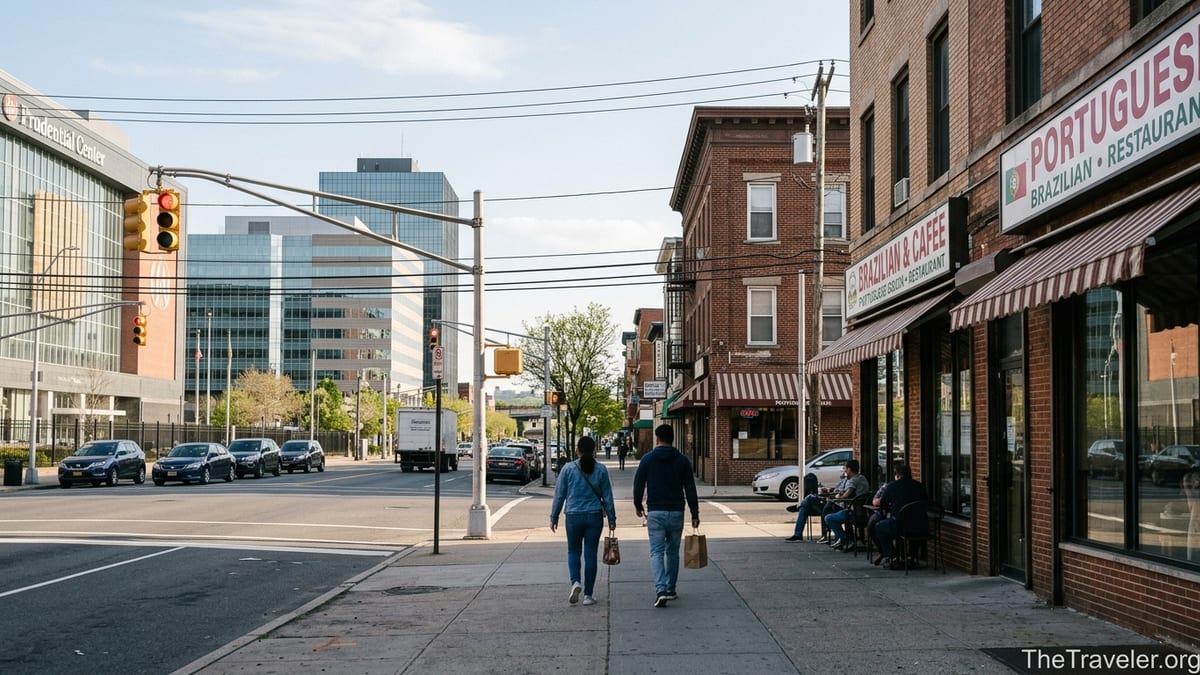
If there is one neighborhood that consistently overturns preconceptions about Newark, it is the Ironbound, the largely Portuguese and Brazilian district just east of Newark Penn Station. Walk out of the station, cross the elevated tracks via Ferry Street, and within minutes you are moving past pastelarias selling espresso and custard tarts, Brazilian rodizio houses with skewers of grilled meat, and seafood restaurants hanging platters of grilled octopus in the window. On a mild Friday night in June, the sidewalks are crowded with families, couples, and soccer fans watching Portuguese league games on bar televisions.
This is where Newark’s reputation starts to crack. Instead of boarded-up storefronts, you find busy bakeries like Teixeira’s or Nasto’s Ice Cream, which has been serving Italian-style desserts for decades. Family-run restaurants line Ferry Street and its side streets, offering dishes like bacalhau com natas, whole grilled sardines, feijoada, and towering seafood stews meant to be shared. A sit-down dinner with a bottle of vinho verde at a mid-range Portuguese restaurant may run around 30 to 45 dollars per person, less than what you would pay for comparable quality in Manhattan or Brooklyn.
Daytime visitors can start with coffee and a pastel de nata at one of the Portuguese bakeries, then walk toward Independence Park, a green pocket popular for weekend soccer matches. Small grocery stores import olive oils, cured meats, and tinned fish from Portugal and Brazil, making the Ironbound an unexpectedly good place to stock a picnic or pick up edible souvenirs. Street life here is dense and lively, and because so many families live in the neighborhood there is a constant hum of activity that feels more small-town Europe than industrial New Jersey.
At night, the Ironbound shifts into a more overtly social mood, with wine bars and dessert cafés staying open late and casual spots pouring sangria on the sidewalk. It is still smart to be aware of your surroundings and keep valuables discreet, particularly near the edges of the neighborhood and around major transit intersections, but the main commercial strips remain busy well into the evening. For many visitors, an evening in the Ironbound, bookended by an easy train ride from New York and back, becomes their most vivid memory of Newark and an incentive to return.
Riverfront, Squares, and Cherry Blossoms: Newark’s Green Side
Newark’s industrial landscape makes its parks and open spaces that much more surprising. Chief among them is Branch Brook Park, a sweeping ribbon of green stretching from the city’s North Ward into neighboring Belleville. Designed in part by the Olmsted firm, the same landscape architects behind Central Park, Branch Brook is famous for its collection of more than 5,000 cherry trees, widely reported to exceed the number found in Washington, D.C. Every April, the Essex County Cherry Blossom Festival draws tens of thousands of visitors for runs, bike events, and peak-bloom walks through avenues of pink and white blossoms.
Visiting Branch Brook Park during cherry blossom season requires a bit of planning. The park is large, and the highest concentration of trees and festival activities is typically in the northern section near the Cherry Blossom Welcome Center and the lake, not at every random entrance. When crowds are heavy, parking in the small lots near the Welcome Center fills quickly, so many visitors opt to use the Newark Light Rail, which stops at several points along the park’s edge, or they park on residential side streets farther north and walk in. Comfortable shoes and layers are essential: spring in northern New Jersey can swing from almost summer-like warmth to raw and windy within a single day.
Closer to downtown, Mulberry Commons provides a more urban kind of green space. Opened in 2019 between the Prudential Center and Newark Penn Station, it feels like a front lawn for the arena and surrounding office towers. On non-event days, office workers eat lunch on benches, children clamber over the playground, and pop-up markets or fitness classes occasionally take over the lawn. On game nights for the New Jersey Devils or during big-name concerts at the Prudential Center, the park fills with hockey jerseys, tour merch, and food trucks, and the short walk from the station suddenly feels like walking through a fan festival.
Then there is Newark Riverfront Park, an evolving chain of spaces along the Passaic River. The bright orange boardwalk and floating dock near Raymond Boulevard offer views across the water to East Newark and Kearny, with joggers and cyclists threading past families out for a stroll. As additional phases of the park open, they are adding an amphitheater, vendor kiosks, and public art walls. What used to be a forbidding edge of the city, dominated by warehouses and industrial fences, is slowly turning into a genuine waterfront promenade. Travelers with a few spare hours between flights or meetings can walk from Penn Station to the riverfront in under fifteen minutes, get a sense of the city’s changing face, and still be back in time for an evening departure.
Arts, Culture, and a Serious Arena Scene
For a city that many travelers never consider as a destination in its own right, Newark supports a surprisingly robust arts and events calendar. The Prudential Center, a 19,000-seat arena that opened in 2007, anchors the city’s modern entertainment scene. In addition to serving as home ice for the New Jersey Devils, it hosts touring pop stars, Latin music blockbusters, family shows, and college basketball tournaments. On a major concert night, a visitor stepping off the train into downtown Newark will see streams of fans funneling toward the arena along Market Street and through Mulberry Commons, giving the area the enthusiasm of a smaller, more manageable version of Midtown on event nights.
Just a short walk away, New Jersey Performing Arts Center offers a more traditional cultural lineup. Its main hall and smaller theaters present symphony performances, jazz festivals, dance companies, and community events year-round. The planned expansion of NJPAC’s surrounding blocks into an arts district with apartments, restaurants, and outdoor performance spaces signals how central culture has become to Newark’s attempt to shift both its economy and reputation. Even if you are not attending a performance, the public spaces around NJPAC, including its sculpture installations and seasonal outdoor events, are worth a detour.
The Newark Museum of Art rounds out this triangle of major cultural institutions. Set in the James Street Commons historic district, it holds collections that range from American painting and sculpture to decorative arts, Tibetan art, and contemporary installations. It is large enough to spend several hours exploring, yet compact enough that you can absorb a coherent slice of it in an afternoon. The museum’s outdoor sculpture garden and periodic public art installations on nearby streets help blur the line between museum campus and neighborhood, especially as the Museum Parc redevelopment adds housing, retail, and a new gallery building to the block.
Smaller venues enrich this fabric. Newark Symphony Hall, a 1925 performing arts venue on Broad Street, is undergoing a multi-year, multi-million-dollar renovation aimed at restoring its historic interiors while upgrading it for contemporary performances and community use. GlassRoots, a nonprofit glass art studio and gallery, is moving to a larger home in the Teachers Village area, anchoring a burgeoning arts and education district with classes, demonstrations, and youth programs. For travelers who enjoy blending a city break with cultural discovery, these institutions make it easy to build an itinerary that feels purposeful rather than improvised.
From Airport Layover to Walkable City Break
Because Newark Liberty International Airport is one of the busiest in the United States, millions of travelers pass through Newark every year without ever leaving airport property. That is a missed opportunity. With basic planning, even a long layover of six to eight hours can be turned into a brief introduction to the city, especially now that downtown and the Ironbound offer food, parks, and culture within easy reach of public transit. The key is to keep logistics simple and build in generous buffers for security and delays.
From the airport, the easiest route into the city center is via the AirTrain connection to Newark Liberty International Airport Station, where frequent New Jersey Transit trains run to Newark Penn Station in roughly 7 to 10 minutes. From there, most of the locations a first-time visitor will want to see are within a 10 to 20 minute walk. Ferry Street and the Ironbound’s restaurants sit just across the tracks; Mulberry Commons and the Prudential Center are directly across from the station’s main exit; and the Riverfront Park boardwalk begins a short stroll up Raymond Boulevard. Taxis and rideshares are available outside the station if you prefer not to walk, but many visitors are surprised at how compact the core really is.
With a full day, it becomes feasible to combine several sides of Newark. You might start with coffee and pastries in the Ironbound, walk up to the riverfront for views of the Passaic and the skyline, then ride the Newark Light Rail or take a short rideshare up to Branch Brook Park for an hour among the cherry trees if they are in bloom. In the afternoon, you could return downtown for a few hours at the Newark Museum of Art or an early dinner before a Devils game or concert at the Prudential Center. Because trains back to the airport run late into the evening, a well-planned schedule allows time for both exploration and a comfortable cushion before boarding your next flight.
Hotel choices near downtown Newark have also improved. Several branded properties cluster around Newark Penn Station and the Gateway Center office complex, offering business-standard rooms with convenient access to trains and arenas. A bit farther out, near the airport, dedicated airport hotels provide frequent shuttles and early breakfast options, which can be useful for travelers with dawn departures. For a visit focused on experiencing the city rather than simply catching a flight, a downtown hotel usually makes more sense; being able to walk to dinner, a show, or a park without dealing with highways changes the experience entirely.
Safety, Perception, and Seeing Newark Clearly
It would be disingenuous to pretend that Newark’s reputation is entirely undeserved. The city has struggled for decades with poverty, underinvestment, and crime. Some neighborhoods, particularly those far from the revitalizing influence of downtown and major institutions, still see limited economic opportunity and higher rates of violence. For visitors, acknowledging that reality while also understanding its limits is key to making informed choices about how and where to explore.
In practical terms, most travelers will spend their time in corridors that are relatively well-policed and busy: the area around Newark Penn Station, the Ironbound’s main commercial streets, the blocks around the Prudential Center and Mulberry Commons, and the cultural spine stretching along Washington and Broad Streets. These areas are used daily by commuters, students from nearby Rutgers and NJIT campuses, office workers, and event-goers, which means more “eyes on the street” and steady investment in lighting, cameras, and security personnel. That does not eliminate risk, but it does mean that the everyday experience of walking to dinner or a show feels far different than the city’s reputation suggests.
Simple urban common sense goes a long way. Avoid displaying expensive jewelry or electronics unnecessarily, keep wallets and phones in interior pockets or zipped bags, and opt for rideshares or taxis late at night if you are unfamiliar with the area. When attending big events, stay within the main pedestrian flows between the station, arena, and major streets rather than cutting through isolated side blocks or garages. If you plan to explore farther afield, such as residential neighborhoods beyond the immediate downtown or late-night venues off the main strips, consider going with a local friend or joining organized tours that operate during daytime hours.
It is also worth noting that many of the statistics and stories that cemented Newark’s reputation date from earlier eras, before the recent wave of park construction, arena events, and arts investment. While the city still has work to do, long-time residents will tell you that certain areas feel noticeably different than they did ten or twenty years ago. For a new visitor, the question is not whether Newark has completely shed its old image, but whether they are willing to test their assumptions against the reality on the ground. For most who do, the answer is that Newark feels more like a work-in-progress city with pockets of real vibrancy than the caricature of danger they expected.
The Takeaway
Newark will likely never have the instant-name appeal of New York or Jersey City, and in some ways that is part of its charm. The city is close enough to Manhattan’s skyscrapers that you can see them from the Passaic riverfront, yet far enough from the tourist crush that restaurants, parks, and cultural institutions still feel rooted in local life rather than curated for visitors. That combination of authenticity and accessibility is what makes Newark’s best side so compelling once you take the time to look for it.
Whether you are breaking up a long-haul itinerary with a day on the ground, searching for a more affordable base for exploring the region, or simply curious about a city too often reduced to stereotypes, Newark now offers a credible answer. You can spend a morning under cherry blossoms in Branch Brook Park, eat grilled sardines on a busy Ironbound sidewalk, wander through galleries at the Newark Museum of Art, and finish the evening cheering at a Devils game, all without ever crossing a bridge or paying Manhattan prices. For those willing to move beyond the headlines, Newark is no longer just a place you fly through. It is a place worth landing for.
FAQ
Q1. Is Newark safe for tourists?
Newark has higher crime rates than some nearby cities, but the downtown core, Ironbound, and areas around major venues are busy and reasonably safe for visitors who use standard big-city precautions.
Q2. How do I get from Newark Airport to downtown Newark?
Take the AirTrain from your terminal to Newark Liberty International Airport Station, then transfer to a New Jersey Transit train to Newark Penn Station, which puts you in the heart of downtown in about 15 to 20 minutes.
Q3. What is the Ironbound, and why is it popular?
The Ironbound is a neighborhood just east of Newark Penn Station known for its Portuguese and Brazilian communities, with dozens of restaurants, bakeries, and bars that make it one of the region’s best areas for casual dining.
Q4. When is the best time to see cherry blossoms in Newark?
Branch Brook Park’s cherry blossoms usually peak in early to mid April, though exact timing varies each year with the weather; the Essex County Cherry Blossom Festival typically takes place during this window.
Q5. Can I explore Newark during a long layover?
Yes, with a layover of six to eight hours you can comfortably take the train into downtown, have a meal in the Ironbound, visit a park or museum, and return to the airport with time to clear security.
Q6. Are there good hotels in downtown Newark?
Several mid-range chain hotels cluster around Newark Penn Station and the Gateway Center complex, offering convenient access to trains, the Prudential Center, and the Ironbound without needing a car.
Q7. Do I need a car to see Newark’s main sights?
No, most key attractions for first-time visitors, including the Ironbound, Mulberry Commons, the riverfront, and major venues, are walkable from Newark Penn Station, and the Newark Light Rail connects to Branch Brook Park and the museum area.
Q8. How does Newark compare in cost to New York City?
In general, restaurant meals, hotel rates, and event tickets are comparable to or slightly lower than in Manhattan, and you can often enjoy high-quality dining and culture at a better value than across the river.
Q9. What is there to do in Newark at night?
Evenings in Newark often center on events at the Prudential Center or NJPAC, as well as dining and bar-hopping in the Ironbound, which stays lively with cafés, wine bars, and dessert spots.
Q10. Is Newark worth a dedicated weekend visit?
Yes, a weekend gives you time to experience the Ironbound’s food scene, explore parks like Branch Brook and the riverfront, visit the Newark Museum of Art, and catch a game or performance, all at a relaxed pace.